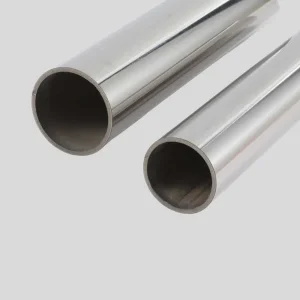
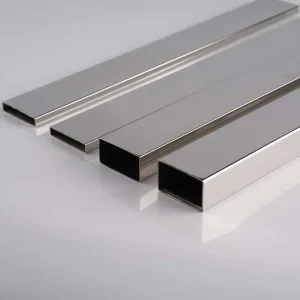
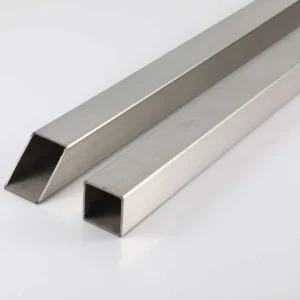
Engineered to strict international standards for structural, architectural, automotive, and sanitary applications.
An authoritative analysis of market demand, global regulatory harmonisation, and structural consumption dynamics across North America, Europe, and Asia-Pacific.
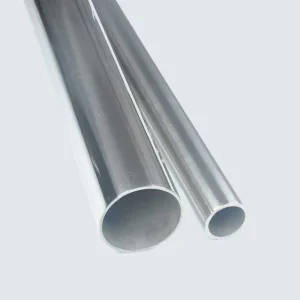
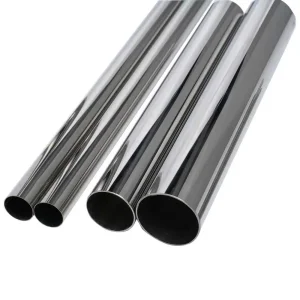
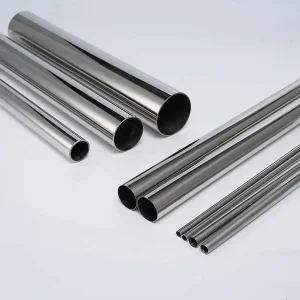
Austenitic Grade 304 (UNS S30400 / EN 1.4301) represents over 55% of the total global stainless steel tubing market. In 2026, global consumption of 304 welded pipes has surged due to expanding industrial automation, sustainable modern architecture, food-grade processing infrastructure, and automotive emissions management systems. Structural integrity coupled with cost-effective corrosion resistance makes 304 welded tubing the primary structural standard for engineers worldwide.
From North American commercial construction to European hygienic machinery and Southeast Asian urbanization projects, procurement officers are transitioning from seamless options to high-precision welded tubing. Advances in Plasma and Automated Laser Welding have elevated weld seam joint efficiency to near-unity (1.0 factor), effectively eliminating historic strength differentials while offering superior dimensional uniformity and cost savings of 25% to 40% over seamless alternatives.
Global cross-border trade demands total adherence to international mechanical and dimensional standards. High-quality 304 welded pipes must comply strictly with specific global frameworks depending on end-use:
Understanding the atomic foundation of 18/8 austenitic stainless steel, passivation kinetics, and mechanical performance under stress.
| Grade Specification | Chromium (Cr) % | Nickel (Ni) % | Carbon (C) % | Manganese (Mn) % | Silicon (Si) % | Nitrogen (N) % | Pitting Resistance (PREN) |
|---|---|---|---|---|---|---|---|
| AISI 304 (UNS S30400) | 17.50 – 19.50 | 8.00 – 10.50 | ≤ 0.07 | ≤ 2.00 | ≤ 0.75 | ≤ 0.10 | 18.0 – 20.0 |
| AISI 304L (Low Carbon) | 17.50 – 19.50 | 8.00 – 12.00 | ≤ 0.030 | ≤ 2.00 | ≤ 0.75 | ≤ 0.10 | 18.0 – 20.0 |
| AISI 316L (Marine Grade) | 16.00 – 18.00 | 10.00 – 14.00 | ≤ 0.030 | ≤ 2.00 | ≤ 0.75 | Mo 2.00–3.00 | 23.0 – 25.5 |
| AISI 201 (High Manganese) | 13.50 – 15.00 | 1.00 – 2.50 | ≤ 0.15 | 8.50 – 10.00 | ≤ 0.75 | ≤ 0.20 | 14.0 – 15.5 |
During the automatic welding process (TIG or Laser), steel experiences rapid thermal cycles. In standard high-carbon alloys, chromium carbides ($Cr_{23}C_6$) can precipitate along grain boundaries between 450°C and 850°C—a phenomenon known as sensitisation. This depletes local chromium levels below the critical 10.5% threshold, triggering intergranular corrosion.
Our factory mitigates sensitisation by utilizing low-carbon strip stock, precise heat input control, and automatic inner nitrogen gas purging ($N_2$). Nitrogen shielding prevents interior seam oxidation ("sugar coating") and stabilizes the austenite weld structure without requiring costly post-weld solution annealing on standard wall tubing.
While 304 welded pipe excels in standard atmospheric, freshwater, and organic chemical environments, free iron particles introduced during roll-forming or cut-off operations can cause surface tea-staining if left untreated.
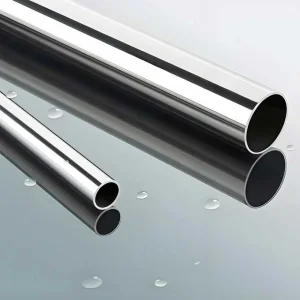
Every batch produced at our facility undergoes full-length chemical pickling and passivation treatment. This removes tramp iron contamination and converts the surface into a uniform, dense passive layer. Under ASTM B117 Neutral Salt Spray testing, our passivated 304 welded tubing consistently withstands 200+ hours without red rust, while marine-grade 316L exceeds 500 hours.
Properly processed 304 welded tubing provides a high strength-to-weight ratio combined with exceptional cold formability:
Why sourcing directly from a vertically integrated manufacturer in Foshan delivers unmatched lead times, pricing structural advantages, and rigid quality control.
Located in Shishan Town, Nanhai District, Foshan City, our factory sits at the center of the world's most concentrated stainless steel processing hub. This geographic advantage creates a seamless supply chain network:
When purchasing 304 welded tubing globally, middleman trading desks often introduce 15% to 30% price inflation alongside communication delays. Sourcing directly from our 43-line manufacturing plant delivers distinct commercial advantages:
Direct engineering communication eliminates misinterpretation of radius, wall thickness tolerance, and packaging specs, guaranteeing a 15-day rapid lead time for standard FCL shipments.
From architectural landmarks to medical cleanrooms and high-performance automotive exhausts, discover how 304 welded pipe is engineered for target environments.
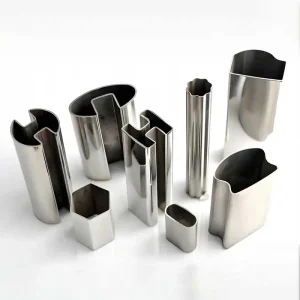
ASTM A554 304 round, square, and slot tubes serve as the backbone of modern architectural railings. Precision wall thickness (1.2mm–2.0mm) ensures high structural load resistance under wind shear and crowd pressure. Our 600# mirror polish or 320# satin grain provides high aesthetic appeal while resisting fingerprint smudges and urban pollution corrosion.
For high-end faucets, shower arms, and towel racks, tube surface smoothness determines electroplating and PVD adhesion. We maintain a micro-roughness of Ra ≤ 0.4 µm with seam planishing that eliminates internal weld ridges. This prevents pinhole blisters or flaking during electroplating, chrome plating, or black PVD deposition.
Conveyor systems in food processing and parcel logistics require low Total Indicator Runout (TIR) to prevent roller wobble and bearing wear. Our 304 roller tubes feature controlled straightness (≤ 1mm/m) and precise roundness, enabling quiet operation at high RPMs in hygienic wash-down environments.
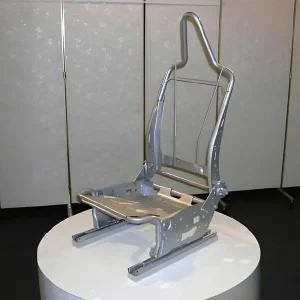
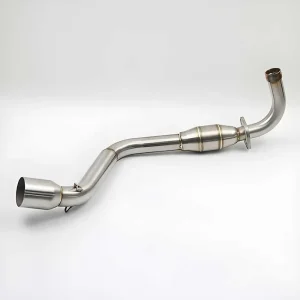
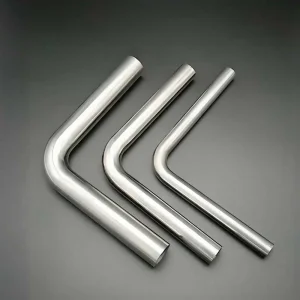
304 and 409L stainless tubing are essential for exhaust manifolds, catalytic converter shells, and structural seat frames. Excellent thermal fatigue resistance (withstanding temperatures up to 800°C) and high ductility allow complex hydroforming and mandrel bending without wall necking or seam splitting.
Hygienic environments require non-porous, easy-to-disinfect surfaces. Our medical-grade 304 tubing features smooth internal weld beads and antibacterial cleanability, widely applied in hospital bed frames, IV poles, surgical carts, and safety grab bars rated to support heavy pull forces.
Replacing traditional plastic-coated lean pipe, solid 304 stainless steel tubing eliminates coating delamination, particle shedding, and static accumulation. Essential for semiconductor cleanrooms, pharmaceutical laboratories, and high-tech assembly benches.
A step-by-step engineering checklist for procurement managers, structural designers, and QA auditors ordering 304 welded pipes from China.
Never place a purchase order stating "standard tolerance." Always specify explicit upper and lower limits on drawing sheets:
Every shipment must be accompanied by a EN 10204 3.1 Mill Test Certificate (MTC) covering heat-traceable raw material chemical composition and mechanical test logs:
To prevent sea-freight transit damage, salt air corrosion, and scratching: Each individual tube is sleeved in protective PE film or woven bag, bundled with plastic strapping, wrapped in waterproof corrugated plastic sheet, and mounted on heavy-duty iron skids or fumigated wooden crates optimized for forklift unloading.
How high-precision fiber laser welding, green steel decarbonisation, and AI vision inspection are reshaping stainless tube production.
Transitioning from traditional TIG welding to high-power fiber laser welding reduces the Heat-Affected Zone (HAZ) width by up to 60%. This yields a stronger weld joint, minimizes thermal distortion, and allows faster production speeds while maintaining pristine internal seam profiles.
As European and global buyers adapt to the Carbon Border Adjustment Mechanism (CBAM), our mill is integrating renewable solar power generation across our 12,000 m² rooftop and sourcing low-emission scrap-recycled stainless steel coils to reduce product carbon footprints.
Real-time infrared thermal imaging combined with AI optical defect recognition scans 100% of moving tube surfaces at 30 meters per minute. Any micro-pinhole, scratch, or wall variation is flagged instantly, guaranteeing zero-defect shipments.
Expert technical answers covering real-world procurement issues, material selection, bending rules, and custom fabrication.
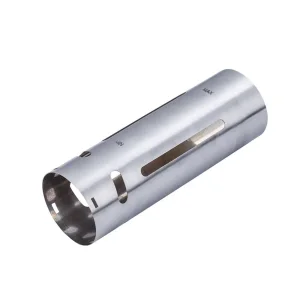
Custom profiles, structural components, and application-tailored stainless steel tubing produced to customer specifications.