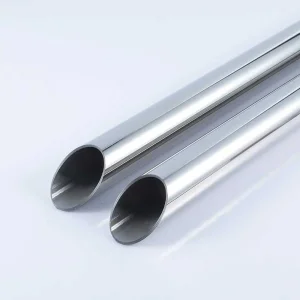
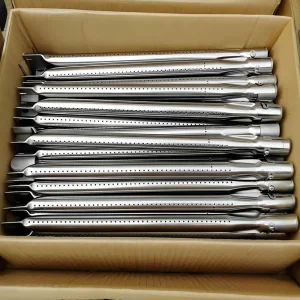
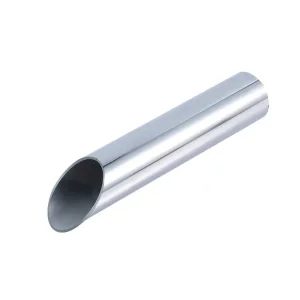
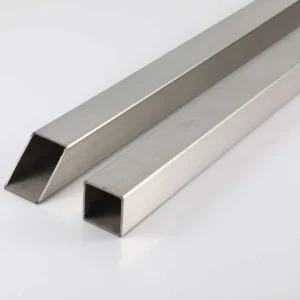
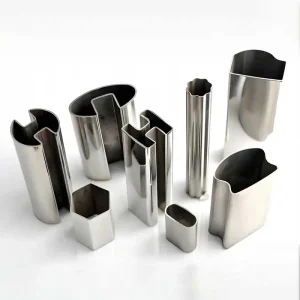
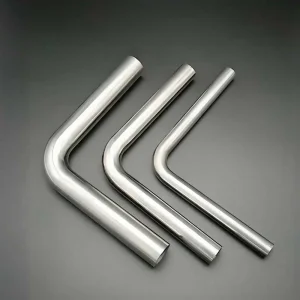
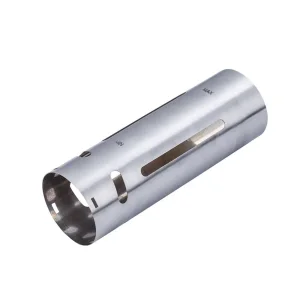
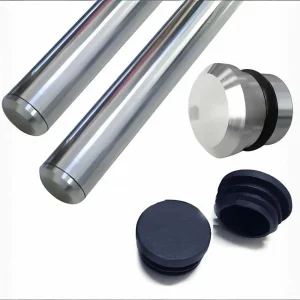
Explore our high-performance ASTM A554/A249/A269 structural tubing engineered specifically for heavy-duty furniture framing, sanitary systems, and OEM applications.
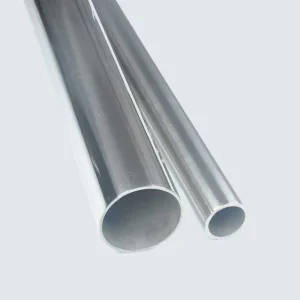
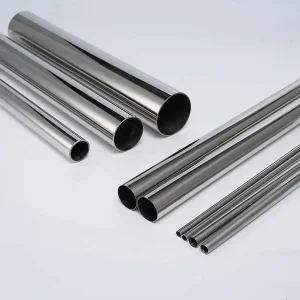
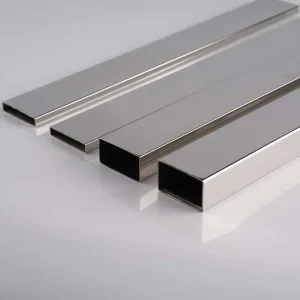
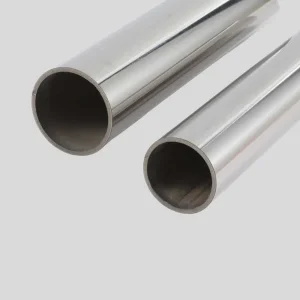
In modern architectural engineering, commercial interior design, and industrial cleanroom manufacturing, the structural substructure is no longer treated as a secondary commodity. High-quality stainless steel bench legs represent the critical intersection between high-yield mechanical strength, environmental hygiene, and architectural aesthetics. As global procurement shifts toward sustainable, long-lifecycle infrastructure, the demand for precision-engineered 304, 316, and 316L stainless steel bench legs, bases, and modular frames has accelerated exponentially.
Modern architectural specs require bench legs to support exceptional static and dynamic loads while resisting aggressive chemical exposure, coastal salt-air pitting, and high-frequency sterilization regimes. This whitepaper analyzes the metallurgical developments, advanced CNC fabrication techniques, global supply chain dynamics, and structural compliance frameworks defining today's premium stainless steel bench leg manufacturing sector.
Global ESG mandates are driving commercial real estate and municipal developers to eliminate short-lived chrome-plated or powder-coated mild steel legs. Fully recyclable 304/316 stainless steel provides an infinite lifecycle with zero chemical off-gassing, directly contributing to LEED v4.1 credits.
Pharmaceutical, medical packaging, and semiconductor industries demand workbenches featuring crevice-free continuous TIG/plasma welds and low surface roughness (Ra ≤ 0.4 μm) to prevent microbial harbourage and particulate accumulation during cleanroom washdowns.
Luxury hospitality and retail environments are replacing traditional electroplating with advanced PVD titanium coatings applied over precision-polished stainless steel bench legs, offering ultra-hard scratch-resistant gold, rose gold, and black finishes.
The structural performance and environmental longevity of stainless steel bench legs depend directly on correct alloy selection, grain structure, and post-weld passivation. Below is an engineering comparison matrix of stainless steel grades utilized in industrial bench leg manufacturing:
| Alloy Grade | Chemical Composition Key Elements | Yield Strength (MPa) | PREN Rating | Corrosion Resistance Level | Primary Industrial Applications |
|---|---|---|---|---|---|
| AISI 201 (High-Cu) | 16-18% Cr, 3.5-5.5% Ni, 5.5-7.5% Mn, Cu ≥ 1.5% | ≥ 310 | ~17.5 | Moderate (Indoor Controlled) | Budget indoor commercial furniture, retail displays, dry office framing. |
| AISI 304 (1.4301) | 18-20% Cr, 8-10.5% Ni, C ≤ 0.07% | ≥ 205 | ~19.0 | High (Standard Commercial) | Architectural indoor/outdoor benches, corporate desks, cleanroom worktables. |
| AISI 304L (Low-C) | 18-20% Cr, 8-12% Ni, C ≤ 0.03% | ≥ 175 | ~19.0 | High (Intergranular Corrosion Proof) | Heavy welded tubular bench assemblies requiring thick cross-section jointing. |
| AISI 316 (1.4401) | 16-18% Cr, 10-14% Ni, 2-2.5% Mo | ≥ 240 | ~23.5 | Superior (Chlorides & Acids) | Chemical lab workbenches, marine boardwalk seating, municipal park infrastructure. |
| AISI 316L (1.4404) | 16-18% Cr, 10-14% Ni, 2-2.5% Mo, C ≤ 0.03% | ≥ 220 | ~23.5 | Maximum Coastal & Washdown | Offshore oil rig furniture, sterile pharma cleanrooms, coastal spa seating. |
For outdoor municipal benches and coastal installations, pitting corrosion caused by chloride ions ($Cl^-$) is the primary mode of failure. PREN is calculated using the formula: PREN = %Cr + 3.3(%Mo) + 16(%N). Our marine-grade 316L bench legs maintain a PREN score > 23, guaranteeing resistance to tea-staining and crevice corrosion under high atmospheric salt conditions.
Cutting, bending, and TIG welding stainless steel disrupts the protective Chromium Oxide ($Cr_2O_3$) film. All our custom bench legs undergo full immersion citric/nitric acid passivation (ASTM A967 compliant) to restore passivity and eliminate micro-iron contamination caused by CNC tooling.
B2B buyers, institutional procurement managers, and commercial furniture OEMs face distinct technical challenges depending on their operating environment. Below, we break down macro industry solutions for major global procurement sectors:
Primary Need: High aesthetic consistency, rapid assembly, modular height adjustability, and hidden wire management conduits.
Engineered Solution: CNC laser-cut square/rectangular 304 legs with integrated internal levelling feet, precision mitred 45° corners, and concealed internal cable routing channels.
Primary Need: Zero bacterial traps, complete resistance to chlorine washdowns, zero flaking coatings, extreme static loading.
Engineered Solution: Fully welded, seamless 316L round or heavy square legs with continuous seal-welded mounting plates, ground smooth to Ra ≤ 0.4 μm finish.
Primary Need: Anti-vandalism load resistance, salt-air resistance, ground-anchor integration, maintenance-free longevity.
Engineered Solution: Heavy wall-thickness (≥ 3.0mm) 316 grade tubular frames with base-plate flanges designed for chemical anchor bolting directly into concrete foundations.
Operating out of Foshan's high-precision stainless steel manufacturing cluster, our production plant integrates automated laser cutting, robotic TIG/Fiber Laser welding, and automated surface finishing.
Our dual-axis laser welding stations yield ultra-narrow heat-affected zones (HAZ). This preserves grain boundary integrity and minimizes thermal distortion across complex bench leg geometries.
From 180-grit satin brushed to 600-grit ultra-mirror polish and PVD color titanium deposition, automated multi-head polishing lines maintain identical surface gloss levels across entire production runs.
Every batch of bench legs undergoes non-destructive Eddy Current weld inspection, hydrostatic pressure testing, load-deflection testing, and SPECTRO material chemistry validation.
Navigating global B2B procurement demands total transparency in trade compliance, material origin documentation, and specialized export packaging. We ensure seamless importation for enterprise clients in North America, Europe, Australia, and the Middle East.
Every shipment is accompanied by complete EN 10204 3.1 Mill Test Certificates (MTC) detailing exact chemical heat analyses and mechanical yield test results. Furthermore, our products comply fully with REACH, RoHS 3, and US Buy America provisions when required for government infrastructure projects.
Stainless steel surfaces are vulnerable to transit abrasion. Our export protocol requires individual PE protective sleeves, heavy-duty honeycomb card sleeving, custom foam inserts, and fumigated reinforced plywood crates engineered for multi-modal ocean and air freight.
As commercial architecture integrates digital capabilities and ultra-lightweight structural design, our engineering team is actively advancing three core technological fronts:
Integrating strain-gauge load sensors and environmental monitoring nodes directly inside the hollow profile of stainless steel bench legs for automated structural fatigue tracking in industrial facilities.
Transitioning from traditional welded mitre joints to internal high-pressure fluid forming (hydroforming), creating single-piece organic curved bench legs with elevated structural rigidity.
Pioneering sol-gel TiO2 photo-catalytic surface coatings bonded over brushed 316L bench legs to automatically break down bacteria and organic matter under ambient cleanroom light.
Direct answers from our metallurgical and structural design team regarding specifications, custom fabrication, and procurement workflows.
Load capacity depends on wall thickness, profile geometry, and alloy grade. A standard 4-leg set constructed from 50mm x 50mm x 2.0mm AISI 304 square tubing easily accommodates static loads exceeding 1,200 kg (2,640 lbs). For heavy-duty laboratory or industrial machinery bases, we engineer gusset-reinforced 316L legs rated for over 3,000 kg.
Grade 304 is highly effective in standard inland outdoor environments. However, in coastal locations (within 5 miles of salt water) or environments exposed to de-icing salts, 304 can experience superficial "tea-staining". Grade 316 contains 2-3% Molybdenum, providing immunity to chloride pitting and ensuring long-term aesthetic integrity.
Yes. Our engineering shop operates advanced 5-axis laser cutting and CNC bending systems integrated directly with SolidWorks and AutoCAD. We accept STEP, IGES, DXF, and DWG files, offering rapid prototype turnarounds in as few as 5 working days.
We provide comprehensive surface options including 180-grit to 320-grit Satin/Hairline, 600-grit Mirror Polish, Sandblasted Matte, Bead Blasted, and PVD Titanium Ion Plating (Gold, Rose Gold, Black, Brass, Bronze).
Browse our extended catalog of sanitary, medical, automotive, and decorative stainless steel profile solutions manufactured to ISO 9001 quality management standards.