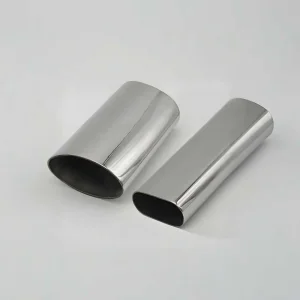
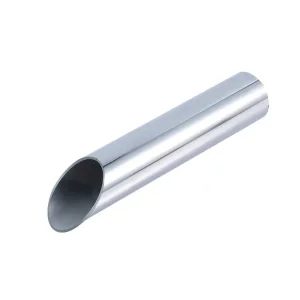
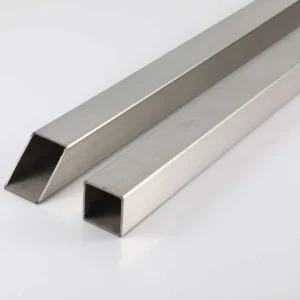
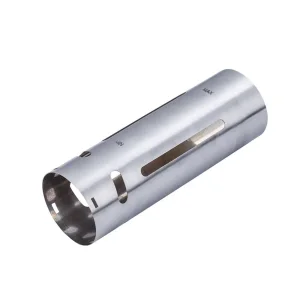
Explore our top OEM/ODM engineered stainless steel tubing solutions designed for demanding mechanical, sanitary, structural, and automotive deployments.
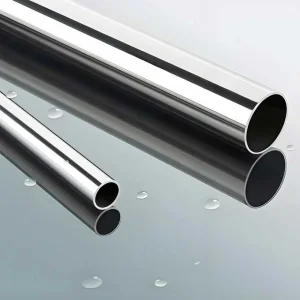
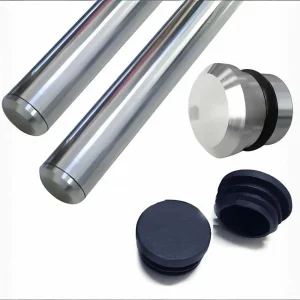
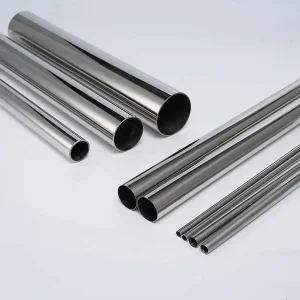
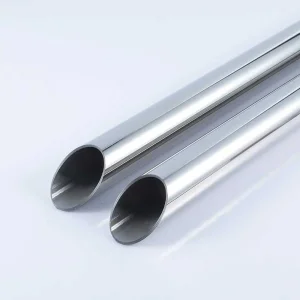
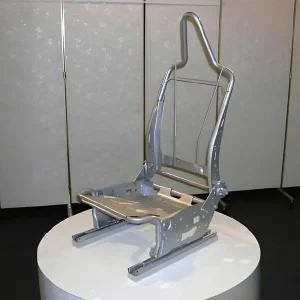
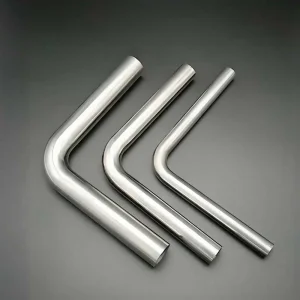
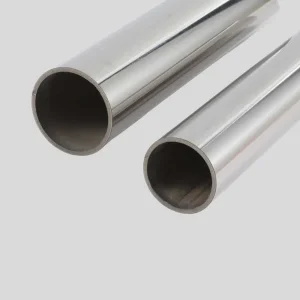
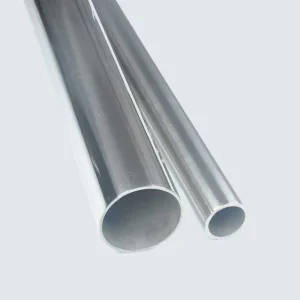
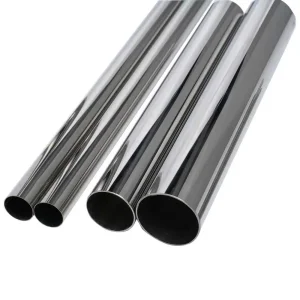
In modern industrial manufacturing and structural engineering, the 3/4 inch (19.05 mm) outer diameter (OD) stainless steel tube occupies a paramount geometric position. Serving as a foundational component across fluid dynamics, structural architecture, automotive systems, and sanitary apparatus, the 3/4" dimension hits the exact cross-section of mechanical rigidity, minimal hydrodynamic head loss, and optimal strength-to-weight ratios. As Original Design Manufacturers (ODM) and tier-one OEMs expand globally, sourcing 3/4 inch tubing requires moving beyond standard off-the-shelf commodities toward fully tailored, specialized mill runs.
The global market for precision stainless steel tubing has experienced structural transformation. Driven by stringent environmental legislation, the acceleration of electric vehicle (EV) chassis lightweighting, high-purity medical infrastructure growth, and modern architectural standards, demand for 3/4 inch tubing continues to outpace broad steel market averages. Industrial buyers are shifting away from fragmented supply networks toward integrated ODM manufacturing hubs—most notably centered in specialized metallurgy clusters like Foshan, China—capable of delivering high-speed plasma welding, tight dimensional tolerances ($\pm 0.05\text{ mm}$), and bespoke surface finishing under automated Quality Management Systems (QMS).
Modern global procurement strategies for 3/4" stainless steel tubing prioritize Total Cost of Ownership (TCO) over initial mill-gate prices. Advanced ODM facilities eliminate downstream fabrication overhead by integrating laser slotting, mandrel bending, end-necking, and automated surface passivation directly into the tube mill run.
The 3/4-inch OD specification accounts for over 22% of total worldwide ornamental and precision structural welded tubing consumption due to universal standardization in fittings, clamps, and bending tooling.
Compliance with global standards such as ASTM A554, ASTM A249, ASTM A269, EN 10217-7, and JIS G3446 is now mandatory for seamless cross-border supply chain integration.
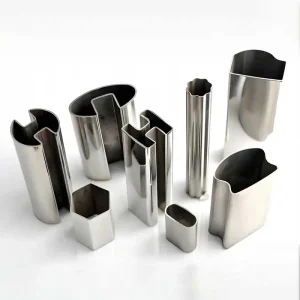
Leading ODM mills leverage over 500 existing roll-forming die sets, reducing lead times from traditional 45-day cycles down to 15 days for specialized profiles.
Selecting the optimal alloy grade for a 3/4 inch stainless steel tube dictates its pitting corrosion resistance, yield strength, formability during CNC tube bending, and long-term operating lifecycle. ODM manufacturers evaluate chemical compositions through the Pitting Resistance Equivalent Number (PREN) formula:
The table below provides a engineering specification matrix comparing alloy selection, mechanical attributes, and target application fields for 3/4" (19.05mm) tubing:
| Alloy Grade | Metallurgical Structure | PREN Rating | Tensile / Yield (MPa) | Primary Performance Characteristics | Recommended Application |
|---|---|---|---|---|---|
| AISI 304 / 304L | Austenitic (18/8) | 18.0 - 20.0 | $\ge 515 / \ge 205$ | Excellent formability, balanced atmospheric corrosion resistance, low temperature ductility. | Furniture, Balustrades, Appliances, General Hardware |
| AISI 316 / 316L | Austenitic (2-3% Mo) | 23.0 - 25.0 | $\ge 515 / \ge 205$ | Superior chloride resistance, immune to crevice pitting, passivated weld zone. | Marine Hardware, Sanitary Grab Bars, Coastal Railings |
| Ferritic 409L / 439 | Ferritic (11-18% Cr) | 11.0 - 13.0 | $\ge 380 / \ge 175$ | High thermal fatigue resistance, low thermal expansion coefficient, cost-optimized. | Automotive Muffler Systems, Exhaust Manifolds |
| High-Cu 201 Grade | Austenitic (Mn-Ni-N) | 14.0 - 16.0 | $\ge 520 / \ge 245$ | Elevated tensile strength, modified copper addition for deep-drawing & tight bending. | Indoor Storage Racks, Decorative Trim, Retail Fixtures |
| Duplex 2205 (UNS S32205) | Austenitic-Ferritic | 32.0 - 35.0 | $\ge 655 / \ge 450$ | Double yield strength of austenitic grades, extreme resistance to stress corrosion cracking. | High-Pressure Fluid Lines, Subsea Instrumentation |
For 3/4 inch tubing, wall thickness selection dictates both structural integrity and weight cost optimization. Standard production ranges encompass fractional gauges:
How leading factories guarantee zero-defect 3/4 inch welded stainless steel tubing through automated continuous-monitoring production lines.
Prime steel coils from top mills (TISCO, POSCO, Baosteel) are precision slit. Milling cutters dress the strip edges to eliminate microscopic burrs that could introduce weld seam porosity.
High-energy plasma arc welding ensures 100% full-penetration seam fusion. Automatic current control adjusts dynamically based on line speed to prevent undercutting or burnout.
Continuous positive-pressure high-purity nitrogen gas is injected inside the tube during welding. This suppresses oxidation, eliminating the internal black oxide bead line.
Hydraulic internal and external roll-planishing flattens the weld seam reinforcement, aligning internal bore smooth texture to match base metal thickness within $\pm 0.02\text{ mm}$.
Dual inline testing: Non-contact laser sensors log Total Indicator Runout (TIR) and outer diameter roundness, while electromagnetic Eddy Current probes check for micro-cracks at 100m/min.
Multi-stand sizing mills shape the 3/4" tube to precise outer diameter tolerances ($\pm 0.05\text{ mm}$) and achieve straightness exceeding 1 mm per meter.
The versatility of 3/4 inch stainless steel tubing makes it an indispensable component across disparate global industries. ODM production facilities provide engineered customizations tailored to specific application stresses:
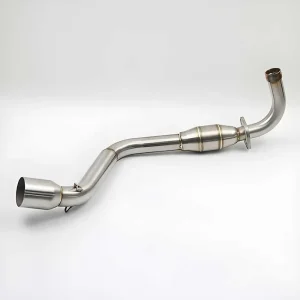
Used extensively in OEM exhaust tailpipes, cross-over tubes, and seat frame assemblies. Ferritic 409L and 304 grades withstand continuous thermal cycling up to 800°C without scaling or structural fatigue. Mandrel-bent 3/4" tubes retain 98%+ circularity through tight-radius curves.
3/4" and 1" OD 304/316L tubing forms the structural backbone for hospital bed rails, safety grab bars, and IV stands. Satin 320# and mirror polish finishes pass stringent hospital disinfection protocols without pitting, micro-cracking, or harbouring pathogens.
ASTM A554 ornamental 3/4" tubing acts as vertical balusters, glass railing infill posts, and commercial door handles. Available in 8 PVD titanium vacuum-coated colors (gold, rose gold, black titanium, champagne) with exceptional UV and scratch resistance.
Low-TIR precision 3/4" stainless tubing serves as hygienic conveyor rollers in food processing, pharmaceutical packaging, and automated parcel distribution center lines where steel paint flaking is strictly prohibited.
Overhead drying systems, high-end wardrobe hanger rails, and dishwasher heating elements utilize lightweight 20-gauge 3/4" 304 tubing to combine aesthetic metallic elegance with permanent structural load capacity.
Internal surface roughness controlled down to $Ra \le 0.4\mu m$ prevents mineral scaling and biofilm accumulation in sanitary heat exchangers, beer cooling coils, and residential solar thermal loops.
As global industries transition toward Net-Zero carbon emissions and circular economic models, the stainless steel tubing sector is undergoing profound technological transformation. Original Equipment Manufacturers now demand complete environmental transparency, encompassing Scope 1, 2, and 3 carbon footprints across the raw material supply chain.
Traditional bright annealing furnaces relied on fossil-fuel combustion. Advanced ODM mills are transitioning to 100% green hydrogen-atmosphere annealing furnaces powered by local solar arrays. Furthermore, sourcing raw steel slit coil from EAF (Electric Arc Furnace) smelters using recycled scrap steel yields up to a 72% reduction in embodied carbon dioxide ($CO_2$) per tonne compared to traditional Blast Furnace-Basic Oxygen Furnace (BF-BOF) routes.
Quality assurance is evolving from retrospective sampling to real-time predictive control. Next-generation 3/4 inch tube mills incorporate machine-learning vision systems that analyze weld bead thermal radiation, geometry profiles, and surface reflectances at 120 frames per second. Any micro-fissure or dimensional drift beyond $\pm 0.03\text{ mm}$ triggers instant automated mill calibration, reducing scrap rates to under 0.15%.
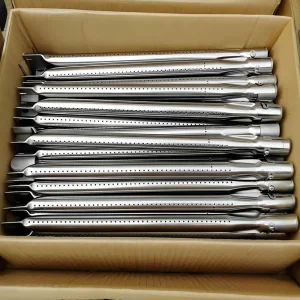
Global logistics costs favor fully finished components over raw mill lengths. Modern ODM suppliers serve as contract manufacturing partners, offering CNC 3D laser cutting, robotic TIG welding, end-flaring, hydroforming, and custom kitting directly on-site. Buyers receive assembly-ready tube modules rather than 6-meter mill bundles, drastically reducing factory floor space requirements and scrap handling in destination markets.
In-depth answers from our metallurgical quality assurance team addressing common procurement, manufacturing, and application challenges for 3/4" stainless tubing.
Explore our full engineering range including medical-grade tubing, CNC machined components, special-shaped profiles, and marine specifications.