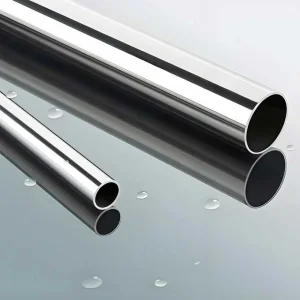
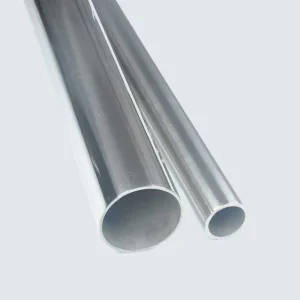
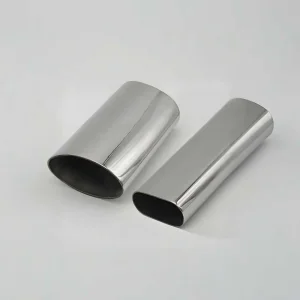
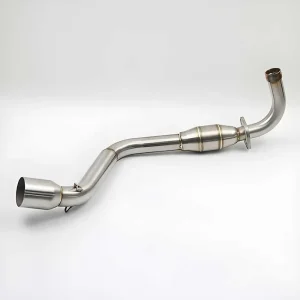
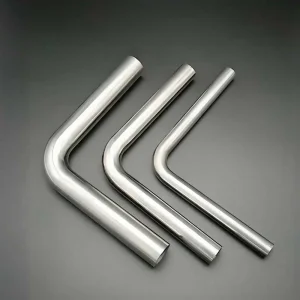
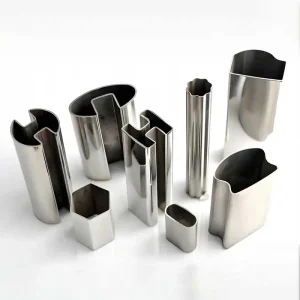
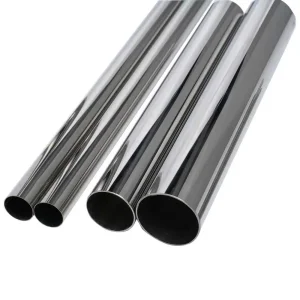
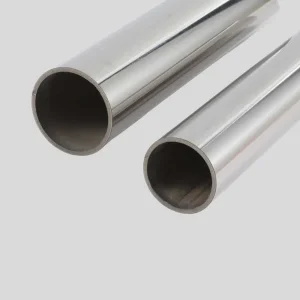
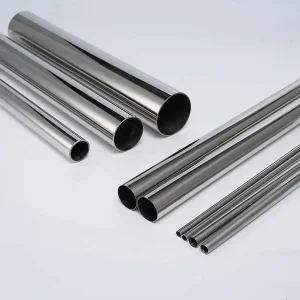
Explore our precision-engineered ASTM A554/A249 structural, ornamental, and medical grade tubing portfolio built for global industrial demands.
Understanding the chemical equilibrium, carbide precipitation risks, and structural performance criteria that govern enterprise procurement decisions.
In high-reliability industrial fluid handling, structural architecture, and automated assembly, selecting between AISI 304 (UNS S30400) and AISI 304L (UNS S30403) represents a critical engineering trade-off. The fundamental distinction centers on the carbon concentration cutoff: Type 304 permits a maximum carbon content of 0.08%, whereas Type 304L restricts carbon to a strict upper boundary of 0.03%.
During thermal joining—such as TIG, Plasma Arc, or High-Frequency Induction Welding—temperatures in the Heat-Affected Zone (HAZ) linger within the critical sensitisation range of 425°C to 860°C (800°F to 1580°F). In standard 304 stainless steel, carbon reacts with surrounding chromium atoms to form chromium carbides (Cr₂₃C₆) along the grain boundaries. This localized depletion drops the effective chromium level below the required 10.5% passivity threshold, triggering intergranular corrosion (weld decay).
By utilizing 304L (Low Carbon), the kinetic rate of carbide precipitation is drastically reduced. This enables heavy-wall tube welding and secondary post-weld fabrication without requiring costly post-weld solution annealing, preserving passive chromium oxide integrity ($Cr_2O_3$) across demanding chemical and environmental exposure.
While 304L eliminates weld sensitisation, the reduction in interstitial carbon slightly lowers yield strength. To compensate, modern advanced ODM mills employ dual-certification processing (304/304L Dual Grade), retaining ultra-low carbon (≤0.030%) while controlling nitrogen micro-alloying to match the mechanical yield parameters of standard 304.
| Element / Property | AISI 304 Standard | AISI 304L Low Carbon |
|---|---|---|
| Carbon (C) Max | 0.08% | 0.030% |
| Chromium (Cr) | 17.50% - 19.50% | 17.50% - 19.50% |
| Nickel (Ni) | 8.00% - 10.50% | 8.00% - 12.00% |
| Yield Strength (0.2% Offset) | ≥ 205 MPa (30 ksi) | ≥ 170 MPa (25 ksi) |
| Tensile Strength (Min) | ≥ 515 MPa (75 ksi) | ≥ 485 MPa (70 ksi) |
Strategic intelligence for enterprise procurement managers, B2B importers, and industrial original equipment manufacturers (OEMs).
North America: Supply chain diversification drives demand for verified ASTM A554 architectural tubing with transparent Mill Test Reports (MTRs) compliant with EN 10204 3.1.
European Union: Sustainability regulations and CBAM (Carbon Border Adjustment Mechanism) emphasize traceable scrap-to-billet ratios and energy-efficient induction welding processes.
Asia-Pacific & Middle East: Rapid urban infrastructure and commercial medical facilities accelerate multi-tonne orders of decorative and sanitary structural profiles.
Calculating tube procurement cost extends far beyond raw FOB price per tonne. Dimensional inconsistency forces downstream fabricators into excess scrap, manual shimming, and frequent CNC tooling wear.
By maintaining wall thickness uniformity within ±8% and straightness at 1 mm/m, our ODM factory reduces secondary bending failure rates from an industry average of 4.2% down to under 0.3%.
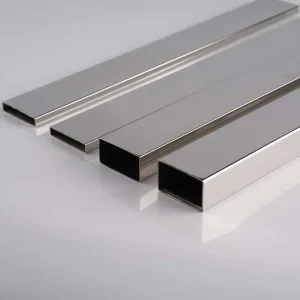
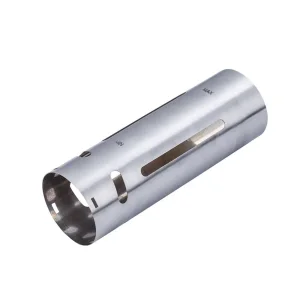
Specialized cross-sections—such as flat oval, D-shape, triangular, and single-slot channels—traditionally require heavy capital outlay for custom roll-forming die sets.
With over 500 existing active mould sets in stock, enterprise buyers access specialized aesthetic and structural profiles without initial tooling fees, reducing prototype-to-production lead times down to 15 days.
Tailored metallurgical specifications engineered to overcome distinct industrial operational stresses.
Architectural glazing and high-rise handrail hardware require strict torsional strength and flawless surface aesthetics. Standard ASTM A554 round and square 304 profiles provide high yield strength under wind load stress.
For coastal or high-salinity urban environments, 304L and marine-grade 316L are processed with a 600# Mirror or PVD Physical Vapor Deposition finish, creating a non-porous surface layer that repels atmospheric chloride ions.
Hospital bed framing, patient transfer systems, and mobility grab bars demand hypoallergenic properties, resistance to daily disinfectant washdowns, and zero sharp inner burrs.
Our medical-grade 304/304L tubing features precision internal weld bead planishing ($Ra \le 0.4 \mu m$), eliminating crevice traps for biological contaminants while ensuring full mandrel bending integrity without wall collapse.
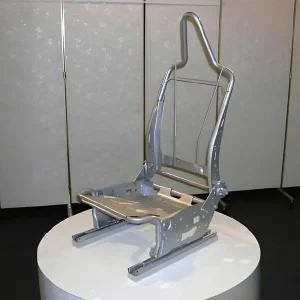
Chassis sub-frames, seat frame structures, and exhaust manifold links undergo intense vibration and localized thermal cycling. 304L provides higher fatigue resistance against thermal cracking compared to ferritic 409L grades.
Tight outer-diameter tolerances enable automated robotic laser cutting and CNC end-flaring, guaranteeing seamless integration into high-speed automotive assembly lines.
Modern cleanroom electronics manufacturing and food processing plants are replacing plastic-coated iron pipe with solid stainless steel lean tubing. Plastic coatings peel, harbor bacteria, and degrade under UV light.
Our low-TIR (Total Indicator Runout) 304 stainless tubing for conveyor rollers minimizes dynamic balance vibration at high belt speeds, substantially lengthening bearing operational lifespan.
From raw slit coil to automated multi-stage quality gates: inside our 10-step precision production workflow.
1. Prime Metallurgical Sourcing: Raw material is exclusively sourced from top-tier primary steel mills (TISCO, POSCO, Baosteel). Every master strip coil undergoes spectral chemical verification before entering the slitting line.
2. Automated High-Frequency & Plasma Welding: Tubes are roll-formed and joined using keyhole plasma welding paired with an active Inner Inert Nitrogen Purge System. Nitrogen shielding displaces atmospheric oxygen inside the tube bore, suppressing interior oxide scale formation and eliminating the internal "black line" defect.
3. In-Line Eddy Current & Infrared NDT: 100% non-destructive testing (NDT) continuously scans the weld seam in real-time, instantly identifying and marking micro-voids, pinholes, or cold weld anomalies prior to sizing.
4. Multi-Stage Mechanical Polishing & PVD Finish: Tubing progresses through four distinct polishing heads—starting from 180# coarse satin up to 600# optical mirror gloss. Decorative series undergo secondary high-vacuum PVD physical vapor deposition to coat titanium-nitride layers (Titanium Gold, Rose Gold, Black Titanium, Champagne).
Streamlining cross-border compliance, regulatory documentation, and custom packaging logistics.
Our mill manufacturing aligns with globally recognized structural and mechanical codes:
Export shipments undergo custom protective packaging engineered for long sea transit:
Navigating international trade duties requires accurate documentation. We assist buyers with:
Direct engineering answers to common enterprise procurement and technical specification queries.
Discover specialized profiles, decorative finishes, and high-performance structural stainless steel tubing.