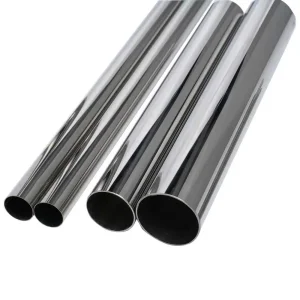
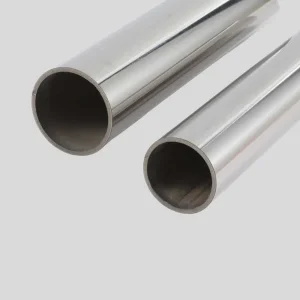
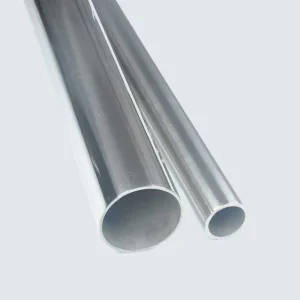
Explore our comprehensive range of high-performance stainless steel tubing manufactured under strict quality standards for medical, structural, decorative, and industrial applications.
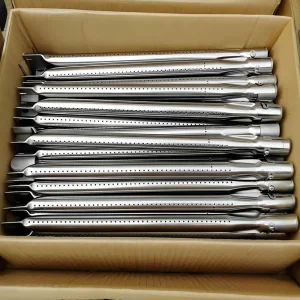
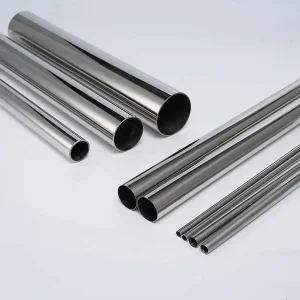
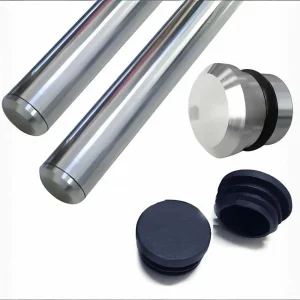
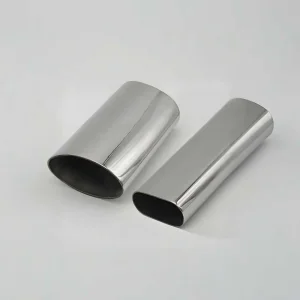
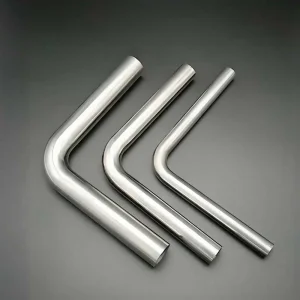
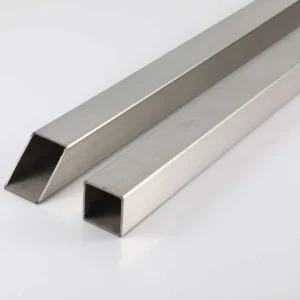
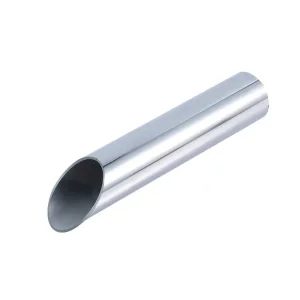
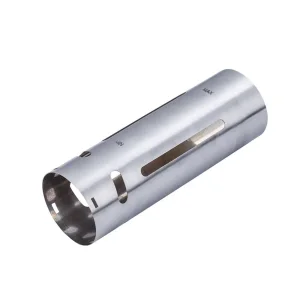
In critical healthcare, diagnostic, and surgical applications, standard commercial tubing falls short. Grade 304 austenitic stainless steel medical tubing requires extreme metallurgical purity, strict dimensional control, and precise passivated surface chemistry to guarantee zero cytotoxic response and long-term mechanical reliability.
Our ODM 304 medical tubing is processed strictly in compliance with ASTM A269 (Seamless and Welded Austenitic Stainless Steel Tubing for General Service) and ASTM A632 (Small-Diameter Seamless and Welded Tubing). This ensures exact wall uniformity, yield strength above 205 MPa, and tensile strength exceeding 515 MPa, essential for micro-invasive surgical tools and liquid delivery systems.
Medical applications demand non-reactive, non-hemolytic materials. Our 304 medical tubing undergoes specialized Citric or Nitric Acid Passivation (ASTM A967) to remove free iron contaminants from the surface layer. This creates an enriched Chromium Oxide (Cr₂O₃) passive layer that complies with ISO 10993-5 (Cytotoxicity) and ISO 10993-11 (Systemic Toxicity) testing.
Bacterial adhesion directly correlates with surface roughness. By utilizing advanced Bright Annealing (BA) and internal/external Electropolishing (EP), we achieve internal surface roughness down to Ra < 0.2 µm (8 µin). This ultra-smooth micro-finish prevents bio-film accumulation and enables effortless cleaning and sterilization protocols.
| Parameter | Standard Specification | ODM Custom Capability | Quality Assurance Testing |
|---|---|---|---|
| Outer Diameter (OD) | 0.25 mm to 25.4 mm (0.010" to 1.000") | Micro-tubing down to 0.15 mm ±0.005 mm | 100% In-line Laser Micrometer Gauging |
| Wall Thickness (WT) | 0.05 mm to 2.00 mm (0.002" to 0.078") | Ultra-thin wall (0.03 mm) & custom stepped walls | Ultrasonic Wall Thickness Verification |
| Inner Surface Roughness (ID Ra) | Ra ≤ 0.4 µm (16 µin) Bright Annealed | Ra ≤ 0.15 µm (6 µin) Electropolished | Surface Profilometer & SEM Microscopic Inspection |
| Chemical Composition | Cr: 18.0-20.0%, Ni: 8.0-10.5%, C: ≤ 0.08% | 304L (Low Carbon C ≤ 0.03%) for improved weldability | Spectrometric Heat Chemical Analysis (EN 10204 3.1) |
| Mechanical Properties | Tensile: ≥515 MPa, Yield: ≥205 MPa, Elongation: ≥35% | Custom Tempering: Soft Annealed, Half-Hard, Full-Hard | Eddy Current Testing & Micro-hardness (Vickers/Rockwell) |
| Passivation & Cleanliness | ASTM A967 Citric / Nitric Passivation | Cleanroom Washing & Packaged in ISO Class 7 Cleanroom | Auger Electron Spectroscopy (AES) & Particle Count |
Leveraging Foshan's world-class stainless steel industrial cluster, our manufacturing infrastructure provides global medical enterprises with unmatched scale, agility, and cost-efficiency without compromising metallurgical integrity.
Our production ecosystem eliminates intermediary markups and quality variance. We source prime austenitic stainless steel coils exclusively from tier-one steel mills including TISCO, POSCO, and Baosteel. Every raw material batch is backed by certified melt chemistry documentation detailing carbon, nickel, chromium, and trace element ratios.
Our in-house capabilities encompass strip slitting, high-frequency TIG/Laser micro-welding, precision cold drawing through diamond dies, continuous vacuum bright annealing, and secondary CNC fabrication under one 12,000 m² facility in Shishan Town, Foshan.
Medical device design cycles require rapid iteration. While traditional European or Western manufacturers require 6 to 12 weeks for custom die fabrication, our dedicated ODM tooling center produces custom roll-forming dies, drawing mandrels, and laser-cutting fixtures within 7 to 10 working days.
With an extensive library of over 500 existing roll-forming moulds and micro-drawing dies, we match most custom medical profile requests without requiring amortized tooling fees, drastically accelerating your time-to-market (TTM).
For multinational medical device OEMs, purchasing precision tubing is not merely a piece-price calculation. It involves risk mitigation, compliance overhead, defect-free yield rates, and secondary fabrication efficiency.
Defective tubing causes costly assembly line downtime and potential medical recalls. We implement 100% In-Line Eddy Current Defect Detection, automatic optical dimension monitoring, and destructive mechanical testing (flaring, flattening, reverse bending) on every production coil. Our target defect rate is maintained below 50 PPM.
Instead of receiving raw 6-meter mill lengths and incurring secondary processing costs, our clients receive pre-fabricated, assembly-ready medical components. In-house processes include burr-free laser cutting, beveling, slotting, precision swaging, micro-bending, and end-flaring with sub-millimeter repeatable tolerances.
Every shipment of our 304 medical tubing is supplied with a comprehensive documentation package, including Mill Test Reports (MTR per EN 10204 3.1), raw material heat numbers, chemical analysis, mechanical test charts, surface roughness certificates, and passivity verification logs for seamless FDA / CE auditing.
304 Stainless Steel medical tubing serves as the structural and functional backbone for a wide spectrum of critical medical devices, surgical tools, and healthcare equipment.
Used in trocar cannulas, laparo-endoscopic instruments, and arthroscopic shafts where high torsional rigidity, thin walls, and smooth surface finishes are required for effortless anatomical insertion and manipulation.
Essential for high-precision HPLC chromatography columns, automated reagent pipetting probes, and blood analysis instruments where bio-inertness and micro-bore Ra < 0.2 µm prevent sample carryover.
Engineered with high tensile strength and full-hard temper to support precision grinding of lancet needle bevels without burr formation, ensuring minimal patient discomfort during tissue biopsy.
Applied in hospital bed side rails, IV poles, surgical trolleys, and cleanroom workstations. Solid 304 stainless steel avoids peeling, rusting, or shedding particles under repeated chemical disinfectant wash-downs.
Provides robust outer shielding for surgical power tools, dental handpieces, and ultrasonic scalers requiring repeated steam autoclave cycles (134°C / 2.1 bar) without surface oxidation or dimensional warping.
Manufactured as ultra-thin wall micro-tubing with exact spring temper to offer kink resistance and longitudinal pushability in vascular catheter delivery assemblies.
Navigating international regulatory requirements is seamless with our established export infrastructure and regulatory assurance documentation.
Our ODM manufacturing facility operates under an integrated ISO 13485:2016 Medical Quality Management System alongside ISO 9001:2015 and ISO 14001:2015 environmental management standards.
All 304 medical tubing lines are certified compliant with EU directives: RoHS 3 (Directive 2015/863) and REACH SVHC heavy metal restrictions, ensuring zero trace of lead, cadmium, mercury, or hexavalent chromium.
To assist global OEMs with Lean manufacturing and Just-In-Time (JIT) inventory management, we offer regional stock holding programs and flexible shipping options including DDP (Delivered Duty Paid) directly to your manufacturing facility in North America, Europe, or Southeast Asia.
Custom packaging solutions include protective plastic sleeving, vacuum sealing, vapor corrosion inhibitor (VCI) paper wrapping, and custom wooden/steel crates designed to withstand transatlantic transit without cosmetic damage.
As healthcare moves towards minimally invasive surgery, micro-diagnostics, and smart medical devices, precision tubing technology is evolving rapidly.
The demand for smaller surgical incisions is driving tubing dimensions into micro-scale boundaries. Advanced cold drawing techniques now allow wall thicknesses under 0.03 mm, maximizing internal flow area while preserving structural column strength.
Future medical catheters and diagnostic probes require embedded micro-sensors for real-time pressure, temperature, and pH tracking. Next-generation 304 tubing features laser-etched micro-channels for fiber-optic sensor routing.
Global medical device leaders prioritize sustainable supply chains. Our factory is transitioning to closed-loop water filtration, solar-powered bright annealing, and 100% recyclable scrap recovery to reduce embodied carbon per meter of tubing.
Detailed technical answers curated by our senior metallurgical engineers and medical quality assurance team.
Grade 304 contains 18% Chromium and 8% Nickel, offering exceptional mechanical strength, formability, and general corrosion resistance suitable for most medical equipment, surgical tools, and structural hospital components. Grade 316L includes 2-3% Molybdenum and lower carbon, which provides higher resistance to chloride pitting and aggressive chemical environments (such as saline immersion or long-term body fluid contact). For cost-effective medical devices where chloride exposure is minimal, 304 is the industry standard.
For precision medical runs, our cold-drawing and laser-gauging process holds Outside Diameter (OD) tolerances to ±0.005 mm (±0.0002") and Wall Thickness (WT) tolerances to ±0.008 mm. Straightness is controlled to 0.5 mm per meter. Each mill batch is 100% verified using in-line laser micrometers and ultrasonic wall thickness gauges.
Our surface preparation follows ASTM A967 citric acid passivation to remove free iron contaminants introduced during drawing. We then apply continuous hydrogen vacuum bright annealing (BA) and optional electropolishing (EP) to achieve an internal surface roughness Ra ≤ 0.15 µm. The passivated surface is verified via salt spray testing (ASTM B117 > 300 hours) and water immersion testing.
Yes. Our dedicated CNC medical fabrication shop provides comprehensive value-added secondary operations, including burr-free fiber laser slotting, precision angle beveling, end flaring, swaging, micro-bending, and end-closure forming. Components arrive thoroughly degreased, ultrasonically cleaned, and packaged ready for assembly.
We provide a complete Quality Assurance Documentation Package with every shipment. This includes a certified EN 10204 3.1 Mill Test Report detailing exact melt chemistry, tensile/yield strength, elongation, hardness, flattening/flaring test results, along with RoHS 3 compliance certificates, REACH SVHC declarations, and ISO 13485 production audit records.
Our standard MOQ for standard medical tube sizes is 200 kg. For custom ODM micro-tubing or specialized wall dimensions requiring custom draw dies, the MOQ is typically 500 kg. Sample prototyping lead time is 7-10 working days, while full production run shipping times range between 15 and 20 days after drawing approval.
Browse our broader range of structural, automotive, marine, and specialized profile stainless steel tubing engineered for industrial reliability.