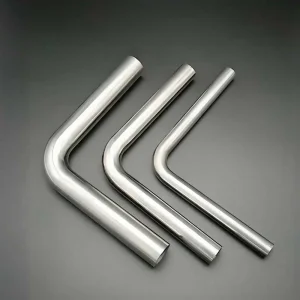
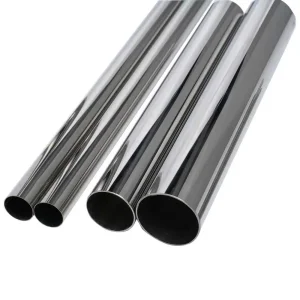
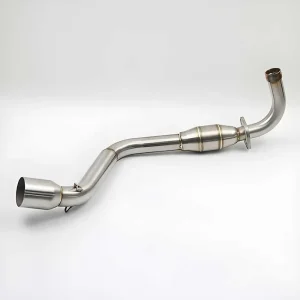
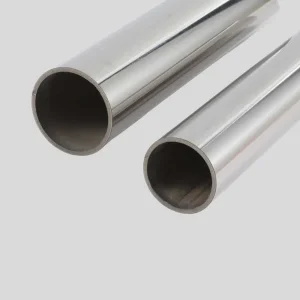
Explore our certified range of structural, ornamental, and high-spec industrial stainless steel piping manufactured under strict ISO 9001 and ASTM standards.
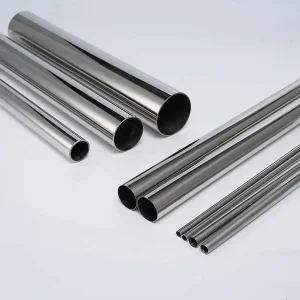
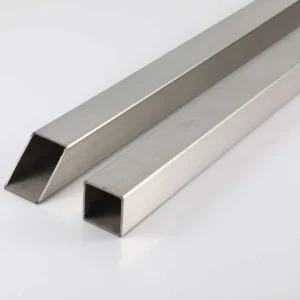
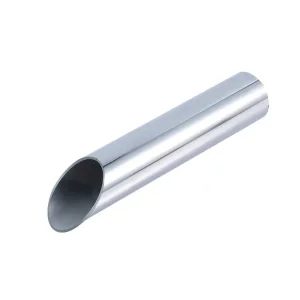
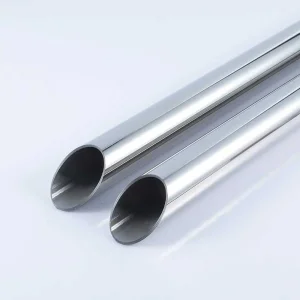
A comprehensive analysis of high-temperature creep strength, phase stability, and chemistry controls for global industrial EPC projects.
Grade 304H (UNS S30409) represents the high-carbon modification of the standard 18-8 austenitic alloy (AISI 304). Engineered specifically for elevated-temperature service, 304H maintains a tightly controlled carbon content ranging strictly between 0.04% and 0.10%. This elevated carbon band provides enhanced high-temperature yield strength and ultimate tensile strength above 500°C (932°F), making it an indispensable alloy for steam superheaters, petrochemical reheaters, pressure vessels, and industrial heat exchangers.
Unlike standard 304L, which restricts carbon below 0.03% to mitigate intergranular corrosion during welding, 304H prioritizes short-term elevated thermal yield and long-term creep rupture strength. When subjected to continuous operating stress at temperatures between 525°C and 800°C, the carbon in 304H forms stable intra-granular carbide precipitates, effectively pinning crystal lattice dislocations and preventing premature mechanical creep deformation.
In accordance with ASTM A312, ASTM A249, and ASME SA312 specifications, authentic 304H piping must demonstrate an ASTM grain size of No. 7 or coarser (typically ASTM No. 3 to No. 6). Coarser grain structure significantly enhances creep rupture resistance by reducing grain boundary sliding under extreme thermal load over multi-year service cycles.
To achieve optimal metallurgical balance, advanced ODM manufacturers execute precise full-solution annealing at temperature ranges of 1040°C to 1150°C (1900°F to 2100°F), followed by immediate rapid water quenching or forced air cooling. This thermal treatment fully dissolves chromium carbides into the austenitic matrix while stabilizing the coarse grain structure required for critical thermal stress environments.
| Alloy Grade | Carbon (C) % | Chromium (Cr) % | Nickel (Ni) % | Manganese (Mn) % | ASTM Grain Size | Max Temp Limit |
|---|---|---|---|---|---|---|
| AISI 304H (UNS S30409) | 0.04 - 0.10 | 18.0 - 20.0 | 8.0 - 10.5 | 2.00 Max | ASTM No. 7 or Coarser | 816°C (1500°F) |
| AISI 304L (UNS S30403) | 0.030 Max | 17.5 - 19.5 | 8.0 - 12.0 | 2.00 Max | Fine Grain (No. 7 or Finer) | 426°C (800°F) |
| AISI 304 (UNS S30400) | 0.080 Max | 17.5 - 19.5 | 8.0 - 10.5 | 2.00 Max | Standard Mill Grain | 600°C (1112°F) |
| AISI 316H (UNS S31609) | 0.04 - 0.10 | 16.0 - 18.0 | 10.0 - 14.0 | 2.00 Max (2-3% Mo) | ASTM No. 7 or Coarser | 850°C (1562°F) |
Meeting the uncompromising requirements of multinational EPC contractors, quality auditors, and global engineering buyers.
Global procurement teams mandate rigorous Non-Destructive Testing (NDT) to prevent cataclysmic leaks in high-pressure thermal loops. Leading ODM factories integrate 100% online Eddy Current Testing (ECT) alongside Hydrostatic Testing up to 20 MPa. For thick-wall seamless or heavy-welded 304H pipe, Radiographic Testing (RT) and Ultrasonic Testing (UT) ensure zero volumetric defects across seam interfaces.
Material traceability is non-negotiable. Every 304H pipe bundle is accompanied by an original EN 10204 3.1 Mill Test Certificate (MTC) documenting real-heat chemical heat analysis, mechanical tensile/yield testing, hardness numbers, flattening/flaring verification, and grain-size measurement. Third-party inspection (TPI) by SGS, BV, or TÜV delivers 3.2 certification compliance.
OEM/ODM manufacturers supplying North American, European, and Middle Eastern markets comply with the Pressure Equipment Directive (PED 2014/68/EU), ASME Boiler and Pressure Vessel Code (BPVC Section VIII), and ISO 9001:2015 quality management systems. Dimensional practice strictly adheres to ASME B36.19M and B36.10M.
Why Foshan and Chinese stainless steel manufacturing hubs deliver unprecedented lead times, custom roll-forming flexibility, and cost efficiency.
China accounts for over 50% of the world's crude stainless steel production. Operating within major industrial clusters like Foshan (Guangdong), ODM manufacturers leverage direct partnerships with Tier-1 primary mills such as TISCO, Tsingshan, POSCO China, and Baosteel. This vertical integration guarantees prime parent strip quality with exact elemental purity, minimal non-metallic inclusions, and highly competitive raw material pricing passed directly to global buyers.
In-house strip slitting, plasma and laser welding, bright annealing, and multi-stage automated polishing eliminate intermediary markups, cutting total procurement costs by 15% to 30% compared to Western regional distributors.
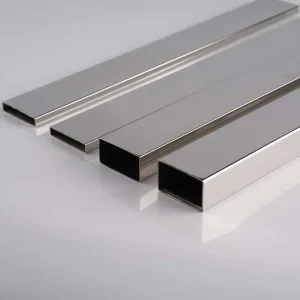
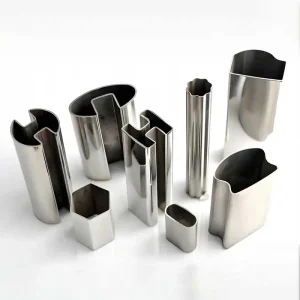
Custom industrial dimensions often trigger lengthy tooling lead times in traditional markets. Advanced Foshan ODM factories maintain extensive libraries of over 500+ roll-forming moulds, enabling rapid production of special oval, square, rectangular, and heavy-wall round profiles without new tooling charges.
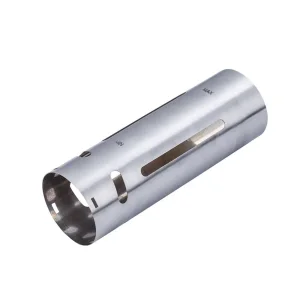
In-house secondary fabrication capabilities—including 5-axis laser cutting, precision CNC mandrel bending, end flaring, necking, beveling, and custom slotting—transform raw pipe into assembly-ready OEM modules. Standard order lead times are compressed to just 15 days, dramatically accelerating project schedules.
Deploying 304H stainless steel piping across extreme thermal, pressure, and chemical operating environments.
In thermal cracking units and refinery boilers, 304H superheater tubing operates continuously under high pressure at temperatures exceeding 650°C. Controlled grain boundaries prevent creep rupture under cyclic thermal stress.
Furnace radiant coils, exhaust headers, and heat recovery steam generators (HRSG) utilize 304H to resist scaling, oxidation, and structural sagging during rapid thermal cycling in heat-treatment facilities.
Fossil fuel and biomass power plants rely on 304H main steam lines and headers. Higher carbon content guarantees structural longevity against steam oxidation and thermal fatigue over 100,000+ operating hours.
Strategic technology developments transforming high-temperature stainless steel tube manufacturing.
As global industries transition toward decarbonization, high-temperature thermal loops are increasingly adapted for green hydrogen production, high-temperature steam electrolysis (HTSE), and solar thermal power generation. Modified 304H alloys engineered with ultra-precise grain structure and internal surface smoothing minimize hydrogen embrittlement risks while sustaining high thermal efficiency up to 800°C.
Modern China ODM manufacturing lines are replacing traditional TIG welding with automated Plasma-Laser Hybrid Welding. This advanced process produces narrow weld zones with deeper penetration and minimal heat-affected zone (HAZ) grain coarsening. Coupled with real-time AI optical and infrared thermal imaging, microscopic seam anomalies are detected and corrected instantly during high-speed mill runs.
In-depth technical answers curated by lead metallurgical quality control engineers.
The main distinction lies in the carbon content and intended service temperature. 304L features low carbon (≤0.030%) to prevent sensitization during welding in corrosive ambient environments. Standard 304 has up to 0.080% carbon for general usage. 304H specifies a elevated carbon band of 0.04% to 0.10% and coarse ASTM grain size (No. 7 or coarser), maximizing high-temperature creep strength and mechanical stability above 500°C.
At temperatures above 500°C, mechanical failure occurs primarily via creep deformation along grain boundaries. A coarser grain size (ASTM No. 7 or coarser) drastically reduces total grain boundary area per unit volume, minimizing grain boundary sliding and significantly increasing the stress-rupture life of superheater and boiler tubing.
Every mill run undergoes 100% inline Eddy Current Testing (ECT) for surface and sub-surface flaw detection, hydrostatic pressure testing (up to 20 MPa), Positive Material Identification (PMI) chemical spectrum analysis, dimensional laser micrometer verification, and ultrasonic/radiographic inspection upon request.
For welding 304H to 304H in high-temperature applications, matching high-carbon filler metals such as AWS E308H / ER308H are mandatory to ensure the weld metal matches the elevated temperature creep resistance of the parent metal. Standard ER308L fillers should be avoided for elevated service.
Standard production lead time is 15 business days following technical drawing and sample approval. Standard MOQ is 500 kg per dimension for regular profiles, while custom ODM profile tooling requires 1,000 kg. Strategic stock coils allow rapid sample dispatch within 3 days.
Browse our specialized decorative, structural, and OEM custom-engineered tubing options.