Explore our custom OEM/ODM tubular products manufactured to rigorous international standards (ASTM A554, JIS G3446, EN 10217-7) with guaranteed dimensional accuracy.
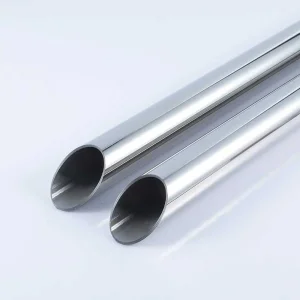
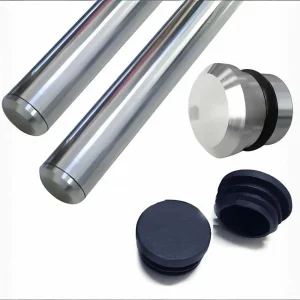
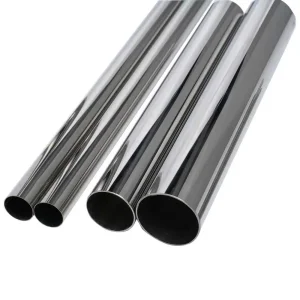
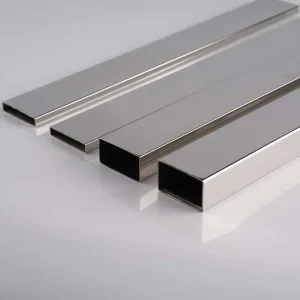
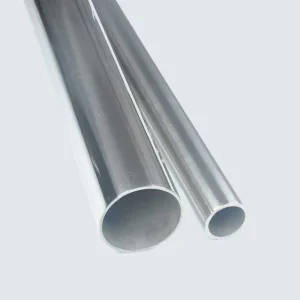
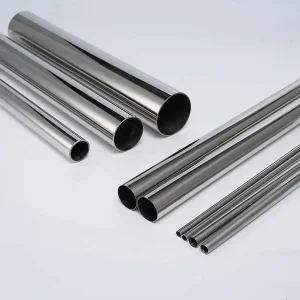
In the modern global industrial landscape, original design manufacturing (ODM) for stainless steel tubing demands a sophisticated balance between structural integrity, corrosion resistance, workability, and cost efficiency. As global supply chains evaluate material selections, AISI 201 austenitic stainless steel tubing has emerged as a premier economic alternative to traditional 300-series alloys, particularly for high-volume structural, decorative, hardware, and appliance applications.
AISI 201 (UNS S20100 / EN 1.4372) is an austenitic chromium-nickel-manganese alloy engineered during nickel-scarcity periods and continuously perfected by modern metallurgy. By substituting a portion of nickel with manganese (5.5%–7.5%) and nitrogen additions (up to 0.25%), AISI 201 achieves high yield strength (typically ≥ 310 MPa, over 40% higher than AISI 304) while preserving impressive ductility and formability.
To optimize ODM production outcomes, factory-level control over chemical heats is paramount. Modern Chinese mills in Foshan categorize AISI 201 raw coils into specialized sub-grades—most notably the J1, J2, J3, J4, and J5 series—tailored for specific mechanical and fabrication requirements:
| Grade / Variant | Chromium (Cr %) | Nickel (Ni %) | Manganese (Mn %) | Copper (Cu %) | Yield Strength (MPa) | Elongation (A5 %) | Primary Application Profile |
|---|---|---|---|---|---|---|---|
| AISI 201 Standard | 16.0 - 18.0 | 3.5 - 5.5 | 5.5 - 7.5 | ≤ 1.0 | ≥ 310 | ≥ 40% | Structural frame, transit rails, heavy hardware |
| 201 J1 (High Cu) | 13.5 - 15.0 | 1.0 - 1.5 | 8.5 - 10.0 | 1.5 - 2.0 | ≥ 275 | ≥ 45% | Deep drawing, tight CNC bending, hydroforming |
| 201 J3 (Mid Cu) | 13.0 - 14.5 | 0.8 - 1.2 | 9.0 - 10.5 | 1.0 - 1.4 | ≥ 290 | ≥ 40% | Ornamental round/square tubes, furniture legs |
| 201 J4 (Low Cu) | 13.0 - 14.0 | 0.6 - 1.0 | 9.2 - 11.0 | 0.6 - 0.9 | ≥ 310 | ≥ 35% | Straight structural posts, displays, shelf racks |
| AISI 304 (Benchmark) | 18.0 - 20.0 | 8.0 - 10.5 | ≤ 2.0 | - | ≥ 205 | ≥ 40% | Severe outdoor marine, chemical processing |
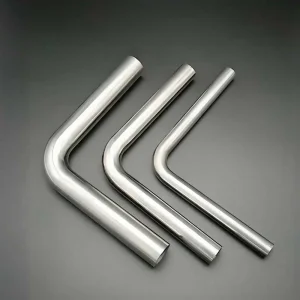
Understanding these micro-alloying modifications enables procurement directors to specify exact metallurgical formulas. For instance, selecting a High-Copper 201 J1 formulation mitigates work-hardening during severe 90° mandrel bending, preventing longitudinal seam cracking during automated CNC tube manipulation.
Combining raw material purchasing power, automated continuous TIG/Laser welding, and world-class surface finishing infrastructure.
Strategic clusters in Foshan provide unprecedented speed-to-market, cost optimizations, and comprehensive fabrication capabilties.
Direct integration with mega-mills (TISCO, POSCO, Tsingshan) ensures stable chemical heats, rapid coil slitting, and complete heat traceability via Mill Test Certificates (MTC EN 10204 3.1).
Automated Eddy Current Defect Detection, inline laser outer-diameter calipers, continuous inner-nitrogen weld seam shielding, and hydraulic flattening/flaring testing on every production batch.
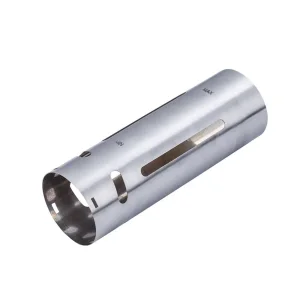
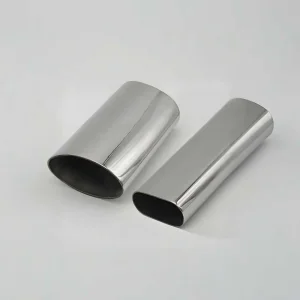
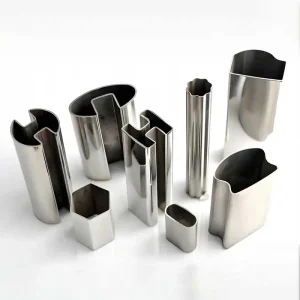
Over 500 existing roll-forming die sets for Special Shaped Tubing (Oval, Elliptical, Triangular, D-Shape, Hexagonal, and Slotted channels) eliminating capital expenditure on new tooling.
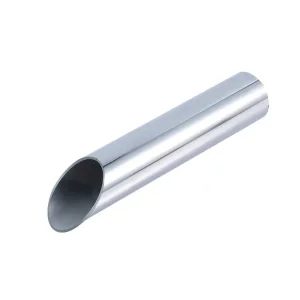
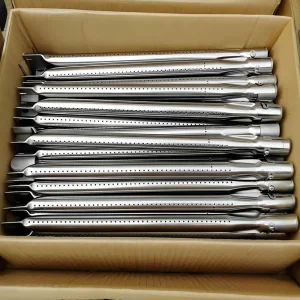
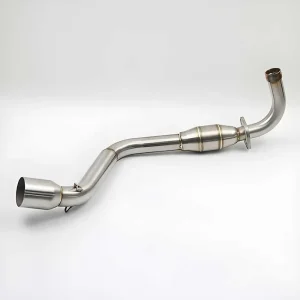
One-stop processing facility featuring high-precision CNC multi-axis tube benders, automated punch presses, fiber laser cutting, end-flaring, necking, and sub-assembly line fitting.
Tailoring AISI 201 tube mechanical properties and surface finishes to meet rigorous localized industry requirements.
For modern interior furniture, wardrobe hanging rails, display racks, and table frames, visual perfection is crucial. AISI 201 tubing offers high surface hardness (HV ≥ 210), resisting scratches and dents far better than soft aluminum. Combined with PVD Titanium Coating (Rose Gold, Brushed Brass, Black Pearl), it offers designer aesthetic options at a fraction of the cost of solid brass.
In low-moisture or indoor bathroom hardware like shower curtain rods, towel racks, and grab bars, specialized 201 J1 tubing functions as an outstanding substrate for direct electroplating (Chrome, Brushed Nickel) or electro-phoretic painting. When properly passivated with nitric-citric baths, weld seams pass 48-72 hour neutral salt spray tests easily.
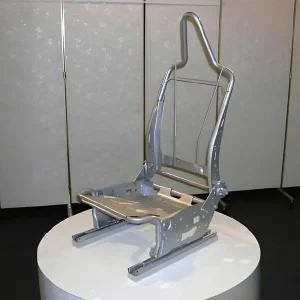
Subway grab poles, bus handrails, and indoor building balustrades require high mechanical yield strength. AISI 201's elevated tensile strength (≥ 620 MPa) allows engineers to specify thinner wall thicknesses (e.g., 0.8mm vs 1.2mm in 304) while maintaining the structural deflection load limit, reducing assembly weight and material costs.
Lean manufacturing flow racks, cleanroom workstations, and warehouse conveyor rollers benefit from AISI 201's high wear resistance. Tight Total Indicator Runout (TIR ≤ 0.3mm) and controlled straightness (≤ 0.8mm/m) ensure smooth rotation in high-speed parcel handling conveyor systems.
When international procurement officers purchase stainless steel tubing from Chinese suppliers, navigating tariff structures (such as HS Code 7306.40 for welded stainless round tubes and HS Code 7306.61 for square/rectangular profiles), freight volumetric efficiency, and quality assurance protocols is vital.
Implementing a comprehensive Supplier Auditing Standard ensures zero-defect container deliveries:
The global stainless steel industry is accelerating toward sustainability and technological automation. Leading ODM manufacturers in Foshan are adopting Electric Arc Furnace (EAF) recycling loops, decreasing carbon emissions per ton of tube produced by up to 45%. Furthermore, machine vision quality inspection systems powered by AI algorithms now scan 100% of polished tube surfaces in real-time, instantly identifying micro-scratches, pinholes, or polishing chatter marks at line speeds exceeding 40 meters per minute.
Delivering tailored wall-thickness profiles, custom geometric contours, and high-performance alloys for heavy industrial usage.
Direct technical answers from our metallurgical quality assurance team regarding AISI 201 stainless steel tubing manufacturing and export compliance.
The primary difference lies in copper (Cu) and manganese (Mn) content. 201 J1 contains higher copper (1.5-2.0%), which significantly lowers the work-hardening rate, making it ideal for severe 90° CNC mandrel bending and hydroforming without seam splitting. J3 is medium-copper (1.0-1.4%) suited for standard ornamental bends, while J4 has low copper (0.6-0.9%) and higher yield strength, designed for straight structural frames where high rigidity is required.
AISI 201 has a lower chromium (13.5-16.5%) and nickel (1.0-3.5%) content compared to 304 (18% Cr, 8% Ni), resulting in a lower Pitting Resistance Equivalent Number (PREN ~17 vs ~19 for 304). 201 performs exceptionally well in dry indoor environments, furniture, indoor handrails, and hardware applications. For direct coastal exposure or chemical immersion, 304 or 316L is recommended. However, applying PVD color coatings or clear lacquers over 201 extends outdoor service life dramatically.
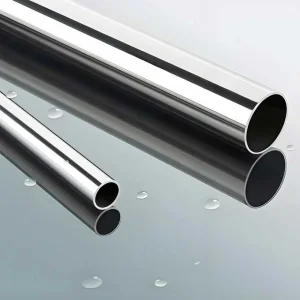
Our Foshan factory provides a comprehensive range of mechanical and chemical surface treatments, including Satin/Hairline (180#, 240#, 320#), Bright Annealed (BA), High-Gloss 600# Mirror Polish, and Physical Vapor Deposition (PVD) titanium plating offering colors such as Rose Gold, Champagne Gold, Black Pearl, Emerald, and Antique Brass.
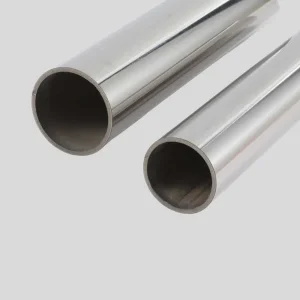
We adhere strictly to ASTM A554 dimensional specifications. For standard ornamental round tubes, outer diameter (OD) tolerance is ±0.10mm. For precision applications (e.g., conveyor shells or hydraulic grab bars), we maintain ±0.05mm OD tolerance. Wall thickness is held to ±8%, straightness to 0.5mm per meter, and squareness of square/rectangular profile corners within ±0.5°.
Every production lot ships with a complete Quality Assurance Dossier, including the official Mill Test Certificate (MTC in accordance with EN 10204 3.1) detailing heat number chemistry, tensile yield testing, elongation percentages, eddy current test verification, and flattening/flaring test reports. Third-party inspections (SGS, BV, TUV) are fully supported prior to container loading.