VertexFlow Tubes stainless steel tube manufacturer logo VertexFlow TubesPrecision SS Tubing
Industry 4.0 ODM Engineering

ODM Auto Exhaust Tubing Manufacturer & Global OEM Suppliers

Precision-Engineered Stainless Steel Exhaust Tubing (409L / 439 / 444 / 304 / 316L) Delivering High-Temperature Corrosion Resistance, Hydroforming Ductility & Global Supply Chain Resilience.

Featured Product Engineering

Precision OEM & ODM Stainless Steel Tubing Portfolio

Explore our top-tier industrial, automotive, and structural tubing options manufactured to exact ASTM standards with tight dimensional tolerances.
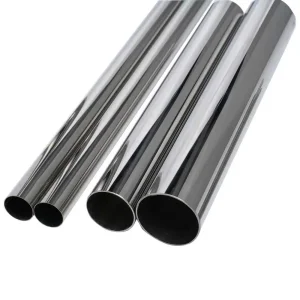
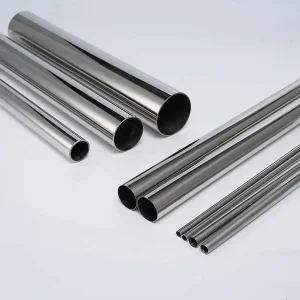
ODM Marine Grade 316L Stainless Steel Tubing Manufacturer, Suppliers

ODM Marine Grade 316L Stainless Steel Tubing

View Specifications
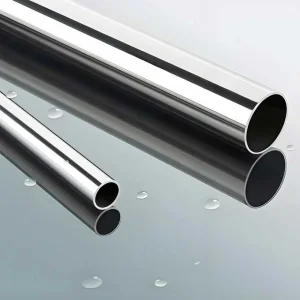
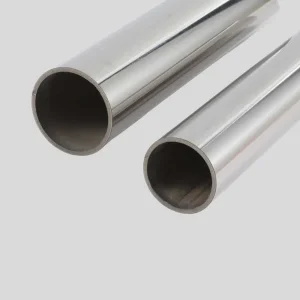
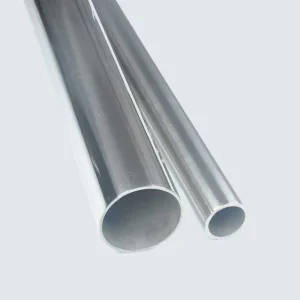
High-Quality ASTM A554 Stainless Steel Round Tubing (Ornamental & Structural)

ASTM A554 Stainless Steel Round Tubing

View Specifications
High-Quality Medical Grade Stainless Steel Tubing

Medical Grade Stainless Steel Tubing

View Specifications
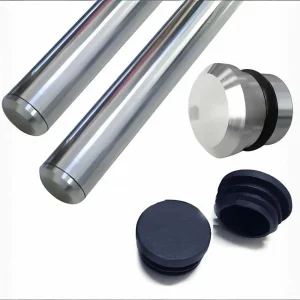
High-Quality Stainless Steel Tubing for Medical Safety Grab Bars

Stainless Steel Safety Grab Bar Tubing

View Specifications
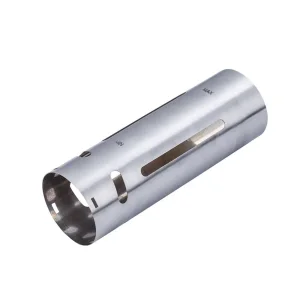
China OEM Stainless Steel Tube Fabrication & CNC Machining

OEM Tube Fabrication & CNC Machining

View Specifications
OEM Stainless Steel Tubing for Home Appliances & Electric Tools

Home Appliances & Electric Tools Tubing

View Specifications
High-Quality Stainless Steel Handrail & Balustrade Tubing

Stainless Steel Handrail & Balustrade Tubing

View Specifications
OEM Stainless Steel Tubing for Conveyor Rollers Manufacturers

OEM Stainless Steel Conveyor Roller Tubing

View Specifications
Deep Engineering Insight

Metallurgical Foundations of Automotive Exhaust Tubing: Ferritic vs. Austenitic Alloys

In the automotive propulsion sector, the exhaust piping infrastructure operates under some of the most aggressive thermo-mechanical and corrosive conditions found in commercial metallurgy. As an experienced ODM Auto Exhaust Tubing Manufacturer, our mill engineering team focuses on optimizing chemical composition, weld seam ductility, and thermal fatigue endurance across specialized stainless steel grades.

Modern internal combustion engines (ICE) and hybrid-electric vehicle (HEV) powertrain layouts demand exhaust tubing capable of maintaining structural integrity at operating temperatures spanning 650°C to 950°C, while simultaneously resisting internal condensate acid corrosion and external de-icing salt exposure.

409L / UNS S40900 (Ferritic)

10.5%–11.75% Cr stabilized with Titanium. Offers a low coefficient of thermal expansion, preventing cyclic thermal stress cracking in catalytic converter shells and exhaust mufflers.

439 / 444 Grades (High-Cr Ferritic)

17%–18% Cr with Ti/Nb dual-stabilization. Exceptional resistance to high-temperature oxidation up to 850°C and stress corrosion cracking in aggressive exhaust environments.

304 / 316L (Austenitic)

18% Cr / 8% Ni (304) and 16% Cr / 10% Ni / 2% Mo (316L). High room-temperature ductility and superior aesthetic surface gloss for exposed performance tips and downpipes.

Information Gain - Weld Seam Integrity: In automotive exhaust hydroforming and tight-radius mandrel bending (1.0D to 1.5D), typical tubing failure originates at the weld bead due to grain coarsening or martensitic phase formation. Our ODM process integrates high-frequency induction welding paired with online seam annealing and internal scarfing, achieving a weld seam flare expansion rate exceed 30% without micro-fracturing (verified via ASTM A1016 testing).

Stainless Alloy Structure Cr Content (%) Max Service Temp (°C) Thermal Expansion (10⁻⁶/K) Primary Exhaust Component Target
AISI 409L (1.4512) Ferritic 10.5 - 11.7 650°C 10.4 Muffler Shells, Tailpipes, Intermediate Pipes
AISI 439 (1.4510) Ferritic 17.0 - 19.0 850°C 10.8 Exhaust Manifolds, Front Pipes, EGR Tubes
AISI 444 (1.4521) Ferritic (Mo) 17.5 - 19.5 920°C 10.5 Turbocharger Downpipes, Hot-End Assemblies
AISI 304 (1.4301) Austenitic 18.0 - 20.0 870°C 17.2 Exhaust Tips, Performance Headers, Flex Joints
AISI 316L (1.4404) Austenitic (Mo) 16.0 - 18.0 870°C 16.5 Marine Wet Exhaust, Highly Corrosive Condensate Sections
43+
High-Precision Tube Mills
12,000
Square Meter Manufacturing Facility
±0.05mm
Precision Wall Tolerance
15 Days
Rapid OEM Custom Delivery
Market Evolution

Global Industry Trends Shaping Automotive Exhaust Tubing Sourcing

The global automotive exhaust system market is undergoing significant technological restructuring driven by stringency in emission regulations (Euro 6d, China 6b, and US EPA Tier 3 standards). Procurement executives and Tier-1 automotive engineering buyers face unprecedented demands to optimize thermal efficiency while reducing overall chassis curb weight.

1. Downsizing Wall Thicknesses via High-Strength Ferritic Alloys

Historically, automotive exhaust systems utilized 1.5mm to 2.0mm wall thickness tubing to compensate for corrosion allowances. Today's light-weighting directives require wall down-gauging to 1.0mm or 1.2mm. To achieve this without premature thermal fatigue, ODM manufacturers utilize stabilized grades like AISI 439 and 444, providing superior yield strength at elevated temperatures compared to standard 409L.

2. Hybrid Electric Vehicle (PHEV/HEV) Exhaust Condensate Challenges

Hybrid powertrains introduce a severe corrosion phenomenon: frequent engine start-stop cycles prevent the exhaust gas line from reaching its full thermal equilibrium. Consequently, water vapor mixed with sulfur dioxide ($SO_2$) and nitrogen oxides ($NO_x$) condenses inside the cold pipe sections, forming aggressive acidic dew points (sulfuric and nitric acid condensate). Custom ODM tubing requires specialized inner-diameter chemical passivation and high-molybdenum or dual-stabilized alloy selection to prevent internal pitting.

3. Hydrogen ICE and Synthetic E-Fuel Exhaust Considerations

As the automotive sector explores zero-carbon combustion through Hydrogen Internal Combustion Engines (H2-ICE), the primary exhaust byproduct shifts to pure water vapor at higher temperatures. Tubing must resist severe moisture oxidation and hydrogen embrittlement across long lifecycle operating hours.

Supply Chain Strategy

Global Enterprise Procurement Requirements & Quality Matrix

International OEMs and Tier-1 exhaust assembly buyers require far more than basic dimensional tube rolling. Sourcing managers implement rigid qualification matrices prior to onboarding an overseas ODM supplier:

100% Non-Destructive Testing

In-line Eddy Current Testing (ECT) per ASTM E426 guarantees zero pinhole defects or micro-fissures along the longitudinal weld seam before mill cutting.

Bend & Hydroform Yield

Strict mechanical elongation limits (>32%) and controlled hardness (≤88 HRB) ensure tube walls stretch uniformly in complex CNC bending tooling.

Full Traceability Certification

Every shipment is accompanied by Mill Test Certificates (MTC) conforming to EN 10204 3.1, detailing heat chemical analysis and mechanical tensile results.

Manufacturing Excellence

China Industry 4.0: Supply Chain Resilience & The Foshan Ecosystem Advantage

Situated in Foshan, China—the global epicenter of stainless steel precision processing—our manufacturing infrastructure leverages deep industrial cluster synergetic advantages to deliver superior efficiency, agility, and cost-effectiveness for overseas procurement managers.

Vertical Integration: Raw Strip Slitting to Automated Finishing

Unlike independent processing shops that outsource slitting or surface treatment, our 12,000m² manufacturing complex maintains end-to-end operational control:

  • Direct Mill Raw Coil Sourcing: Prime mother coils sourced directly from TISCO, POSCO, and Baosteel ensure strictly controlled sulfur (≤0.005%) and phosphorus levels for optimal weld melt pools.
  • Precision High-Speed Slitting: In-house slitting lines produce burr-free strip edges with continuous optical width measurement, preventing edge misalignment during high-frequency welding.
  • Automated Laser-Assisted Welding Mills: Operating 43 advanced production lines equipped with automatic optical tracking, inner gas shielding (argon/nitrogen mixture), and real-time weld seam heat profiling.
  • Integrated Tooling Library: With over 500 existing roll-forming die sets, custom ODM profiles (oval, D-shaped, rectangular, multi-radius) require zero upfront mold tooling fees for standard size iterations.

Supply Chain Resilience Impact: By managing slitting, welding, annealing, polishing, and CNC fabrication under one roofing architecture, we cut production lead times from the industry standard of 35 days down to 15 days, allowing global automotive distributors to operate leaner JIT (Just-In-Time) inventory buffer reserves.

Versatile Engineering Scope

Cross-Sector Industrial & Automotive Application Scenarios

Beyond standard passenger car exhaust systems, our precision-manufactured stainless steel tubing operates across diverse demanding commercial environments:

Automotive OEMs & Aftermarket

Downpipes, catalytic converter shells, resonator bodies, crossover balance tubes, and custom performance exhaust tips engineered for high flow dynamics.

Marine Wet Exhaust Systems

Heavy-walled 316L stainless steel marine risers and engine exhaust collectors designed to resist saltwater splashing, hot gases, and localized pitting.

Heavy Machinery & Generators

409L / 439 exhaust stacks for diesel generators, agricultural tractors, construction equipment, and mining machinery operating under continuous vibration.

Complete Range Capabilities

Specialized Industrial, Structural & Automotive Products

Browse our extended product lines engineered for specialized commercial applications and heavy-duty structural performance.
OEM Stainless Steel Tubing for Industrial Racks & Workstations

Industrial Racks & Workstations Tubing

View Specifications
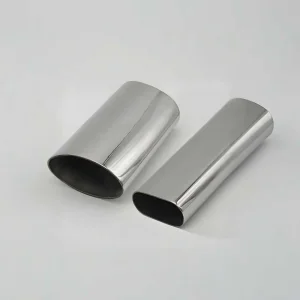
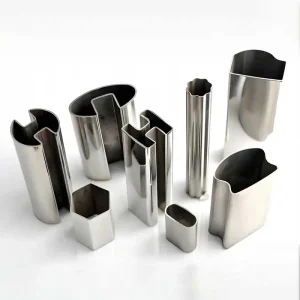
OEM ASTM A554 Stainless Steel Oval & Special Shaped Tubing

ASTM A554 Oval & Special Shaped Tubing

View Specifications
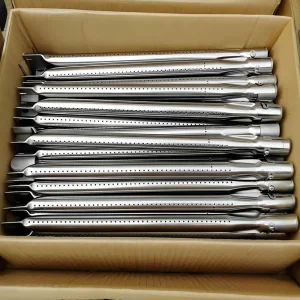
OEM Stainless Steel Gas Grill Burner Tubes

Stainless Steel Gas Grill Burner Tubes

View Specifications
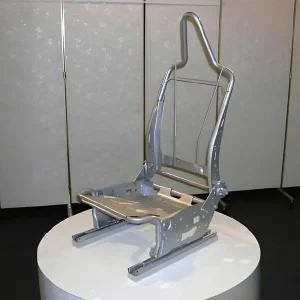
Wholesale Automotive Structural Tubing for Seats & Chassis

Automotive Structural Seat & Chassis Tubing

View Specifications
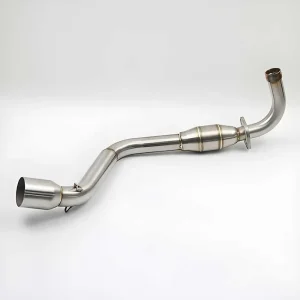
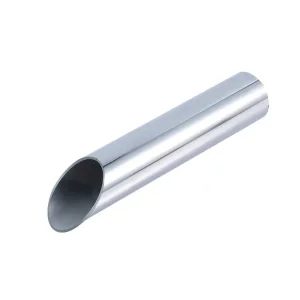
High-Quality Automotive Exhaust & Muffler Tubing (409L / 304)

Automotive Exhaust & Muffler Tubing (409L/304)

View Specifications
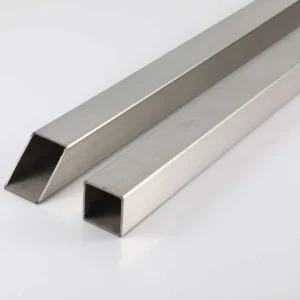
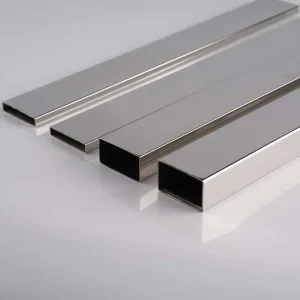
ODM ASTM A554 Stainless Steel Square & Rectangular Tubing

ASTM A554 Square & Rectangular Tubing

View Specifications
High-Quality Stainless Steel Tubing for Home Storage & Organization

Home Storage & Organization Tubing

View Specifications
China Sanitary Grade Precision Stainless Steel Tubing Manufacturers

Sanitary Grade Precision Stainless Steel Tubing

View Specifications
Technical Knowledge Base

Frequently Asked Engineering & Procurement Questions

Direct technical answers from our metallurgists and export engineering directors regarding custom auto exhaust tube manufacturing.

Why is Grade 409L preferred over Grade 304 for standard automotive exhaust systems?
Grade 409L is a ferritic stainless steel containing 10.5%–11.75% chromium stabilized with titanium. It offers two primary engineering advantages for exhaust systems over austenitic Grade 304: first, its coefficient of thermal expansion is substantially lower (~10.4 x 10⁻⁶/K vs 17.2 x 10⁻⁶/K for 304), significantly reducing cyclic thermal fatigue, warpage, and weld cracking during repeated heating and cooling cycles. Second, 409L is immune to chloride stress corrosion cracking. While Grade 304 offers superior cosmetic brightness and higher room-temperature corrosion resistance, 409L provides optimal long-term mechanical reliability at a much lower material cost for unexposed exhaust underbodies.
What dimensional tolerances can your mill maintain for custom ODM exhaust tubing?
Our precision tube mills maintain standard Outside Diameter (OD) tolerances of ±0.10mm, with precision hydroforming runs tightened to ±0.05mm through continuous in-line laser caliper gauging. Wall thickness tolerance is held within ±8%, and straightness is controlled to 1.0mm per meter. Ovality/out-of-roundness is strictly kept within 0.5% of total nominal OD, ensuring seamless insertion into automated robotic CNC bending fixtures and clamping dies.
How do you prevent weld seam splitting during 90° mandrel bending and hydroforming?
Weld seam cracking during tight-radius bending (e.g., 1.0D to 1.5D center line radius) is usually caused by excessive hard weld seam reinforcement or grain coarsening. We prevent this by combining high-frequency induction/plasma welding with online automated seam planishing (flattening the weld bead flush) and full bright annealing under a hydrogen/nitrogen atmosphere. This restores grain structure and ductility in the heat-affected zone (HAZ), allowing flare tests exceeding 30% expansion without cracking.
What quality certification and testing documentation accompany international shipments?
Every production batch ships with a comprehensive Mill Test Certificate (MTC) conforming to EN 10204 3.1. Documentation includes heat chemical composition, tensile strength, yield strength, elongation percentage, Rockwell hardness, flattening test results, flaring expansion data, and 100% in-line Eddy Current NDT test verification per ASTM E426 standards.
What are your Minimum Order Quantity (MOQ) and production lead times for custom ODM profiles?
Our standard Minimum Order Quantity is 500 kg per outer diameter and wall thickness for standard round sizes, and 1,000 kg for custom profiles or special metallurgical grades (such as AISI 444 or 316L). Because our Foshan facility houses over 500 existing roll-forming tooling sets and operates in-house strip slitting, standard order delivery is achieved within 15 working days following sample approval.