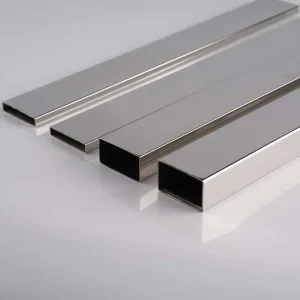
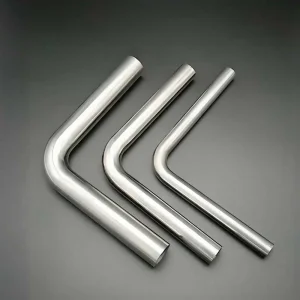
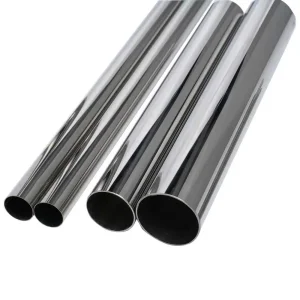
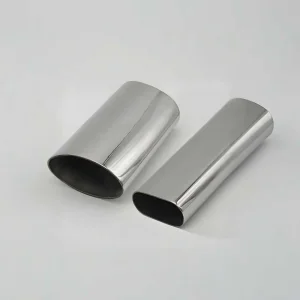
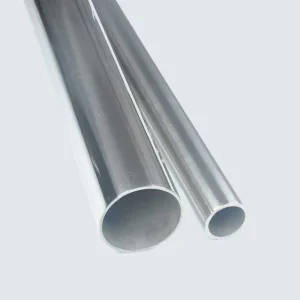
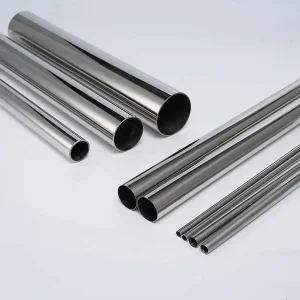
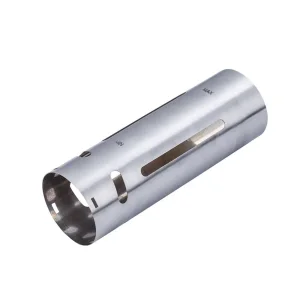
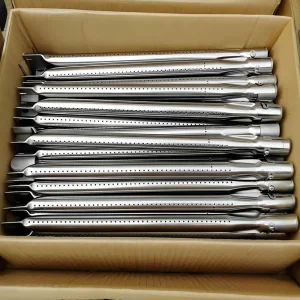
Explore our core engineering catalog designed for structural, automotive, medical, and sanitary applications.
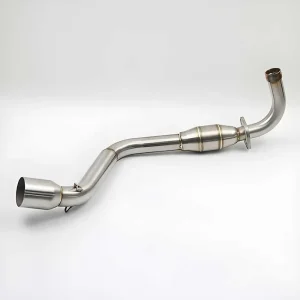
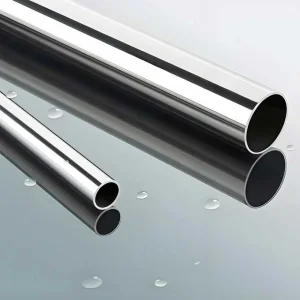
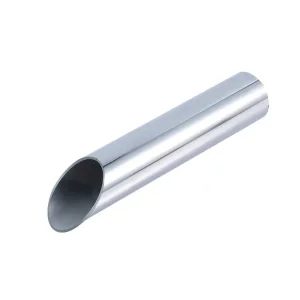
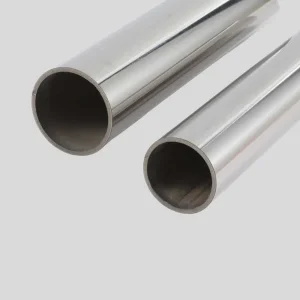
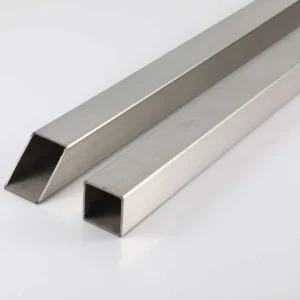
The global automotive exhaust tubing market is undergoing a profound structural transition driven by stringent emissions regulations—such as Euro 6e, China VI-b, and US EPA Tier 4—alongside the rapid evolution of hybrid power trains (PHEVs and EREVs). Modern Original Design Manufacturers (ODM) and Tier-1 automotive exhaust suppliers are no longer merely bending simple steel pipes. Today, they are tasked with providing highly engineered thermal management channels capable of surviving high-frequency thermal cycling, extreme corrosive gas dynamics, and severe mechanical vibration over a typical vehicle lifespan exceeding 150,000 miles.
In internal combustion engines (ICE) and hybrid vehicle setups, the exhaust tract operates under harsh conditions. Exhaust gas temperatures downstream of the turbocharger frequently spike between 700°C and 950°C. Furthermore, engine cold starts generate acidic condensate containing corrosive nitric, sulfuric, and organic acid residues. Concurrently, global automotive OEMs demand aggressive mass reduction (lightweighting) to hit fleet-wide fuel efficiency and range targets without compromising fatigue strength or structural integrity.
Technical Insight: As OEM engine calibrations shift toward leaner burn ratios and higher turbocharger boost pressures, exhaust gas thermal profiles increase rapidly. Choosing the proper ODM tubing partner requires evaluating not just cold yield strength, but high-temperature cyclic oxidation performance, intergranular corrosion limits, and hydroforming weld seam ductility.
Advanced ferritic stainless steel grades (409L, 439, 444) engineered to prevent oxidation scaling and thermal distortion under severe 900°C+ thermal shock cycles.
Low-carbon, titanium/niobium dual-stabilized alloys designed to eliminate chromium carbide precipitation at heat-affected weld zones (HAZ).
Tightly controlled grain sizing and elongation (>30%) enabling complex 3D non-circular expansion profiles without micro-fracturing during mandrel bending.
Selecting the optimal stainless steel alloy grade is a critical trade-off between bill-of-materials (BOM) cost, oxidation kinetics, formability, and corrosion lifetime. As a dedicated ODM automotive exhaust tubing manufacturer, VertexFlow operates under rigorous metallurgical standards to match alloy chemistry directly to specific exhaust tract zones: Hot-End (manifolds, downpipes, turbo adapters), Mid-End (DPF/SCR catalyst housings, flex pipes), and Cold-End (mufflers, resonators, tailpipes).
| Steel Grade | Microstructure | Key Stabilizers | Max Service Temp | Corrosion Resistance | Primary Exhaust Application |
|---|---|---|---|---|---|
| AISI 409L / 1.4512 | Ferritic | Ti (Titanium) | 650°C - 700°C | Moderate (Condensate) | Mufflers, Cold-End Pipes, Catalytic Converters |
| AISI 439 / 1.4510 | Ferritic | Ti + Al | 850°C - 880°C | High (Wet Oxidation) | Exhaust Manifolds, Front Pipes, EGR Tubes |
| AISI 444 / 1.4521 | Ferritic | Ti + Nb + 2% Mo | 920°C - 950°C | Superior (Pitting & Chloride) | High-Performance Downpipes, Turbo Runnings |
| AISI 304 / 1.4301 | Austenitic | 18% Cr / 8% Ni | 800°C | Excellent (Atmospheric) | Decorative Tailpipes, Structural Brackets |
| AISI 316L / 1.4404 | Austenitic | 16% Cr / 10% Ni / 2% Mo | 850°C | Extreme (Marine/Salt) | Premium Aftermarket Systems, Heavy Duty SCR |
Unstabilized stainless steels suffer from sensitization when subjected to temperatures between 450°C and 850°C. During welding or high-temperature operation, chromium atoms combine with carbon to form chromium carbides ($Cr_{23}C_6$) along grain boundaries. This depletes the adjacent matrix of elemental chromium below the 10.5% threshold required to maintain a passive protective oxide layer ($Cr_2O_3$), leading to rapid intergranular corrosion.
In our 409L and 439 ODM automotive tubing production, we utilize titanium ($Ti$) and niobium ($Nb$) stabilization. Titanium preferentially reacts with carbon and nitrogen at elevated temperatures to form ultra-stable titanium carbonitrides ($Ti(C,N)$). This prevents chromium depletion, preserves ductile grain boundaries, and guarantees optimal weld-seam performance during tight-radius CNC mandrel bending and hydroforming expanders.
VertexFlow operates 43 high-frequency induction (HFI) and TIG/Laser welding lines specifically tuned for thin-wall automotive tubing. Achieving OEM-grade consistency demands end-to-end control from precision strip slitting through online eddy-current flaw detection to final automated end-forming.
Our HFI weld mills operate at frequencies up to 400 kHz, producing an ultra-narrow heat-affected zone (HAZ) with forge-weld seam integrity. In-line seam planishing removes internal and external weld beads, ensuring a smooth interior bore with zero flow turbulence.
During the fusion process, 99.999% pure argon/nitrogen mix purging is applied inside the tube bore. This eliminates interior oxidation ("sugar coating"), which can otherwise break off during engine operation and ruin sensitive downstream turbochargers or catalytic converter substrates.
Every batch of automotive exhaust tubing undergoes non-destructive and destructive testing to meet stringent IATF 16949 compliance standard:
Automotive supply chains operate on lean, Just-In-Time (JIT) manufacturing principles. As an established ODM supplier headquartered in Foshan's premier industrial ecosystem, VertexFlow bridges international engineering requirements with rapid, localized fabrication capability.
Fabricated using thick-wall 439 or 444 ferritic tubing capable of enduring exhaust pulse pressures and peak thermal shocks directly from the cylinder head.
Precision-drawn 409L and 304 canned tubing with minimal out-of-roundness (ovality < 0.15 mm) to ensure airtight mounting of fragile ceramic honeycomb substrates.
CNC burr-free perforated tubes engineered for optimal sound attenuation and backpressure management in passenger car and heavy truck mufflers.
Our international engineering desk works directly with client CAD models (STEP, IGES, SolidWorks) to provide Design for Manufacturability (DFM) feedback. By simulating tube bending die radii and expansion strain limits early in the design cycle, we help Tier-1 clients eliminate costly tooling revisions and shorten production ramp-up timelines by up to 40%.
The next decade of automotive power train development requires novel exhaust materials and manufacturing approaches. As hybrid powertrains demand frequent engine start-stop cycles, condensation accumulation within the exhaust line will drastically increase. Furthermore, hydrogen internal combustion engines (H2-ICE) produce pure water vapor as a byproduct, creating an extremely humid, high-temperature exhaust atmosphere.
Strategic Outlook: VertexFlow's R&D roadmap focuses on developing ultra-thin wall (0.8mm - 1.0mm) high-strength stabilized ferritic grades, alongside surface-passivated internal coatings designed specifically to counteract water-vapour corrosion in Next-Gen Hydrogen ICE powertrains.
Direct answers from our engineering and metallurgy team regarding automotive exhaust tube sourcing.
From architectural profiles to marine-grade 316L and secondary CNC tube machining services.