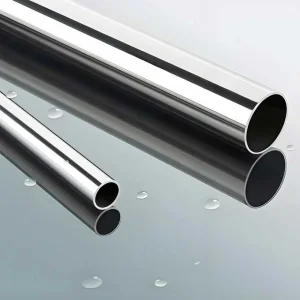
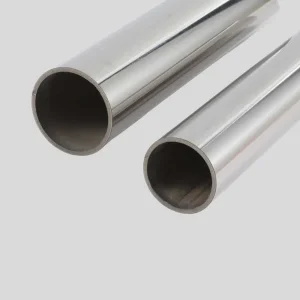
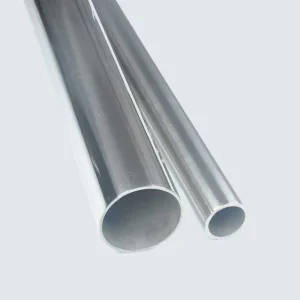
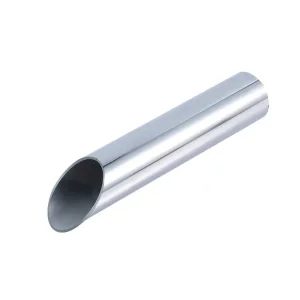
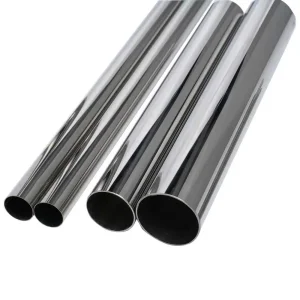
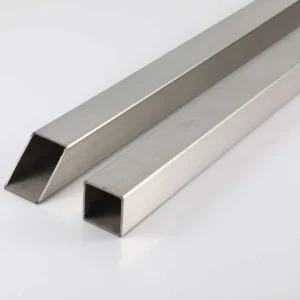
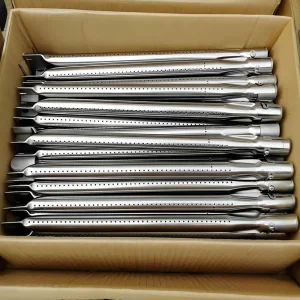
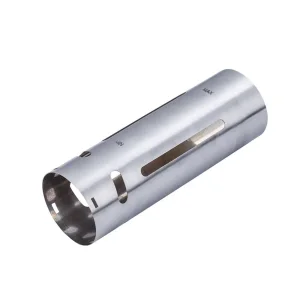
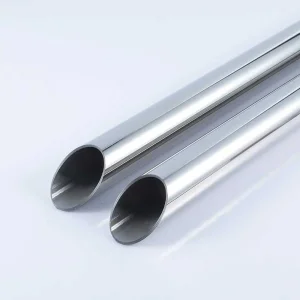
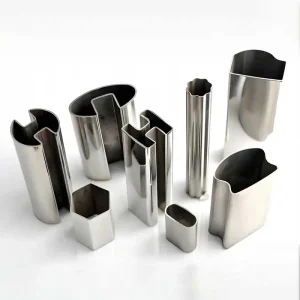
Engineered stainless steel structural tubing, customized profiles, and architectural hardware substrates manufactured to rigorous ASTM A554 and EN 10217-7 specifications.
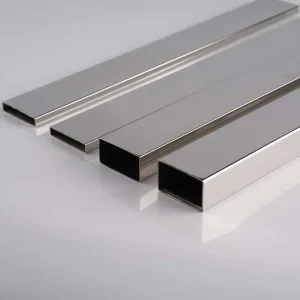
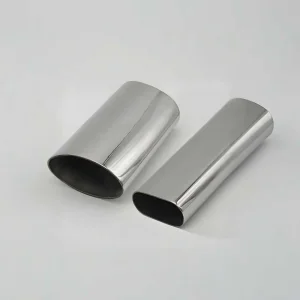
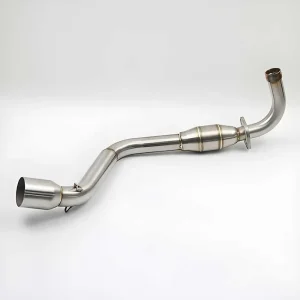
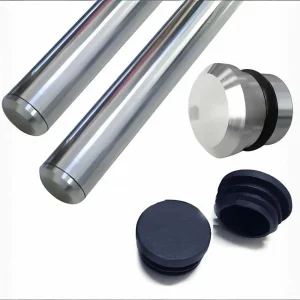
Understanding the macro demand drivers, structural metal engineering criteria, and global procurement shifts across architectural, hospitality, and corporate furniture sectors.
In the global commercial furniture and architectural hardware ecosystem, ODM (Original Design Manufacturer) brushed steel table bases represent the critical structural nexus connecting aesthetic refinement, mechanical stability, and environmental longevity. As hospitality chains, commercial workspace developers, and high-end residential brands scale worldwide, the strategic sourcing of brushed stainless steel bases has evolved from simple hardware procurement into a complex engineering endeavor requiring deep metallurgical knowledge, precision automated fabrication, and robust supply chain integration.
Brushed steel—primarily derived from austenitic stainless steel alloys such as AISI 304 (EN 1.4301) and marine-grade AISI 316L (EN 1.4404)—is universally specified by interior architects and commercial furniture procurement directors due to its exceptional resistance to physical wear, chemical oxidation, and high-impact structural loads. Unlike powder-coated mild steel or electroplated zinc die-castings, a authentic brushed satin stainless steel finish (typically calibrated to 240-grit to 320-grit grain orientation with surface roughness Ra values between 0.2 μm and 0.4 μm) provides a self-healing passive chromium oxide ($Cr_2O_3$) film. This micro-layer ensures that minor surface scuffs can be remediated without compromising the substrate's structural integrity or aesthetic brilliance.
Global commercial real estate growth in key sectors—including Quick-Service Restaurants (QSR), luxury boutique hotels, corporate headquarters, and healthcare facilities—demands table support structures capable of bearing heavy tabletops made of sintered stone, natural granite, solid hardwood, and cast glass. A typical commercial-grade ODM brushed steel base must safely sustain static vertical loads exceeding 250 kg while maintaining strict center-of-gravity stabilization under dynamic cantilever loads. Consequently, leading ODM manufacturers in premier stainless steel manufacturing hubs (such as Foshan, China) have deployed state-of-the-art multi-axis CNC laser cutting, robotic TIG/MIG welding, and automated surface graining systems to satisfy stringently audited international standards.
Rigorous breakdown of stainless steel alloy grades, mechanical tension parameters, chemical compositions, and surface finishing mechanics for commercial ODM table base production.
Selecting the correct stainless steel grade is fundamental to avoiding premature structural fatigue, galvanic corrosion, or aesthetic degradation in commercial service environments. OEM/ODM buyers must evaluate material specs based on environmental exposure, coastal proximity, exposure to sanitizing chemicals, and budget allocations.
| Material Grade | Chemical Composition (Key Elements) | Yield Strength ($R_{p0.2}$) | Tensile Strength ($R_m$) | Corrosion Resistance & Ideal Service Environment |
|---|---|---|---|---|
| AISI 201 (High Copper) | 16-18% Cr, 1-1.5% Ni, 5.5-7.5% Mn, 1-2% Cu | ≥ 275 MPa | ≥ 520 MPa | Indoor dry commercial spaces, cost-driven furniture. Low resistance to airborne chlorides. |
| AISI 304 (Standard Stainless) | 18-20% Cr, 8-10.5% Ni, ≤ 2% Mn | ≥ 205 MPa | ≥ 515 MPa | High-traffic indoor hospitality, QSR dining, office boardrooms. Standard anti-corrosion layer. |
| AISI 316L (Marine Grade) | 16-18% Cr, 10-14% Ni, 2-3% Mo, Low C | ≥ 220 MPa | ≥ 520 MPa | Outdoor coastal resorts, rooftop bars, cruise ships, spa environments. High chloride resistance. |
| 409L / Ferritic Stainless | 10.5-11.7% Cr, Low Ni/C, Ti Stabilized | ≥ 175 MPa | ≥ 380 MPa | Internal structural substructures, heavy weighted ballast plates under decorative brushed sleeves. |
Achieving a consistent brushed steel aesthetic requires linear belt grinding using aluminum oxide or silicon carbide abrasive belts. The grit progression typically starts at 120-grit for mill scale removal, advancing through 180-grit to 240-grit, and finishing at 320-grit for a satin sheen. Consistent directional grain orientation prevents light reflection hot spots and conceals fingerprint oils.
Thermal oxidation during welding alters the localized chemical structure, depleting chromium in the heat-affected zone (HAZ). Advanced factories utilize full-immersion nitric-hydrofluoric acid pickling followed by citric acid passivation to completely restore the $Cr_2O_3$ passive layer, guaranteeing 500+ hours of ASTM B117 salt spray compliance.
For high-end interior architecture, brushed steel table bases undergo Physical Vapor Deposition (PVD) titanium ion plating. This vacuum process deposits a micro-thin (0.3–0.5 μm) titanium nitride coating over the brushed grain, delivering rich metallic hues such as Rose Gold, Champagne Gold, Brushed Brass, and Gunmetal Black while doubling surface hardness.
From raw tube slitting to CNC 5-axis laser cutting, robotic welding, weighted base ballast integration, and automated quality control protocols.
An engineering-grade ODM brushed steel table base comprises three core sub-assemblies: the top mounting plate (spider), the vertical column (single pedestal, twin column, or quad frame), and the ground ballast floor plate. Manufacturing perfection demands seamlessly orchestrated fabrication stages:
Raw stainless steel coils from tier-1 steel mills (such as Posco, Baosteel, and TISCO) are slit to exact dimensions. Tubes are formed via high-frequency plasma welding under continuous interior nitrogen ($N_2$) shielding to eliminate internal seam oxidation. Multi-axis CNC fiber lasers cut bolt patterns, wire management grommets, and mitre joints with a tight dimensional tolerance of ±0.05 mm.
To ensure anti-topple stability without incurring excessive shipping weight, modern ODM table bases utilize a dual-layer composite system. A thick structural carbon steel or heavy iron ballast core (8 mm to 15 mm thickness) provides lower center-of-gravity ballast. This is encapsulated within a 1.2 mm to 2.0 mm thick brushed stainless steel cover shell, secured by anti-vibration rubber gaskets and adjustable levelers.
Columns are joined to floor mounting flanges using six-axis robotic TIG welding stations. Robotic execution delivers uniform weld bead geometry and eliminates thermal distortion along the base cylinder. Post-weld planishing grinds the seam flush, followed by automated four-head belt sanders that recreate an uninterrupted, seamless directional brushed grain pattern.
Addressing critical supply chain bottlenecks, structural flexure, shipment volume optimization, and field maintenance vulnerabilities in commercial furniture projects.
Sintered stone, quartz, and heavy concrete tops create extreme cantilever forces. Standard thin-walled columns flex under dynamic loading, causing table wobble and potential weld cracking.
Offshore resort and outdoor dining installations using standard 201 or 304 brushed steel experience surface tea-staining within months due to ocean salt air and harsh cleaning acids.
Fully welded table bases transport substantial empty volume ("shipping air"), resulting in exorbitant international ocean freight cost per unit during sea transport.
Tailoring structural metal engineering and brushed finishes to specific architectural sectors and operating conditions globally.
High turnover environments require heavy flat-disc base plates equipped with non-marking, chemical-resistant polyurethane floor glides. Brushed 304 stainless steel resists impact from vacuum cleaners, floor scrubbers, and harsh alkaline floor detergents used during night shifts.
Open-air beachfront dining and luxury hotel terraces require marine-grade 316L tubular and sheet fabrications. Electropolished brushed finishes eliminate microscopic crevices where salt crystals aggregate, preserving pristine visual standards under aggressive tropical weathering.
Corporate office projects demand integrated wire-management conduits inside brushed steel table columns. Micro-machined internal raceways house power, data, and HDMI cabling, while non-magnetic 304/316 alloys prevent electromagnetic interference near sensitive laboratory apparatus.
Pioneering innovations in automated furniture fabrication, smart height-adjustment mechanisms, green metallurgy, and AI-driven quality inspection.
As the commercial furniture manufacturing landscape undergoes rapid digital transformation, ODM brushed steel base producers are pioneering several key technological advances expected to reshape architectural metal supply chains over the coming decade:
Next-generation commercial workspaces require sit-to-stand ergonomics without sacrificing architectural elegance. Advanced factories are integrating ultra-quiet dual-motor telescopic linear actuators directly inside brushed stainless steel square and round pedestal columns, achieving seamless height transition (620 mm to 1280 mm) under 100 kg payloads.
Traditional brushed steel susceptible to smudges is being upgraded with sub-micron oleophobic ceramic nano-coatings applied via automated sol-gel dip processing. These transparent coatings cure to 9H pencil hardness, rendering brushed surfaces completely repellant to oil smudges, water spots, and household chemical etching without altering metallic tactile feel.
Leading Foshan production lines have integrated automated optical inspection (AOI) systems powered by neural networks. High-speed camera arrays scan brushed stainless steel tubes during extrusion and graining, automatically detecting surface scratches, pinholes, or grain direction deviations down to 10 microns, driving zero-defect quality control.
Expert engineering answers addressing material verification, structural stability formulas, custom tooling lead times, and global shipping standards.
Specialized industrial tubing, healthcare grab bar solutions, structural conveyor shells, and high-performance structural fittings.