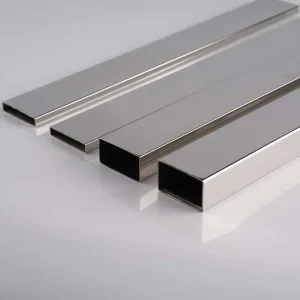
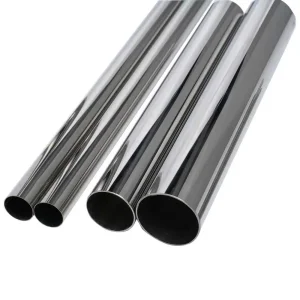
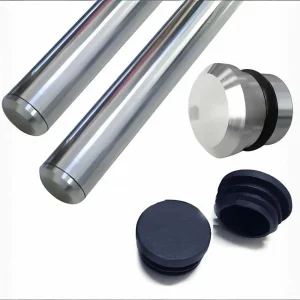
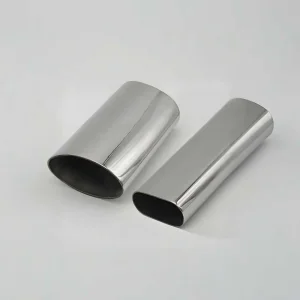
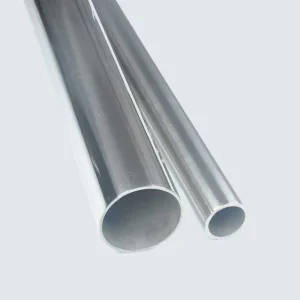
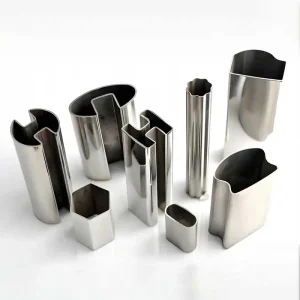
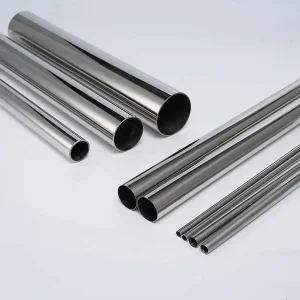
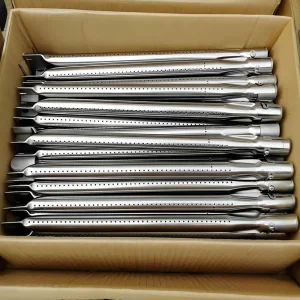
Explore our core engineering catalog engineered for industrial, decorative, medical, and high-thermal applications.
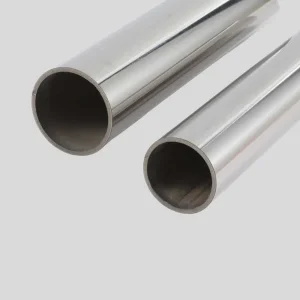
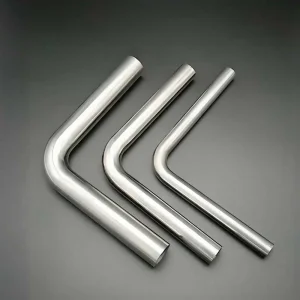
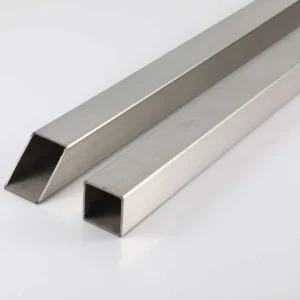
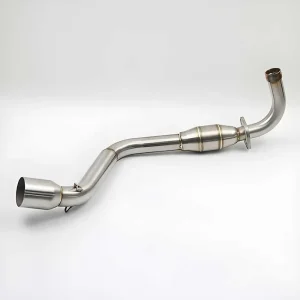
A technical evaluation of thermal fluid dynamics, alloy metallurgy, and ODM contract manufacturing shifts across global barbecue and commercial heating markets.
The global outdoor cooking and commercial catering equipment market has undergone a dramatic transformation over the past decade. No longer constrained to simple stamped steel components, modern commercial gas grills, high-performance outdoor kitchen islands, and industrial heating assemblies demand extreme thermal endurance, continuous flame uniformity, and rigorous structural integrity under cyclic thermal shock. At the heart of every high-efficiency gas combustion system lies the gas grill burner tube—a component whose micro-geometry, port alignment, venturi air-fuel mixing ratio, and metallurgical grain structure dictate both cooking performance and operational safety.
As Original Design Manufacturers (ODM) and tier-1 suppliers, advanced China-based metal tube fabricators have elevated the burner tube from a basic commodity to a hyper-engineered precision component. Modern ODM gas grill burner tubes must balance complex fluid dynamics—maintaining uniform static pressure across the entire burner length—with aggressive resistance to chloride-induced stress corrosion cracking (SCC), oxidation at elevated temperatures (up to 800°C), and organic acid degradation originating from food drippings, marinades, and combustion byproducts.
Information Gain Insight: Standard off-the-shelf burner tubes frequently experience premature localized flame drop-off and seam rupture due to uneven wall thickness and un-passivated internal weld seams. ODM engineering leverages 3D Computational Fluid Dynamics (CFD) modeling coupled with automated laser micro-porting to guarantee identical BTU output per linear inch, eliminating cold spots across expansive cooking surfaces.
Understanding the interplay between stainless steel grain structure, thermal expansion, and venturi-driven air-gas mixing.
Ideal for premium outdoor and marine gas grills. Containing 18% Chromium and 8% Nickel, AISI 304 delivers exceptional ductility for deep-drawn venturi necking. For high-chloride oceanfront environments, 316L adds 2-3% Molybdenum to prevent pitting oxidation and intergranular corrosion after thousands of thermal cycles.
Engineered explicitly for direct combustion zones where operating temperatures routinely exceed 650°C. Featuring a lower coefficient of thermal expansion than austenitic alloys, ferritic 439/443 grades prevent burner tube warping, sagging, and fatigue failure caused by rapid cooling cycles in commercial catering units.
The primary gas orifice velocity creates a pressure drop (Bernoulli principle) that draws ambient air through an adjustable air shutter. Precision ODM tooling controls internal neck taper, ensuring homogeneous gas-to-air stoichiometric ratios prior to reaching the primary discharge ports.
| Alloy Grade | Microstructure | Max Temp (°C) | Corrosion Resistance | Thermal Expansion | Primary Application Scenario |
|---|---|---|---|---|---|
| AISI 304 | Austenitic | 870°C | High (General Outdoor) | 17.2 µm/m·K | Residential BBQ Grills, Built-in Patio Kitchens |
| AISI 316L | Austenitic (Low C) | 920°C | Superior (Marine/Salt Air) | 16.5 µm/m·K | Yacht Built-ins, Coastal Resort Commercial Grills |
| AISI 439 / 443 | Ferritic | 750°C | Moderate to High | 10.4 µm/m·K | High-BTU Commercial Infrared & Standard Burners |
| AISI 409L | Ferritic | 650°C | Standard | 11.0 µm/m·K | Value-Line Residential Grills & Replacement Tubes |
Custom-engineered burn solutions adapted to distinct operational environments, gas types, and global safety standards.
High-end residential outdoor kitchens demand ultra-quiet combustion, high BTU output (15,000 to 25,000 BTU per burner), and flawless visual appeal. ODM burner tubes for this segment utilize 304 or 316L stainless steel with a high-luster polished finish, integrated crossover tubes for reliable multi-burner ignition, and micro-punched port arrays that eliminate burner whistle during high-flow Liquid Propane (LP) or Natural Gas (NG) operation.
Commercial broilers, charbroilers, and griddles operate up to 16 hours daily. ODM solutions employ thick-wall (1.2mm - 1.5mm) ferritic 443 tubing with plasma-welded end caps. These tubes are engineered to withstand continuous radiant heat reflections from lava rocks or ceramic briquettes without structural deformation, retaining port geometry despite heavy carbon deposition.
Marine environments represent the ultimate test for corrosion resistance. Salt spray, high wind speeds, and constant humidity cause fast oxidation in lower-grade alloys. Our marine ODM burner tubes incorporate fully passivated 316L stainless steel tubing, continuous inert gas (Nitrogen/Argon) internal purging during seam welding, and wind-resistant port shrouding to prevent flame blow-out on open decks.
Beyond food service, specialized straight-tube, H-style, and oval ODM burners are deployed in agricultural drying units, industrial space heaters, and smokehouse smoke generators. These systems rely on custom port positioning (drilled at 30° or 45° angles) to optimize radiant heat transfer while maintaining low Carbon Monoxide (CO) emissions under strict environmental mandates.
Pioneering advancements in automated laser porting, zero-emission hydrogen combustion, and intelligent thermal sensing.
Transitioning from traditional mechanical gang-punching to 5-axis fiber laser ablation. Micro-laser porting eliminates internal burrs, ensures sub-millimeter hole pitch accuracy, and prevents stress micro-cracks along the heat-affected zone (HAZ), expanding burner service life by over 40%.
As global energy policies shift toward green hydrogen blends (H2/NG up to 20%), ODM burner tube designs are evolving. Because hydrogen possesses a much higher flame speed and lower flashpoint, burner geometries require specialized flame arrestors, smaller port dimensions, and ceramic thermal barrier coatings to prevent flashback and overheating.
Future commercial grilling systems are incorporating smart ODM burner assemblies equipped with embedded thermocouple brackets and flame ionization sensors. These components deliver real-time flame presence verification, automated gas valve modulation, and predictive maintenance alerts for commercial kitchen operators.
Why the Foshan stainless steel cluster delivers unparalleled lead times, cost efficiency, and scale for international OEM/ODM buyers.
In global contract manufacturing, supply chain agility and raw material access dictate market competitiveness. Situated in Foshan, Guangdong—the world’s densest stainless steel manufacturing hub—our manufacturing matrix leverages an end-to-end industrial ecosystem that spans raw coil slitting, precision tube rolling, automated laser cutting, CNC bending, surface polishing, and in-house testing laboratories within a 15-kilometer radius.
Direct sourcing agreements with tier-1 steel mills (TISCO, POSCO, Baosteel) guarantee prime-grade coil availability. In-house slitting lines enable instant adjustment of strip width tolerances, reducing material wastage and protecting clients against global metal price fluctuations.
With access to over 500 sets of existing roll-forming dies, venturi necking tooling, and custom port punching rigs, prototype samples can be engineered, flow-tested, and dispatched within 72 hours. Full containerized production cycles ship within 15 calendar days.
Operating 43 automated precision tube mills in parallel yields over 900 metric tons of finished stainless steel tubing per month. Automated optical sorting, robotic seam tracking, and continuous eddy-current detection ensure zero defective units enter final packaging.
Meeting and exceeding rigorous safety, sanitary, and structural requirements for international gas appliances.
Gas burner components operate under strict international life-safety standards. Our ODM design verification protocols align directly with CSA 1.6 / ANSI Z21.58 for outdoor cooking appliances, EN 498 for LPG appliances, and UL 213 for commercial cooking equipment. Each burner design undergoes rigorous flame stability testing, flash-back limit evaluation, and wind-resistance audit prior to mass mold release.
Because gas grill burner tubes operate directly below food cooking grids, volatile chemical off-gassing and heavy metal contamination are strictly prohibited. All raw materials used are certified compliant with European REACH and RoHS environmental directives. Surface treatments exclude harmful hexavalent chromium compounds, utilizing eco-friendly citric acid passivation to guarantee food-safe hygiene (FDA & German LFGB standards).
Detailed engineering responses to common queries encountered during ODM gas burner tube procurement and design.
Explore our complete manufacturing portfolio covering square, oval, structural, marine, and gas grill components.