Directly integrated from our Foshan automated mill running 43 production lines. Explore our structural, decorative, and industrial OEM/ODM tubing capabilities.
Understanding the Physics of Physical Vapor Deposition (PVD) Titanium Gold Coating, Stainless Steel Substrate Metallurgy, and Modern B2B Procurement Standards.
In high-end architectural engineering, commercial interior design, luxury sanitaryware, and premium furniture manufacturing, ODM Gold Stainless Steel Pipes represent the pinnacle of combined structural durability and aesthetic brilliance. Traditional electroplating methods, which historically dominated the decorative metal industry, are increasingly subject to global environmental bans due to toxic hexavalent chromium byproducts and severe long-term flaking risks. Modern international procurement has shifted decisively toward Physical Vapor Deposition (PVD) Vacuum Ion Plating Technology.
As a leading China-based ODM/OEM stainless steel tube manufacturer running 43 automated mill lines, our facility integrates raw coil slitting, high-frequency plasma argon-shielded welding, online infrared seam defect detection, and state-of-the-art PVD titanium gold coating chambers under a unified 12,000 m² industrial facility in Shishan Town, Foshan. This comprehensive engineering guide explores the technical parameters, manufacturing advantages, global application matrix, and supply chain strategies required to source high-grade gold stainless steel tubing.
| Alloy Grade | UNS / EN Standard | Chemical Composition Key Elements | PVD Gold Adhesion Level | Corrosion Resistance & Best Application |
|---|---|---|---|---|
| AISI 201 (High Cu) | UNS S20100 / 1.4372 | 16-18% Cr, 1-1.5% Ni, 3.5-5.5% Mn, Cu ≥ 1.5% | Excellent (High Ductility) | Indoor furniture, decorative trim, store fixtures. High cost-efficiency for dry interior environments. |
| AISI 304 | UNS S30400 / 1.4301 | 18-20% Cr, 8-10.5% Ni, C ≤ 0.07% | Superior (Optimal Standard) | Architectural railings, elevator cabs, hotel lobbies, home appliances. Outstanding atmospheric resistance. |
| AISI 304L | UNS S30403 / 1.4306 | 18-20% Cr, 8-12% Ni, C ≤ 0.03% | Superior (Weld-Grade) | Heavy-weld structural assemblies, pharmaceutical cleanroom frames. Eliminates carbide precipitation. |
| AISI 316 / 316L | UNS S31603 / 1.4404 | 16-18% Cr, 10-14% Ni, 2-3% Mo | Maximum Chemical Bond | Marine handrails, coastal architectural facades, outdoor luxury spas. Resists pitting against chlorides. |
Why global OEMs, architectural developers, and tier-1 distributors partner with Foshan-based ODM mills for specialized Titanium Gold PVD stainless steel tubing.
Located in Foshan, Guangdong—the world's densest stainless steel processing hub—our ODM operation leverages immediate upstream access to prime stainless coil stock from top-tier mills (TISCO, POSCO, Baosteel). We eliminate third-party logistics overheads and secure preferential raw material pricing.
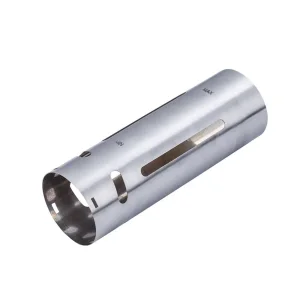
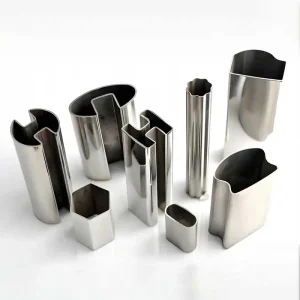
Developing custom special-shaped profiles (flat oval, elliptical, triangular, slotted D-shape) traditionally incurs immense tooling costs. Our ODM facility maintains an inventory of over 500 roll-forming die sets, enabling clients to initiate custom production in 15 days with zero initial tooling fees for standard custom profiles.
Our 43 roll-forming lines feature continuous inner nitrogen-gas purging during plasma argon welding. Real-time eddy-current testing and online laser dimensional sensors ensure zero oxidation within the tube bore, maintaining strict outside diameter tolerances of ±0.05 mm for high-precision CNC bending.
Key technological transformations driving the transition from wet electroplating to green PVD vacuum deposition and multi-tone gold metallic finishes.
Environmental regulations across North America and Western Europe have placed stringent penalties on traditional brass/copper chemical electroplating. PVD titanium vacuum deposition emits zero chemical effluents, produces zero hazardous sludge, and forms a molecular atomic bond with the stainless steel substrate, preventing peeling, blistering, and flaking.
Modern architectural design demands exact color temperature matching. Beyond traditional yellow gold, ODM capabilities now produce Champagne Gold, Rose Gold, Ti-Gold, Light Brass Gold, Bronze Gold, and Matte Sandblasted Gold. By adjusting nitrogen and acetylene gas ratios inside the vacuum sputtering chamber, exact color coordinates (CIE L*a*b*) are locked into mass production.
A primary historical challenge of polished gold metal surfaces was fingerprint staining and smudging in high-traffic public installations. The integration of hydrophobic, oleophobic Nano-Ceramic clear coats (thickness 1-2 µm) applied post-PVD provides hydrophobic lotus-effect cleanability, reducing commercial facility maintenance cycles by up to 70%.
From 7-star hospitality projects in Dubai to high-end residential luxury furniture in Milan, explore localized engineering solutions.
Used for grand hotel entrance glass canopy posts, balustrade handrails, room dividers, and decorative screen frames. ASTM A554 304/316 Gold PVD square and round tubing provides structural yield strength while providing an ultra-luxurious visual appearance resistant to heavy guest handling.
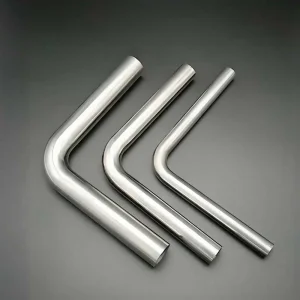
Gold PVD oval, D-shape, and rectangular stainless tubing forms the structural chassis for designer sofas, dining table bases, clothing racks, and boutique jewelry display cases. High-copper 201 and 304 grades allow 90-degree precision CNC bending without micro-cracking the gold surface layer.
Shower columns, towel warmers, faucet spouts, and grab bars require exceptional resistance to high humidity and soap chemicals. Marine-grade 316L gold stainless tubing undergo 500+ hours neutral salt spray testing (ASTM B117), clearing strict international plumbing codes.
Custom marine handrails, VIP luxury van interior trim, exhaust tip shrouds, and bus grab rails utilize precision 304/316 gold tubing. PVD titanium coating withstands thermal cycling and intense marine UV exposure without yellowing or chalking.
In private healthcare facilities, aesthetic wellness clinics, and pharmaceutical cleanrooms, gold PVD stainless tubing offers a sterile, non-porous surface that tolerates daily chemical wipe-downs with isopropyl alcohol and quaternary ammonium disinfectants.
High-tech equipment manufacturers require gold-accented protective housings, conveyor guide rails, and specialized robotic framework where static dissipation and high structural rigidity are mandatory.
How our QC engineers audit every production run to ensure 100% compliance with international structural standards and color consistency.
When purchasing ODM Gold Stainless Steel Tubing in container load quantities, B2B procurement managers must mandate transparent mill test reports and rigorous mechanical testing. Our quality control system follows a ten-stage protocol, verifying chemical heat numbers, tensile strength, flattening yield, wall thickness uniformity, surface gloss, and PVD adhesion.
| Technical Parameter | Factory Standard Capability | Testing Method & Verification |
|---|---|---|
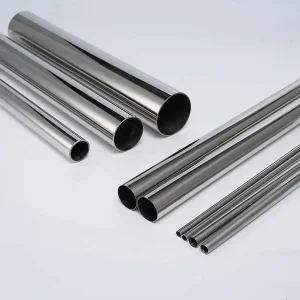
| Outside Diameter (OD) | Round: 6.0 mm - 219.0 mm | Square: 10x10 mm - 150x150 mm | In-line laser micrometer sensor (Tolerance ±0.05 mm) |
| Wall Thickness (WT) | 0.4 mm - 3.0 mm (Custom wall schedule available) | Ultrasonic thickness gauge (Tolerance ±8%) |
| PVD Coating Thickness | 0.3 Micron - 0.5 Micron (Titanium Nitride / Zirconium Nitride) | X-Ray Fluorescence (XRF) coating thickness analyzer |
| Surface Polish Roughness | 600# - 800# Mirror Finish prior to PVD (Ra ≤ 0.2 µm) | Surface Profilometer roughness measurement |
| PVD Coating Adhesion | Class 0 / Grade 5B (Zero film detachment) | Cross-cut tape test per ISO 2409 / ASTM D3359 |
| Corrosion Resistance | 304: >240 hrs | 316L: >500 hrs Neutral Salt Spray | Salt Spray Chamber testing per ASTM B117 |
| Bending & Ductility | No surface cracking when bent 90° on mandrel CNC machine | Flattening & Flaring Mechanical Tests (ASTM A554) |
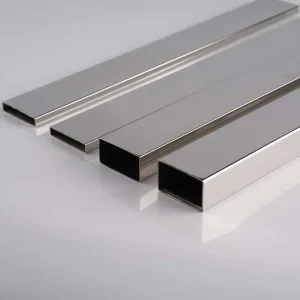
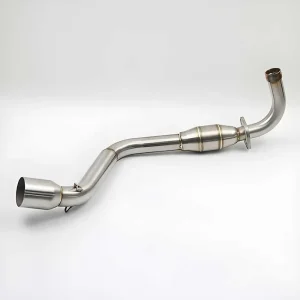
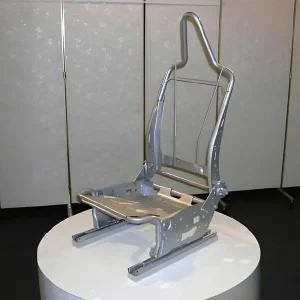
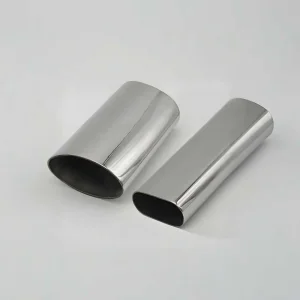
Browse additional specialized tubing categories manufactured for automotive, medical, structural, and OEM aftermarket industries.
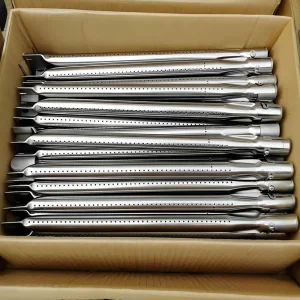
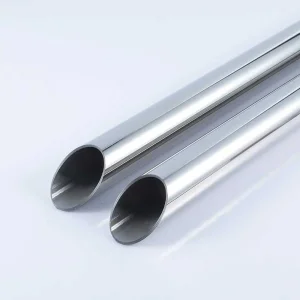
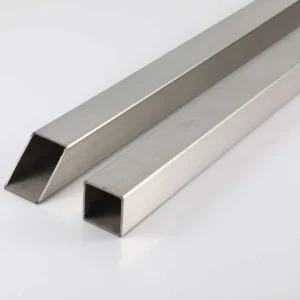
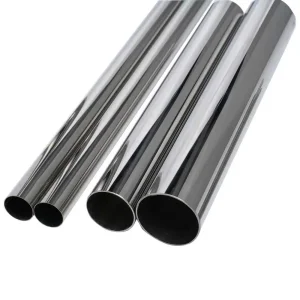
Engineering answers compiled by our Metallurgical Quality Control & Export Operations Department.
Physical Vapor Deposition (PVD) Vacuum Ion Plating is a physical vaporization process conducted inside a high-vacuum furnace (10⁻² to 10⁻⁴ Pa). Metallic titanium is vaporized into an ionized plasma, reacting with nitrogen gas to condense onto the stainless steel pipe surface, forming a 0.3-0.5 µm atomic bond layer of Titanium Nitride (TiN). PVD exhibits extreme Vickers hardness (2,000-2,500 HV), superior scratch resistance, and produces zero chemical hazardous waste.
Conversely, Chemical Electroplating relies on aqueous acid baths to deposit copper/nickel/gold films. Electroplating is prone to micro-delamination, cracking during CNC bending, fading under outdoor UV exposure, and environmental restrictions due to hexavalent chromium effluents.
Selection depends entirely on the operating environment and fabrication requirement:
No, provided the substrate stainless steel tube is properly annealed and the PVD coating thickness is tightly controlled between 0.3 µm and 0.5 µm. Because PVD forms a molecular-level atomic bond with the stainless steel substrate rather than a surface paint film, it flexes with the metal during standard cold bending, rotary draw bending, and end flaring. For extreme tight-radius bends (R < 1.5D), we perform post-fabrication PVD coating on pre-cut/pre-bent components.
Our standard MOQ for stock round, square, and rectangular gold PVD stainless tubing is 500 kg per dimension. For custom special-shaped profiles requiring die modification, the standard MOQ is 1,000 kg. Standard production lead time is 15 business days from artwork approval, complete with Mill Test Certificates (MTC) per EN 10204 3.1.
We utilize advanced Spectrophotometer Colorimeters to measure color coordinates under the international CIE L*a*b* system. Every PVD vacuum coating batch is tested against master reference samples. Gas flow rates (Nitrogen, Argon, Acetylene), target voltage, substrate temperature, and cycle times are digitally logged to ensure Delta E (ΔE) color variation remains strictly under 0.8 across repeat mass production orders.
Gold PVD stainless steel surfaces require minimal maintenance. Clean periodically using warm water, mild liquid dish soap, and a soft microfiber cloth. Avoid using abrasive scouring pads, steel wool, high-concentration chlorine bleach, or hydrochloric acid cleaners, as strong fluorinated or chlorinated solvents can attack the passive oxide film of the substrate over prolonged exposure.
Contact our metallurgical engineering department today for custom drawing reviews, mill test certificates, PVD color swatches, and factory-direct ODM container quotations within 24 hours.