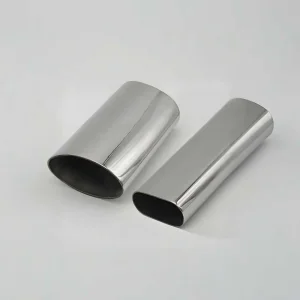
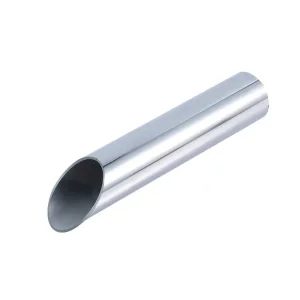
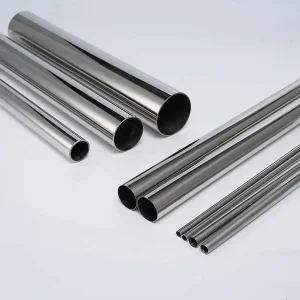
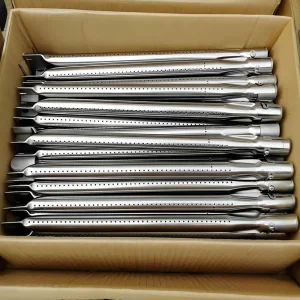
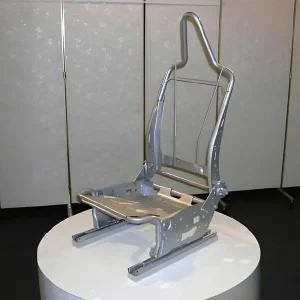
Explore our primary manufacturing outputs spanning medical furniture, high-purity sanitary systems, structural components, and custom special-shaped profiles.
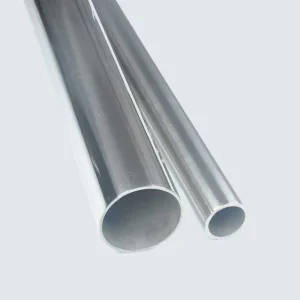
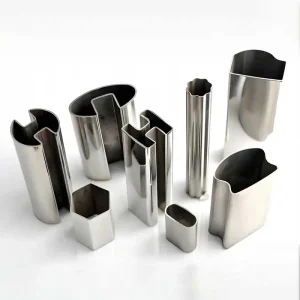
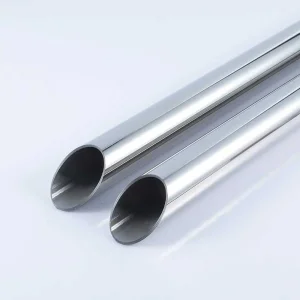
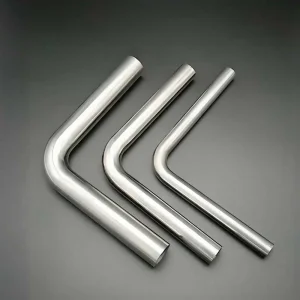
The global landscape for medical device component sourcing is undergoing a radical paradigm shift driven by stringent regulatory overhauls, microminiaturization, and a requirement for unprecedented surface passivation integrity.
Modern minimally invasive surgical tools (MIS), endoscopic cutters, and intravascular delivery needles require micro-tubing with Outer Diameters (OD) below 0.5mm and wall thickness tolerances constrained within ±0.005 mm. ODM specialized factories are adopting multi-pass cold drawing and laser-micromachining to satisfy these clinical constraints.
Medical environments require complete immunity against bodily fluids, physiological saline solutions, and harsh enzymatic sterilizers. Factories are moving toward optimized chemistry alloys like 316LVM (Vacuum Arc Remelted) and 316L to eliminate non-metallic inclusions and guarantee zero cytotoxic leachables.
In clinical environments and hospital furniture manufacturing, traditional chrome-plated iron structures fail over time due to flaking, rusting, and bacteria harbouring in micro-cracks. Original Equipment Manufacturers (OEMs) and Original Design Manufacturers (ODMs) now universally mandate solid structural 304 and 316L tubing.
Leading medical device corporations, hospital furniture suppliers, and pharmaceutical equipment builders evaluate prospective tubing mills based on quantifiable metallurgical metrics and strict operational parameters.
| Application Category | Primary Alloys | Key Technical Specifications | Critical Quality Verification Standard |
|---|---|---|---|
| Surgical Needles & Cannulas | 304, 304L, 316L Stainless Steel | OD: 0.2mm - 3.0mm; Wall: ±0.005mm; Ultra-Smooth Bore | ISO 9626, ASTM A269, Penetration Force & Flare Testing |
| Endoscopic & MIS Instruments | 316LVM, Custom 17-4PH | Torqueability, Flexible Bending, Laser Slotting Compatible | ASTM F138, Biocompatibility Cytotoxicity ISO 10993 |
| Hospital Furniture & Mobility Safety | 304, 316L, ASTM A554 Structural | OD: 19mm - 50.8mm; Mirror 600# / Satin Polish; Anti-Microbial | Load Deflection Testing, 500h Neutral Salt Spray (ASTM B117) |
| Fluid Handling & Peristaltic Lines | 316L Electropolished (EP) | Internal Roughness Ra ≤ 0.25 μm; Weld Seam Planished | ASME BPE, Hydrostatic Pressure & Eddy Current Testing |
Operating out of Foshan's premier stainless steel industrial cluster, VertexFlow Tubes runs a fully integrated manufacturing plant engineered specifically for architectural, industrial, and medical-grade precision tubing.
To prevent weld pinholes, micro-cracks during 90° CNC bending, and surface pitting, our production line executes a rigorous 10-stage technical workflow under controlled atmosphere conditions.
Sourcing exclusively prime raw stainless steel coils from tier-1 mills (TISCO, POSCO, Baosteel). In-house high-precision slitting ensures clean, burr-free strip edges, preventing stress concentrations during cold roll forming.
Utilizing computerized TIG and High-Frequency Plasma welding lines with automatic seam tracking. Welding amperage and travel speed are strictly synchronized to achieve complete fusion without heat-affected zone (HAZ) embrittlement.
Continuous positive-pressure high-purity (99.999%) Inert Nitrogen gas purging inside the tube during welding eliminates internal bore oxidation, eliminating the root cause of internal corrosion and black weld residue.
100% non-destructive testing (NDT) is integrated on-line. Real-time infrared scanning and high-frequency eddy-current probes immediately mark and segregate any microscopic weld void or wall discontinuity.
Automated polishing lines perform multi-pass grinding from 180# Satin up to 600# Mirror Finish. Weld seams are planished flat prior to polishing to guarantee a seamless aesthetic appearance and uniform electroplating readiness.
Finished tubing undergoes citric or nitric acid immersion passivation per ASTM A967, stripping free iron contamination and building a dense, self-healing chromium-oxide passive layer to clear 500+ hours of neutral salt spray testing.
Navigating global medical device directives and cross-border supply chains requires verified regulatory documentation, material traceability, and localized engineering assistance.
Every shipment includes heat-traceable EN 10204 3.1 Mill Test Certificates detailing chemical composition (spectral analysis), tensile strength, yield point, elongation, and flattening test verification results.
All raw materials, cleaning agents, and surface treatment chemicals strictly comply with EU REACH and RoHS regulations, ensuring complete freedom from heavy metal contaminants, lead, or SVHC substances.
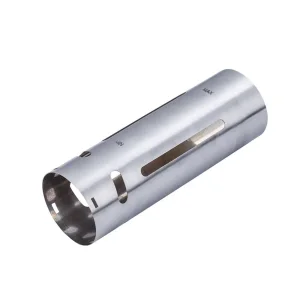
To accelerate your manufacturing pipeline, we offer in-house secondary processing including CNC cut-to-length, mandrel tube bending, end flaring, necking, laser slotting, and precision deburring.
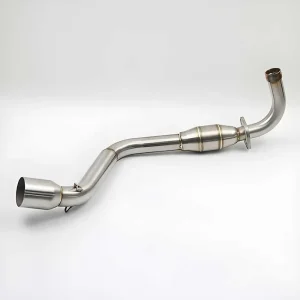
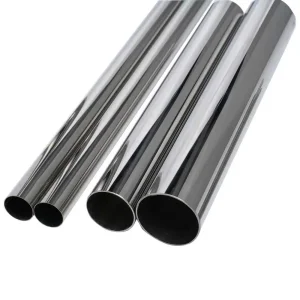
Browse our specialized tubing inventory engineered for automotive structural assemblies, medical safety grab bars, marine installations, and precision CNC fabrication.
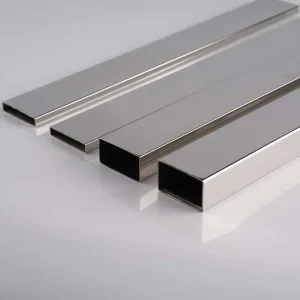
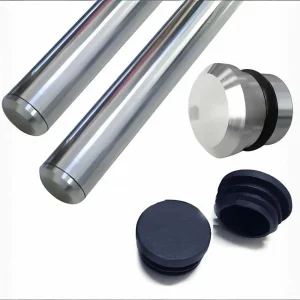
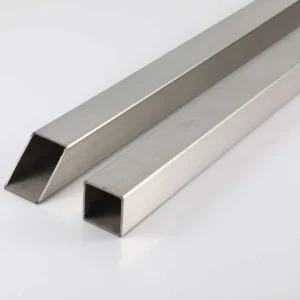
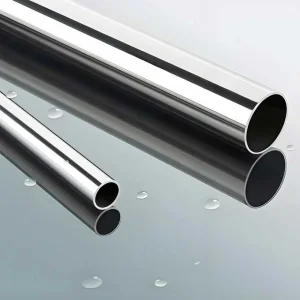
As medical robotics, high-speed bio-pharmaceutical processing, and structural safety requirements advance, VertexFlow Tubes continues investing in next-generation manufacturing technology.
Integration of inline functional PVD coatings including Titanium Nitride (TiN) and Diamond-Like Carbon (DLC) on medical tubing to lower friction coefficients and improve wear resistance on dynamic surgical guides.
Deploying 4K high-speed optical camera inspection coupled with neural network algorithms to detect surface micro-scratches, inclusions, and dimensional variations under 2 microns in real time at mill speeds.
Implementing closed-loop water filtration, solar-powered annealing furnaces, and high-recycled content stainless raw coils to meet corporate ESG and carbon-neutral procurement mandates by 2028.
Direct technical answers from our engineering and metallurgy quality assurance team regarding material selection, tolerances, and custom ODM manufacturing.
We manufacture precision welded and cold-drawn tubing in 201 (high-copper bending grade), 304, 304L, 316, and 316L stainless steel alloys conforming to ASTM A554 (ornamental and structural), ASTM A249, ASTM A269 (sanitary and general service), EN 10217-7, and JIS G3446 standards. Every production heat is supplied with a comprehensive EN 10204 3.1 Mill Test Certificate covering chemical analysis, tensile strength, yield strength, elongation, flattening, and flaring test results.
Our standard production runs hold an outer diameter (OD) tolerance of ±0.10 mm. On precision runs—such as medical equipment components, conveyor roller shells, and electroplating substrates—we achieve tighter tolerances down to ±0.05 mm (and ±0.005 mm for specialized cold-drawn micro-tubing). Wall thickness is controlled within ±8%, straightness to 1 mm/m, and squareness of square/rectangular profiles to ±0.5°.
Chloride ions found in disinfectants, saline solutions, and coastal air break down the passive chromium-oxide surface film on standard 304 stainless steel, initiating pitting corrosion (tea-staining). For aggressive environments, we specify 316L stainless steel containing 2–3% Molybdenum, which passes over 500 hours of Neutral Salt Spray (NSS) testing (ASTM B117). Furthermore, our factory pickling and passivation process removes free iron particles left behind during roll-forming, eliminating the primary root cause of surface rusting along weld seams.
Tube cracking during bending stems from three main factors: insufficient raw material ductility, micro-porosity or oxidation along the weld seam, or selecting a wall thickness too thin for the required centerline bend radius (CLR). We address this by utilizing fully annealed prime strip steel with guaranteed elongation values above 45%, employing high-purity internal Nitrogen gas shielding during plasma welding to eliminate seam embrittlement, and providing technical design consulting to match the ideal wall thickness to your bend radius.
Our standard Minimum Order Quantity (MOQ) is 500 kg per dimension and surface finish for catalog sizes, and 1,000 kg (1 Tonne) for custom profiles or PVD decorative finishes. Standard export production lead time is 15 business days following sample/drawing approval. Products are individually wrapped in protective plastic sleeves to prevent surface abrasion, then packed in woven gunny bags, heavy-duty corrugated plastic sheets, IPPC-certified wooden crates, or steel bundle frames depending on transport requirements.
Yes. VertexFlow Tubes operates a dedicated secondary engineering facility equipped with multi-axis CNC laser tube cutters, automatic precision cold saws, mandrel bending machines, end-flaring and necking equipment, punching presses, and deburring systems. OEM/ODM buyers can receive ready-to-assemble components direct from our factory, eliminating intermediate processing costs, scrap waste, and localized logistics overhead.