Explore our high-tolerance, custom-machined slotted and structural stainless steel tubing portfolio designed for global industrial, architectural, and mechanical applications.
An exhaustive analysis of precision slotting techniques, metallurgical considerations, and supply chain efficiencies for Tier-1 industrial buyers.
Eliminate heat distortion with advanced fiber-laser slotting arrays, maintaining cut widths as small as 0.15 mm with zero burrs and precise dimensional repeatability.
Engineered slot distribution patterns (staggered, straight, keystone) that retain up to 82% of original axial tensile strength under extreme load environments.
Full original design manufacturing capabilities from metallic alloy selection (304/316L/Titanium/Carbon Steel) to final packaging tailored to international export norms.
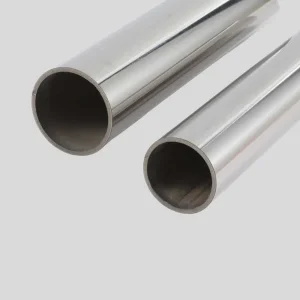
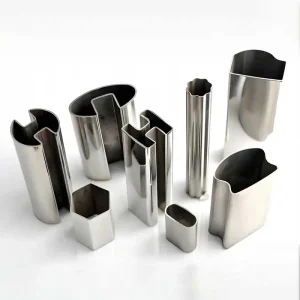
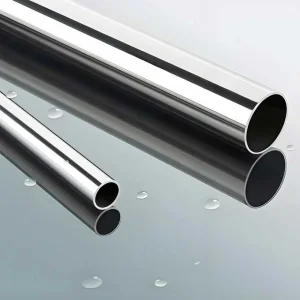
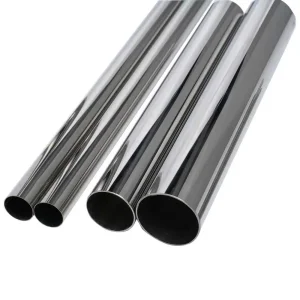
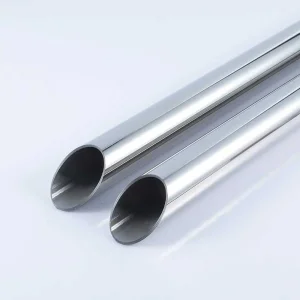
Slotted steel pipes represent a crucial convergence of structural engineering, fluid dynamics, and precise manufacturing. Unlike traditional continuous-wall steel piping, slotted pipes are specialized engineered components manufactured with longitudinal or transverse apertures. These precise slots allow for controlled fluid ingress or egress, filtration, or mechanical interlock, while retaining structural rigidity.
Across the globe, demand for specialized ODM (Original Design Manufacturer) slotted steel tubing has surged. Key market forces driving this growth include expanding infrastructure projects requiring architectural glass balustrades with recessed structural glass slots, deep-well water completion systems needing sand control, and automated material handling lines requiring integrated tracking and mounting channels. As global engineering standards demand tighter tolerances, the traditional method of manual punching or crude mechanical sawing has been rendered obsolete by high-speed CNC laser slotting and multi-spindle mechanical slotting lines.
Technical Information Gain: Modern fiber laser slotting technology operates at positioning accuracies of ±0.03 mm, drastically reducing the Heat-Affected Zone (HAZ) compared to older plasma methods. This ensures the corrosion resistance of 304 and 316L stainless steel alloys remains intact around the slot margins.
Selecting the correct slot architecture is pivotal to preventing structural collapse or flow impedance. ODM suppliers must evaluate radial collapse strength, axial tension limits, and total open area percentage (TOA). Below is an analytical breakdown of primary slot configurations:
| Slot Profile Type | Typical Kerf Width (mm) | Primary Application | Tensile Strength Retention | Manufacturing Complexity |
|---|---|---|---|---|
| Straight Longitudinal Slot | 0.50 - 12.0 mm | Architectural handrails, glass framing, lean structural tubing | 75% - 85% | Standard (CNC Milling / Laser) |
| Keystone Slot (Undercut) | 0.20 - 2.50 mm | Oil/gas sand control, sub-surface water filtering | 80% - 90% | High (Specialized Multi-blade CNC) |
| Staggered Transverse Slot | 0.15 - 1.50 mm | High-pressure filtration, acoustic attenuation sleeves | 65% - 75% | Medium-High (5-Axis Fiber Laser) |
| Custom Interlocking Cutouts | Variable (CAD defined) | Modular cleanroom frames, automated conveyor channels | 70% - 80% | High (3D Tube Laser Cutting) |
When engineering slotted pipe systems, maintaining an optimal balance between Open Area Percentage (TOA) and mechanical strength is paramount. Typically, a TOA between 3% and 10% satisfies fluid dynamics requirements while preventing buckling under hydrostatic or overhead structural loads.
Quantifiable metrics demonstrating China's modern manufacturing power and advanced quality control capabilities.
How raw material proximity, vertical integration, and advanced automation create unparalleled cost-to-quality performance.
The concentration of stainless steel production in Guangdong, particularly in Foshan (Shishan Industrial Zone), has established a world-class manufacturing ecosystem. Rather than relying on fragmented supply chains where slitting, roll-forming, laser slotting, and polishing are outsourced to disparate vendors, leading Chinese ODM factories consolidate all processes under one roof.
Direct sourcing of raw master coils from prime steel producers like TISCO, POSCO, and Baosteel ensures chemical purity. In-house slitting lines convert wide coil into exact strip widths, eliminating middleman markups and reducing raw material lead time from weeks to days.
Integrated laser calipers and eddy-current weld seam detectors scan 100% of the production run in real time. Any deviation in wall thickness, ovality, or slot alignment automatically triggers mill calibration, ensuring zero defect propagation.
Slotted steel pipes serve specific critical functions across diverse industries worldwide:
The slotted steel pipe industry is rapidly evolving toward intelligent manufacturing and enhanced surface finishes. Emerging trends include:
1. PVD (Physical Vapor Deposition) Hard Coating: Beyond traditional satin (180#/240#/320#) and 600# mirror polishing, slotted architectural tubing is increasingly specified with PVD color coatings (Titanium Gold, Rose Gold, Matte Black, Champagne). The PVD process coats both the exterior surface and the inner slot walls, offering superior scratch resistance and UV stability.
2. Hybrid Fiber Laser & Automated Deburring Integration: High-power fiber lasers combined with robotized thermal energy deburring (TEM) or abrasive filament brushes eliminate microscopic interior slot burrs, guaranteeing smooth surfaces for delicate cables or glass inserts.
3. Traceable Mill Certification & Green Steel: Tier-1 global EPC buyers now require strict carbon footprint tracking and full material traceability per EN 10204 3.1. Advanced ODM suppliers provide heat-number tracking stamped on every bundle alongside comprehensive chemical and mechanical test certificates.
Explore additional high-performance products within our extensive ODM stainless steel manufacturing portfolio.
Direct technical insights for engineering managers, procurement officers, and global distributors.