Explore our high-precision, customized ODM/OEM pipe and tube offerings manufactured under stringent quality standards in Foshan.
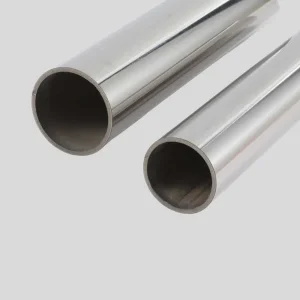
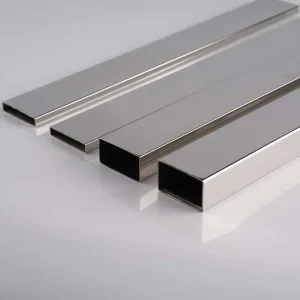
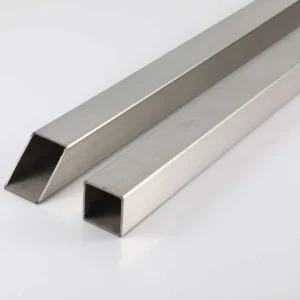
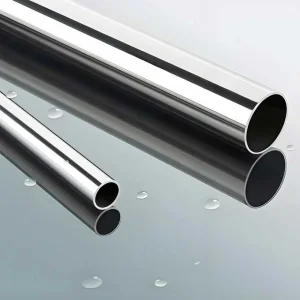
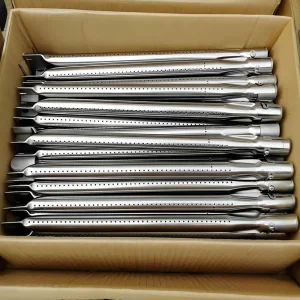
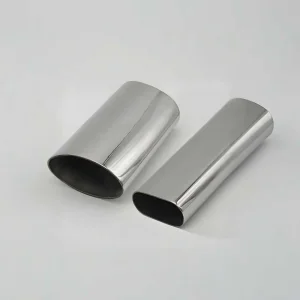
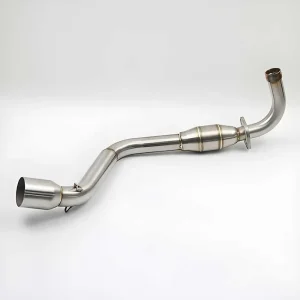
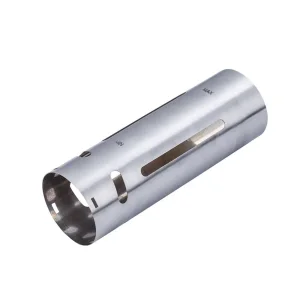
Analyzing procurement shifts across high-growth industrial domains, metallurgical economics, and the imperative for Original Design Manufacturer (ODM) specialized production.
In the modern industrial engineering spectrum, Type 304L stainless steel (UNS S30403 / EN 1.4306 / EN 1.4307) stands out as the cornerstone ultra-low carbon variant of the ubiquitous 18/8 chromium-nickel austenitic alloy family. Global procurement data indicates a significant shift toward 304L specified piping across critical sectors, including chemical processing, cryogenic fluid transportation, hydrogen production facilities, semiconductor cleanroom utilities, and municipal water purification systems. Unlike standard 304 stainless steel, which carries a carbon limit of up to 0.08%, 304L is restricted to a maximum carbon content of 0.030%.
This deliberate reduction in carbon content completely eliminates the phenomenon of chromium carbide precipitation ($Cr_{23}C_6$) along grain boundaries during welding processes within the sensitisation temperature window ($450^\circ\text{C}$ to $850^\circ\text{C}$). Consequently, procurement engineers and plant asset managers specify ODM 304L piping solutions to bypass post-weld solution annealing while maintaining 100% mechanical integrity and superior intergranular corrosion resistance in severe chemical service conditions.
As an authoritative ODM manufacturer headquartered in Foshan—China’s premier stainless steel industrial hub—VertexFlow Tubes (Xiyouwo Group) bridges the gap between raw mill strip master coils and tailor-made, enterprise-grade piping assemblies. Operating a 12,000 m² state-of-the-art facility housing 43 automated plasma and laser welding lines, our engineering team manufactures and exports ASTM A312, ASTM A249, ASTM A269, and ASTM A554 compliant 304L pipes tailored precisely to complex global customer blueprints.
A rigorous empirical comparative matrix establishing the chemical composition, yield strength, and structural performance parameters of 304L against alternative alloys.
By controlling carbon to ≤0.030%, 304L prevents chromium depletion at grain boundaries during high-heat arc welding. The passive chromium oxide ($Cr_2O_3$) surface layer remains uninterrupted, ensuring complete resistance to intercrystalline pitting in wet chemical, acid, and alkaline fluid lines.
The fully stable face-centered cubic (FCC) austenitic crystal structure of 304L exhibits zero ductile-to-brittle transition temperature down to liquid nitrogen (-196°C) and liquid helium (-269°C) levels. Ideal for LNG gasification and cold-chain industrial manifolds.
Our custom ODM processing optimizes elongation properties (≥40%) and controls hardness (≤90 HRB), allowing seamless deep drawing, intricate 90° CNC mandrelling, end flaring, necking, and complex hydrostatic expanding without micro-fissuring.
| Material Grade / Specification | Carbon (C) | Chromium (Cr) | Nickel (Ni) | Yield Strength (0.2% Proof) | Tensile Strength (MPa) | Elongation 2" (50mm) |
|---|---|---|---|---|---|---|
| 304L (UNS S30403 / 1.4306) | ≤ 0.030% | 18.0 - 20.0% | 8.0 - 12.0% | ≥ 170 MPa (25 ksi) | ≥ 485 MPa (70 ksi) | ≥ 40% |
| Standard 304 (UNS S30400 / 1.4301) | ≤ 0.080% | 18.0 - 20.0% | 8.0 - 10.5% | ≥ 205 MPa (30 ksi) | ≥ 515 MPa (75 ksi) | ≥ 40% |
| 316L (UNS S31603 / 1.4404) | ≤ 0.030% | 16.0 - 18.0% | 10.0 - 14.0% (Mo: 2-3%) | ≥ 170 MPa (25 ksi) | ≥ 485 MPa (70 ksi) | ≥ 40% |
| 201 High-Cu (UNS R20100) | ≤ 0.150% | 14.0 - 16.5% | 1.0 - 1.5% (Mn: 8.0-10.5%) | ≥ 260 MPa (38 ksi) | ≥ 685 MPa (100 ksi) | ≥ 35% |
*Note: All VertexFlow 304L master heats are sourced exclusively from Tier-1 primary mills (TISCO, POSCO, Baosteel) with full EN 10204 3.1 dual-certified mill test report coverage.
Custom structural and fluid piping architectures engineered to meet rigorous sector-specific operating challenges.
Used extensively in nitric acid synthesis, organic acid piping networks, and catalytic conversion units. 304L resists oxidizing acids up to boiling temperatures, preventing equipment failure and batch contamination.
Critical fluid delivery manifolds for liquefied natural gas (LNG), liquid oxygen, and green hydrogen supply chains. High impact resistance at ultra-sub-zero temperatures prevents catastrophic thermal-shock fracturing.
Engineered with internal bead leveling and electro-polishing down to Ra ≤ 0.4 µm. Meets ASME BPE standards for bioprocess lines, dairy pasteurization, CIP/SIP washdown systems, and WFI (Water for Injection) loops.
Fabricated for sub-nanometer cleanrooms supplying ultra-pure gas (UPG) lines and bulk chemical delivery. Free of oil, grease, micro-particles, and surface pinholes that could trigger semiconductor wafer defects.
Used in modern cleanroom workstations, hospital furniture structures, modular laboratory frames, and architectural facade supports where non-magnetic properties, longevity, and structural elegance are mandatory.
Inside the VertexFlow smart factory: From raw coil slitting to automated inner nitrogen shielding and online laser dimensional inspection.
Producing world-class ODM 304L pipes requires absolute mastery over heat input, forming mechanics, atmosphere protection, and surface chemistry. At VertexFlow Tubes, our 43 mill production lines incorporate a fully digitalized 10-stage quality protocol designed to eliminate common defects such as weld seam burn-through, oxidation scaling, out-of-roundness, and dimensional drift.
Coil chemical analysis via optical emission spectrometry (OES) upon receipt to verify C ≤ 0.030%, Ni ≥ 8.0%, and Cr ≥ 18.0% prior to slitting.
CNC slitting with zero burrs and smooth side edges, eliminating edge-notch flaws that could cause micro-porosity during continuous welding.
State-of-the-art Plasma and TIG automated fusion welding locks heat input parameters, achieving 100% full-penetration weld seams without filler metal.
Continuous internal purging with 99.999% purity Argon/Nitrogen gas prevents interior oxidation, eliminating the inner black line and maintaining smooth bore cleanliness.
100% inline non-destructive eddy-current testing (ASTM A1016) flags pinholes, seam discontinuities, or wall thickness variations in real time.
Multi-stand roller sizing controls outside diameter (OD) tolerance to ±0.05 mm and controls roundness/ovality within strict engineering tolerances.
Induction heating in a hydrogen atmosphere rapidly cools the pipe below 450°C, restoring maximum ductility (elongation ≥ 40%) and stress relief.
Four-pass automated abrasive head polishing offers finish levels from Satin 180#/240#/320# to No.4 brushed and 600# mirror optical clarity.
In-house secondary processes: CNC precision length cutting, 3D mandrel bending, end flaring, punching, laser slotting, and deburring.
Ensuring frictionless international procurement through standard compliance, tariff optimization, and certified quality assurance packs.
Procuring custom ODM stainless steel pipes across international borders requires complete alignment with regional engineering codes, environmental regulations, and trade compliance directives. VertexFlow Tubes supports global buyers across 40+ countries—including North America, the European Union, the Middle East, Southeast Asia, and Australia—with localized technical documentation and supply chain resilience.
Every shipment is accompanied by EN 10204 3.1 Mill Test Certificates detailing heat chemistry, yield/tensile curves, flattening test, flaring test, micro-structure analysis, and hydrostatic pressure test logs.
Equipped to meet European Union Carbon Border Adjustment Mechanism (CBAM) carbon accounting requirements, ISO 14001 environmental management standards, and REACH/RoHS heavy metal bans.
Individual poly sleeve protection, anti-scratch end caps, moisture-proof plastic wrap, reinforced wooden crates, or heavy-duty iron frames engineered for maritime container transit with zero surface abrasion.
Answers to common technical, metallurgical, commercial, and engineering questions compiled by our Quality Assurance team.
The fundamental difference lies in carbon content: standard 304 allows up to 0.08% Carbon, while 304L restricts Carbon to a maximum of 0.030%. In welded applications, standard 304 undergoes chromium carbide precipitation in the heat-affected zone (HAZ) between 450°C and 850°C, causing local chromium depletion and making the weld susceptible to intergranular corrosion. 304L prevents sensitization, eliminating the need for post-weld solution annealing while maintaining equal corrosion resistance in aggressive service.
Standard mill OD tolerance is ±0.10 mm. On precision ODM runs (e.g., conveyor roller shells, pneumatic cylinder bodies, plating substrates), we hold tight tolerances down to ±0.05 mm. Wall thickness is maintained within ±8%, straightness to 1 mm per meter, and squareness of structural sections to ±0.5°. All dimensional metrics are continuously logged in-line via laser triangulation systems.
Cracking during bending typically stems from three causes: work-hardened strip material with low elongation, poor weld seam fusion, or an improper centerline bend radius relative to wall thickness. VertexFlow prevents cracking by selecting deep-drawing annealing-grade strip (elongation ≥ 40%), executing 100% plasma fusion welding with nitrogen inner shielding, and orienting the weld seam to the neutral axis during CNC mandrel bending.
While 304L offers excellent resistance to general atmospheric corrosion and nitric/organic acids, it remains vulnerable to chloride-induced pitting and crevice corrosion in marine air or direct seawater exposure (chlorides > 200 ppm). For coastal installations, marine hardware, or poolside applications, we strongly recommend specifying 316L stainless steel (containing 2.0-3.0% Molybdenum), which withstands 500+ hours of neutral salt spray testing without tea-staining.
Our secondary processing workshop features 5-axis CNC laser pipe cutting, multi-station mandrel bending, end flaring, swaging, necking, precision drilling, laser slotting, robotic TIG welding assemblies, PVD vacuum color deposition (8 distinct metal tone finishes), and custom surface electropolishing (Ra ≤ 0.2 µm).
Our standard Minimum Order Quantity (MOQ) is 500 kg per size and finish for standard round, square, or rectangular tubing. For custom ODM profiles requiring special extrusion roll dies or PVD finishes, the MOQ is 1,000 kg. Typical production lead time is 15 days following drawing sign-off and sample approval.
Explore the remaining core product lines in our manufacturing index, engineered to international ASTM/EN/JIS specifications.
Send us your technical drawings, material specifications, or sample requirements. Our metallurgical engineers will deliver a comprehensive manufacturability review and competitive quotation within 24 hours.