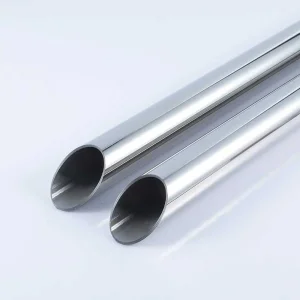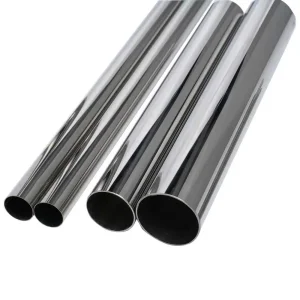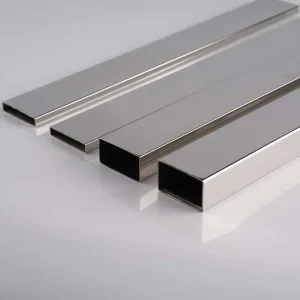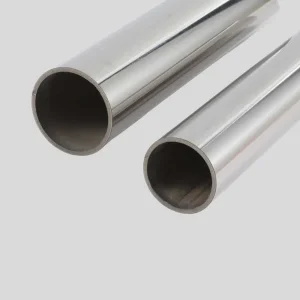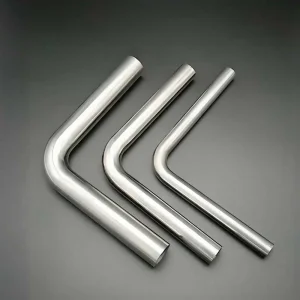
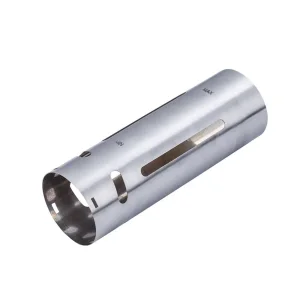
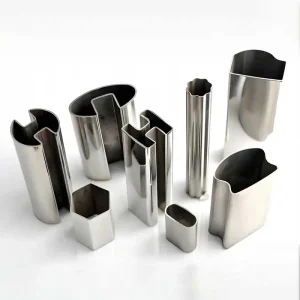
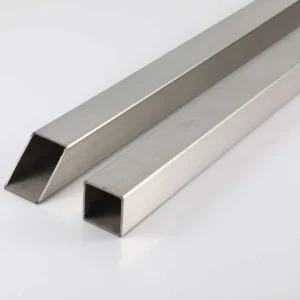
Navigating the complex procurement landscape for ODM Steel Pipe 304 requires an acute understanding of global metallurgical pricing structures, macroeconomic raw material fluctuations, and shifting international trade compliance. As the global industrial sector transitions toward higher energy efficiency, structural longevity, and sustainable architectural design, Grade 304 (UNS S30400 / EN 1.4301) austenitic stainless steel remains the baseline standard for structural, sanitary, and mechanical applications.
The primary drivers of the 304 stainless steel rate are London Metal Exchange (LME) nickel surcharges and ferrochrome market spot prices. Because Grade 304 comprises 18% Chromium and 8% Nickel, alloy surcharges account for up to 65% of the raw coil base rate. ODM suppliers utilizing predictive Hedging Financial Models maintain cost stability against sudden market spikes.
The European Union's Carbon Border Adjustment Mechanism (CBAM) and global ESG standards are forcing procurement teams to evaluate the carbon intensity of steel production. Tier-1 Chinese ODM mills are integrating Electric Arc Furnace (EAF) recycling technologies, lowering scope 1 and 2 emissions while preserving structural integrity and competitive tonnage rates.
Downstream automation—such as robotic laser cutting, automatic orbital welding, and high-speed CNC mandrel bending—requires ultra-tight tube tolerances (OD ±0.05mm). Standard off-the-shelf piping often leads to automated production line jams, driving global demand toward high-precision ODM customized mill runs.
Our Foshan manufacturing ecosystem operates with continuous real-time telemetry, ensuring every batch of ASTM A554, A249, and A269 tubing exceeds strict mechanical yield expectations.
| Technical Parameter | ASTM A554 (Structural/Ornamental) | ASTM A269 / A249 (Sanitary/Precision) | VertexFlow ODM Custom Advantage |
|---|---|---|---|
| Primary Application | Furniture, Architectural Handrails, Racks | Sanitary, Heat Exchangers, Automotive | Dual-certified profiles for multi-industry structural integrity |
| OD & Wall Tolerance | OD: ±0.10mm | Wall: ±10% | OD: ±0.05mm | Wall: ±8% | Micro-gauge control up to ±0.03mm via continuous laser sensors |
| Weld Seam Integrity | As-welded or bead removed | 100% Eddy Current Tested, Planished | Internal Nitrogen-Shielded Plasma Fusion; invisible inner bead |
| Surface Roughness (Ra) | 180# - 400# Satin (Ra 0.4 - 0.8µm) | 600# Mirror / Electro-polished (Ra ≤ 0.2µm) | In-house 4-pass polishing + PVD Titanium Vacuum Coating |
| Bending & Ductility | Standard 90° radius without cracking | High Elongation (>45%) for extreme flare | Annealed high-copper strip options engineered for zero-crack CNC bending |
The procurement of ODM 304 Stainless Steel Pipe extends far beyond transactional unit costs. It relies heavily on localized supply chain density, rapid raw material access, and integrated secondary fabrication. Situated in Shishan Town, Nanhai District, Foshan—the heart of China's stainless steel manufacturing core—VertexFlow Tubes leverages vertical supply chain integration to eliminate intermediary markup and drastically compress production lead times.
By sourcing prime raw stainless coil directly from tier-one steel conglomerates like TISCO, POSCO, and Baosteel, and executing slitting, high-frequency plasma welding, inner-bore nitrogen shielding, and offline polishing under one roof, our facility guarantees complete material traceability from heat lot to container load.
From architectural balustrades in North America to sanitary medical cleanrooms in Western Europe and high-vibration automotive chassis components in Southeast Asia, our structural and ornamental 304 pipes are tailored to specialized field conditions.
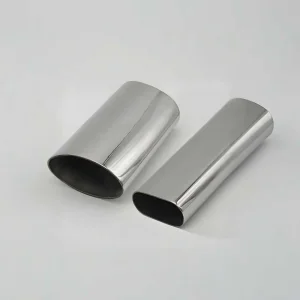
Modern architectural projects and high-end furniture manufacturers require flawless visual aesthetics. Our 304 stainless steel tubing undergoes 4-pass polishing to achieve 600# mirror reflection or perfectly uniform satin brush finishes. Combined with PVD physical vapor deposition (Rose Gold, Black Titanium, Champagne), our products resist fingerprint staining, ambient humidity, and cleaning solvent degradation.
Hospital bed frames, IV poles, and surgical room carts require strict sanitary standards and zero structural flex under load. VertexFlow produces medical-grade 304 tubing with passivated, non-porous surface structures that withstand aggressive hospital-grade chlorine wash-downs and chemical sterilizers without pitting or microbial accumulation.
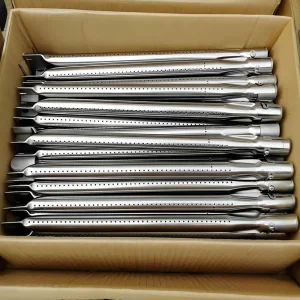
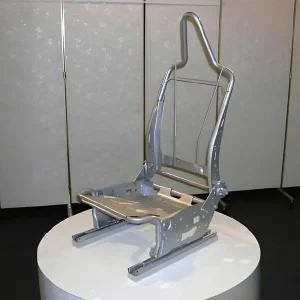
Subjected to rapid thermal cycling, road salt corrosion, and continuous mechanical vibration, automotive exhaust systems and seating chassis demand specialized 304 and 409L alloy grades. Our automated tube mills apply inner nitrogen seam protection during high-frequency welding to eliminate internal oxidation cracks during post-assembly hydroforming and tight CNC bending.
As a substrate for chrome plating, brushed nickel, or matte black electroplating, tube surface smoothness is critical. Microscopic surface defects lead to plating blisters and early pinhole rust. We maintain Ra ≤ 0.4 μm across all sanitary-grade 304 tubing, providing an ideal chemical bonding foundation for faucet spouts, shower columns, and luxury towel racks.
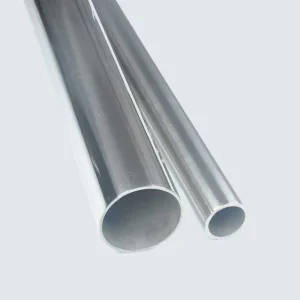
Traditional plastic-coated steel lean tubes frequently delaminate in intensive manufacturing cleanrooms, shedding debris and harbouring bacterial growth. Solid 304 stainless steel 28mm structural tubes offer non-peeling, ESD-safe performance for logistics flow racks, assembly line trolleys, and semiconductor cleanroom furniture.
High-speed automated parcel sorting centers and food conveyor networks require low Total Indicator Runout (TIR) roller shells to avoid motor strain and operational noise. Our specialized 304 tube extrusion and drawing processes maintain high concentricity and 1mm/m straightness, cutting maintenance replacement cycles by up to 60%.
Expert technical guidance curated by VertexFlow's Quality Control Engineers and Metallurgical Consultants.