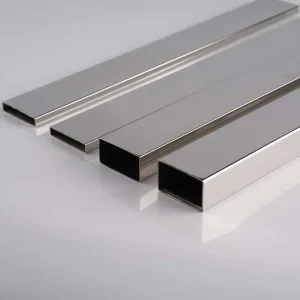
Explore our core engineering ODM/OEM offerings certified for sanitary, structural, conveyor, and medical applications.
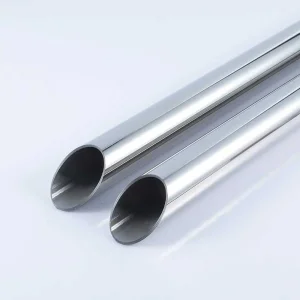
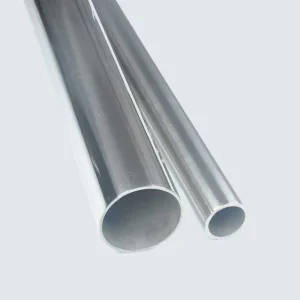
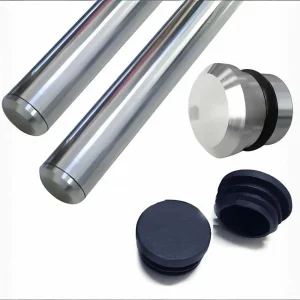
A deep chemical and mechanical evaluation of TP304 (AISI 304 / EN 1.4301) austenitic stainless steel tubing for modern OEM/ODM industrial applications.
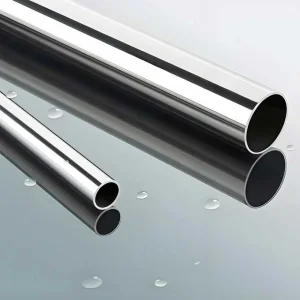
In the realm of global industrial manufacturing, TP304 (UNS S30400 / EN 1.4301) stainless steel tubing stands as the baseline standard for corrosion-resistant, high-strength structural, mechanical, and sanitary piping systems. Operating as an 18/8 chromium-nickel austenitic alloy, TP304 provides an exceptional balance of mechanical formability, weldability, and resistance to oxidizing media. For original design manufacturers (ODM) and tier-1 procurement directors, sourcing precision welded or seamless TP304 tubing requires an intimate understanding of metallurgical dynamics, heat treatment protocols, and dimensional tolerance standards.
Standard specification parameters according to ASTM A554 (Welded Mechanical Tubing), ASTM A269 (General Service Tubing), and ASTM A249 (Heat Exchanger / Boiler Tubing) dictate precise chemistry boundaries to maintain optimal grain structures and prevent chromium carbide precipitation during welding:
| Element / Mechanical Property | ASTM A554 / TP304 Requirement | ASTM A269 / TP304 Requirement | VertexFlow Precision Mill Target |
|---|---|---|---|
| Chromium (Cr) | 18.00% – 20.00% | 18.00% – 20.00% | 18.20% – 18.50% (Optimized) |
| Nickel (Ni) | 8.00% – 11.00% | 8.00% – 11.00% | 8.05% – 8.20% (Stable Austenite) |
| Carbon (C) | Max 0.08% | Max 0.08% | Max 0.04% – 0.05% (Low Carbide Risk) |
| Manganese (Mn) | Max 2.00% | Max 2.00% | 1.10% – 1.30% |
| Silicon (Si) | Max 1.00% | Max 0.75% | 0.45% – 0.55% |
| Yield Strength ($R_p0.2$) | ≥ 205 MPa (30 ksi) | ≥ 205 MPa (30 ksi) | 230 – 260 MPa |
| Tensile Strength ($R_m$) | ≥ 515 MPa (75 ksi) | ≥ 515 MPa (75 ksi) | 560 – 620 MPa |
| Elongation ($A_5$) | ≥ 35% | ≥ 35% | ≥ 45% (High Ductility for Bending) |
| Hardness (Rockwell B) | Max 90 HRB | Max 90 HRB | 75 – 82 HRB (Soft Annealed State) |
In high-stress manufacturing environments—such as CNC multi-axis rotary tube bending, hydroforming, and end-flaring—standard TP304 tubing can suffer from work hardening (strain hardening) or weld-seam cracking if the austenite stability index (Md30 temperature) is not properly controlled. Advanced ODM factories utilize argon-purged bright annealing at 1,050°C to 1,120°C followed by rapid water quenching. This process completely dissolves chromium carbides back into the solid solution matrix, eliminating sensitization and ensuring maximum ductility for complex tube shaping.
Analyzing cross-border sourcing shifts, Total Cost of Ownership (TCO), and the strategic advantage of China’s Foshan Stainless Steel Industrial Cluster.
Global demand for ODM TP304 stainless steel tubing is experiencing robust expansion driven by five primary macro-economic catalysts: rapid urbanization in emerging economies, stringent hygiene mandates in food and beverage processing, lightweight automotive chassis engineering, cleanroom logistics automation, and the premium architectural hardware sector. According to industrial trade data, international buyers from North America, Europe, the Middle East, and Southeast Asia are increasingly moving away from simple commodity tube purchases toward customized, semi-fabricated tube assemblies produced by integrated ODM partners.
Foshan represents over 40% of China's total decorative and industrial stainless steel processing capacity. Strategic proximity to raw material giants (TISCO, POSCO, Baosteel) ensures guaranteed coil metallurgy, lower raw material freight costs, and lightning-fast mill setup times.
Direct ODM factory sourcing eliminates distributor markups (typically 15%–30%) while leveraging automated secondary operations (laser cutting, punching, bending). Buyers achieve an estimated 22% net cost savings on landed ready-to-assemble components.
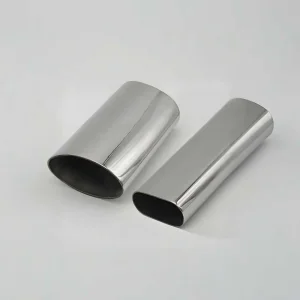
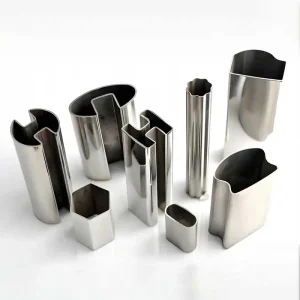
Maintaining an stock portfolio of over 500 roll-forming dies allows manufacturers to fulfill custom geometric profiles (flat oval, capsule, D-shape, triangular) without requiring initial tooling investments or extended 6-week die cutting lead times.
In addition to geographical cluster advantages, supply chain managers must navigate geopolitical tariff landscapes and compliance standardizations. Advanced ODM factories support custom anti-dumping documentation, duty-drawback compliance, and flexible freight arrangements (FOB, CIF, DDP to door) paired with protective export packaging designed to survive long-distance maritime transport without surface degradation or moisture staining.
Tailored TP304 structural, mechanical, and aesthetic engineering solutions across key industrial verticals.
Different commercial industries place unique physical demands on TP304 stainless steel tubing. Below is a comprehensive cross-industry engineering matrix highlighting how ODM manufacturers adapt tube specifications to solve real-world field challenges:
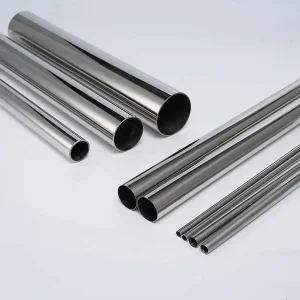
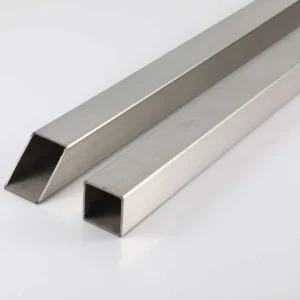
For high-traffic commercial building handrails, glass balustrade posts, and structural canopy frames, strength and surface flawless finish are mandatory. ODM factories supply TP304 round (OD 25.4mm to 101.6mm) and square tubing (20x20mm to 100x100mm) with precision-controlled corner radii. Utilizing a 600-grit mirror or 320-grit satin brushed finish guarantees long-term visual elegance, resisting fingerprint smudges and atmospheric moisture degradation without secondary plating requirements.
Medical grab bars, hospital bed frames, intravenous poles, and surgical carts demand extreme hygiene, zero toxic outgassing, and smooth surface cleanability. TP304 tubing manufactured for medical applications undergoes internal weld-bead flattening (planishing) to eliminate bacterial harbor crevices. Combined with non-porous passivation treatments, the tubing resists harsh hospital chemical disinfectants (quaternary ammonium, bleach solutions) without pitting or rusting.
In logistics centers, pharmaceutical cleanrooms, and food packing plants, traditional carbon steel rollers flake paint and rust under washdown cycles. Precision-drawn TP304 conveyor tubing features low Total Indicator Runout (TIR ≤ 0.3mm) and outer diameter tolerance of ±0.05mm. This ensures whisper-quiet bearing insertion, reduced vibration at high drive RPMs, and complete washdown capability in sanitary environments.
When used as core tubing for high-end shower columns, faucet bodies, and towel warmers, surface roughness ($R_a$) must remain strictly under 0.4 µm. Any micro-void or weld-seam profile witness line will visually telegraph through electroplated chromium, PVD gold, or matte black powder coatings. Custom ODM lines utilize high-frequency TIG/plasma seam fusion followed by automatic multi-pass mechanical polishing to guarantee a mirror-smooth plating base.
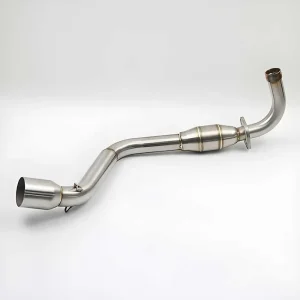
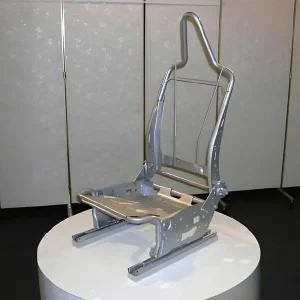
Subjected to severe thermal cycling (ambient to 650°C), mechanical road vibration, and de-icing salt exposure, automotive exhaust tailpipes and seat frame tubes demand optimal fatigue resistance. TP304 provides higher elevated-temperature strength than 409L or 439 ferritic grades, retaining structural elasticity while preventing exhaust gas leakage across extended vehicle warranties.
Inside the 10-Stage Precision Mill: How advanced ODM factories guarantee zero-defect yield from strip slitting to final container loading.
The manufacturing process of high-grade ODM TP304 stainless steel tubing combines automated metallurgical processing with rigorous non-destructive testing (NDT). Below is the technical breakdown of the 10 critical steps implemented in state-of-the-art Foshan tube mills:
Spectrographic elemental analysis (XRF) and incoming coil thickness profiling verify chemistry tolerances before cold-rolling or strip slitting begins.
Coils are slit using carbide rotary knives, ensuring burr-free edges ($< 0.02$ mm camber) that prevent weld arc deviation during high-speed roll forming.
Multi-stage progressive forming rolls shape the flat strip into a continuous round tube profile with minimal residual stress induced into the metal walls.
High-frequency Plasma-TIG dual-shielded arc welding fuses the butt joint without adding filler metal, producing 100% full-penetration weld seams.
In-line electromagnetic Eddy Current testing continuously scans 100% of the weld seam per ASTM E426, instantly flagging micro-pinholes or incomplete fusion.
Hydraulic internal and external bead hammer planishing levels the weld seam smooth against the parent metal wall, removing stress concentration lines.
Before shipment, mill quality control (QC) departments execute destructive mechanical verification tests on sample coupons from every heat batch:
Empowering global OEM partners with full regulatory compliance (EN 10204 3.1) and value-added CNC tube fabrication services.
To successfully integrate Chinese ODM stainless steel tubing into international supply chains, manufacturers must adhere strictly to global compliance frameworks. Every production lot leaving the facility is backed by a fully traceable Material Test Certificate (MTC) according to EN 10204 3.1 detailing chemical heats, heat treatment logs, mechanical test values, and non-destructive examination results.
Guarantees total batch transparency back to the original steel mill melting heat number, compliant with European Pressure Equipment Directive (PED) and North American ASTM standards.
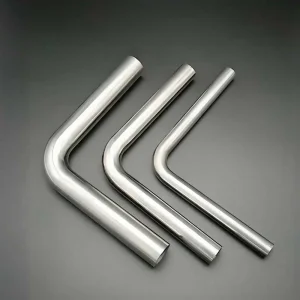
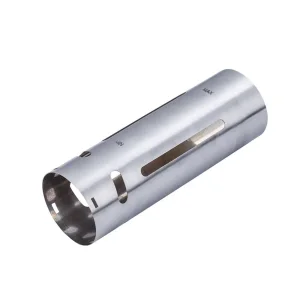
In-house secondary operations include 3D Fiber Laser cutting, 5-axis CNC mandrel tube bending, hydraulic end flaring, necking, slotting, and robotic TIG welding for turnkey part delivery.
In addition to standard polishing, ODM facilities offer Physical Vapor Deposition (PVD) titanium coatings in Rose Gold, Black Titanium, Champagne, and Brass finishes for luxury architectural designs.
Packaging integrity is equally vital for global shipments. Products are wrapped in heavy-duty PE protective film, sleeved in individual plastic bags, and crated in fumigated wooden boxes or reinforced steel frames to prevent sea-freight flexing, denting, or salt air corrosion.
Expert metallurgical and sourcing answers addressing common technical queries from engineering directors and procurement officers.
Explore our specialized range for medical grab bars, home organization, automotive exhausts, and structural chassis components.