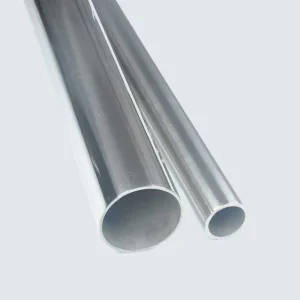
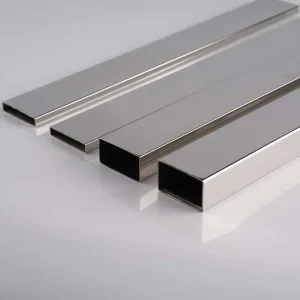
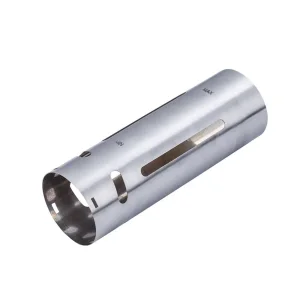
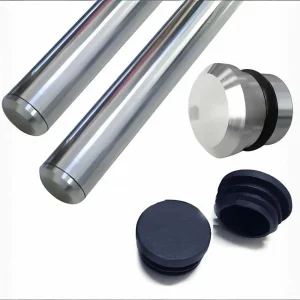
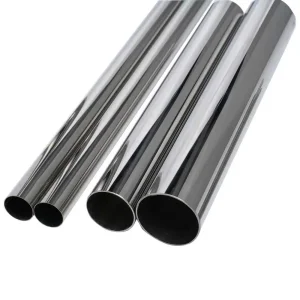
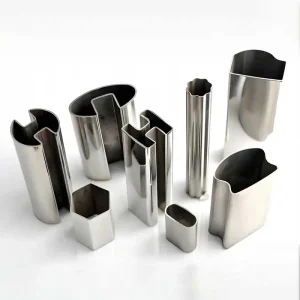
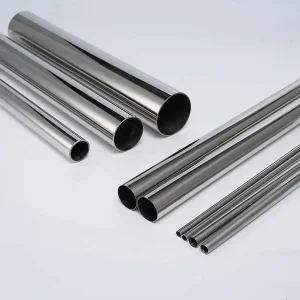
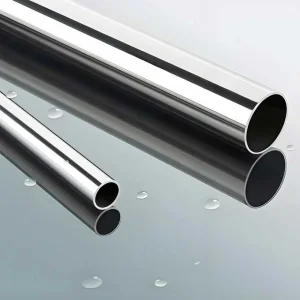
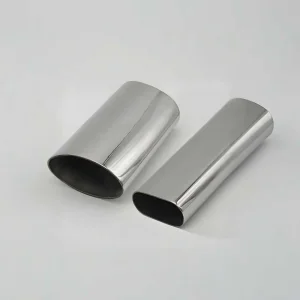
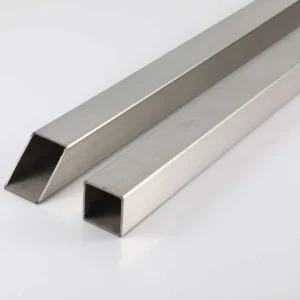
Explore our export-grade ASTM A554 stainless steel round, square, and specialized slotted tubing manufactured directly at our Foshan mills.
Analyzing modern civil engineering, municipal stormwater management, and specialized subgrade drainage dynamics driving the transition toward corrosion-proof, high-strength slotted stainless steel pipe solutions.
Civil projects are shifting from traditional corrugated PVC and perforated HDPE drain tubes to precision 6-slotted stainless steel pipes due to extreme load-bearing requirements under AASHTO H-20 and EN 124 D400 standards for airport aprons, highway shoulders, and railway subgrades.
Plastic subgrade slotted pipes suffer from environmental stress cracking (ESC) and plasticizer migration when exposed to chemical runoffs or industrial wash-downs. Precision-welded 304 and 316L slotted steel pipes offer immune resistance against hydrocarbon and acidic soil degradation.
A standard 6 slotted drain pipe configuration provides optimized longitudinal open area ratio (OAR) exceeding 18%, reducing turbulent entrance losses and increasing flow velocity by up to 34% compared to standard punched round-hole patterns.
In geotechnical and subsurface water collection systems, narrow laser-milled slots perform fundamentally better than punched circular holes. Slots create a natural bridge effect across surrounding granular backfill (geotextile layer integration), preventing sand infiltration while allowing high-volume groundwater inflow without localized hydrostatic head buildup.
Combining fluid dynamics modeling, mechanical hoop-strength optimization, and high-precision laser slotting to eliminate structural collapse and sediment clogging.
The inflow volume of a slotted subsurface pipe is calculated using a modified orifice flow equation accounting for the total slot area ($A_o$), discharge coefficient ($C_d \approx 0.62$), and effective hydrostatic head ($H$):
By orienting 6 continuous or staggered longitudinal slot arrays along the circumference (at 60° index angles), the pipe retains up to 88% of its original un-slotted compressive crush load while increasing intake surface area by 3.2 times relative to single-slot or offset slotted alternatives.
Slotted pipes under heavy overburden pressure experience complex stress concentrations at the slot corners. Our engineering teams utilize 3D FEA stress mapping to optimize corner radii, eliminating sharp stress risers that lead to premature fatigue cracking.
6-Slotted ASTM A554 304 Tube (Wall: 2.0mm) exhibited less than 0.35% radial deflection under maximum static wheel pressure, outperforming schedules of heavy-wall SCH 40 PVC by 410% in deflection resistance.
| Grade | Standard Specs | Yield Strength (MPa) | Tensile Strength (MPa) | Corrosion Rating | Primary Application |
|---|---|---|---|---|---|
| 304 / 304L | ASTM A554 / EN 10217-7 | ≥ 205 | ≥ 515 | High (PREN 18-20) | Municipal Drainage, Furniture, Conveyors |
| 316 / 316L | ASTM A554 / ASTM A269 | ≥ 240 | ≥ 580 | Extreme (PREN 23-25) | Marine Docks, Chemical Runoff, Spas |
| 409L | ASTM A554 / JIS G3446 | ≥ 175 | ≥ 360 | Moderate (Ferritic) | Automotive Exhaust, Heat Shields |
| 201 (High Cu) | ASTM A554 Commercial | ≥ 275 | ≥ 520 | Standard Indoor | Furniture Legs, Storage Racks |
From heavy airport runways to cleanroom trench systems, discover how 6-slotted stainless steel tubes deliver maximum reliability across key global industries.
Under heavy wheel-impact fatigue cycles, subsurface ground stabilization requires rapid removal of trapped water. 6-slotted 304 tubing installed with coarse gravel wrapping prevents surface hydroplaning and subgrade pumping without cracking under vibration.
Food, beverage, and pharmaceutical facilities demand daily wash-downs with aggressive caustic agents (sodium hydroxide, nitric acid). Smooth 316L slotted floor channels resist microbial harboring while enduring high-temperature fluid disposal up to 120°C.
Seawater splash zones contain high chloride levels that induce rapid pitting in lower-grade alloys. 316L slotted pipes with 2-3% Molybdenum content provide 500+ hours of neutral salt spray resistance for sea-wall drainage and marina dewatering wells.
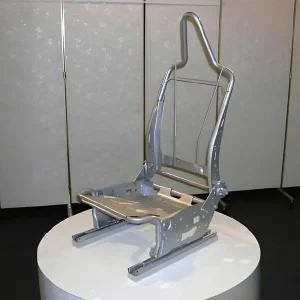
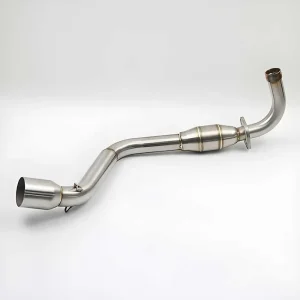
Beyond drainage, 6-slotted and perforated tubes are used in OEM automotive exhaust mufflers, catalytic converters, and seating structural frames to balance fluid backpressure, reduce acoustic noise, and minimize weight.
High-salinity soil leaching requires consistent subsurface groundwater extraction. Slotted stainless steel pipes prevent soil siltation while outlasting PVC pipes, which distort under intense seasonal ground heat shifts.
Solid 304 slotted tubing integrates smoothly into modular cleanroom workstations, gravity flow racks, and conveyor systems, offering a particle-free alternative to flaking plastic-coated lean pipes.
Next-generation metallurgical developments, automated laser manufacturing, and smart sensor integration shaping the future of subgrade fluid management.
Implementation of real-time optical vision correction on slotting mills, dynamically adjusting slot pitch and kerf width to maintain uniform flow coefficients regardless of coil wall variation.
Application of ultra-thin hydrophobic physical vapor deposition layers on the inner wall of slotted pipes to lower boundary layer friction and prevent biofilm adhesion in stagnant groundwater environments.
Embedding micro-acoustic and piezoresistive pressure sensors into slotted pipe couplings, enabling automated telemetry alert systems for subterranean silt build-up and localized subsidence.
Technical guidance compiled directly by VertexFlow quality control engineers and OEM procurement specialists.
Explore our additional range of precision engineered stainless steel tubing for marine, medical, automotive, and decorative applications.