Explore our Tier-1 grade precision welded tubing portfolio engineered for automotive, industrial, sanitary, and high-load mechanical applications.
How lightweighting imperative, crashworthiness mandates (FMVSS 207/210), and EV platform architectures are reshaping tubular steel specifications for Tier-1 seating manufacturers.
The global transition to Electric Vehicles (EVs) has injected unprecedented urgency into weight reduction. Battery packs add between 400kg to 700kg of curb mass to passenger vehicles. To offset battery weight and extend driving range, automotive OEMs are replacing traditional thick-walled carbon steel tubes with Advanced High-Strength Steels (AHSS) and micro-alloyed precision stainless steel tubes.
By transitioning to high strain-hardening alloys such as DP780, DP980, and specialized 300-series structural stainless steels, tube wall thickness can be reduced by up to 25% while preserving identical torsional rigidity and occupant safety margins.
Automotive seating structures are primary safety critical components in rear-end collision, side intrusion, and rollover scenarios. Seating frame tubes must withstand extreme dynamic loadings without brittle fracture at the weld seam or sudden buckling under shear stress.
Strict compliance with international safety standards—including FMVSS 207 (Seating Systems), FMVSS 210 (Seat Belt Anchorages), and UN ECE Regulation 17—demands tubes with high energy absorption capacity, uniform yield strength distribution, and micro-clean seam welds that pass 100% non-destructive eddy current testing.
Global automotive conglomerates are standardizing seat frame architectures across multi-brand vehicle platforms (e.g., MEB, STLA, TNGA). This shift mandates extreme dimensional stability (outside diameter tolerance down to ±0.03 mm, wall thickness variance < 5%).
Furthermore, Tier-1 seat frame fabricators require pre-processed, CNC bendable, hydroform-ready tubing with high ductility (elongation A50 > 25%) that can seamlessly integrate into automated robotic MIG/MAG welding lines without seam alignment failure.
Comprehensive engineering benchmarks for OEM automotive seating structural tubing across yield strength, wall thickness tolerance, and bendability parameters.
| Steel Grade / Standard | Yield Strength Rp0.2 (MPa) | Tensile Strength Rm (MPa) | Elongation A50mm (%) | Typical Seat Application | Formability & Bending Rating |
|---|---|---|---|---|---|
| DP600 / Dual-Phase Steel | 350 - 450 | ≥ 600 | ≥ 22% | Front Seat Cushion & Recliner Pivot Frame | Excellent CNC Rotary Mandrel Bendability |
| DP780 / AHSS Grade | 450 - 570 | ≥ 780 | ≥ 15% | Rear Seat 60/40 Split Frame & Cross Tubes | High Energy Absorption, Controlled Springback |
| DP980 / Ultra-High Strength | 650 - 800 | ≥ 980 | ≥ 10% | Side Impact Intrusion Bar & Belt Anchorage Tube | Requires Tight Radius Tooling & Anti-Crush Mandrel |
| HSLA 340 / 420 (EN 10268) | 340 - 440 | 410 - 560 | ≥ 24% | Headrest Support Rods & Guide Tubes | Superior Swaging, Necking & End-Flaring |
| ASTM A554 Stainless 304/304L | ≥ 205 | ≥ 515 | ≥ 40% | Exposed Architectural Seats, Luxury Trim Bars | Mirror/Satin Polish, High Corrosion Resistance |
| AISI 409L / Ferritic Stainless | ≥ 240 | ≥ 380 | ≥ 25% | High-Humidity Seat Mechanisms & Underbody Frame | Cost-Effective Anti-Rust Structural Tubing |
Strategic localized advantages of Chinese precision tube mills: Raw material integration, ultra-fast tooling cycles, and secondary CNC fabrication capability.
Located in the heart of Southern China's industrial metalworking ecosystem (Foshan, Guangdong), our manufacturing plant operates in direct synergy with premier domestic steel giants including Baosteel, TISCO, POSCO China, and Shougang Steel.
Modern seat frame tube suppliers must deliver more than straight mill lengths. Our facility houses over 43 high-frequency induction tube mills integrated with automated 3D fiber laser cutting units and multi-axis CNC bending cells.
How our engineering protocols fulfill IATF 16949 requirements, VDA 6.3 process standards, and international automotive traceabilities.
Automotive seat frame tube production requires absolute adherence to quality gatekeeper systems. Our plants operate under certified IATF 16949:2016 quality management frameworks. Every OEM contract follows Advanced Product Quality Planning (APQP) protocols, incorporating detailed Failure Mode and Effects Analysis (FMEA) to identify potential forming or welding risks prior to mass production.
For every custom seat frame tube program, we deliver complete Production Part Approval Process (PPAP Level 3) dossiers. This includes Dimensional Inspection Reports (CMM 3D scanning), Material Test Certificates (chemical composition and mechanical pull testing), Control Plans, Process Flow Diagrams, Process Capability Studies (Cpk > 1.67), and IMDS (International Material Data System) submission confirmation.
From master coil slitting to packaged tube bundles, every item receives an inkjet-printed or 2D matrix laser-etched serialization line. Traceability records encompass heat treatment temperature logs, online induction seam normalizing charts, eddy current defect alarms, and operator sign-offs—retained in our secure database for a minimum of 15 years.
Specific structural solutions engineered for passenger vehicle front, rear, and dynamic seat assemblies.
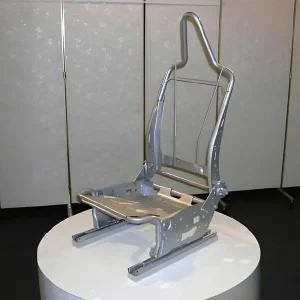
The cushion perimeter tube acts as the core load-bearing skeleton supporting occupant weight and absorbing dynamic vertical G-forces during road oscillations. Engineered with high-ductility DP600/DP780 tubing to prevent low-cycle fatigue failure and maintain structural integrity during front-impact airbag deployment.
Recliner pivot tubes require extremely tight wall thickness tolerance (±0.03 mm) and high roundness to seat recline gear units smoothly. High torsional stiffness prevents frame twisting when adjusting backrest angle under heavy occupant rearwards load.
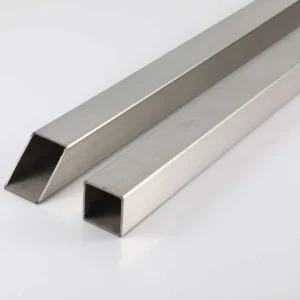
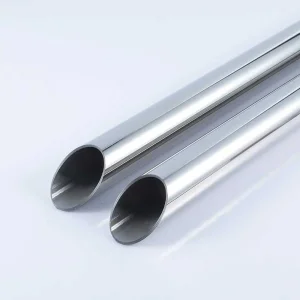
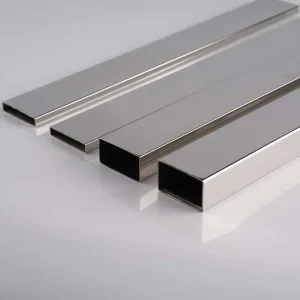
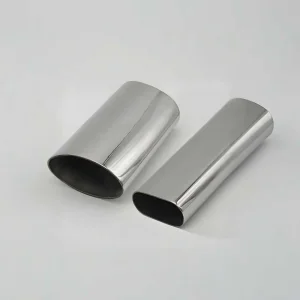
Rear seat frames must maintain luggage retention safety under sudden deceleration (ECE R17 test). Thin-walled AHSS square and oval tubes provide lightweight rigidity, preventing cargo penetration into the passenger cabin during high-speed collisions.
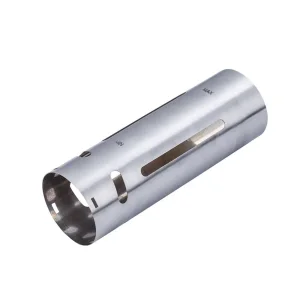
Headrest tubes undergo precise swaging, slotting, and surface finishing. Fulfilling strict crash test whiplash protection mandates, these tubes exhibit precise yield strength control to absorb head displacement energy without unexpected shear collapse.
Expert answers from our automotive metallurgy and QC engineering teams regarding crash testing, seam annealing, surface coatings, and lead times.
Weld seam splitting during CNC bending is caused by un-annealed heat-affected zones (HAZ) or seam misalignment. We utilize Online High-Frequency Induction Seam Normalizing (Annealing) to recrystallize the weld seam grain structure to match the parent metal. Furthermore, on customer request, we mark or orient the weld line precisely along the neutral bending axis to minimize tensile stress on the weld during 1D or 1.5D mandrel bending operations.
Depending on the vehicle environment and Tier-1 specification, we offer: 1) Pre-galvanized zinc coatings (Z100 - Z275 g/m²); 2) E-Coating (Electrophoretic deposition) providing 500+ hours neutral salt spray resistance (ASTM B117); 3) Environmental oil pickling for un-coated structural carbon steels; and 4) PVD or Mirror/Satin mechanical polishing for exposed decorative stainless steel seat rails and handles.
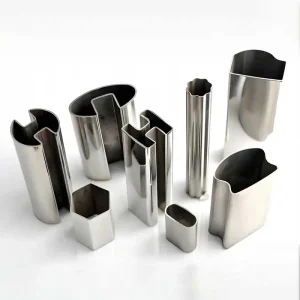
Yes. Our tooling workshop maintains over 500 sets of existing roll-forming dies covering standard and asymmetrical geometries. If a custom profile is required, our engineering team designs and cuts dedicated tooling in-house within 15 days. We perform finite element roll-forming simulation to prevent longitudinal twist or corner thinning on custom profiles.
For standard mill sizes in carbon steel or stainless steel, our minimum order quantity is 500 kg per dimension. For custom AHSS alloys or specialized PVD finishes, the MOQ is 1.0 to 2.0 metric tonnes. Standard production lead time is 15 to 20 days post sample/drawing approval. Express tooling turnaround is available for urgent prototype runs supporting vehicle trial builds.
Every tube is individually plastic-sleeved or inter-wrapped with VCI (Vapor Corrosion Inhibitor) paper. Bundles are bound with non-marring synthetic strapping, corner-protected with heavy corrugated caps, and sealed inside moisture-vapor barrier foil bags with desiccant packs before insertion into sturdy wooden crates or heavy-duty steel transit frames.
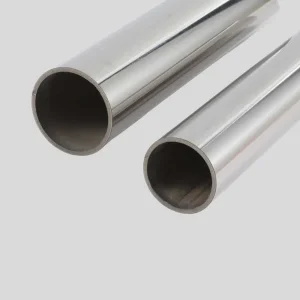
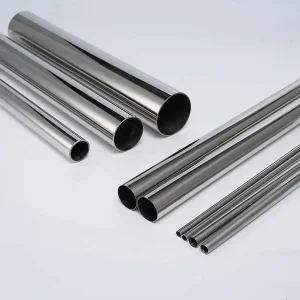
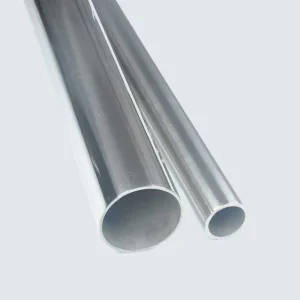
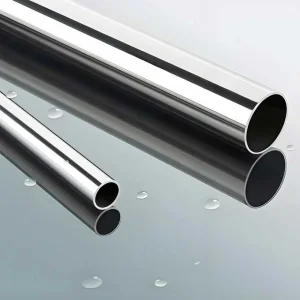
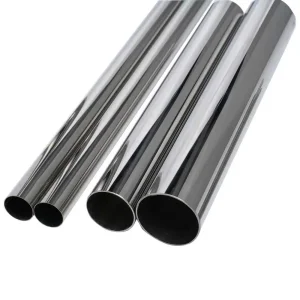
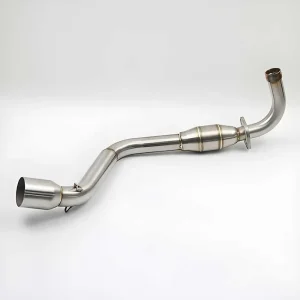
Full spectrum of structural, decorative, marine, and automotive structural tubing manufactured to international standards.
Contact our automotive structural tubing specialists today for technical drawing reviews, DFM feedback, PPAP Level 3 sample requests, and instant factory-direct quotations.