Engineered stainless steel profile solutions manufactured under ISO 9001:2015 quality frameworks for direct integration into custom OEM furniture legs and frames.
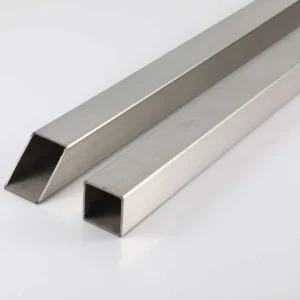
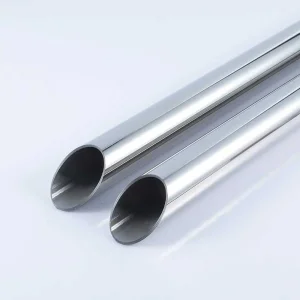
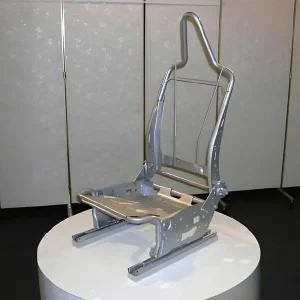
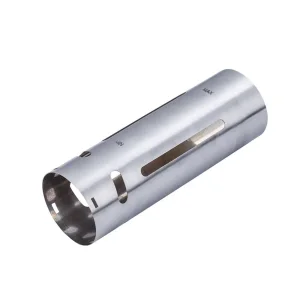
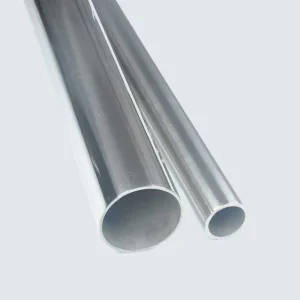
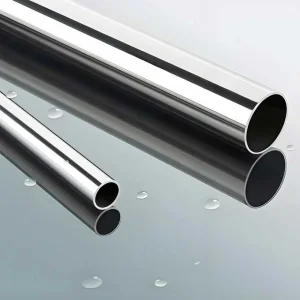
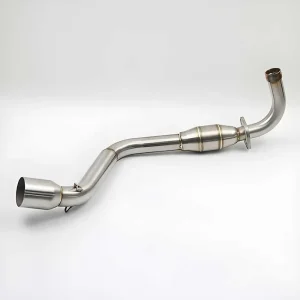
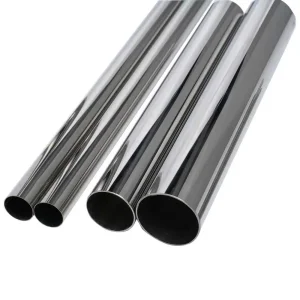
The global furniture manufacturing landscape is undergoing a structural transition toward long-life, corrosion-resistant, and chemically stable materials. As interior designers, commercial contractors, and enterprise office furniture brands seek higher durability and premium visual appeal, OEM brushed steel table legs have emerged as the standard of choice for high-load executive desks, hospitality dining tables, and cleanroom laboratory workstations.
Traditional mild steel table legs rely on organic powder coatings for corrosion protection. Over time, physical impact, foot scuffs, and cleaning detergents cause micro-chipping, leading to underlying rust propagation. Brushed stainless steel (AISI 304/316) possesses a self-passivating chromium oxide layer ($\text{Cr}_2\text{O}_3$) that self-heals when scratched, providing zero maintenance over a 20+ year lifecycle.
Advanced OEM factories now deploy 5-axis fiber laser tube cutters and robotic TIG welding cells equipped with automated seam planishing. This ensures flush weld joints at mitred corners ($90^\circ$ and $45^\circ$ joints) without heat discoloration, reducing manual grinding labor by 70% and preserving metallurgical integrity.
Modern architectural buyers require touch-resistant surfaces. Leading suppliers apply physical vapor deposition (PVD) combined with hydrophobic nano-sealants over satin-brushed textures (180–320 grit). This yields rich colors like Brushed Brass, Rose Gold, and Charcoal Black without compromising cleanability or fingerprint resistance.
Specifying the correct alloy grade and wall thickness for OEM table legs requires balancing load capacity, flexural rigidity, corrosion resistance, and unit cost. VertexFlow Tubes manufactures custom hollow structural sections (HSS) engineered according to ASTM A554 specifications.
| Stainless Steel Grade | Chemical Composition Key (%) | Yield Strength ($\sigma_y$) | Tensile Strength ($\sigma_u$) | Neutral Salt Spray (NSS) Resistance | Primary OEM Application |
|---|---|---|---|---|---|
| AISI 201 (High-Cu) | 16-18% Cr, 1-1.5% Ni, 3.5-5.5% Mn, 1.5% Cu | $\ge 275\text{ MPa}$ | $\ge 520\text{ MPa}$ | 96 Hours (Indoor Controlled) | Cost-sensitive indoor furniture, residential coffee tables, dining frames. |
| AISI 304 (UNS S30400) | 18-20% Cr, 8-10.5% Ni, $\le 0.08\%$ C | $\ge 205\text{ MPa}$ | $\ge 515\text{ MPa}$ | 240+ Hours (ISO 9227) | Commercial office desks, restaurant tables, hospital workstations, executive suites. |
| AISI 316L (UNS S31603) | 16-18% Cr, 10-14% Ni, 2-3% Mo, $\le 0.03\%$ C | $\ge 220\text{ MPa}$ | $\ge 520\text{ MPa}$ | 500+ Hours (Marine Grade) | Outdoor patio tables, cruise ship furniture, coastal resort dining, cleanroom labs. |
When designing heavy-duty executive or industrial workbench bases, preventing table deflection under load is critical. The maximum central deflection ($\delta_{max}$) for a hollow rectangular steel leg frame subjected to a uniformly distributed load ($W$) is calculated using Euler-Bernoulli beam theory:
Our engineering support team calculates section modulus values for OEM clients to eliminate frame wobble and ensure static load capacities exceeding 500 kg (1,100 lbs) for heavy stone-topped or executive conference tables.
Backed by Foshan's primary stainless steel mill group with complete vertical control over slitting, forming, welding, precision machining, and finishing.
Achieving a uniform brushed finish across batch production requires strict abrasive belt grading, consistent linear speed, and automated pressure feedback. Inconsistent brushing leads to visible grain mismatch when assembling leg brackets and top frames.
Roughness Value: $Ra \; 0.5 - 0.8 \; \mu\text{m}$
A linear grain texture featuring continuous directional lines. Preferred for modern industrial office furniture and architectural leg bases where high tactile texture and grain contrast are desired.
Roughness Value: $Ra \; 0.3 - 0.5 \; \mu\text{m}$
Features softer, refined parallel lines. Delivers a sleek matte sheen that effectively diffuses ambient lighting, ideal for high-end residential dining tables and executive boardroom furniture.
Roughness Value: $Ra \; 0.15 - 0.3 \; \mu\text{m}$
An ultra-smooth polished brushed finish ideal as a substrate for Titanium PVD coloring. Provides exceptional resistance to smudging and ambient humidity while offering custom decorative metallic tones.
Different commercial operating environments impose unique mechanical and hygienic demands on steel leg fabrications. We provide tailored technical blueprints and custom manufacturing routes across three core sectors:
Primary Challenges: High flex load, cable integration needs, knockdown (KD) shipping efficiency.
Primary Challenges: Aesthetics, hidden welds, premium metallic finishes.
Primary Challenges: Harsh chemical washdowns, zero bacterial traps, strict hygiene.
Sourcing OEM steel components internationally requires absolute certainty in raw material chemistry, dimensional consistency, and protective packaging. VertexFlow implements a multi-layer quality gate process that guarantees zero-defect deliveries for overseas brand partners.
From raw coil slitting to ocean container sealing, every production lot undergoes verified testing:
Long-distance ocean transit exposes brushed steel to saltwater moisture and vibration risks. Our export packaging protocol includes:
Anticipating architectural and manufacturing trends from 2026 to 2030 to keep our OEM partners ahead of market requirements.
Integrating motorized linear actuators seamlessly inside hollow brushed stainless steel leg profiles for height-adjustable sit-stand desks, concealing drive cables completely from view.
Transitioning toward low-carbon stainless steel produced via Electric Arc Furnaces (EAF) utilizing up to 85% recycled scrap metal, reducing Scope 3 carbon emissions for global ESG compliance.
Applying next-generation ceramic nano-coatings over brushed surfaces to achieve oleophobic properties that eliminate fingerprint smudge visibility entirely on high-touch furniture legs.
Detailed answers compiled by our chief metallurgical engineers and export project management team.
The core difference lies in their chemical composition and corrosion resistance. Grade 304 contains 18-20% Chromium and 8-10.5% Nickel, creating a stable, self-healing chromium oxide film that withstands humidity, spills, and cleaning chemicals without rusting (passing 240+ hours of salt spray testing). Grade 201 replaces much of the nickel with manganese and copper; while offering high mechanical yield strength at a lower cost, it is susceptible to tea-staining and pitting in humid or coastal environments. We recommend Grade 304 for commercial, medical, and export-grade furniture, reserving 201 for dry, cost-sensitive indoor residential applications.
Batch-to-batch finish consistency is maintained through automated belt-polishing machinery with continuous pneumatic pressure control. For custom welded subframes, our fabricators line up all tube members according to a uniform grain orientation drawing before cutting and welding. After TIG welding and seam planishing, the joint area is hand-brushed using matching grit abrasive pads to blend the weld seamlessly into the original grain direction.
Yes. As a direct factory supplier, over 80% of our production consists of custom OEM components. We accept STEP, IGES, DWG, and SolidWorks files. Our engineering team reviews your drawings for manufacturability, bending radiuses, laser-slot tolerances, and structural integrity, providing an optimized production blueprint along with sample prototype delivery prior to full-scale manufacturing.
Heavy tops such as granite, quartz, or marble (which can weigh 150 kg to 400+ kg) require hollow structural sections with wall thicknesses ranging from 1.5 mm to 3.0 mm, depending on the span and leg geometry. For large rectangular dining legs (e.g., 80x40mm or 100x50mm profiles), a 2.0mm wall thickness in 304 stainless steel provides exceptional resistance against flexure and sway without excessive frame weight.
For outdoor or coastal environments exposed to airborne salt chlorides, Grade 304 can suffer from localized pitting corrosion over time. We strongly recommend specifying AISI 316L stainless steel for outdoor patio legs. Grade 316L contains 2-3% Molybdenum, which dramatically enhances chloride resistance. Additionally, we apply a full post-weld pickling and passivation treatment to clear free iron residues from weld seams.
Utilizing physical vapor deposition (PVD) vacuum coating technology, we supply custom brushed steel table legs in a wide variety of durable metallic finishes. Popular choices include Brushed Champagne Gold, Brushed Rose Gold, Brushed Brass, Gunmetal Black Titanium, and Antique Bronze. PVD coatings form a 0.3–0.5 micron micro-ceramic surface layer that is scratch-resistant and will not chip, peel, or fade under UV light.
For standard tube profiles and standard satin finishes, our MOQ is 500 kg per size/spec. For custom fully-fabricated leg assemblies or custom PVD colors, the typical MOQ is 100 to 200 sets depending on design complexity. Standard production lead time is 15 to 20 business days after sample approval and deposit confirmation.
Every individual brushed leg component is wrapped in a protective, low-tack PE protective sleeve. Complete assemblies are nested with foam cushioning and placed inside heavy-duty 5-ply corrugated master cartons or custom wooden crates lined with VCI rust-inhibiting film. This ensures products arrive in pristine condition, ready for immediate assembly or retail distribution.
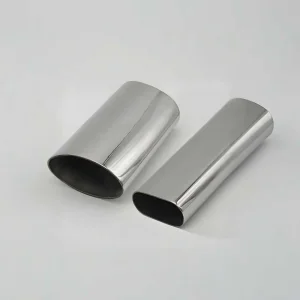
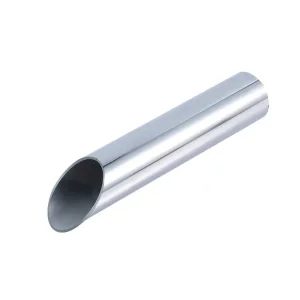
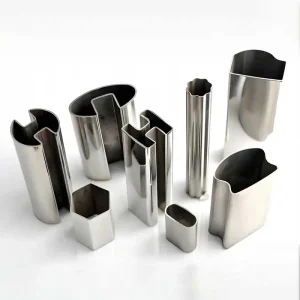
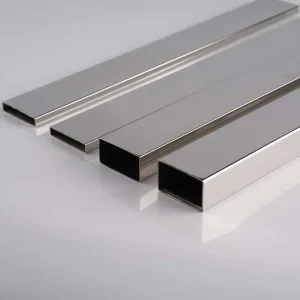
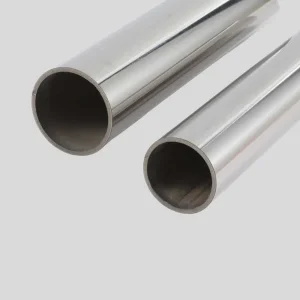
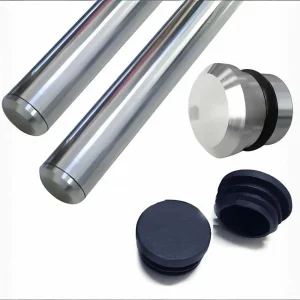
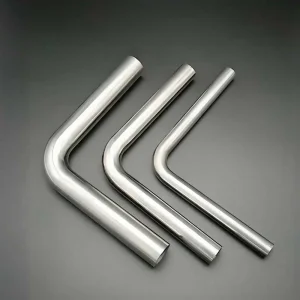
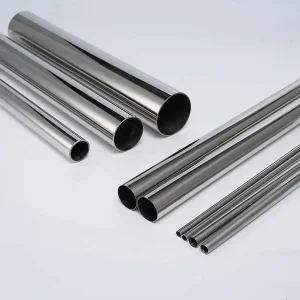
Explore our complete range of specialized stainless steel structural profiles, oval tubes, and decor fittings manufactured in Foshan.
Send us your technical drawings, 3D CAD files, or product requirements. Our engineering desk will deliver a comprehensive OEM quotation, material feasibility report, and sample plan within 24 hours.