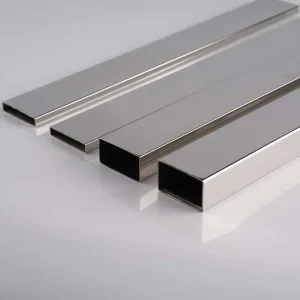
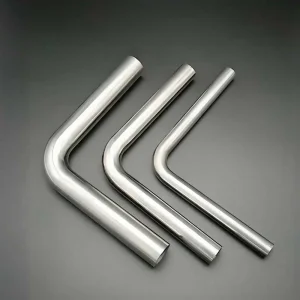
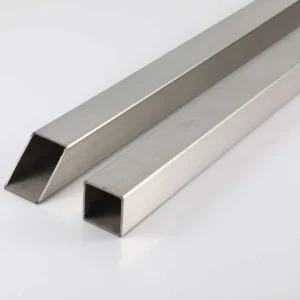
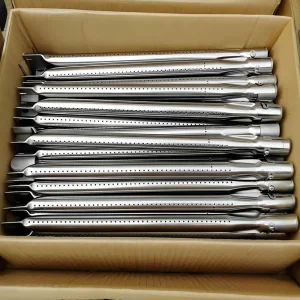
Explore our core engineered tubular products certified to international mechanical and decorative OEM standards.
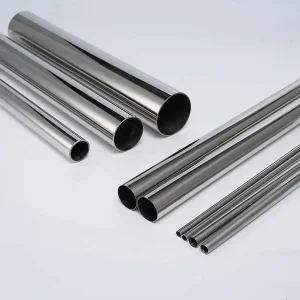
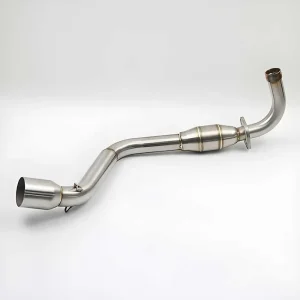
Analyzing the shift in public transportation infrastructure, safety mandates, and structural alloy demands across global markets.
The global public transportation sector is undergoing a rapid transformation driven by urban decarbonization, electric bus fleet adoption, and elevated passenger safety protocols. As original equipment manufacturers (OEMs) and tier-1 bus interior builders scale production to meet municipal mandates, the demand for high-integrity, lightweight, and bio-hygienic handrail systems has reached an unprecedented high. OEM bus handrail tubing serves not merely as a physical support mechanism for commuters during acceleration and decelerative surges, but as a critical structural safety component governed by rigorous international crashworthiness standards, including ECE R107 (UN Regulation on Vehicle Construction), FMVSS 222 (School Bus Passenger Seating and Crash Protection), and ISO 3834 (Quality Requirements for Fusion Welding of Metallic Materials).
In mature markets across North America, the European Union, and Asia-Pacific, municipal transit authorities are imposing strict procurement guidelines regarding interior hygiene, tactile ergonomics, and vandal resistance. Conventional powder-coated or painted carbon steel handrails fail under heavy daily abrasion, resulting in flaking paint, rust formation, and sanitary hazards. Today’s tier-1 suppliers specify premium austenitic grades (AISI 304, 304L, 316, 316L) and specialized high-manganese stainless steels engineered with micro-textured surfaces or physical vapor deposition (PVD) titanium coatings. These advanced metallurgical solutions provide multi-decade resistance to human sebum, aggressive industrial disinfectants, and environmental humidity variations.
Engineered to withstand static point loads exceeding 1.5 kN and dynamic impact stresses required under ECE R107 passenger safety testing without permanent plastic deformation.
Thin-wall high-tensile tubing profiles reduce overhead mass in electric buses (eBuses), extending battery range and lowering total cost of ownership (TCO) for municipal transit fleets.
Inner-nitrogen purged plasma welding guarantees 100% seam fusion, protecting handrails against high-frequency chassis vibrations over 1,000,000+ kilometer service lifetimes.
Comprehensive engineering parameters for raw material selection, dimensional control, and post-fabrication surface engineering.
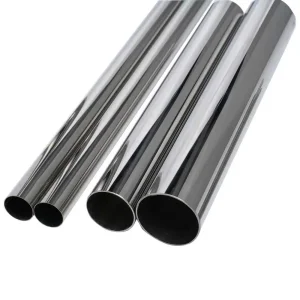
Selecting the precise alloy and manufacturing specification for bus handrail tubing requires a rigorous evaluation of mechanical properties, bendability, and surface finishing capabilities. Handrails are rarely installed as straight lengths; they undergo complex multi-axis CNC mandrel bending, end flaring, necking, laser slotting, and bracket welding. Inferior tubing with irregular wall thickness tolerances or unannealed weld seams will split, wrinkle, or suffer from ovality degradation during tight-radius bending.
| Alloy Grade | Chemical Composition Key Elements | Tensile Strength (MPa) | Yield Strength (MPa) | Primary Bus Application Environment |
|---|---|---|---|---|
| AISI 304 (UNS S30400) | 18% Cr, 8% Ni | ≥ 515 | ≥ 205 | Standard urban buses, intercity coaches, indoor dry environment grab rails. |
| AISI 316L (UNS S31603) | 16-18% Cr, 10-14% Ni, 2-3% Mo | ≥ 485 | ≥ 170 | Coastal transit networks, high-humidity tropical BRT systems, outdoor open-top tourist buses. |
| High-Copper 201 (Custom Grade) | 14-16% Cr, 1-1.5% Ni, 8-10% Mn, 1-2% Cu | ≥ 650 | ≥ 275 | Cost-optimized fleet projects requiring high tensile stiffness and moderate indoor corrosion resistance. |
| 409L Stainless Steel | 10.5-11.7% Cr, Ti-stabilized | ≥ 380 | ≥ 170 | Sub-floor structural handrail supports, hidden frame reinforcements, exhaust-adjacent framing. |
At our manufacturing facility, handrail tubing is produced using state-of-the-art continuous roll-forming mills equipped with high-frequency plasma welding and in-line infrared weld seam monitors. To ensure absolute interchangeability during bus assembly, we enforce manufacturing tolerances stricter than standard ASTM A554 requirements:
Maintained within ±0.05 mm via in-line dual-axis laser micrometers. Ensures seamless press-fit compatibility with cast aluminum, stainless steel, or molded plastic handrail brackets and connectors.
Controlled within ±5% across the entire coil batch. Prevents localized necking or wall thinning during severe 1.5D center-line radius (CLR) bending operations on automatic CNC pipe benders.
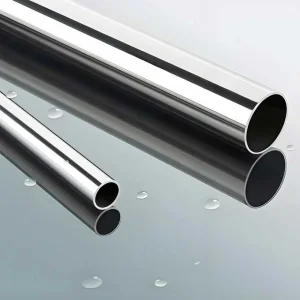
Offered in Satin 180#/240#/320# grit, 600# Mirror Polish, or Brushed Anti-Fingerprint PVD coatings. Roughness average controlled to Ra ≤ 0.2 µm for supreme tactile comfort and low bacterial retention.
Tailored tubular geometries engineered for distinct interior architectures in modern public mobility networks.
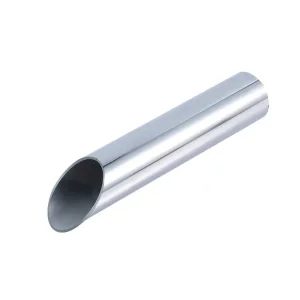
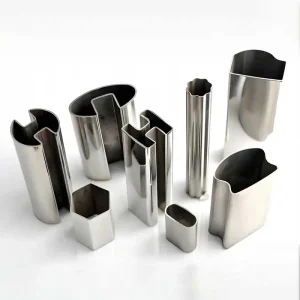
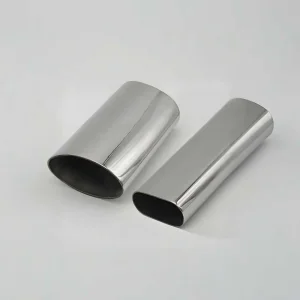
Requires high-capacity ceiling-mounted grab rails and vertical stanchions. Oval and elliptical tubing profiles are increasingly specified over standard round tubes to provide an ergonomic grip that prevents hand slippage during rapid braking.
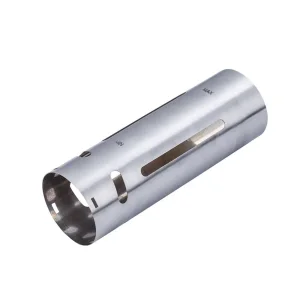
Demands futuristic aesthetic integration with ambient LED lighting. Slotted stainless steel tubing allows direct integration of continuous flexible LED strips inside the handrail channel, providing safety illumination for passenger walkways.
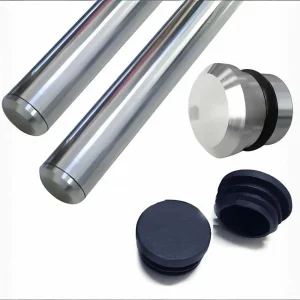
Focuses on stairwell handrails and seat-back safety bars. Uses custom D-shape and knurled anti-slip tubes with PVD Rose Gold, Champagne, or Gunmetal black finishes to match high-end upholstery and interior cabin aesthetics.
In high-density passenger environments, oval handrail tubing ($30 \times 15 \text{ mm}$ or $35 \times 20 \text{ mm}$) offers superior ergonomic performance compared to conventional $\Phi31.8 \text{ mm}$ or $\Phi38.1 \text{ mm}$ round tubes. The flattened side matches the natural curl of human fingers, requiring 25% less pinch force to maintain a secure grip during sudden vehicle maneuvers. Furthermore, oval tubing increases the section modulus along the primary load axis, preventing vertical bending under heavy downward force from standing passengers.
Pioneering the convergence of smart sensors, antimicrobial metallurgy, and sustainable manufacturing.
Integrating Cu/Ag nanocomposite particles directly into the vacuum deposition layer. Achieves 99.99% kill rate against E. coli and Staphylococcus aureus within 2 hours without degrading surface luster.
Developing hollow tubes with internal routing channels for capacitive touch sensors and passenger counting telemetry. Allows fleet managers to monitor passenger density and stop-request interactions in real time.
Utilizing cold-worked high-nitrogen alloys to reduce wall thickness from 1.5 mm down to 1.0 mm while preserving full crash-yield thresholds, contributing directly to zero-emission transit goals.
End-to-end quality tracking from master raw steel coil to localized container shipping and duty compliance.
As a specialized OEM manufacturing hub running 43 continuous production mills across a 12,000 m² facility, our factory bridges the gap between massive steel mill production capacity and localized, customized bus builder specifications. Every shipment of handrail tubing is accompanied by a full EN 10204 3.1 Material Test Certificate (MTC), documenting heat numbers, chemical analysis, tensile testing, elongation figures, and eddy-current non-destructive flaw detection results.
Technical guidance for bus designers, procurement managers, and quality assurance engineers.
Explore our complete industrial offering covering automotive, structural, medical, and sanitary stainless steel tubing.