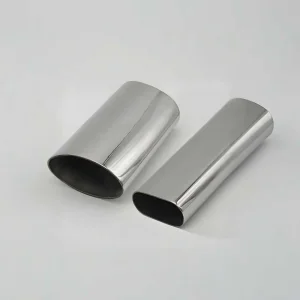
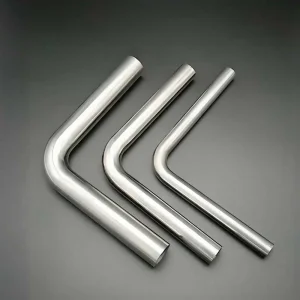
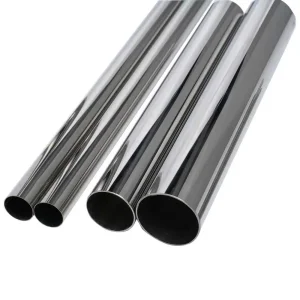
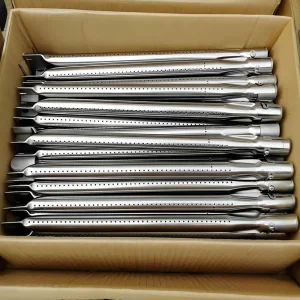
Explore our core engineering lineup. Custom roll-grooved, ASTM compliant, and structurally optimized stainless steel products manufactured for demanding global applications.
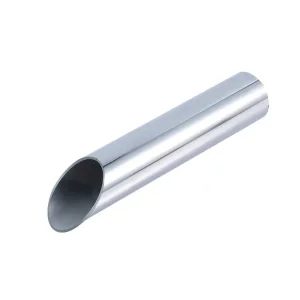
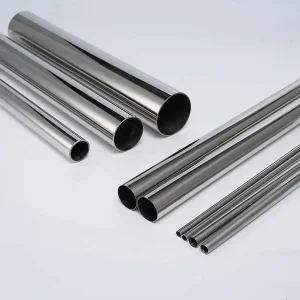
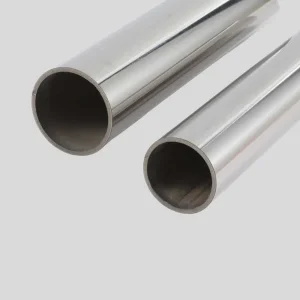
Analyzing the paradigm shift from traditional welding and threading to cold roll-grooved mechanical joint systems in commercial, industrial, and high-purity fluid transfer environments.
Modern fluid routing systems are undergoing a rapid transformation. Traditional joining methodologies—such as full-penetration butt welding, socket welding, and NPT threading—present substantial challenges in high-cost labor markets. Flame-based welding requires certified specialized personnel, extensive hot-work permits, time-consuming non-destructive testing (NDT), and complex chemical pickling and passivation procedures to restore the corrosion-resistant passive layer compromised by heat-affected zones (HAZ).
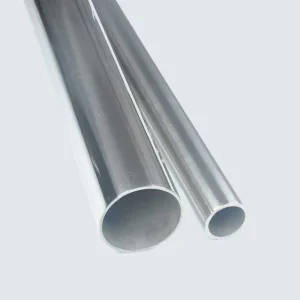
In contrast, Grooved Stainless Steel Pipe Technology offers a cold-formed mechanical joint solution. By cold-rolling or machining a precise circumferential groove near the pipe end, mechanical couplings with elastomeric gaskets can securely clamp sections together. This technique reduces installation labor costs by up to 70%, completely eliminates hot-work safety risks, and maintains the metallurgical integrity of stainless steel alloys (such as 304, 304L, 316, and 316L).
A common misconception among piping design engineers is that roll-grooving creates internal flow restrictions or localized turbulence. Detailed Computational Fluid Dynamics (CFD) modeling reveals that cold roll grooving creates a smooth, rounded radial indentation inside the pipe bore with minimal friction factor variations.
Furthermore, grooved joint connections absorb linear thermal expansion, contraction, structural deflection, and seismic vibration. The resilient elastomeric gasket housing accommodates angular deflection without inducing bending moments into structural supports, providing superior long-term mechanical reliability in high-rise, seismic, and marine conditions.
Comprehensive metallurgical specs, roll vs. cut groove mechanical profiles, and standard dimension tables adhering to ASTM A312, ASTM A554, and EN 10217-7 criteria.
| Nominal Size (NPS) | Outside Diameter (OD) | Wall Thickness (Sch 10S) | Wall Thickness (Sch 40S) | Groove Depth (Tol ±0.05mm) | Max Working Pressure |
|---|---|---|---|---|---|
| DN25 (1") | 33.7 mm / 1.315 in | 1.65 mm / 0.065 in | 3.38 mm / 0.133 in | 1.14 mm | 300 PSI (20.7 bar) |
| DN50 (2") | 60.3 mm / 2.375 in | 2.77 mm / 0.109 in | 3.91 mm / 0.154 in | 1.60 mm | 300 PSI (20.7 bar) |
| DN100 (4") | 114.3 mm / 4.500 in | 3.05 mm / 0.120 in | 6.02 mm / 0.237 in | 2.11 mm | 300 PSI (20.7 bar) |
| DN150 (6") | 168.3 mm / 6.625 in | 3.40 mm / 0.134 in | 7.11 mm / 0.280 in | 2.16 mm | 250 PSI (17.2 bar) |
| DN200 (8") | 219.1 mm / 8.625 in | 3.76 mm / 0.148 in | 8.18 mm / 0.322 in | 2.34 mm | 250 PSI (17.2 bar) |
Roll grooving is a cold-forming process that radially displaces material without metal removal. A motorized grooving die depresses the pipe outer wall while a bottom drive roll supports the inner wall. This maintains full material density, structural stiffness, and seam strength on high-grade welded stainless steel tubing.
Cut grooving involves precision machining to cut away a groove on heavy-wall pipes (typically Schedule 40 and thicker). Ideal for thick-walled seamless industrial pipes where bore consistency is required. It ensures zero internal deformation, making it suitable for high-viscosity media and precise mechanical pigging operations.
Grade 304/304L (UNS S30400/S30403) provides excellent cost-to-performance ratio for HVAC, fire safety, and general industrial applications. Grade 316/316L (UNS S31600/S31603) incorporates 2.0-3.0% Molybdenum, boosting resistance to chloride-induced pitting, making it essential for marine, coastal, and chemical applications.
Addressing supply chain risks, total cost of ownership (TCO), and sourcing criteria for EPC contractors, engineering OEMs, and international distributors.
When evaluating piping procurement, sophisticated global purchasing managers analyze total installed cost rather than initial material procurement costs alone. Although stainless steel raw materials carry a premium compared to carbon steel or ductile iron, grooved stainless piping eliminates the following expenditures:
Sourcing OEM grooved stainless pipes from unreliable tier-2 suppliers often leads to dimensional non-conformities, such as groove width deviations, out-of-round pipe ends, and inconsistent wall thickness. These defects compromise gasket sealing integrity, resulting in costly job-site leaks.
By partnering with VertexFlow—utilizing over 43 specialized production lines and in-line real-time optical laser sensors—global buyers secure consistent dimensional accuracy (±0.05 mm), batch-to-batch chemical homogeneity, and reliable delivery lead times (15 days standard).
Quantifiable operational benchmarks supporting global EPC contractors, industrial plants, and OEM equipment fabricators.
Engineered grooved stainless steel piping systems tailored for stringent structural, hygienic, and environmental stress requirements.
Thin-wall light-weight grooved stainless steel piping (Schedule 10S/5S) is ideal for commercial HVAC chilled water loops and fire sprinkler systems (compliant with NFPA 13 standards). Lightweight handling eliminates heavy rigging equipment, while corrosion resistance prevents internal rust scaling from clogging sprinkler head nozzles.
Seawater reverse osmosis (SWRO) and municipal wastewater facilities operate under harsh chemical conditions. Utilizing Grade 316L grooved stainless pipes ensures resistance to aggressive halogen compounds, preventing pinhole leaks and preserving long-term structural integrity.
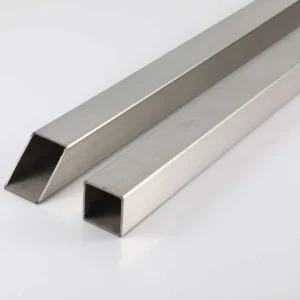
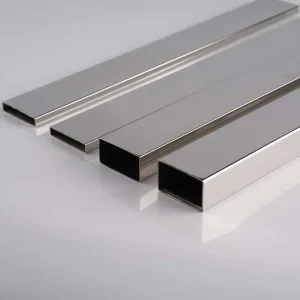
From conveyor roller housings to industrial workstation frames, structural stainless steel tubing provided by VertexFlow delivers structural straightness (controlled to 1 mm/m) and uniform wall thickness. This guarantees precise mechanical fitment and long service life under high dynamic loads.
Ensuring compliance with international standards, transparent metallurgical documentation, and end-to-end engineering support from coil slitting to global site delivery.
Every lot of OEM grooved stainless steel pipe manufactured by VertexFlow complies with international codes. Raw coil materials are directly sourced from premier steel producers including TISCO, POSCO, and Baosteel.
Quality assurance is embedded throughout our 10-stage manufacturing process. Rather than relying on simple final visual checks, our factory utilizes automated, continuous inspection systems:
Driving innovation in custom grooved profile geometry, automated CNC tube processing, advanced PVD surface treatments, and sustainable green metallurgy.
Beyond traditional 180#/240#/320# satin brushing and 600# mirror polishing, VertexFlow offers Physical Vapor Deposition (PVD) titanium color coating. Available in Rose Gold, Champagne, Black Titanium, and Brass, providing a durable 0.3–0.5 µm ceramic layer for high-end architectural and decorative installations.
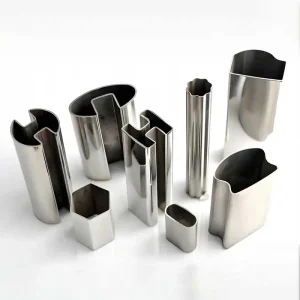
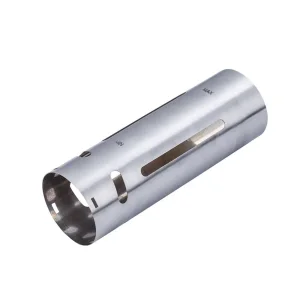
Eliminate extra fabrication steps in your plant. Our facility provides integrated secondary fabrication, including CNC precision cut-to-length, rotary draw bending, end flaring, necking, punching, laser slotting, and edge deburring—delivering installation-ready components directly to your assembly line.
We are actively developing optimized roll-groove geometries designed for thin-wall high-yield alloys. Concurrently, our manufacturing operations prioritize green metallurgy initiatives—utilizing recycled scrap fractions, solar power energy offset, and zero-discharge closed-loop water filtration systems.
Direct answers from our metallurgical quality team addressing common questions regarding specifications, tolerances, roll grooving, and corrosion prevention.
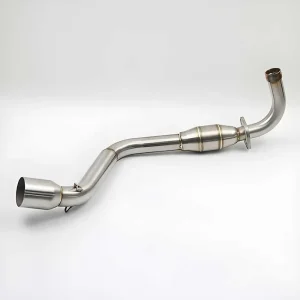
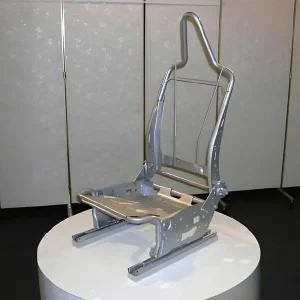
Explore our extended series of stainless steel products designed for automotive systems, medical furniture, home storage, and marine applications.