Explore our flagship OEM tube product line manufactured to exact tolerances (ASTM A554, ASTM A269, ASTM A249) with verified Total Indicator Runout (TIR) metrics and specialized surface finishes.
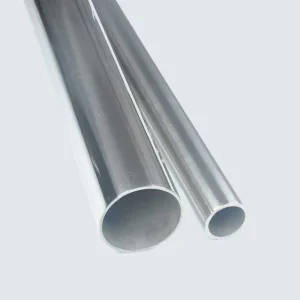
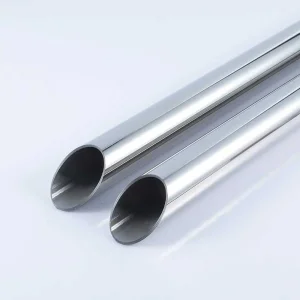
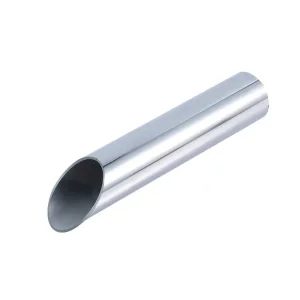
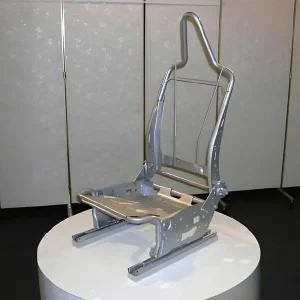
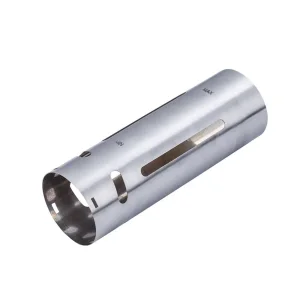
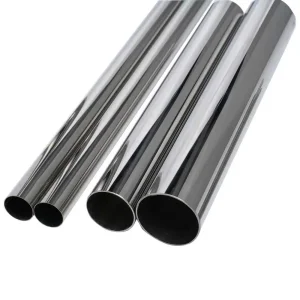
In modern precision manufacturing, standard dimensional tolerances are no longer sufficient for high-speed dynamic applications. Total Indicator Runout (TIR) serves as the definitive engineering metric for tubing rotational stability, roundness, and axial concentricity.
Total Indicator Runout (TIR) measures the full radial displacement of a tube's outer surface during a complete 360-degree rotation around its central reference axis. Unlike standard OD tolerance which only checks localized diameter, TIR evaluates combined ovality, wall eccentricity, and longitudinal camber.
While cross-sectional roundness (ovality) focuses solely on perimeter geometry, low TIR demands that the outer diameter (OD) and inner diameter (ID) share a perfectly aligned geometric center. For conveyor roller shells and motor shafts, low TIR prevents centrifugal forces from generating operational vibration at high RPM.
Utilizing standard tubing with excessive TIR (>0.30mm) leads to premature bearing failure, chatter marks in printing/coating machinery, excessive noise levels (>85dB), and elevated fatigue stress on drive systems. OEM Low TIR tubing (<0.05mm) eliminates these operational bottlenecks.
The centrifugal force ($F_c$) generated by an eccentric rotating tube shell is mathematically defined as:
F_c = m \cdot \omega^2 \cdot e
Where m is mass, ω is angular velocity (rad/s), and e is eccentricity (directly proportional to TIR). By reducing TIR from 0.25 mm to 0.05 mm, OEM engineers reduce dynamic unbalance forces by 80%, quadrupling bearing service life in continuous automated logistics and high-speed roller assemblies.
Across North America, Europe, and the Asia-Pacific region, rapid automation, cleanroom manufacturing, and stringent energy efficiency targets have shifted procurement demands toward high-precision OEM stainless steel tubing.
With global e-commerce driving giant fulfillment centers, high-speed parcel sorters require millions of conveyor rollers. Low TIR 304/316L stainless tubing eliminates belt tracking errors, minimizes drive motor friction, and lowers electrical power consumption in 24/7 sorting hubs.
Precision web handling equipment for lithium-ion battery separators and microelectronic foil manufacturing mandates ultra-smooth, low TIR stainless steel roller shells. Any runout induces uneven tension, leading to micro-tears, yield loss, and expensive downtime.
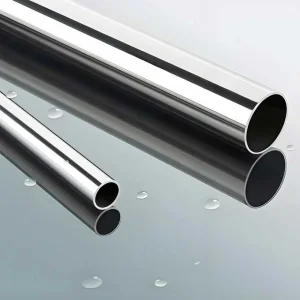
Sanitary grade low TIR stainless steel pipes prevent liquid stagnant zones inside pumps, filling machines, and heat exchangers. Coupled with internal bead planishing and electro-polishing (Ra ≤ 0.4 μm), these tubes meet stringent FDA, 3-A, and EHEDG standards.
Our OEM mill produces welded and cold-drawn stainless steel tubing compliant with international structural, sanitary, and mechanical engineering standards.
| Specification Parameter | Standard Commercial Tube | OEM Low TIR Precision Tube | Sanitary / High Precision Grade |
|---|---|---|---|
| Primary Standards | ASTM A554, GB/T 12770 | ASTM A554 (Tight Tolerance), DIN 2394 | ASTM A269 / A249, EN 10217-7 |
| Total Indicator Runout (TIR) | ≤ 0.30 mm / meter | ≤ 0.05 mm to 0.10 mm | ≤ 0.03 mm / meter |
| OD Tolerance | ± 0.15 mm to ± 0.25 mm | ± 0.05 mm | ± 0.03 mm |
| Wall Thickness Tolerance | ± 10% to 12.5% | ± 5% to 8% | ± 5% (Cold Redrawn) |
| Internal Weld Bead Condition | As-Welded (Raised Bead) | Planished / Smooth Flush Bead | Bead-Removed / Seamless Equivalent |
| Surface Roughness (Ra) | Ra 0.8 μm - 1.2 μm | Ra 0.4 μm (Satin/Polished) | Ra ≤ 0.25 μm (Electro-polished) |
| Available Material Alloys | 201, 304 | 304, 304L, 316, 316L, 409L | 316L, 904L, Duplex 2205 |
Situated in Foshan, Guangdong—the epicenter of global stainless steel metallurgy—our modern manufacturing facility leverages complete vertical integration to offer unprecedented speed, consistency, and cost-competitiveness.
We procure top-grade stainless steel mother coils exclusively from tier-one steelmakers (TISCO, POSCO, Baosteel). Chemical composition purity ensures consistent tensile strength, superior yield during CNC bending, and zero structural cracking.
From in-house coil slitting, automated plasma welding, and nitrogen-shielded bright annealing to precision roll forming and multi-pass mechanical polishing—all processes occur under one 12,000 m² roof under direct ISO9001 supervision.
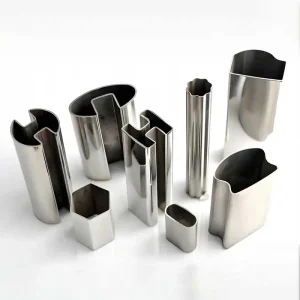
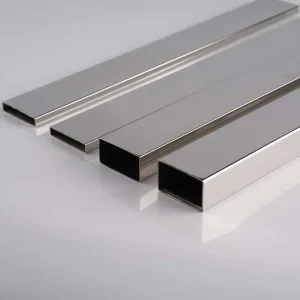
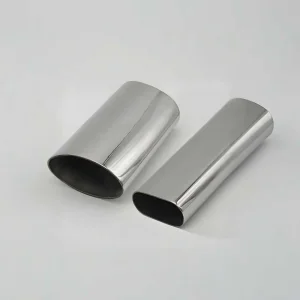
With over 500 active roll-forming die sets for round, square, rectangular, oval, and custom architectural shapes, our factory eliminates expensive tooling setup fees and reduces initial sample lead times to under 5 business days.
Our OEM custom tubing solutions are tailored to meet specialized operational stress factors across multiple global sectors.
Utilizing 409L and 304 heat-resistant stainless alloys, our tubes withstand high cyclic thermal expansion and mechanical fatigue. Low TIR tubing guarantees precise CNC bending and robotic end-flaring without wall thinning or seam splitting.
Hospitals and care facilities demand seamless-look surfaces, anti-microbial cleanability, and structural rigidity. Our medical-grade 304/316L tubing undergoes 600# mirror polishing and 100% load testing for patient support safety.
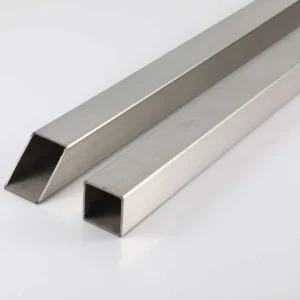
For high-end interior architecture and outdoor coastal balustrades, we supply ASTM A554 round and square tubes coated in PVD Titanium colors (Gold, Rose Gold, Champagne, Gunmetal Black) with enhanced UV resistance and salt spray protection.
As global industries accelerate toward Industry 4.0, zero-emission manufacturing, and extreme precision, stainless steel tube production is undergoing a technological revolution.
Modern mill lines incorporate multi-axis dual laser micrometers downstream from sizing passes. Dimensional deviations or TIR drift are detected in milliseconds, automatically triggering motorized roller calibration to maintain ±0.03mm consistency.
Eliminating oxide scale without chemical pickling, 100% pure hydrogen protective atmosphere furnace annealing delivers bright, stress-relieved tubing with enhanced grain structure, critical for secondary cold draw operations.
OEM buyers increasingly require life-cycle carbon tracking (EPD certificates). Our mill utilizes closed-loop water filtration systems, solar energy offsets, and 100% recyclable steel scrap recovery to support sustainable supply chains.
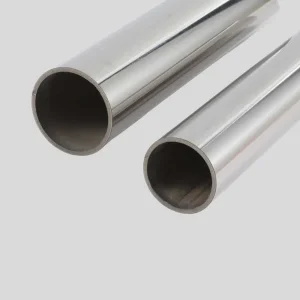
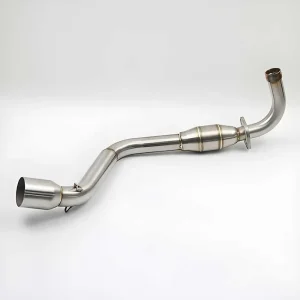
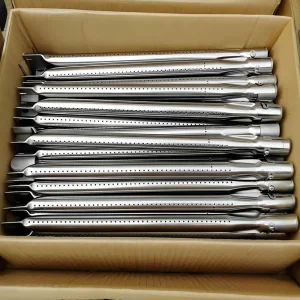
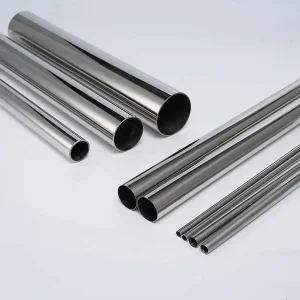
Explore additional specialized product series designed for conveyor rollers, medical safety, gas burner components, and structural hollow sections.
Detailed answers to critical metallurgical, dimensional tolerance, and quality verification queries compiled by our Senior QC Engineering Team.
TIR is measured using dual precision dial indicators or non-contact laser optical triangulation sensors while the tube is supported on precision V-blocks at specified support centers (typically 1,000mm intervals). The tube is manually or mechanically rotated through 360 degrees, and the maximum peak-to-valley variance displayed on the gauge represents the TIR metric.
ASTM A554 governs welded stainless steel tubing intended for ornamental, structural, and mechanical applications where external aesthetic finish and tight OD/wall dimensions are primary. ASTM A269 specifies seamless and welded tubing for general corrosion-resisting and low/high-temperature service, requiring mandatory hydrostatic or non-destructive electric testing and strict pressure retention performance.
When bearings or end caps are press-fitted into conveyor roller shells, an un-conditioned internal weld bead creates localized strain, causing bearing misalignment, elevated operational noise, and premature race pitting. Internal bead planishing cold-works the weld flush with the inner wall, guaranteeing a smooth concentric bore for seamless bearing insertion.
Under ASTM B117 neutral salt spray testing, standard passivated 304 stainless steel tubing withstands 100 to 200 hours before showing initial signs of surface tea-staining or pitting. Marine grade 316L, containing 2.0% to 3.0% Molybdenum, routinely exceeds 500+ hours without corrosion, making it the essential choice for coastal balustrades, offshore equipment, and harsh chemical environments.
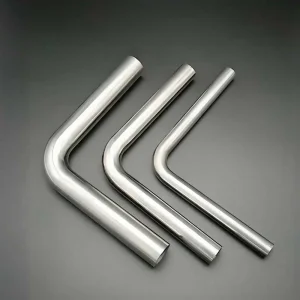
Our OEM manufacturing facility offers comprehensive secondary processing, including precision CNC rotary cutting (±0.2mm length tolerance), mandrel tube bending, laser slotting, hole punching, end flaring, swaging, thread tapping, and robotic TIG/laser welding. This allows global clients to import ready-to-assemble components directly.
Every shipment is backed by a comprehensive Quality Assurance Dossier, including EN 10204 3.1 Mill Test Reports (MTR) with heat number chemical analysis, mechanical tensile/yield testing, flattening/flaring test certificates, dimensional inspection logs, surface roughness (Ra) charts, and SGS or Intertek third-party audit reports upon request.