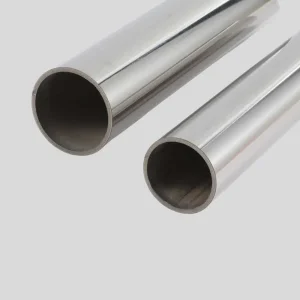
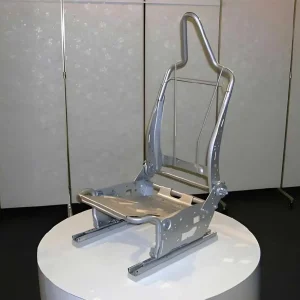
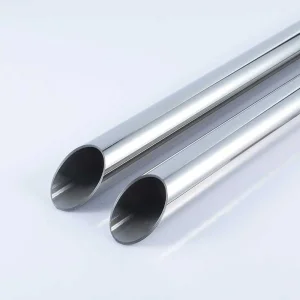
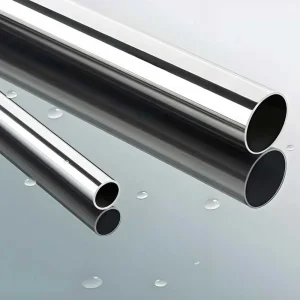
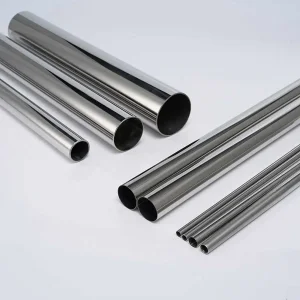
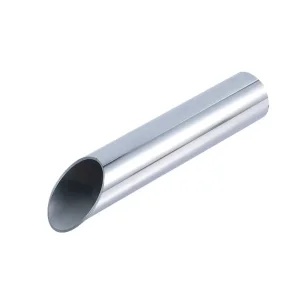
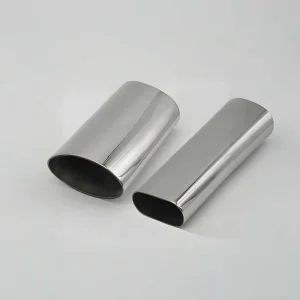
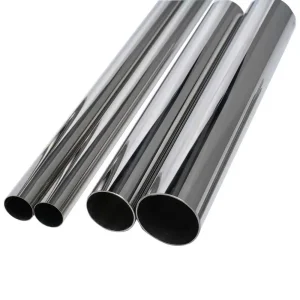
Explore our high-performance stainless steel slotted well pipes and specialized tubing line engineered for rigorous industrial, municipal, and structural applications.
A definitive guide to sub-surface fluid intake, mechanical integrity, structural collapse resistance, and precision laser slotting in modern well construction.
Slotted well pipes must maintain high tensile strength while bearing immense axial tensile loads and radial hydraulic burst/collapse pressures. Engineering slot geometry directly dictates the preservation of moment of inertia across the pipe body.
Maximizing total open percentage area reduces entrance velocity of ground fluids below 0.03 m/s, suppressing laminar turbulence, reducing bio-fouling, and preventing incrustation along the slotted aperture boundaries.
Using CNC laser cutting and high-speed mechanical milling, slot widths ranging from 0.15 mm to 3.0 mm can be cut with continuous tolerances of ±0.015 mm, providing optimal grain-size matching for aquifer sand control.
In the realm of deep groundwater extraction, geothermal reservoir tapping, oil & gas sand control, and industrial dewatering, the operational lifespan of a completion well relies fundamentally upon the integrity of its slotted well screen pipe. As modern hydrogeology pushes into deeper, highly saline, and high-pressure geothermal zones, standard perforated casings fail to deliver the granular sand control and structural collapse resistance required. Sourcing custom slotted pipes from an established OEM factory is no longer merely a procurement choice; it is an essential engineering risk-mitigation strategy.
VertexFlow Tubes Co., Ltd. (operating from a 12,000 m² facility with 43 high-speed automated mills in Foshan) engineers custom slotted well pipes that combine high-yield strength stainless steel strip (ASTM A554, A249, A269 in 304, 316L, 904L, and Duplex 2205) with advanced laser slotting technologies. By controlling the metallurgical slitting, plasma welding, annealing, and slot cutting under one roof, VertexFlow eliminates internal micro-stresses that cause conventional slotted screens to buckle under localized formation shifts.
| Slotted Pipe Architecture | Primary Slot Geometry | Open Area Efficiency (%) | Sand Control Capability | Structural Collapse Resistance |
|---|---|---|---|---|
| Continuous V-Wire Slot | Keystone / Keystone-Trapezoidal | 15.0% – 45.0% | Superior (Fine Silts & Sands) | Moderate to High (Depth Dependent) |
| Bridge Slot Screen | Staggered Bridge Apertures | 8.0% – 18.0% | High (Coarse Gravels & Medium Sands) | High Columnar Loads |
| Straight CNC Mill Slotted | Parallel Longitudinal Cuts | 3.0% – 12.0% | Moderate (Consolidated Aquifers) | Very High (Retains 85%+ Casing Strength) |
| Laser Micro-Slotted Casing | Sub-Millimeter Tapered Slots | 5.0% – 22.0% | Ultra-Fine (Deep Hydrocarbon / Geothermal) | Maximum Yield Resistance |
Choosing the correct alloy chemical profile and slot configuration to resist aggressive chloride attack, hydrogen sulfide stress cracking, and high lithostatic depth pressures.
Austenitic stainless steels form the bedrock of groundwater abstraction and municipal water wells. AISI 304/304L offers excellent cost-to-strength ratios in neutral aquifers, while 316/316L contains 2.0%–3.0% Molybdenum, raising the Pitting Resistance Equivalent Number (PREN) to ≥ 25. This prevents localized pitting corrosion caused by free chloride ions in brackish coastal aquifers and mineralized geothermal waters.
PREN = %Cr + 3.3(%Mo) + 16(%N)
For high-depth geothermal applications, high-temperature brine extraction, and offshore oil field dewatering, Duplex stainless steel S31803 / S32205 (2205) provides roughly double the yield strength of conventional austenitic grades alongside PREN values exceeding 34. Duplex alloys exhibit superior resistance to Stress Corrosion Cracking (SCC) in elevated temperature environments containing high H2S and Cl- ions.
When designing slotted well screens, engineers must evaluate the reduced pipe moment of inertia ($I_{eff}$). The theoretical collapse pressure ($P_c$) of an un-slotted pipe governed by Clinedinst/API 5C3 standards is modified by an empirical Slot Intensity Factor ($K_s$):
P_{c, slotted} = K_s \times \left( \frac{2E}{1-\nu^2} \right) \left( \frac{t}{D} \right)^3
Where $E$ represents Young's Modulus of elasticity (MPa), $\nu$ is Poisson's ratio, $t$ is nominal wall thickness (mm), $D$ is outside diameter (mm), and $K_s$ ranges between 0.72 and 0.91 depending on longitudinal slot spacing, staggered indexing, and laser kerf taper.
Real-world integration of OEM slotted well pipes across challenging hydrogeological, municipal, and industrial operating conditions worldwide.
Used in high-capacity municipal water extraction shafts up to 800 meters deep. Slotted 304L/316L pipes filter out fine quartz sands, maintaining stable drawdowns without clogging or requiring costly pump replacements due to impeller sand abrasion.
Operated in high-enthalpy geothermal power plants handling superheated steam and mineral-rich geothermal brines exceeding 180°C. Duplex 2205 slotted casings resist silica scaling and thermal expansion fatigue.
Integrated into completion strings for sand-prone hydrocarbon reservoirs. Tapered laser slots allow heavy crude fluids to pass freely while restraining reservoir formation sands under cyclic pressure swings.
Deployed in deep pit mining operations to lower regional water tables rapidly. Heavy-wall slotted steel pipes withstand acidic rock drainage (pH < 4.0) and high structural impact from surrounding rock formations.
Used across vast agricultural tracts where large volumes of water must be pumped continuously during growing seasons. High open area slotted pipes protect submersed turbine pumps from fine sediment wear.
Installed in contaminated industrial sites to extract volatile organic compounds (VOCs) and heavy chemical leachates. 316L and 904L slotted pipes prevent chemical breakdown under aggressive oxidation chemistry.
Pioneering advancements in precision sub-surface filtration, sensor-enabled smart casings, and anti-fouling nanotechnologies.
Traditional mechanical milling yields slot widths down to ~0.5 mm with rough edge burrs that promote particulate accumulation. The next generation of laser slotting utilizes 5-axis fiber laser systems with nitrogen assist gas, producing smooth slot widths of 0.15 mm ± 0.010 mm. The resulting slots possess a negative internal kerf taper, allowing trapped sand grains to dislodge naturally under reverse flushing cycles.
Future slotted pipes will feature embedded longitudinal capillary grooves that house distributed temperature and strain sensing (DTS/DSS) fiber-optic cables. Real-time diagnostic data regarding inflow velocities, localized sand bridging, hydrostatic pressure changes, and subterranean structural shifts can be transmitted directly to surface monitoring stations without disrupting extraction pumps.
Bacterial biofilm formation and carbonate mineral scaling are primary drivers of slotted screen degradation. Advanced surface treatments—such as physical vapor deposition (PVD) titanium nitride coatings and fluoropolymer-infused nano-passivation—prevent iron-reducing bacteria and calcium carbonate crystals from bonding to slot apertures, extending screen maintenance intervals by up to 300%.
Moving away from single monolithic pipe strings, modern completion engineering favors modular, interchangeable slotted screen cassettes equipped with elastomer swelling packers. This design enables precise isolation of low-performing or sand-heavy aquifer strata while maintaining continuous extraction from clean, high-yield zones.
How VertexFlow Tubes leverages Foshan's premier industrial ecosystem to deliver world-class slotted well pipes with unmatched speed, quality, and scale.
Located in Shishan Town, Foshan—the core stainless steel hub of China—VertexFlow sources prime coils directly from top-tier steelmakers like TISCO, Baosteel, and POSCO. Full metallurgical traceability (MTC 3.1) is guaranteed for every heat lot.
By housing strip slitting, plasma welding, bright annealing, multi-pass polishing, CNC laser slotting, and thread cutting within a single facility, we eliminate third-party processing delays and enforce strict quality control at every stage.
Our experienced export packaging team utilizes individual protective sleeving, heavy-duty wooden crates, and reinforced iron frames to ensure slotted well pipes arrive in pristine condition, ready for immediate field installation across 40+ countries.
Ensuring complete regulatory alignment and technical documentation for engineering consultancies, drilling contractors, and municipal authorities worldwide.
Every slotted well pipe manufactured at our Foshan facility complies strictly with international piping and tubing standards:
To meet the stringent documentation requirements of major global engineering, procurement, and construction (EPC) projects, our pipes undergo rigorous inspection protocols:
Expert guidance directly from our metallurgical engineers and hydrogeological technical support team.
Explore our broader range of precision-engineered industrial, sanitary, structural, and automotive tubing lines manufactured to strict global standards.