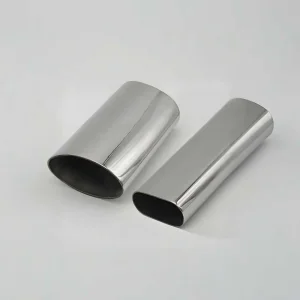
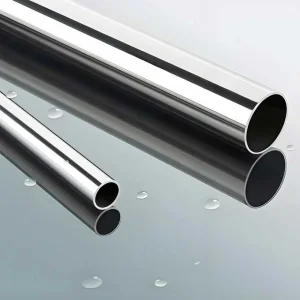
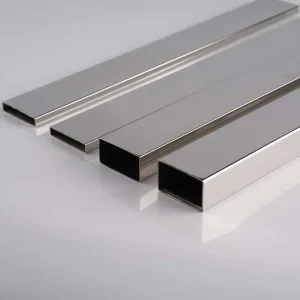
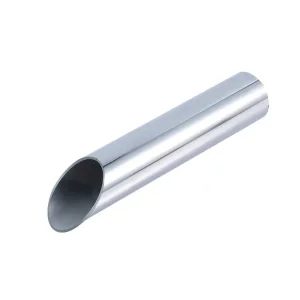
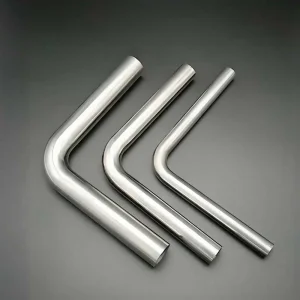
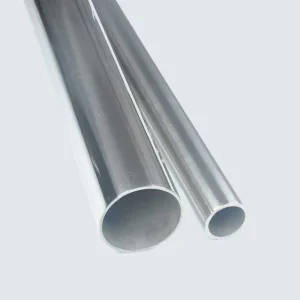
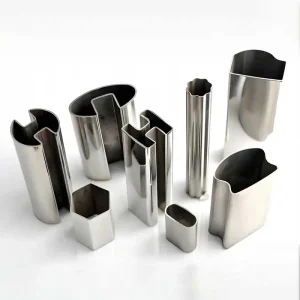
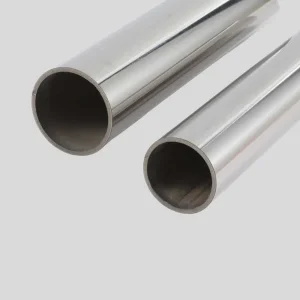
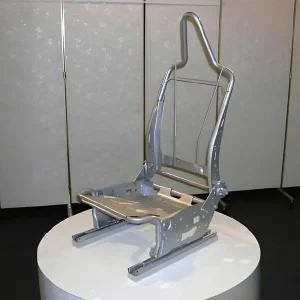
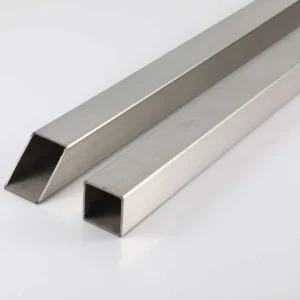
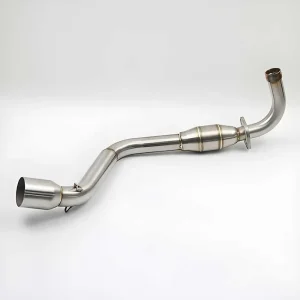
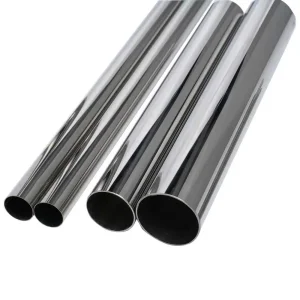
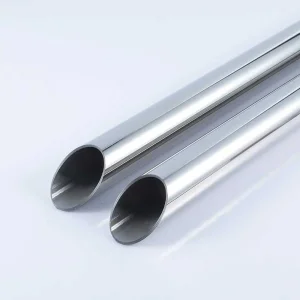
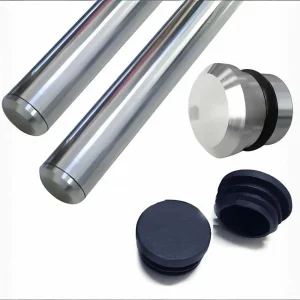
Explore our core export-grade welded stainless steel tubing categories engineered for global OEM/ODM furniture fabricators, automotive chassis builders, and architectural installers.
Understanding the microstructural mechanics of Grade 201 austenitic stainless steel for high-strain bending, hydroforming, and precision OEM furniture manufacturing.
In the competitive global landscape of commercial and residential furniture manufacturing, Stainless Steel 201 (SS 201) has emerged as the premier structural medium for OEMs seeking an optimal balance between yield strength, workability, aesthetic mirror reflectivity, and cost efficiency. Developed originally as a nickel-conserving austenitic alloy, Grade 201 substitutes a portion of nickel with manganese (Mn) and nitrogen (N). When properly formulated with elevated copper (Cu) content (specifically high-copper variants such as 201 J4 and 201 L1), SS 201 provides superior tensile strength compared to traditional Grade 304 while preserving the necessary elongation percentages required for intricate CNC rotary draw bending and cold forming.
Standard low-copper SS 201 exhibits rapid work hardening during bending, causing micro-cracking along the outer tension radius. Premier OEM manufacturers specify High-Copper (Cu ≥ 1.5% to 2.0%) SS 201. Copper reduces the stacking fault energy of the austenite phase, significantly softening the matrix during cold deformation, boosting elongation up to 50–55%, and eliminating bend wrinkling or seam splits.
To assist procurement directors, quality engineers, and furniture designers in choosing the exact alloy grade for structural legs, table sub-frames, and wardrobe systems, the following table presents verified laboratory data comparing SS 201 sub-variants against standard AISI 304 and mild steel substrates.
| Grade / Variant | Chromium (Cr %) | Nickel (Ni %) | Manganese (Mn %) | Copper (Cu %) | Yield Strength (MPa) | Tensile Strength (MPa) | Elongation (A5 %) |
|---|---|---|---|---|---|---|---|
| SS 201 High-Cu (J4 / L1) | 15.0 - 16.5% | 1.0 - 1.5% | 8.0 - 10.5% | 1.5 - 2.0% | ≥ 310 MPa | ≥ 685 MPa | ≥ 52% |
| SS 201 Standard (J1) | 13.5 - 15.0% | 0.6 - 1.0% | 9.0 - 11.0% | 0.8 - 1.2% | ≥ 350 MPa | ≥ 710 MPa | ≥ 40% |
| AISI 304 (ASTM A554) | 18.0 - 20.0% | 8.0 - 10.5% | ≤ 2.0% | - | ≥ 205 MPa | ≥ 515 MPa | ≥ 40% |
| Chrome-Plated Q235 Steel | 0.0% | 0.0% | 0.3 - 0.7% | - | ≥ 235 MPa | ≥ 375 MPa | ≥ 26% |
How state-of-the-art Foshan tube mills eliminate surface defects, control outer diameter tolerances to ±0.05 mm, and achieve flawless 600# mirror polish.
Sourced exclusively from Tier-1 steel works (TISCO, POSCO, Baosteel). Every raw coil undergoes optical emission spectrometry to verify chemical composition, copper fraction, and inclusions prior to slitting.
High-speed rotary shear lines slit wide coils into narrow strips with zero edge burrs, ensuring consistent seam gap width during continuous roll forming.
Multi-pass progressive roll stands shape the strip into exact circular, square, rectangular, or custom oval profiles using hardened D2 tool steel dies to prevent galling.
Continuous high-frequency TIG or Plasma arc welding seals the longitudinal seam with complete fusion penetration, minimal heat-affected zone (HAZ), and structural weld integrity.
Pressurized nitrogen purge inside the tube prevents inner bore oxidation during welding, eliminating the black oxide line and preserving internal corrosion resistance.
Online hydraulic seam planishing flattens the external weld bead smooth against the tube surface, enabling seamless downstream polishing and micro-finish uniformity.
Precision sizing mills calibrate outer dimensions to within ±0.05 mm while multi-roll straightening heads achieve straightness better than 1.0 mm per meter.
Four-to-eight head automated polishing lines process tubes through progressive grit abrasive wheels (180#, 240#, 320#, 400#, and 600# mirror) for uniform gloss.
100% online eddy current flaw detection combined with laser micrometer checks ensures zero pinholes, split seams, or wall thickness variations pass factory gates.
Empirical metrics demonstrating manufacturing capacity, compliance rigor, and global export reliability from our Foshan production center.
Real-world engineering implementations of SS 201 furniture tubing across North America, Europe, the Middle East, and Asia-Pacific market ecosystems.
Major office furniture brands in North America demand heavy-gauge 30x30mm and 40x20mm SS 201 square and rectangular tubing for height-adjustable desk frames and modular benching systems. By specifying High-Cu SS 201 with 1.2mm to 1.5mm wall thickness, OEMs achieve structural rigidity exceeding 250 kg load limits while cutting material costs by 35% compared to 304 stainless steel. Micro-smooth 320# satin finishes integrate seamlessly with modern architectural aesthetics.
European luxury interior brands require complex bent oval profiles (such as 30x15mm flat oval and 40x20mm elliptical tube) for sofa bases, lounge chairs, and dining tables. Using high-elongation SS 201 tubing, fabricators complete tight-radius CNC bends without surface distortion. The tubes are subsequently coated with Physical Vapor Deposition (PVD) Titanium Brass, Rose Gold, or Gunmetal Black, providing a scratch-resistant, luxurious metallic finish that outlasts standard liquid paint.
In humid coastal climates like Dubai and Jeddah, low-grade carbon steel clothes rails and bathroom furniture corrode rapidly. OEM furniture factories utilize passivated SS 201 round tubes (22mm and 25mm OD) with continuous inner nitrogen seam protection. When treated with an transparent clear-seal acrylic nano-layer, SS 201 rails resist ambient humidity and salt spray while bearing heavy wardrobe loads without sagging.
Hospitals, clinics, and care facilities globally utilize SS 201 tubing for waiting room seating frames, overbed tables, and intravenous pole assemblies. The non-porous 600# mirror-polished SS 201 surface facilitates frequent chemical disinfection without degradation, offering an hygienic, rust-resistant alternative to chrome-plated steel in dry interior clinical areas.
Why sourcing OEM SS 201 furniture tube from Foshan, Guangdong yields unmatched lead times, tooling flexibility, and cost efficiency.
Foshan, China stands as the epicenter of the global stainless steel processing industry, housing over 70% of the world's precision ornamental and mechanical tubing production lines. This hyper-dense industrial cluster creates unprecedented supply chain synergies that directly benefit international OEM procurement programs:
Every batch of OEM SS 201 tubing manufactured at our facility is tested against ASTM A554 (Standard Specification for Welded Stainless Steel Mechanical Tubing). Mill Test Certificates (MTC 3.1) accompanying each shipment detail chemical heat numbers, yield/tensile strength, 30% flaring expansion tests, and flattening seam integrity checks.
Expert answers to critical engineering, metallurgical, and procurement questions posed by global furniture designers and OEM buyers.
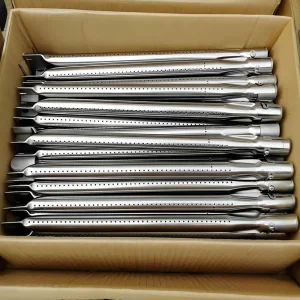
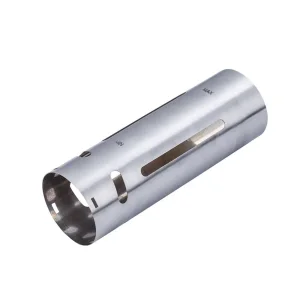
Browse additional precision stainless steel tubing profiles engineered for storage systems, gas burners, CNC components, and structural safety grab bars.