Explore our core range of ASTM A554 precision-engineered welded stainless steel tubing produced across 43 automated mill lines.
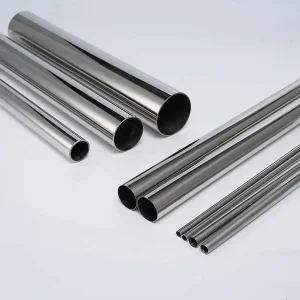
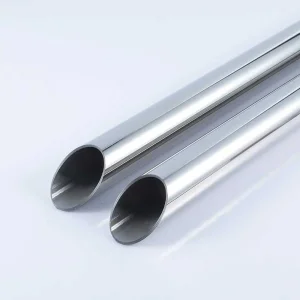
Understanding the microstructural mechanics, heat-affected zone (HAZ) control, and passivation thermodynamics of OEM Grade 304 (UNS S30400 / EN 1.4301) welded pipes.
In modern industrial manufacturing, specifying an OEM SS 304 ERW Pipe requires a comprehensive understanding of both mechanical metallurgy and high-frequency induction welding physics. Austenitic Grade 304 stainless steel—comprising nominally 18% chromium and 8% nickel—derives its structural integrity and corrosion resistance from a self-healing, nanometer-thick passive chromium oxide layer ($\text{Cr}_2\text{O}_3$). However, the process of Electric Resistance Welding (ERW) introduces local thermal cycles that can compromise this passive film if not controlled with absolute thermal precision.
Our automated ERW mills operate at solid-state high frequencies between 300 kHz and 500 kHz. This concentrates skin-effect and proximity-effect electrical currents exclusively along the strip edges, achieving instantaneous forging heat with minimal total heat input and an extremely narrow Heat-Affected Zone (HAZ).
During uncontrolled welding, heating stainless steel between 450°C and 850°C causes chromium carbides ($\text{Cr}_{23}\text{C}_6$) to precipitate along austenite grain boundaries, leading to chromium depletion. We mitigate sensitized grain boundaries through rapid nitrogen-quenched cooling and specialized low-carbon melt chemistry control.
For applications demanding strict Total Indicator Runout (TIR) or unobstructed internal fluid flow, our lines feature active hydraulic weld bead trimmers and internal roll-planishing dies that eliminate internal weld flash down to height tolerances below $\le 0.05\text{ mm}$.
While standard decorative tubing follows ASTM A554 tolerances, OEM industrial applications frequently mandate hybrid quality specifications. VertexFlow integrates full solution annealing ($1040^\circ\text{C} - 1120^\circ\text{C}$ followed by rapid water quenching) to redissolve precipitated carbides, restoring full corrosion resistance and mechanical ductility for heavy-duty rotary, pressure, and tight-radius CNC bending applications.
| Parameter / Mechanical Spec | Standard Decorative Grade (ASTM A554) | Precision OEM Structural Grade | Sanitary & Hydraulic Pressure Grade |
|---|---|---|---|
| Chemical Composition | Cr 17.5-19.5%, Ni 8.0-10.5%, C ≤ 0.07% | Cr 18.1-19.0%, Ni 8.1-10.0%, C ≤ 0.04% | Cr 18.2-19.2%, Ni 8.2-10.5%, C ≤ 0.030% (304L) |
| Outer Diameter (OD) Tolerance | ±0.15 mm to ±0.25 mm | ±0.05 mm to ±0.08 mm | ±0.04 mm (Precision Ground / Drawn) |
| Wall Thickness (WT) Tolerance | ±10% | ±5% to ±7.5% | ±5% strictly maintained |
| Weld Seam Condition | External weld flash removed | Internal bead planished (Flash ≤ 0.1mm) | 100% Flush Seamless-Look (Smooth Bore Ra ≤ 0.4µm) |
| Nondestructive Testing (NDT) | Visual & Dimensional Check | 100% Online Eddy Current (ASTM E426) | Eddy Current + Hydrostatic Pressure Test (up to 50 Bar) |
Tailored metallurgical profiles, geometric tolerances, and surface treatments engineered for multi-sector OEM operational demands.
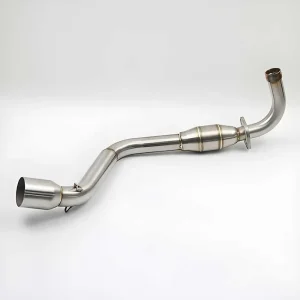
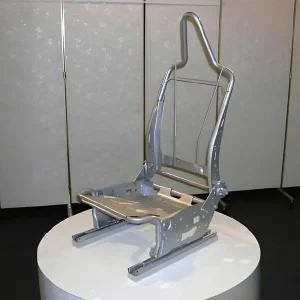
Modern automotive OEMs require SS 304 ERW tubing capable of undergoing high-strain rotary draw bending and hydroforming without throat collapsing or seam splitting. Our ERW pipes undergo strict 90° flaring, expansion, and flattening tests, ensuring fatigue resistance against thermal cycling, exhaust condensates, and road vibration.
For premium sanitaryware, faucet spouts, shower columns, and grab bars, surface roughness directly impacts electroplating adhesion. We deliver ERW tubes with smooth surface topography ($\text{Ra} \le 0.4\,\mu\text{m}$) free of mill scale, micro-pits, or seam witness lines, optimizing substrate readiness for PVD titanium coatings, nickel, and chrome plating.
Logistics sorting equipment, cleanroom conveyors, and food processing lines rely on low-TIR tubing to eliminate dynamic imbalance at high rotational RPMs. VertexFlow’s controlled ERW sizing and post-welding straightness control ($1\text{ mm/m}$) eliminate mechanical hum, vibration, and premature bearing wear.
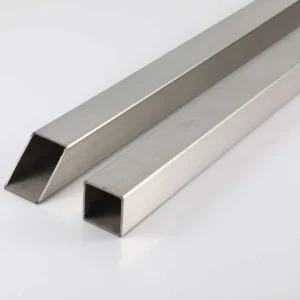
High-rise curtain walls and glass railings require strict squareness ($\pm 0.5^\circ$) and sharp-corner radii on square and rectangular hollow sections. Our special tooling dies ensure consistent glass gasket channel seating and seamless architectural mitre joints, retaining aesthetic appeal under wind-load stress.
Hospital bed frameworks, mobile IV pole assemblies, and surgical furniture mandate non-magnetic behavior, chemical resistance to caustic disinfectants, and zero particle shedding. Our SS 304 ERW tubing passes stringent passivation protocols to prevent rust formation under frequent chemical wash-downs.
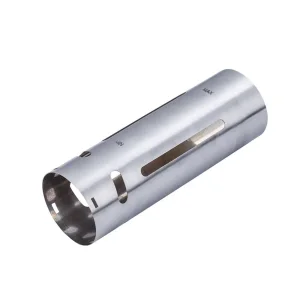
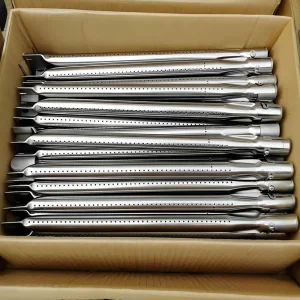
Used in high-temperature OEM gas grill burner tubes and commercial cooking gear, our custom slotted and perforated SS 304 ERW pipes provide uniform gas distribution and thermal oxidation resistance at temperatures up to 870°C without scaling or seam rupture.
How VertexFlow leverages Foshan’s stainless steel industrial cluster, automated robotics, and end-to-end quality transparency to de-risk global procurement.
In an increasingly volatile global trade environment, supply chain continuity depends on vertical integration, raw material traceability, and automated manufacturing scalability. Located in Shishan Town, Nanhai District, Foshan—the world’s largest stainless steel processing ecosystem—VertexFlow operates as a direct manufacturer rather than an intermediary trading house.
We source prime stainless steel mother coils directly from top-tier mills (TISCO, POSCO, Baosteel). Slitting in-house ensures exact edge-width control without burrs or stress notches that cause micro-flaws during ERW forming.
Every mill line is integrated with automated Eddy Current flaw detectors and laser triangulation sensors. Sub-surface discontinuities or wall thickness deviations are flagged in real-time, preventing defective footage from reaching the cutting stage.
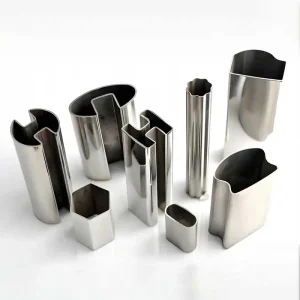
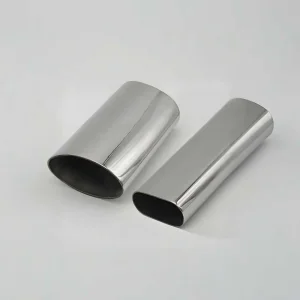
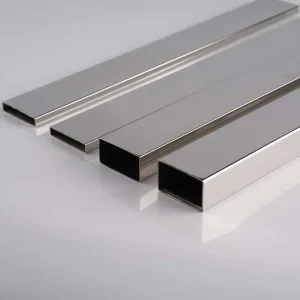
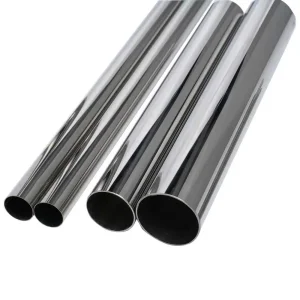
With more than 500 sets of existing roll-forming dies covering round, square, rectangular, oval, elliptical, and D-shape profiles, global procurement teams save thousands of dollars in custom tooling costs and cut prototyping lead times by up to 60%.
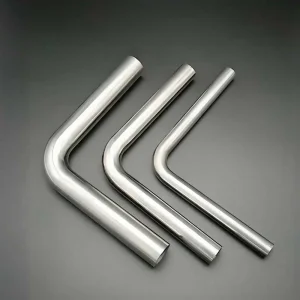
Eliminate extra fabrication steps by utilizing our secondary processing capabilities: precision laser slotting, 3D CNC mandrel bending, end flaring, necking, swaging, and automated robotic deburring directly prior to export packaging.
Next-generation metallurgical developments, AI-driven weld seam monitoring, and sustainable green manufacturing protocols transforming SS 304 ERW pipe production.
Integrating high-speed infrared pyrometers with deep-learning vision algorithms to continuously analyze thermal gradients across the ERW weld pool. By instantly adjusting induction power output to compensate for minor coil thickness variances, weld integrity reaches zero-defect stability.
Transitioning from standard gas mixtures to 100% green hydrogen and ultra-pure nitrogen inner shielding. This eliminates microscopic oxidation traces along the inner bore during high-frequency welding, producing completely clean internal surfaces without chemical pickling.
Developing molecularly bonded functional surface treatments that combine mechanical satin polishing with physical vapor deposition (PVD) micro-layers. These treatments enhance surface hardness beyond 800 HV while delivering corrosion protection superior to standard passive layers in high-salinity environments.
Addressing OEM buyer requirements: Quality documentation, international standard compliance, mill test reports, and Total Cost of Ownership (TCO) optimization.
Every shipment is accompanied by fully traceable 3.1 inspection certificates detailing exact ladle chemistry, mechanical yield, ultimate tensile strength, elongation percentages, hardness values, and hydrostatic/eddy current test verification.
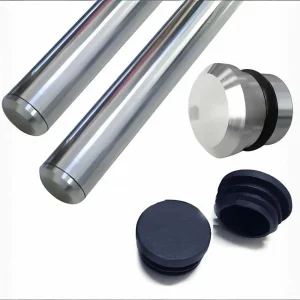
Prevent surface abrasion during maritime transit through individual plastic sleeve wrapping, woven outer poly-sacks, end-cap plugs, and steel-framed wooden crates optimized for rapid forklift unloading at regional distribution hubs.
Products strictly comply with EU REACH, RoHS 3 (Directive 2015/863), heavy metal limit tests, and FDA sanitary guidelines for food-contact surfaces. Third-party testing reports from SGS, TÜV, or Bureau Veritas are available upon request.
Seamless cross-border supply chain integration: Engineering consultations, regional duty optimization, and dedicated export logistics.
Procuring stainless steel tubing globally requires clear communication, reliable technical documentation, and compliance with local import regulations. VertexFlow provides dedicated multilingual engineering assistance (English, German, Spanish, Japanese) to bridge the gap between design engineering teams and factory floor execution.
Before launching a production line, our engineers review customer CAD files to optimize corner radii, wall thickness-to-diameter ratios, and weld seam positions, helping prevent tooling re-runs and micro-fissures during secondary assembly.
We handle diverse shipping arrangements—FOB (Foshan/Nansha/Yantian), CIF, CFR, DDP (Delivered Duty Paid), and DAP—complete with customs documentation and HS Code classification (e.g., 7306.40.00, 7306.61.00) tailored to your logistics requirements.
Each OEM enterprise customer works with a dedicated technical sales manager who oversees material heat tracking, production status updates, pre-shipment dimensional reports, and ongoing post-delivery feedback.
Expert answers to metallurgical, manufacturing, and procurement questions curated by our QC engineering team.
High-Frequency Solid-State ERW utilizes localized induction current to heat strip edges without introducing external filler wire, generating an extremely narrow heat-affected zone (HAZ) at significantly faster welding speeds. This rapid heating and forged seam consolidation retain fine grain microstructures superior to conventional TIG welding. As a result, ERW tubing delivers higher yield strength and microstructural uniformity, making it ideal for structural frames, conveyor shells, and high-strain CNC bending.
Weld-line splitting usually stems from edge-notch micro-flaws during strip slitting, incomplete fusion, or positioning the seam along the maximum tensile strain radius. We prevent bending failure through three primary methods: 1) Slitting mother coils with zero-edge burrs; 2) Performing full continuous online Eddy Current flaw testing (ASTM E426); and 3) Supplying fully annealed strip stock with elongation ratings exceeding $\ge 45\%$. Additionally, our technical documentation advises bending operators on how to position the weld seam along the neutral axis during tooling setup.
While Grade 304 austenitic stainless steel is fully non-magnetic in a solution-annealed state, cold-working processes—such as cold roll-forming on ERW tube mills, seam planishing, or bending—transform part of the metastable austenite matrix ($\gamma$-phase) into strain-induced martensite ($\alpha'$-phase). This strain-induced martensite is ferromagnetic. It is a natural metallurgical response to strain hardening and does not signify incorrect chemical composition or compromised quality. If absolute zero-magnetism is required for sensitive medical or electronic applications, bright solution annealing can be performed to fully restore the non-magnetic austenitic matrix.
ASTM A554 governs ornamental, structural, and mechanical welded stainless steel tubing where tight dimensional tolerances (OD, wall thickness, ovality, squareness) and surface finish quality (mirror, satin, PVD) are primary requirements. ASTM A312 covers seamless and straight-seam welded austenitic stainless steel pipe intended for high-temperature and general corrosive fluid pressure service, requiring mandatory hydrostatic testing, flattening tests, and strict pressure-rating design formulas. VertexFlow produces tubing under ASTM A554 for mechanical and structural OEMs, and offers hydro-tested, solution-annealed options tailored to specific pressure fluid requirements.
Our standard MOQ is 500 kg per size and surface finish for standard round, square, and rectangular profiles. For specialized OEM custom shapes (oval, D-shape, slotted sections) utilizing our existing 500+ roll-forming die library, MOQ starts at 1,000 kg. Custom PVD color-coated runs require a 1,000 kg minimum per batch. Production lead time is typically 15 calendar days from artwork and sample approval, with expedited 10-day manufacturing runs available for urgent assembly line downtime situations.
Explore our specialized oval profiles, automotive exhaust sections, industrial workstation tubing, and high-precision CNC tube fabrications.