Direct OEM & ODM manufacturing capabilities for commercial seating, architectural furniture, and structural sub-assemblies.
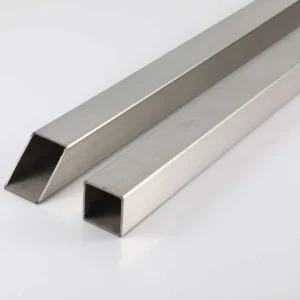
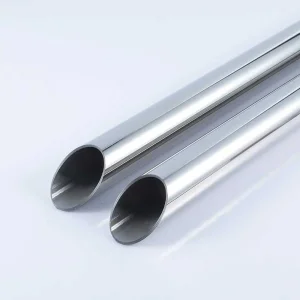
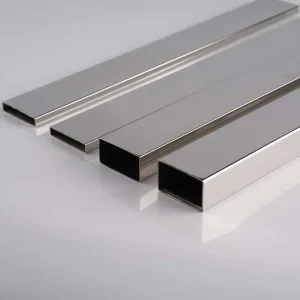
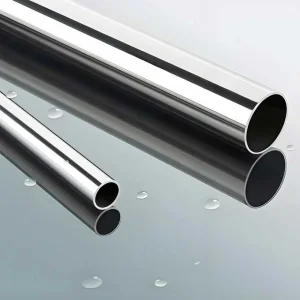
In high-end upholstery manufacturing, commercial contract seating, and architectural interior furniture design, the load-bearing sub-structure is no longer considered merely a secondary mechanical component. The transition toward high-density modular seating systems, motorized reclining mechanisms, and heavy-use commercial hospitality lounges has elevated the role of OEM Stainless Steel (Ss) sofa legs to a critical engineering sub-assembly. Modern furniture original equipment manufacturers (OEMs) and original design manufacturers (ODMs) face stringent performance requirements: static load thresholds exceeding 800 kilograms per seating module, non-reactive chemical stability under aggressive cleaning protocols, and flawless metallic aesthetics under variable lighting conditions.
Selecting an experienced OEM Stainless Steel sofa leg manufacturer requires an in-depth evaluation of raw material metallurgy, mechanical deformation dynamics, joinery integrity, surface deposition methods, and international quality management certifications. This whitepaper establishes the foundational technical metrics, manufacturing practices, and structural testing standards necessary to evaluate top-tier industrial supply partners.
The baseline longevity of stainless steel sofa legs is dictated by alloy chemistry. While carbon steel requires heavy electroplating susceptible to micro-cracking and flaking, austenitic stainless steel forms a self-healing chromium oxide ($Cr_2O_3$) passive layer. However, selecting the optimal alloy grade requires balancing yield strength, environmental exposure, and overall bill-of-materials (BOM) cost efficiency:
| Stainless Alloy Grade | Chemical Composition Highlights | Tensile Strength (MPa) | Corrosion Resistance | Primary OEM Furniture Application |
|---|---|---|---|---|
| Grade 201 (High Cu) | 16-18% Cr, 3.5-5.5% Ni, 1% Cu, High Mn | ≥ 650 MPa | Moderate (Indoor Residential) | Cost-optimized residential sofa legs, decorative frames, interior shelving base legs. |
| Grade 304 (Standard Austenitic) | 18-20% Cr, 8-10.5% Ni, Low Carbon | ≥ 520 MPa | High (Commercial & High-Humidity) | Luxury contract upholstery, hotel lounge seating, medical seating sub-frames. |
| Grade 316L (Marine Grade) | 16-18% Cr, 10-14% Ni, 2-3% Mo | ≥ 485 MPa | Extreme (Coastal, Outdoor, Yacht) | Resort outdoor lounges, luxury marine/yacht seating, coastal healthcare furniture. |
| Grade 430 (Ferritic) | 16-18% Cr, < 0.75% Ni (Magnetic) | ≥ 450 MPa | Moderate (Dry Environments) | Stamped bracket components, low-profile accent trims, non-structural covers. |
For indoor residential furniture, engineered Grade 201 with high copper content (~1.0%) offers enhanced ductility during cold-heading, spinning, and bending operations while maintaining a higher yield strength than standard mild steel. For commercial contract environments—such as airports, international hotel lobbies, and executive suites—Grade 304 is the absolute industry standard, ensuring zero surface oxidation (tea-staining) even under repeated exposure to harsh disinfectant cleaners.
How state-of-the-art automation in Foshan's hardware industrial cluster delivers unmatched structural consistency, cost advantages, and rapid prototyping.
Utilizing multi-kW fiber laser cutting stations and fully automated CNC tube benders, our factories achieve complex geometric profiles—such as tapered cone legs, elliptical swoops, and compound angle mounting plates—with dimensional tolerances within ±0.05 mm.
Full-penetration orbital robotic TIG and laser welding guarantees zero internal oxidation when joining mounting plates to tubular or cast leg shafts. Weld beads are planished and flush-ground in-line, eliminating structural stress concentration points.
Instead of traditional eco-hazardous electroplating, our facilities operate industrial Physical Vapor Deposition (PVD) vacuum chambers. We deposit Titanium/Zirconium nitride ceramic coatings (Rose Gold, Champagne Gold, Brushed Brass, Matte Black) yielding surface hardness over 2000 HV.
Tier-1 global furniture brands and architectural procurement firms enforce rigid technical acceptance criteria before onboarding a new OEM metal components supplier. A failure in structural integrity or surface coating adhesion in consumer homes or commercial venues leads to costly warranty claims and brand damage.
Each OEM sofa leg model is subjected to finite element analysis (FEA) simulation followed by real-world destructive load testing. Leg assemblies must withstand a vertical static force of up to 4,500 N (~1,000 lbs) per leg without permanent plastic deformation or weld failure.
Simulating years of seating dynamics, legs undergo 100,000 cycles of dynamic lateral force testing (standard angle deflection test at 10-degree tilt) to ensure mounting plates, M8/M10 threaded rods, and base glides retain torque tightness.
All mirror-polished (600# grit), brushed satin (#4 grit), and PVD color-coated stainless sofa legs undergo continuous 48-hour to 500-hour neutral salt spray (NSS) testing to verify that zero micro-pitting or color shift occurs under intense humidity.
Our manufacturing hub supports comprehensive customization options for global furniture engineering teams. From CAD/STEP file review to rapid 3D metal printing prototype validation within 72 hours, we provide end-to-end component execution:
Exploring emerging material science innovations, smart integration, and eco-conscious manufacturing methods reshaping furniture metal hardware.
Development of micro-hydraulic internal fluid dampers inside metal legs to absorb dynamic impact loading when users sit abruptly, combined with auto-leveling magnetic glides for uneven floor surfaces.
Implementation of hydrophobic and oleophobic nano-ceramic topcoats applied over PVD metallic coatings, reducing visible smudges by 95% and eliminating optical degrading on high-touch furniture surfaces.
Transitioning raw material supply lines to 100% recyclable, scrap-sourced stainless steel coils processed via Electric Arc Furnace (EAF) technology, reducing the embodied carbon footprint ($CO_2e/kg$) by over 60%.
Hollow-core CNC machined legs designed with internal cable channels and integrated low-voltage LED accent lighting channels for luxury smart lounges and modern home theater seating.
Tailored structural hardware strategies engineered for diverse sector requirements and international market compliance.
High-traffic environments demand Grade 304 or 316 stainless legs with heavy-duty mounting plates (5mm+) capable of resisting high impact, cleaning solvents, and continuous 24/7 load cycles without aesthetic wear.
Non-porous, corrosion-proof Grade 304 legs certified for hospital furniture. Designed with seamless smooth welds that leave zero crevices for pathogens, conforming to stringent medical hygienic protocols.
High-volume, cost-effective Grade 201 OEM legs featuring quick-connect bayonet mounting plates and standardized thread pitches (M8/M10), allowing effortless consumer assembly and minimal shipping box dimensions.
We provide full metallurgical traceability with Mill Test Certificates (MTC) according to EN 10204 3.1 for every raw coil batch. Furthermore, our global logistics support provides DDP (Delivered Duty Paid) shipping, localized Vendor-Managed Inventory (VMI) buffer stock solutions, and full compliance with REACH, RoHS, and California Proposition 65 heavy-metal safety regulations.
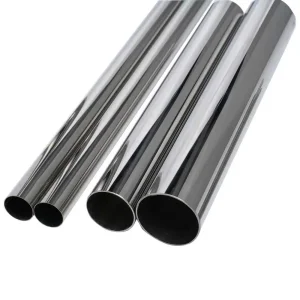
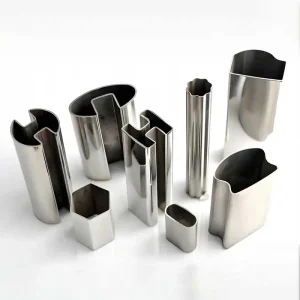
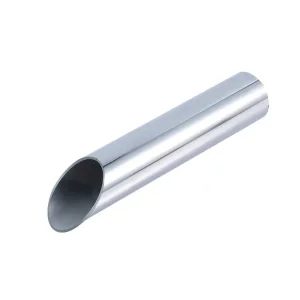
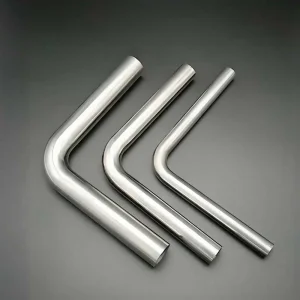
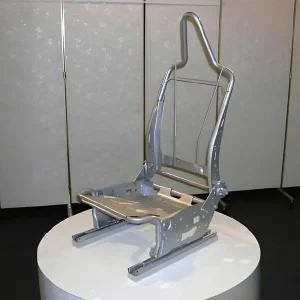
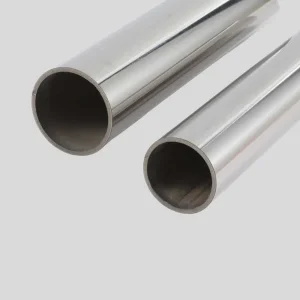
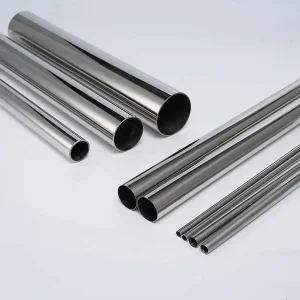
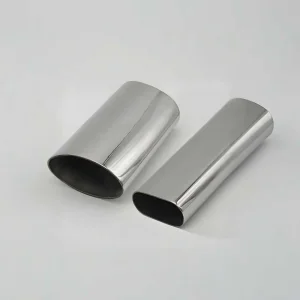
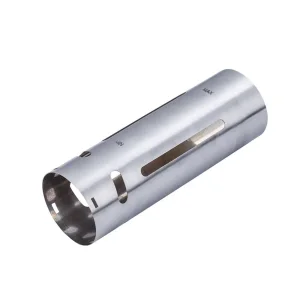
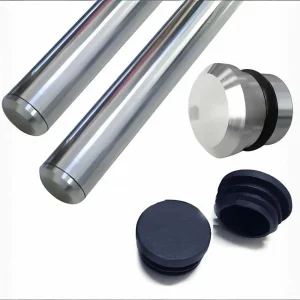
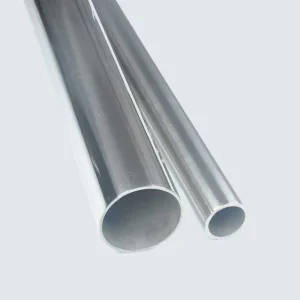
Explore our extended series of precision welded stainless steel tubes engineered for diverse furniture, automotive, and industrial uses.
Expert metallurgical and supply chain answers provided by our senior manufacturing engineering team.
Electroplated carbon iron is highly vulnerable to moisture absorption through pinholes in the plated layer, leading to subterranean rust, plating peeling, and floor staining within 12–24 months. Zinc alloy die-castings offer high detail but suffer from low tensile strength (~200–250 MPa) and high brittleness under dynamic impact loads. Stainless steel (Grades 201, 304, 316) provides superior yield strength (>520 MPa), absolute structural reliability for heavy loads, and a self-healing passive chromium layer that eliminates rust entirely.
Standard chemical electroplating deposits a thin metal layer (e.g., electroplated brass or chrome) using liquid acid baths, which creates toxic chemical waste and yields relatively soft surfaces (300–500 HV) prone to scratching. Physical Vapor Deposition (PVD) is an eco-friendly vacuum process that vaporizes titanium or zirconium metal into a plasma state, bonding atomic ceramic layers to the stainless substrate. PVD yields extreme hardness (>2000 HV), exceptional scratch resistance, UV stability, and zero environmental chemical run-off.
For standard stocked tubular diameters and standard PVD finishes, our MOQ starts at 500 pieces per size. For fully customized geometric shapes requiring custom stamping dies, 5-axis bending blocks, or specialized mounting flange tooling, the initial tooling lead time is 7 to 10 working days, with a sample approval window of 5 days. Full production runs typically ship within 15 to 20 calendar days after sample sign-off.
We employ full-penetration robotic TIG or fiber laser welding along the 360-degree perimeter of the mounting junction. Every production batch undergoes destructive torque testing, shear strength testing, and micro-sectioning examination to confirm 100% weld fusion without internal gas porosity or incomplete root penetration.
Yes. We offer specialized OEM packaging tailored for e-commerce and retail distribution. Legs are individually sleeved in non-abrasive PE foam, fitted with molded EPE corner protectors, and packed into ISTA-3A drop-test certified inner cartons to ensure zero surface scratching during transit.