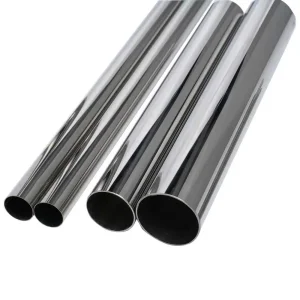
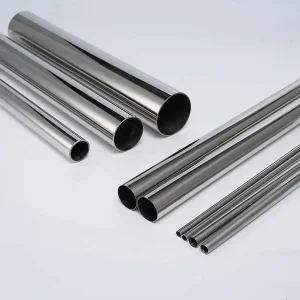
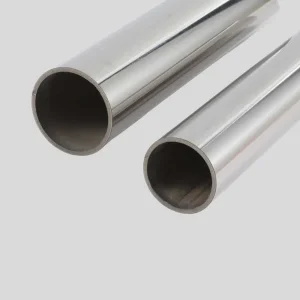
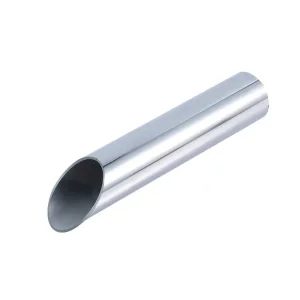
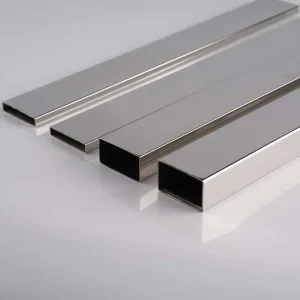
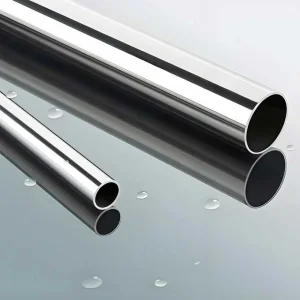
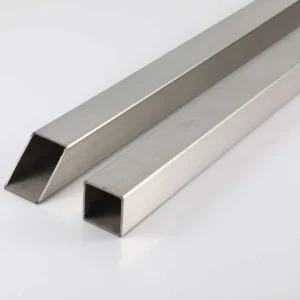
Explore precision-engineered AISI 304 / ASTM A554 stainless tubing tailored for structural, ornamental, automotive, and sanitary OEM manufacturing.
An authoritative technical evaluation of AISI 304 (UNS S30400 / EN 1.4301) austenitic stainless steel tubing across international OEM and industrial supply chains.
Austenitic Grade 304 stainless steel remains the global backbone of structural, sanitary, and mechanical piping systems, accounting for over 50% of world stainless steel production. Demand is powered by global urbanization, stringent sanitary regulations in pharmaceutical/food processing, and the lightweighting imperative in automotive frame fabrication.
For procurement officers and engineering directors, choosing an OEM supplier requires navigating volatile nickel commodity prices, strict tolerance requirements (ASTM A554 vs. ASTM A249), and ensuring zero intergranular corrosion in high-stress operational environments.
Grade 304 derives its corrosion resistance from a passive, self-healing Chromium Oxide ($\text{Cr}_2\text{O}_3$) film. The alloy chemistry must strictly adhere to international standards to prevent premature pitting and stress corrosion cracking (SCC):
| Grade Standard | UNS / EN Code | PREN Score | Yield Strength (MPa) | Primary Application Environment | Relative Cost Index |
|---|---|---|---|---|---|
| AISI 304 | S30400 / 1.4301 | 18.0 - 20.0 | ≥ 205 | Architectural, General Machinery, Furniture, HVAC | Baseline (1.0x) |
| AISI 304L | S30403 / 1.4307 | 18.0 - 20.0 | ≥ 175 | Heavy Welded Structure, Chemical Process Lines | 1.03x |
| AISI 316L | S31603 / 1.4404 | 23.0 - 25.0 | ≥ 220 | Marine, Coastal Handrails, Marine Grab Bars | 1.45x |
| Grade 201 (Hi-Cu) | S20100 / 1.4372 | 12.0 - 14.0 | ≥ 275 | Cost-Driven Indoor Decor, Dry Furniture Frames | 0.72x |
From raw strip slit coils to high-frequency weld seam conditioning: How modern OEM factories guarantee precision within ±0.05 mm.
Production begins with cold-rolled prime coils sourced exclusively from tier-1 steel mills (TISCO, POSCO, Baosteel). Coil thickness tolerance is maintained strictly within ±0.02 mm to ensure uniform roll-forming and consistent weld bead heat distribution.
OEM 304 pipes utilize automated TIG, Plasma Arc, or Fiber Laser welding. Laser welding minimizes the Heat-Affected Zone (HAZ), reducing structural distortion and preserving parent-metal corrosion properties without inner oxidation.
For applications such as conveyor rollers or sanitary fittings, the internal diameter (ID) weld bead is rolled online or planished. This ensures low Total Indicator Runout (TIR) and prevents material entrapment inside the pipe bore.
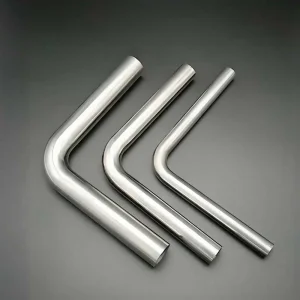
Advanced OEM facilities integrate in-line bright annealing at 1050°C under a 100% pure Hydrogen/Nitrogen protective atmosphere. This fully dissolves chromium carbides back into the matrix, restoring maximum ductility for 90° CNC bending and expanding without seam cracking.
Why sourcing OEM Steel Pipe 304 from Foshan, Guangdong yields unmatched cost efficiency, rapid scaling, and robust lead-time security.
Foshan represents the ultimate stainless steel processing hub globally. Within a 20-kilometer radius, tube mills access raw slit coils, specialized tooling makers, PVD color coating chambers, and CNC fabrication workshops. This geographical concentration reduces internal transport lead times from weeks to hours.
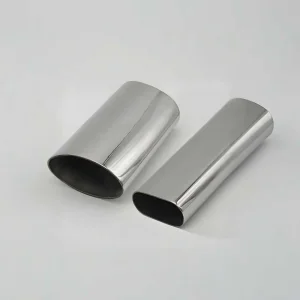
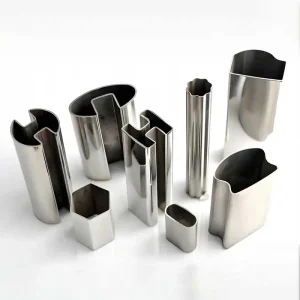
Leading OEM factories maintain libraries of over 500 existing roll-forming moulds for round, square, rectangular, oval, and D-shape pipes. OEM buyers save thousands of dollars in upfront NRE (Non-Recurring Engineering) tooling costs and shorten prototype delivery to under 7 days.
Deploying OEM Steel Pipe 304 across specialized regional market sectors, regulatory landscapes, and environmental demands.
Specified under ASTM A554 for structural glazing posts, balustrades, and modern building entry facades. Demands uniform 600# mirror polish or satin 320# grit brushed finishes with consistent grain lines across long multi-floor installations.
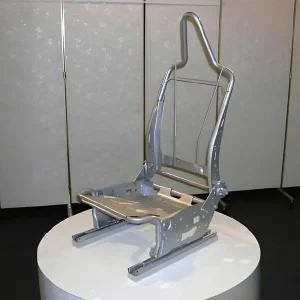
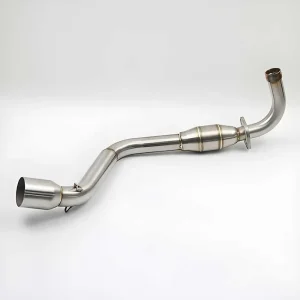
Utilized for seat frames, exhaust manifold components, and catalytic converter shells. Grade 304 provides heat resistance up to 870°C without severe scaling, maintaining structural rigidity under intense vibration and thermal cycling.
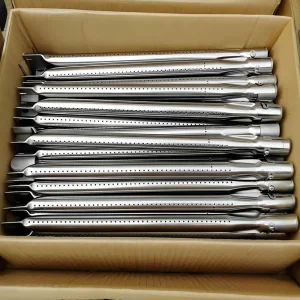
Used for bathroom grab bars, medical hospital beds, towel warmer frames, and gas grill burner tubes. Requires high-cleanliness inner surfaces, non-toxic passivation, and defect-free plating substrates for chrome or PVD gold finishes.
Inspecting every meter of tubing using non-destructive testing (NDT) to ensure compliance with EN 10204 3.1 Mill Test Certificates.
100% of functional OEM pipes undergo in-line Eddy Current flaw detection (per ASTM E426) to identify micro-fissures or pinholes along the weld seam. Hydrostatic testing up to 5.0 MPa is available for fluid and pressure lines.
Off-line laboratory samples undergo flattening tests (flattened to 1/3 OD without seam cracking), flare/expansion tests (100% cone flare), and intergranular corrosion tests per ASTM A262 Practice E.
Adapting to global CBAM (Carbon Border Adjustment Mechanism) standards and advancing towards low-carbon OEM stainless steel production.
Modern 304 pipe production utilizes up to 80% recycled scrap processed through Electric Arc Furnaces powered by renewable solar grid energy in southern China manufacturing parks.
Transitioning from traditional nitric acid pickling to eco-friendly citric acid and electro-passivation systems, ensuring zero hazardous liquid discharge (ZLD) into local ecosystems.
Integrating real-time laser micrometer feedback onto roll-forming stands. AI algorithm auto-adjusts roller pressure to prevent dimensional drift during 24/7 continuous production runs.
Explore our complete catalog of customized OEM stainless tubing for specialized automotive, conveyor, sanitary, and structural installations.
In-depth responses curated by metallurgy and manufacturing engineers regarding ASTM specifications, bending tolerances, and export logistics.
ASTM A554 covers welded stainless steel mechanical tubing intended for structural, ornamental, automotive, and general machinery applications where appearance, precise outer dimensions (OD), squareness, and surface finish are paramount. ASTM A249 / A269 are industrial pressure and heat exchanger standards that require mandatory hydrostatic or non-destructive electric testing, specific heat treatment (solution annealing), and strict inner diameter pressure-containment ratings.
Weld seam cracking during bending stems from three factors: un-annealed work hardening, poor seam fusion, or placing the seam along the outer tension radius. We mitigate this by supplying specialized bending-grade strip (elongation ≥ 45%), utilizing continuous inline bright annealing, and marking the seam location so fabricators can position it along the neutral bending axis.
While Grade 201 replaces nickel with manganese to lower material costs, its PREN score (12-14) is significantly lower than Grade 304 (18-20). In humid, outdoor, coastal, or sanitary wash-down environments, Grade 201 will suffer pitting and brown tea-staining within months. Grade 304 guarantees long-term corrosion resistance and complies with strict European REACH/RoHS and FDA hygiene regulations.
Our standard precision lines hold Outer Diameter (OD) to ±0.10 mm, while high-precision runs (such as conveyor roller shells and plating substrates) achieve ±0.05 mm. Wall thickness tolerance is maintained within ±8%, straightness to 1.0 mm/m, and squareness of hollow sections to ±0.5°.
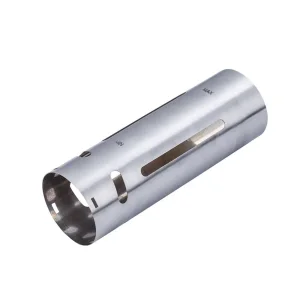
To deliver ready-to-assemble components, our factory provides integrated CNC precision cut-to-length, 3D laser slotting and hole punching, mandrel tube bending, end flaring, necking, swaging, thread tapping, and custom PVD color coating (Rose Gold, Black Titanium, Champagne, Antique Brass).
Standard stock profiles require an MOQ of 500 kg per size/finish, while custom tooling or PVD colors require 1.0 metric tonne. Standard container production lead time is 15 calendar days following sample sign-off and technical drawing freeze.