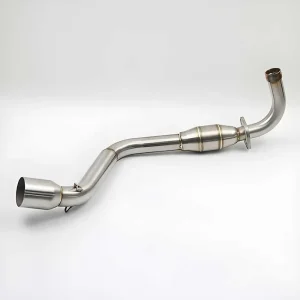
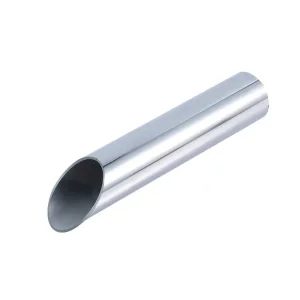
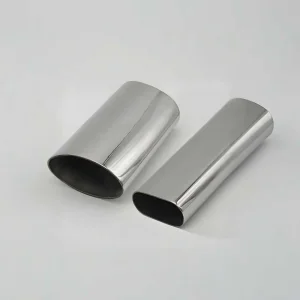
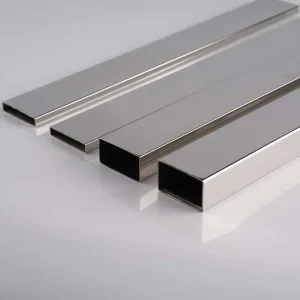
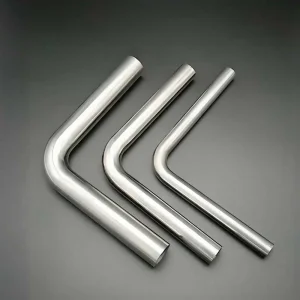
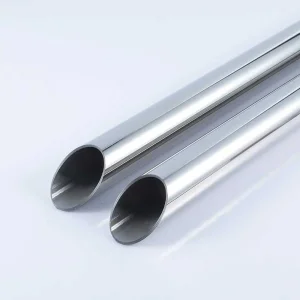
Explore our core product lines manufactured to rigid ASTM A554 and ISO standards, optimized for structural integrity and high-end aesthetic finishes.
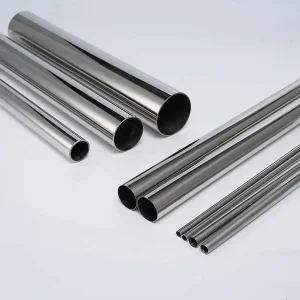
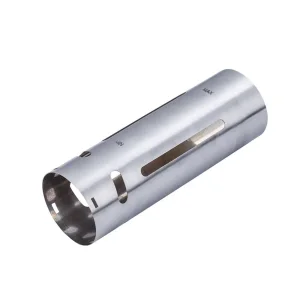
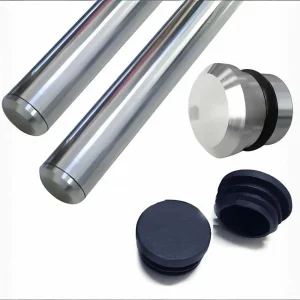
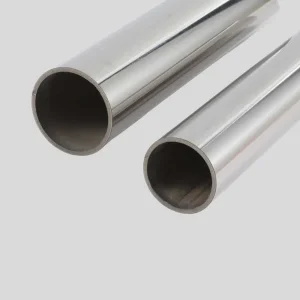
Analyzing metallurgical shifts, architectural furniture trends, structural standards (BIFMA/DIN), and the engineering mandate for high-precision steel components.
In the contemporary furniture design landscape, the global procurement focus for structural legs and bases has shifted dramatically from traditional solid timber and heavy cast iron toward high-tensile precision-engineered steel and stainless steel tubing. Driven by modern architectural demands—such as minimal profile visuals, extreme load capacities, modular shipping structures, and resistance to environmental degradation—OEM steel sofa table legs suppliers have become foundational partners for top-tier furniture brands worldwide.
Unlike wooden frames which suffer from grain inconsistency, humidity distortion, and joinery degradation under dynamic loads, engineered tubular steel maintains absolute dimensional stability over decades of service. Furthermore, carbon steel and stainless steel alloys allow designers to execute ultra-slim geometric profiles—such as hairpin legs, tapered cone structures, floating spider bases, and recessed perimeter subframes—without compromising structural rigidity or exceeding weight thresholds required for modern flat-pack distribution.
Procuring metal sofa legs or executive table subframes for commercial, hospitality, or healthcare deployment requires strict adherence to international safety guidelines. Commercial table bases must withstand rigorous testing, including ANSI/BIFMA X5.5 (Desk and Table Products) dynamic drop tests, static load applications exceeding 300 kg (660 lbs), and horizontal impact shear forces.
For high-end OEM suppliers, compliance begins at the metallurgical level. Ensuring that steel tube raw materials conform to ASTM A554 standards for mechanical and ornamental tubing guarantees controlled yield strength ($R_{p0.2} \ge 205 \text{ MPa}$), ultimate tensile strength ($R_m \ge 515 \text{ MPa}$), and elongation metrics ($\ge 35\%$). This prevents catastrophic frame failure during heavy cyclic loading or sudden impact forces in high-traffic public venues.
How Foshan’s integrated stainless steel industrial clusters, 5-axis CNC automation, and vertical process control deliver unprecedented cost-to-quality ratios.
Concentrated in regional powerhouse hubs such as Foshan, Guangdong, China's stainless steel and hardware manufacturing cluster provides complete supply chain integration within a 15-kilometer radius. Raw coils sourced directly from tier-one steel mills like TISCO, Baosteel, and POSCO are slit, cold-rolled, laser-welded, and surface-finished with near-zero logistics latency.
Modern Chinese OEM manufacturing facilities operate 43+ automated cold-forming tube mills operating alongside 3D fiber laser tube cutters, 5-axis CNC mandrel benders, and robotic TIG/plasma welding cells. This technology infrastructure enables rapid prototype iteration (under 72 hours) and tolerances tight to $\pm 0.05 \text{ mm}$.
By eliminating intermediate trading markups, standardizing roll-forming dies across 500+ existing profile tooling sets, and running continuous in-line plasma welding under nitrogen gas shielding, Chinese OEM factories reduce unit production costs by 25% to 40% compared to Western European or North American domestic fabricators.
Selecting the exact steel alloy and wall thickness configuration to balance budget, structural loading, environment resistance, and aesthetic criteria.
| Steel Grade Standard | Chemical Composition Highlights | Corrosion Resistance Level | Recommended Furniture Application | Typical Surface Finish Options |
|---|---|---|---|---|
| AISI 201 (High Copper) | 16-18% Cr, 1-1.5% Ni, 5.5-7.5% Mn, Cu > 1.0% | Moderate (Indoor Residential) | Indoor sofa legs, residential coffee table frames, accent chairs | 600# Mirror, Satin 240#, PVD Titanium Gold |
| AISI 304 / EN 1.4301 | 18-20% Cr, 8-10.5% Ni, C ≤ 0.07% | High (Commercial / Humid Indoor) | Executive desk legs, hotel dining tables, hospital furniture | Brushed Satin, Mirror Polish, Matte Black Powder Coating |
| AISI 316L / EN 1.4404 | 16-18% Cr, 10-14% Ni, 2-3% Mo | Extreme (Marine & Outdoor Coastal) | Outdoor patio tables, luxury yacht furniture, poolside lounge legs | Pickled & Passivated, Electropolished, PVD Gunmetal |
| Q235B / Q355B Carbon Steel | Fe base, C 0.14-0.22%, Mn 0.3-0.65% | Low (Requires Protective Coating) | Heavy industrial dining tables, office benching subframes | Electrophoresis + Epoxy Powder Coat, Chrome Electroplating |
PVD magnetron sputtering deposits a ceramic titanium micro-layer ($0.3 - 0.5 \ \mu\text{m}$) over polished 304 stainless steel. This technique delivers ultra-luxurious metallic hues—such as Rose Gold, Champagne Gold, Brushed Brass, and Black Titanium—that offer 10x greater scratch resistance and UV stability than wet lacquer spraying.
Achieving a zero-distortion mirror reflection on sofa legs requires four consecutive polishing steps utilizing progressive grit belts up to 600#. Crucially, the internal and external weld seam must undergo automatic planishing prior to polishing, eliminating any witness lines or seam shadows on visible leg faces.
For modern industrial aesthetics (matte sandblasted black or architectural white), carbon steel or stainless substrates undergo automated zinc phosphate pre-treatment followed by thermosetting epoxy-polyester powder coating, yielding uniform film thickness ($80 - 120 \ \mu\text{m}$) that passes 240-hour cross-hatch adhesion tests.
How specific commercial furniture verticals dictate leg geometry, structural mounting designs, and anti-corrosion protection protocols.
Hospitality environments demand zero surface degradation under aggressive daily sanitation regimes with chloride-rich cleaning chemicals. Table bases and sofa legs installed in coastal resorts or high-traffic hotel lobbies are predominantly constructed from AISI 304 or 316L stainless steel featuring heavy-duty top mounting plates ($4.0 - 6.0 \text{ mm}$ thick solid steel plate) laser-welded to tapered tubular legs.
Mounting points are designed with recessed floor levelling glides, incorporating non-marking neoprene or Teflon pads to protect marble and hardwood flooring while preventing structural wobble over uneven subfloors.
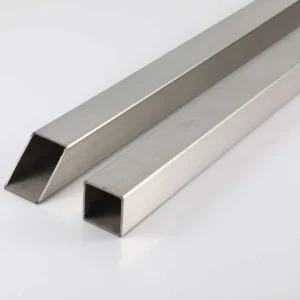
Modern office furniture manufacturers require modular steel leg frameworks that facilitate rapid field assembly and integrated wire management. OEM suppliers deliver hollow square or rectangular steel legs (e.g., $50 \times 50 \text{ mm}$ or $60 \times 30 \text{ mm}$) equipped with internal laser-cut cable conduits, snap-fit beam connectors, and concealed tie-rod fasteners.
These systems must support dual-monitor arms, heavy desktop power hubs, and continuous static loads up to $400 \text{ kg}$ without noticeable mid-span deflection ($< L/500$).
In high-end residential furniture, leg design is a defining aesthetic element. OEM steel sofa leg suppliers utilize hydroformed oval tubing, tapered triangular profiles, and CNC 3D bent wire hairpin legs to match contemporary scandinavian or mid-century modern aesthetics.
To reduce shipping volume for direct-to-consumer (D2C) e-commerce brands, legs feature standardized M8 or M10 threaded hanger bolts or 4-hole corner bracket attachments, enabling tool-free assembly by end customers.
Patio table frames and poolside sofa chassis exposed to salt fog, UV rays, and extreme temperature fluctuations mandate passivated 316L marine-grade stainless steel. Welded joints undergo 100% internal pickling to remove free iron contamination introduced during forming.
Salt spray chamber testing according to ISO 9227 guarantees over 500 hours of continuous exposure without red rust ($Fe_2O_3$) pit nucleation.
From prime coil slitting to automated 3D inspection and sea-freight packing, every production phase operates under strict ISO 9001:2015 traceability.
Direct XRF spectrum testing on incoming raw steel strip coils from TISCO/POSCO to verify nickel, chromium, molybdenum, and copper composition before uncoiling.
Coil slitting to exact strip widths with continuous edge milling to eliminate micro-burrs, preventing edge-defect stress fractures during roll forming.
Continuous roll-forming coupled with automated plasma arc welding under inner nitrogen shielding, preventing internal bore oxidation and seam blackening.
Real-time electromagnetic non-destructive testing (NDT) scans 100% of weld seams on the mill, automatically marking any pinholes or lack of fusion.
Hydraulic seam rollers flatten the internal and external weld bead flush with tube walls, holding outer diameter tolerances within ±0.05 mm.
3D laser tube cutting executes clean mitre cuts, mounting hole slots, and interlocking notches directly from customer CAD/STEP files.
Precision mandrel bending ensures zero wall wrinkling, flattening, or cross-sectional collapse even on tight centreline radii (1.5x OD).
Six-axis robotic arms weld heavy mounting flanges and bracket plates to legs, guaranteeing full weld penetration and uniform fillet beads.
Automated four-stage belt polishing to 600# mirror, or electro-static powder spraying and PVD sputtering chamber coating.
Individual protective PE film sleeving, honeycomb spacer partitioning, VCI anti-corrosion wrap, and export-grade fumigated wooden crates.
Deep engineering answers covering material grade selection, structural load limits, anti-pitting treatment, MOQ, and custom OEM manufacturing lead times.
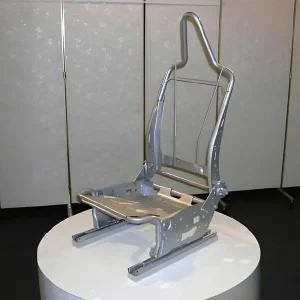
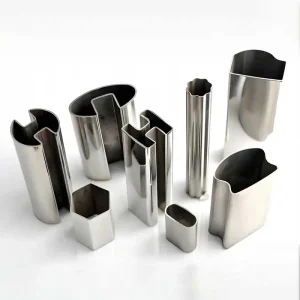
Browse our wide range of specialized stainless steel tubing engineered for automotive, home organization, structural racking, and sanitary applications.