Explore our core 304/316L stainless steel tubing inventory, custom engineered for industrial machinery, decorative architecture, and sanitary hardware.
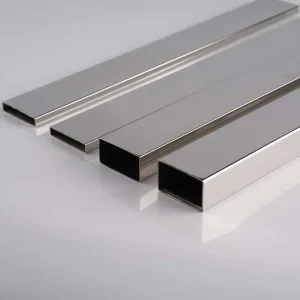
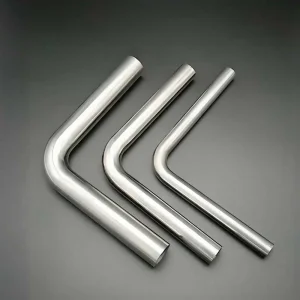
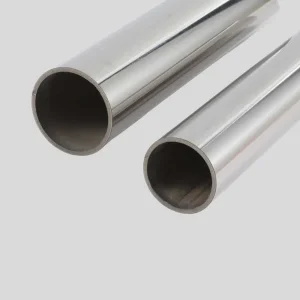
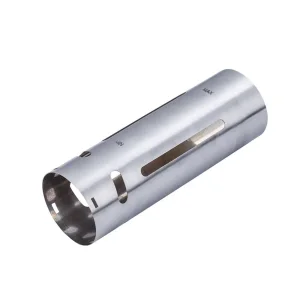
The global industrial landscape for Grade 304 (UNS S30400 / EN 1.4301) austenitic stainless steel tubing is undergoing a structural transformation driven by green metallurgy decarbonization, automated precision fabrication, and strict lifecycle cost modeling.
Global procurement teams across Europe and North America now prioritize suppliers complying with Carbon Border Adjustment Mechanisms (CBAM). By leveraging high-scrap ratio Electric Arc Furnace (EAF) smelting and closed-loop process water recycling in Foshan hubs, modern 304 tubing production slashes embodied carbon by up to 38% compared to traditional Blast Furnace routes.
While standard ASTM A554 ornamental tubing remains a structural staple, international buyers increasingly demand sub-millimeter dimensional tolerances (OD ±0.05 mm) and verified ovality controls. This transition allows high-speed robotic laser welding and CNC bending without custom shimming or manual fitting on assembly lines.
Industrial end-users are moving away from traditional physical chrome plating toward electro-polished or PVD (Physical Vapor Deposition) coated 304 profiles. Micro-roughness thresholds (Ra ≤ 0.4 µm) prevent biofilm accumulation in medical environments and severe pitting in coastal commercial hardware setups.
Understanding the chemistry, phase transformation, and mechanical boundary conditions of 304 Stainless Steel (18/8 Austenitic Matrix) ensures precise material selection for high-stress applications.
| Alloy Grade | Chromium (Cr) | Nickel (Ni) | Carbon (C) | Tensile Strength (MPa) | Yield Strength (MPa) | Salt Spray Corrosion Resistance |
|---|---|---|---|---|---|---|
| AISI 304 (UNS S30400) | 18.0 - 20.0% | 8.0 - 10.5% | ≤ 0.08% | ≥ 515 | ≥ 205 | 200 - 300 Hours (Neutral NSS) |
| AISI 304L (Low Carbon) | 18.0 - 20.0% | 8.0 - 12.0% | ≤ 0.03% | ≥ 485 | ≥ 170 | 240 - 350 Hours (Intergranular Optimized) |
| AISI 316L (Marine Grade) | 16.0 - 18.0% | 10.0 - 14.0% (Mo 2-3%) | ≤ 0.03% | ≥ 485 | ≥ 170 | 500+ Hours (Chloride Resistant) |
| 201 (High Manganese) | 13.5 - 15.0% | 1.0 - 3.5% (Mn 5.5-7.5%) | ≤ 0.15% | ≥ 685 | ≥ 295 | 48 - 96 Hours (Indoor Use Only) |
304 stainless steel derives its chemical inertia from an invisible, self-healing chromium-oxide ($\text{Cr}_2\text{O}_3$) passive layer. When oxygen reacts with the minimum 18% chromium content, this film stops further oxidation. Our factory applies online continuous bright annealing at 1050°C under hydrogen shielding to prevent chromium carbide precipitation at the grain boundaries.
During localized high-heat welding, carbon can bind with chromium to form chromium carbide ($\text{Cr}_{23}\text{C}_6$) along the weld zone boundaries—a process known as sensitization. By utilizing low-carbon 304L strip stock or implementing precision high-frequency TIG/Plasma welding with inner argon/nitrogen shielding, we eliminate weld seam decay.
Austenitic stainless steels exhibit rapid work hardening during cold roll-forming. For buyers requiring severe 90° CNC mandrelling, end flaring, or necking, our mill supplies fully annealed, soft-temper tubes with elongation metrics exceeding 40%, ensuring zero seam splitting or micro-fracturing on secondary fabrication lines.
Located in the heart of China’s premier stainless steel industrial cluster, VertexFlow combines integrated raw material sourcing from tier-1 mills with digitalized smart manufacturing to guarantee lead-time stability.
By controlling the entire production sequence—from precision coil slitting and automated roll-forming to 4-pass outer diameter polishing and customized end deburring—we eliminate third-party processing bottlenecks. This vertical model enables standard order lead times of just 15 days.
Every tube mill operating in our 12,000 m² plant is integrated with real-time laser gauge sensors and high-speed infrared seam analyzers. If a wall thickness variation exceeds ±0.05 mm or a weld pinhole is detected, the line automatically marks the section for rejection before bundle packaging.
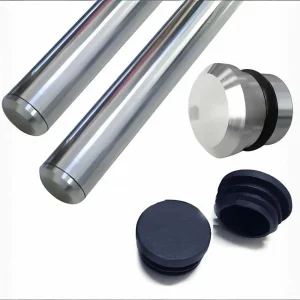
With direct proximity to Guangzhou and Shenzhen deep-water ports, our export logistics team manages full container load (FCL) and less than container load (LCL) shipments globally. Tubes are individually plastic-sleeved, cap-ended, and packed in heavy-duty wooden crates or steel frames to prevent transit moisture staining.
Our ASTM A554 and A249 304 stainless steel tubing is customized to satisfy specific mechanical load, aesthetic finish, and chemical tolerance demands across key global industries.
Specified for high-footfall airport handrails, glass balcony clamps, and luxury hotel interior trim. High-gloss 600# mirror polish and 320# satin brushed options provide UV stability and rust-free longevity without recurring maintenance painting.
Serving as the structural substrate for premium shower columns, faucet spouts, and wall-mounted grab bars. Surface micro-smoothness (Ra ≤ 0.4 µm) provides flawless adhesion for electroplated chrome, matte black, and PVD titanium finishes.
Engineered for thermal expansion stability and structural vibration resistance. Utilized in exhaust muffler bypass lines, structural seat frames, and heavy-duty bus handrails operating in high-vibration environmental conditions.
Solid 304 stainless steel round and square tubing replaces traditional plastic-coated lean pipe in pharmaceutical plants and food assembly lines. 100% wash-down safe, eliminating particle shedding and chemical peel risks.
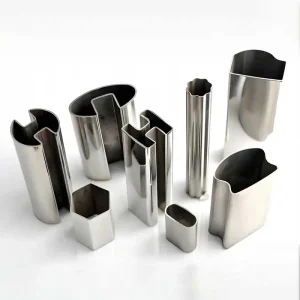
Explore our specialized tube fabrication capabilities, including medical-grade specs, sanitary finishes, automotive components, and custom structural profiles.
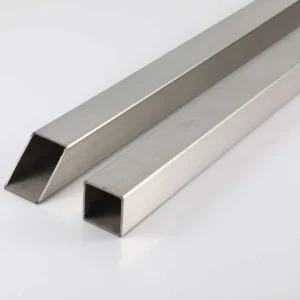
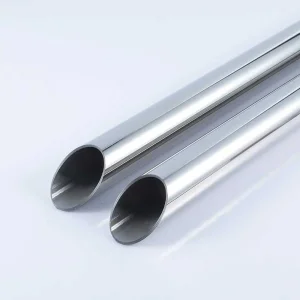
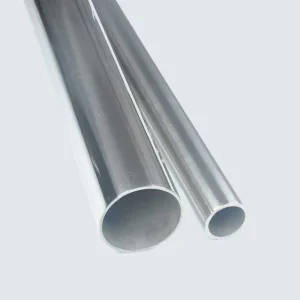
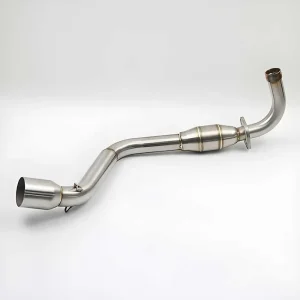
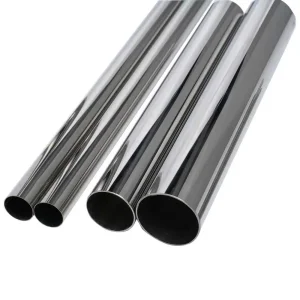
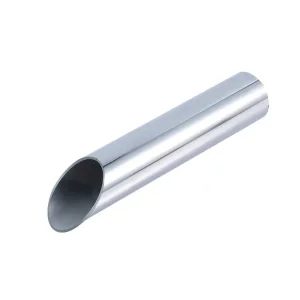
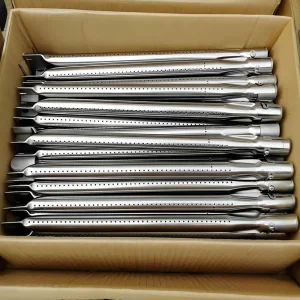
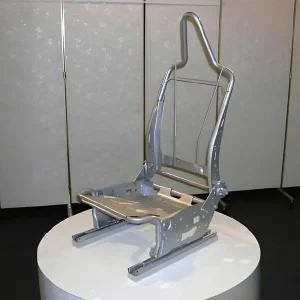
Every meter of 304 tube undergoes rigorous metallurgical validation from raw coil entry to containerization, ensuring absolute adherence to international engineering drawings.
Incoming hot and cold-rolled stainless steel strip coils from TISCO, Baosteel, and POSCO are verified using portable XRF analyzers to confirm exact Chromium (≥18%) and Nickel (≥8%) thresholds before slitting.
Automated High-Frequency Plasma/TIG welding operates under continuous internal nitrogen gas shielding. This prevents internal seam oxidation, yielding a smooth, black-oxide-free inner wall bore.
Tubes destined for pressure or fluid handling undergo 100% non-destructive Eddy Current defect monitoring (per ASTM E426) and hydrostatic pressure testing up to 5.0 MPa to guarantee zero micro-leakage.
Expert answers to critical technical, chemical, and commercial questions faced by global procurement officers and structural engineers.