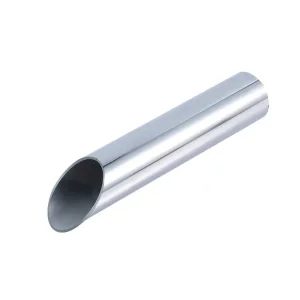
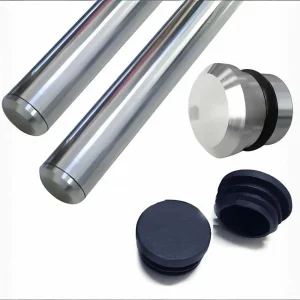
Direct factory engineering specs for architectural, medical, sanitary, and high-precision mechanical applications.
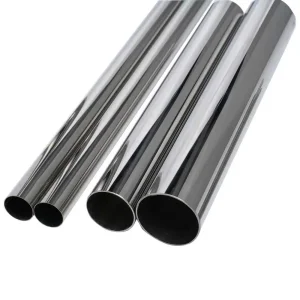
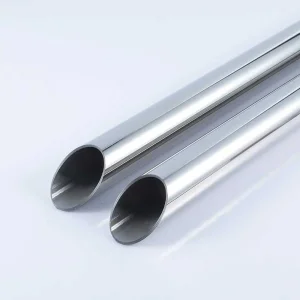
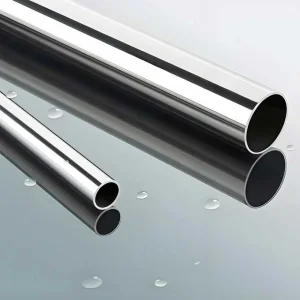
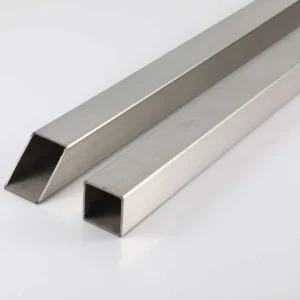
In high-integrity industrial fluid transportation, structural engineering, and sanitary equipment manufacturing, selecting the correct tubular material dictates system longevity, maintenance cycles, and operational safety. As a leading Wholesale 304l Stainless Steel Pipe Manufacturer & Factories network, VertexFlow Tubes delivers authoritative technical guidance backed by chemical, mechanical, and thermal performance metrics.
Grade 304L is the extra-low carbon variant of the ubiquitous 18/8 (304) austenitic stainless steel family. By restricting the maximum carbon content to ≤ 0.030% (compared to 0.08% max in standard 304), 304L effectively eliminates the risk of chromium carbide precipitation in the Heat-Affected Zone (HAZ) during heavy welding operations. This low-carbon chemistry guarantees immunity against intergranular corrosion without requiring post-weld annealing treatment.
During welding, standard austenitic steels exposed to temperatures between 450°C and 850°C precipitate chromium carbides at grain boundaries, causing local chromium depletion. 304L prevents sensitization, preserving corrosion resistance up to the weld seam.
Exhibiting superior weldability across TIG, Plasma, and Laser welding processes. The low-carbon matrix provides excellent elongation (≥ 40%), facilitating severe CNC cold bending, end flaring, and necking without mechanical micro-fracturing.
The austenitic crystal structure provides non-magnetic properties in the solution-annealed state and outstanding fracture toughness at cryogenic temperatures down to liquid nitrogen (-196°C) levels.
| Grade Specification | Carbon (C) Max | Chromium (Cr) | Nickel (Ni) | Molybdenum (Mo) | Tensile Strength (MPa) | Yield Strength (MPa) | Max Service Temp |
|---|---|---|---|---|---|---|---|
| ASTM A554 / A312 TP304 | 0.08% | 18.0 - 20.0% | 8.0 - 10.5% | - | ≥ 515 | ≥ 205 | 870 °C |
| ASTM A554 / A312 TP304L | 0.030% | 18.0 - 20.0% | 8.0 - 12.0% | - | ≥ 485 | ≥ 170 | 816 °C |
| ASTM A554 / A312 TP316L | 0.030% | 16.0 - 18.0% | 10.0 - 14.0% | 2.0 - 3.0% | ≥ 485 | ≥ 170 | 870 °C |
Operating inside Foshan's premier stainless steel industrial cluster, VertexFlow Tubes integrates 43 continuous roll-forming mills to maintain operational efficiency and quality control.
The international market for 304L stainless steel pipes and tubing is undergoing a structural shift driven by stringent decarbonization targets, accelerating urbanization in emerging economies, and the rapid expansion of clean hydrogen, pharmaceutical, and high-tech manufacturing infrastructure. Procurement executives and engineering firms are re-evaluating legacy supply chains to prioritize verified material origin, strict dimensional repeatability, and seamless total cost of ownership (TCO).
Hydrogen transport lines, solar-thermal receivers, and carbon capture infrastructure require ultra-clean internal surface roughness (Ra ≤ 0.4 µm) and zero micro-fissures. 304L provides the chemical stability necessary to eliminate gas contamination and scale formation.
Global EPC contractors are mandating complete heat-number traceability back to raw melting slabs. Mill Test Certificates (MTC) compliant with EN 10204 3.1, along with full PMI (Positive Material Identification) reports, are now baseline requirements rather than premium options.
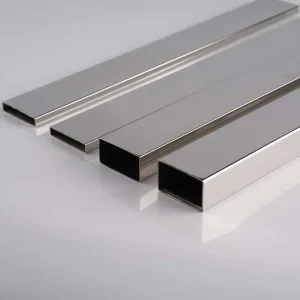
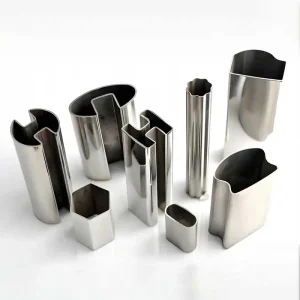
Architectural and industrial sectors are shifting to prefabricated modular skids. This requires structural square, rectangular, and custom oval 304L profiles held to strict angular tolerances (±0.5° squareness) for effortless automatic robotic welding on job sites.
Located in Shishan Town, Nanhai District, Foshan—the heart of China's stainless steel precision manufacturing cluster—VertexFlow Tubes embodies the shift toward Industry 4.0 high-precision production. By integrating raw material sourcing, automated slitting, smart plasma/laser welding, inline eddy-current testing, and surface treatments, China's modern mills deliver cost efficiencies without sacrificing quality.
Direct partnership with tier-1 steel mills (TISCO, POSCO, Baosteel). Every coil undergoes optical emission spectroscopy to verify chemical composition before slitting.
Continuous plasma arc welding combined with internal inert nitrogen purging prevents inner-bore oxidation, yielding smooth, fully fused weld seams.
Non-contact dual-axis laser micrometers monitor outside diameter and wall concentricity in real time, automatically compensating for roll wear to maintain ±0.05 mm limits.
Over 500 active roll-forming dies in stock allow for rapid delivery timelines (standard 15 days) and zero tooling cost for specialized profiles.
Due to its chemical purity, weldability, and resistance to environmental stress cracking, 304L stainless steel tubing serves as a core material across critical commercial and industrial sectors. Below are localized application scenarios engineered to exact standards.
In medical grab bars, hospital bed frames, and sanitary fluid lines, 304L is electropolished to achieve Ra ≤ 0.2 µm. The non-porous passive oxide layer prevents bacterial adhesion, tolerates heavy chemical disinfectants, and eliminates corrosion under frequent wash-downs.
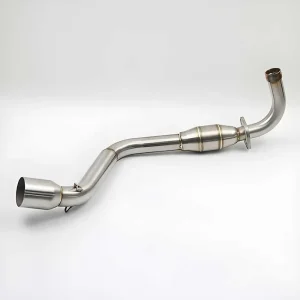
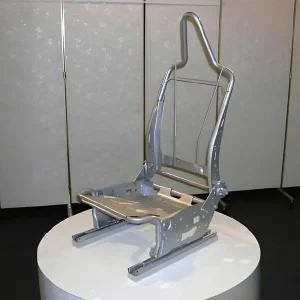
Automotive tier-1 manufacturers utilize customized 304L and 409L structural tubing for chassis support beams, seating frames, and exhaust system components. High elongation values enable severe mandrel bending without seam rupture.
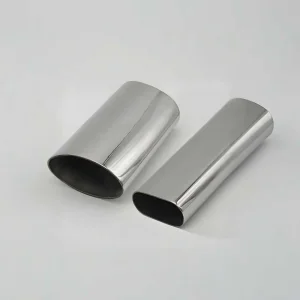
High-end architectural facades, interior balustrades, and luxury furniture utilize ASTM A554 ornamental 304L square, oval, and rectangular tubes coated with PVD (Physical Vapor Deposition) titanium finishes (Rose Gold, Black Titanium, Brass).
The fundamental distinction lies in carbon concentration. 304L contains a maximum of 0.030% carbon, whereas standard 304 permits up to 0.08%. The lower carbon content in 304L prevents chromium carbide precipitation at grain boundaries during welding, maintaining full corrosion resistance in the heat-affected zone without requiring post-weld solution annealing.
316L should be selected when the installation environment contains significant chloride levels, coastal marine air, acid exposure, or harsh chemical cleaning agents. Grade 316L includes 2.0% to 3.0% Molybdenum (Mo), which dramatically increases resistance to pitting and crevice corrosion compared to 304L (which contains 0% Molybdenum).
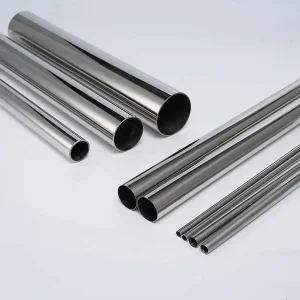
Our standard automated production lines maintain an Outside Diameter (OD) tolerance of ±0.10 mm. For precision applications such as conveyor roller shells, motor housings, and electroplating substrates, we achieve tighter tolerances down to ±0.05 mm. Wall thickness is held to within ±8%, straightness to 1.0 mm per meter, and squareness of structural profiles to within ±0.5°.
Every shipment is supplied with a comprehensive Mill Test Certificate (MTC) conforming to EN 10204 3.1. Quality reports cover full chemical heat analysis, yield/tensile strength, elongation percentage, hydro-static or non-destructive online eddy-current test results, flattening/flaring test validation, and dimensional inspection records. Third-party inspections (SGS, TUV, Intertek) are available upon request.
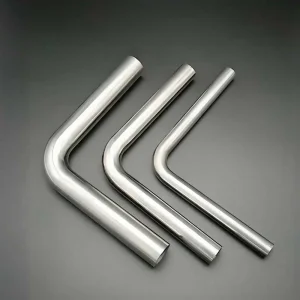
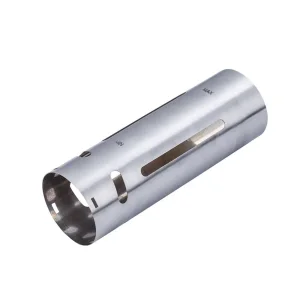
In addition to manufacturing mill-length tubes (standard 6m), our facility provides value-added CNC processing: precision cut-to-length (chip-free rotary cut), CNC mandrel tube bending, end flaring and reduction, punching, laser slotting, bead rolling, and PVD titanium color vacuum coating.
Select specialized tubing dimensions engineered for furniture, industrial storage, mechanical racks, and automotive structures.