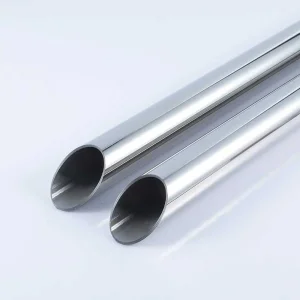
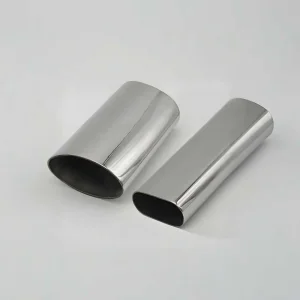
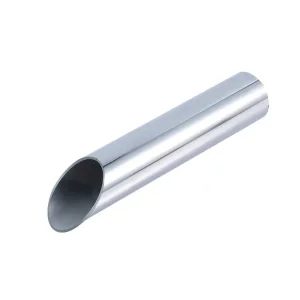
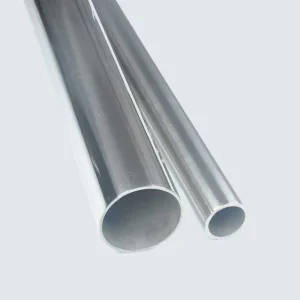
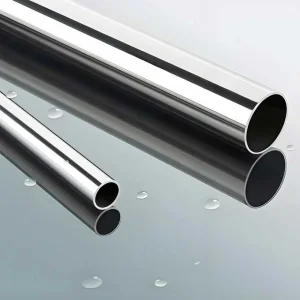
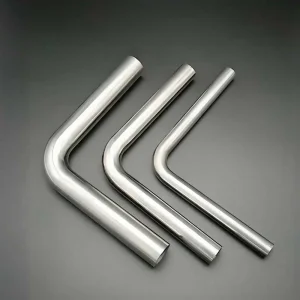
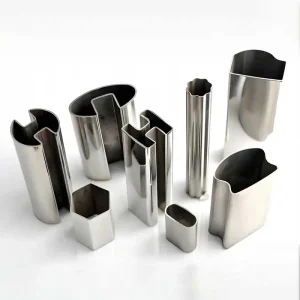
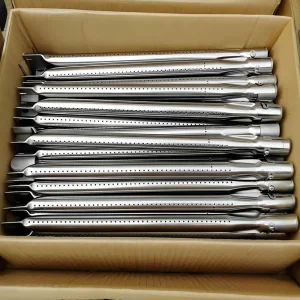
Engineered to exact geometric tolerances with full material traceability (EN 10204 3.1 certification). Explore our core wholesale production lines below.
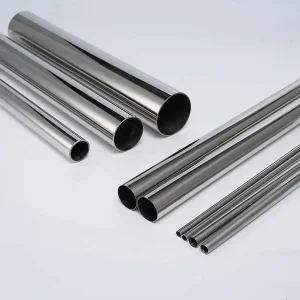
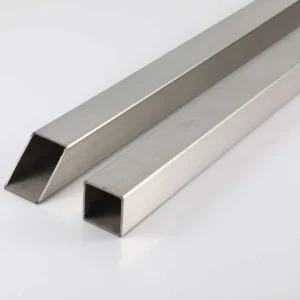
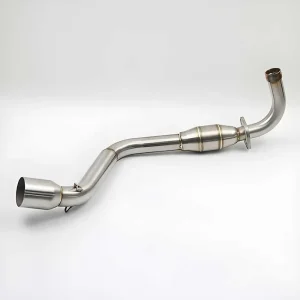
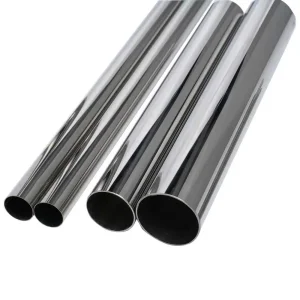
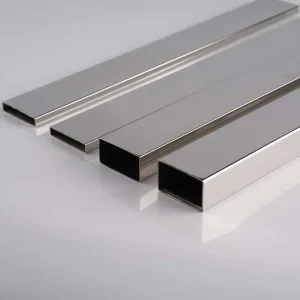
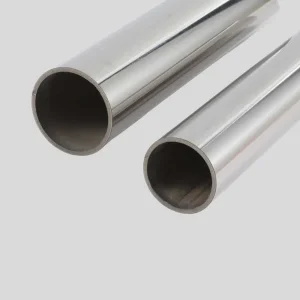
A definitive technical breakdown of molybdenum-alloyed austenitic stainless steel tubing, mechanical performance thresholds, and chemical corrosion resistance.
Grade 316 stainless steel integrates 2.0% to 3.0% Molybdenum (Mo), significantly elevating its Pitting Resistance Equivalent Number (PREN). Calculated as PREN = %Cr + 3.3(%Mo) + 16(%N), Grade 316 yields a PREN index of 23.0–25.0 compared to 19.0 for standard 304. This chemical elevation guarantees exceptional passivation defense against chloride-induced micro-pitting and crevice oxidation in harsh marine environments.
Standard Grade 316 contains up to 0.08% Carbon, which can cause Chromium Carbide precipitation along grain boundaries during high-temperature TIG or Laser welding (sensitizing zone between 425°C and 860°C). Our Grade 316L (Low Carbon, C ≤ 0.03%) eliminates intergranular carbide precipitation, retaining full corrosion resistance in welded joints without requiring post-weld solution annealing treatment.
Navigating global procurement requires rigorous specification mapping. We produce wholesale 316 tubing across structural, sanitary, and hydraulic codes. While ASTM A554 governs ornamental and structural tubing with tight mechanical dimensional tolerances, ASTM A269 dictates seamless and welded tubing for general corrosion-resisting and low/high-temperature service, requiring mandatory hydrostatic or non-destructive electric testing.
| Steel Grade Standard | Carbon (C) max | Chromium (Cr) | Nickel (Ni) | Molybdenum (Mo) | Yield Strength (Rp0.2 MPa) | Tensile Strength (Rm MPa) |
|---|---|---|---|---|---|---|
| AISI 316 (UNS S31600) | 0.08% | 16.0 - 18.0% | 10.0 - 14.0% | 2.00 - 3.00% | ≥ 205 | ≥ 515 |
| AISI 316L (UNS S31603) | 0.030% | 16.0 - 18.0% | 10.0 - 14.0% | 2.00 - 3.00% | ≥ 177 | ≥ 485 |
| EN 1.4404 (X2CrNiMo17-12-2) | 0.030% | 16.5 - 18.5% | 10.0 - 13.0% | 2.00 - 2.50% | ≥ 220 | 520 - 670 |
| EN 1.4435 (X2CrNiMo18-14-3) | 0.030% | 17.0 - 19.0% | 12.5 - 15.0% | 2.50 - 3.00% | ≥ 220 | 520 - 670 |
Deploying high-performance 316/316L stainless steel tubing solutions across mission-critical sectors worldwide.
Offshore oil platforms, coastal balustrades, yacht hardware, and seawater desalination plants suffer rapid pitting when lower-grade alloys are deployed. Our wholesale 316L tubing resists high concentrations of marine chloride ions ($Cl^-$), ensuring structural longevity without tea-staining or stress cracking under harsh sea-spray cycles.
Sanitary grade 316L tubing is mandatory for Water-for-Injection (WFI) distribution loops, hospital equipment, safety grab bars, and bioreactor tubing. Utilizing specialized internal bright annealing and mechanically polished bores (Ra < 0.38 µm), our tubing suppresses bacterial biofilm accumulation and withstands aggressive CIP/SIP chemical sterilization.
Handling organic acids, sulfates, and halogen compounds requires superior thermodynamic stability. Our heavy-wall and thin-wall 316 heat exchanger tubing resists local crevice corrosion in acidic solution boundaries, maintaining thermal transfer efficiency up to 870°C intermittent exposure.
In humid or coastal architectural environments, specifying 304 stainless steel tubing instead of 316/316L to reduce upfront capital expenditure often results in severe surface tea-staining within 6 to 12 months. Wholesale purchasers must audit the chemical composition—specifically checking for molybdenum percentages exceeding 2.0%—to protect long-term asset value and avoid costly replacement cycles.
From prime steel strip slitting to automated non-destructive testing, every length of tubing undergoes complete quality validation.
Prime raw coil sourcing exclusively from TISCO, POSCO, and Baosteel with full melt traceable heat certificates.
Rotary slitting to micron-level strip width, preventing edge burrs that could compromise TIG weld seam integrity.
Gradual cold-forming rollers reshape strip into precise tubular profiles without work-hardening the metal.
Automated high-frequency plasma arc welding ensures 100% full-penetration joint fusion without filler metal.
Inner argon/nitrogen purging shields internal bore during welding, preventing internal heavy oxidation lines.
Internal and external weld bead rolling eliminates structural steps, achieving seamless-like profile geometry.
Continuous in-line electromagnetic non-destructive eddy current scanning isolates pinholes and seam flaws.
Controlled atmosphere furnace heat treatment at 1050°C restores ductility and optimizes passive oxide layer density.
Automated polishing heads produce finishes from 180# Satin/Hairline to 600# Mirror finish and PVD coatings.
Final multi-axis laser gauging verifies outer diameter tolerance (±0.05mm), roundness, and total indicator runout.
Simplifying global procurement with robust documentation, international certification, and localized fabrication support.
Every shipment is accompanied by detailed EN 10204 3.1 Mill Test Certificates containing exact heat numbers, spectral chemical analysis, tensile testing, yield mapping, elongation percentages, and hydrostatic pressure test logs. We support 3rd party inspections via SGS, TUV, BV, or Intertek prior to container sealing.
To optimize customer assembly pipelines, our Foshan facility offers extensive secondary operations: CNC precision cut-to-length, 3D laser slotting, mandrel tube bending, end flaring, swaging, drilling, and pre-welded flange assemblies. Tubes can be shipped ready for immediate assembly line installation.
We provide tailored container loading solutions including custom steel-frame crates, plastic anti-scratch sleeving, vacuum sealing with desiccant bags, and anti-dumping tariff optimization documentation. Exporting seamlessly across North America, Europe, Australia, the Middle East, and Southeast Asia.
Pioneering next-generation manufacturing technology to deliver unmatched purity, precision, and sustainability.
Integrating machine vision and infrared spectrographic sensors directly into the plasma welding head. Real-time AI algorithms automatically adjust welding voltage, current, and line speed to rectify micro-variations in strip thickness instantly, achieving zero-defect weld seams.
Partnering with Tier-1 steel mills to transition to hydrogen-reduced direct reduced iron (DRI) electric arc furnace (EAF) raw material coils. Our goal is to reduce Scope 1 & 2 embedded carbon emissions by 40% across our 316L tubing supply chain by 2030.
Expanding physical vapor deposition (PVD) coating lines to bond micro-thin titanium nitride (TiN) and titanium carbonitride (TiCN) layers onto 316 tubing surfaces. This provides enhanced scratch resistance and customized metallic finishes (Rose Gold, Black Titanium, Champagne Gold) for high-end structural hardware.
Expert answers from our metallurgical and quality assurance engineering team regarding 316/316L tubing specifications.
The core difference lies in the chemical addition of 2.0% to 3.0% Molybdenum (Mo) in Grade 316. Grade 304 typically contains 18% Chromium and 8% Nickel, whereas Grade 316 contains 16-18% Chromium, 10-14% Nickel, and Molybdenum. The addition of molybdenum significantly elevates resistance to pitting, crevice corrosion, and chloride-induced stress corrosion cracking. For coastal, marine, pharmaceutical, or chemical applications, Grade 316 or 316L is essential to prevent rapid degradation.
Grade 316L contains a lower carbon content (maximum 0.030%) compared to standard 316 (maximum 0.080%). When standard 316 is welded, temperatures between 425°C and 860°C cause chromium and carbon to combine, forming chromium carbides at the grain boundaries. This depletes chromium near the seam, leaving the welded zone vulnerable to intergranular corrosion. Grade 316L prevents chromium carbide precipitation during welding, maintaining full corrosion integrity without requiring post-weld solution heat treatment.
Our 43 precision tube mills maintain an outer diameter (OD) tolerance of ±0.10 mm standard, and down to ±0.05 mm on precision gauge order runs. Wall thickness tolerance is strictly controlled within ±8%. Straightness is maintained to within 1 mm per meter (1/1000). For square and rectangular section tubing, corner squareness is held to within ±0.5°, ensuring clean mitre joints and gasket seating.
During the TIG or plasma welding process, molten stainless steel reacts instantly with ambient oxygen if unshielded, creating dark chromium oxide scale ("sugar coat") along the internal seam. Purging the tube bore with ultra-pure inert gas (99.999% Argon or Nitrogen/Argon mix) displaces oxygen, ensuring the internal weld seam remains smooth, bright, un-oxidized, and fully passivated.
We offer a complete suite of mechanical and chemical surface treatments: Mill Finish / Descaled, Satin / Hairline Finish (180#, 240#, 320#), Bright Annealed (BA), High-Gloss Mechanical Polished (400#, 600# Mirror), Electropolished (EP) for ultra-clean biomedical applications, and PVD titanium decorative coatings.
Every shipment includes an EN 10204 3.1 Mill Test Certificate (MTC) stating the heat number, physical melt chemistry, mechanical tensile and yield results, hardness, elongation, flattening and flaring test results, along with non-destructive eddy current inspection reports.
Explore additional precision manufactured stainless steel profiles engineered for specialized commercial applications.