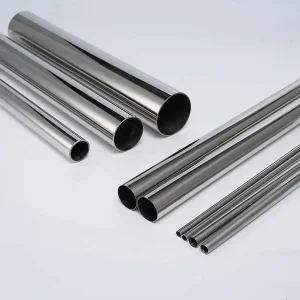
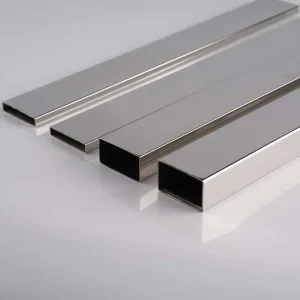
Explore our foundational mill product portfolio certified under international manufacturing standards including ASTM A554, ASTM A249, ASTM A269, and EN 10217-7.
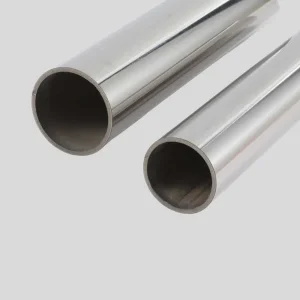
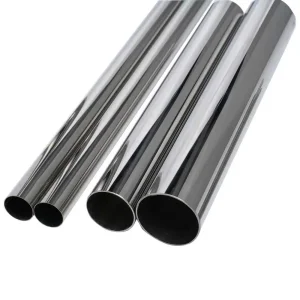
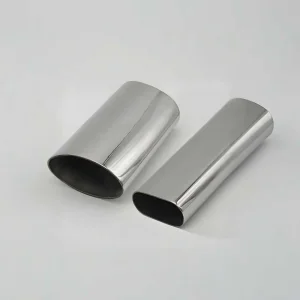
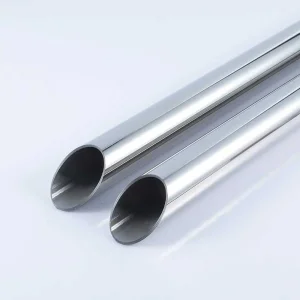
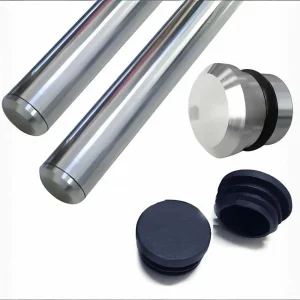
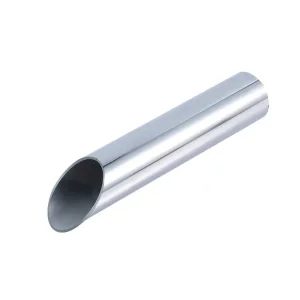
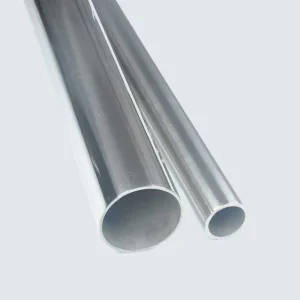
Understanding why Grade 304 (UNS S30400 / EN 1.4301) remains the global cornerstone for structural, fluid dynamics, and sanitary tubing systems.
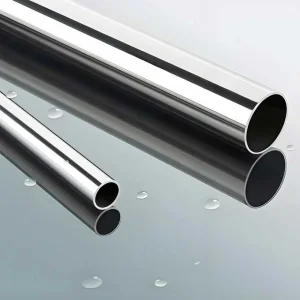
AISI 304 possesses an 18% Chromium and 8% Nickel composition that forms a self-healing Chromium Oxide (Cr₂O₃) passive layer. This suppresses bacterial adhesion and contamination in dairy, brewery, and pharmaceutical fluid handling pipelines. Internal surface roughing held strictly below Ra 0.4 μm prevents biofilm build-up.
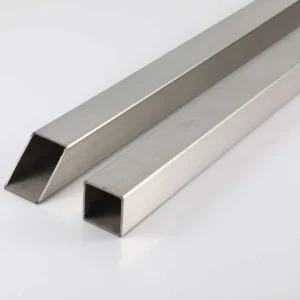
With a minimum tensile strength of 515 MPa and yield strength exceeding 205 MPa, welded ASTM A554 304 pipes deliver optimal weight-to-strength ratios for automotive chassis subframes, industrial workstation racks, structural balustrades, and high-load conveyor roll systems.
The face-centered cubic (FCC) austenitic crystal structure prevents ductile-to-brittle transition even at liquid nitrogen temperatures (-196°C), while maintaining high thermal oxidation scaling resistance up to 870°C in continuous industrial duty.
Strict compliance with elemental chemistry is mandatory to prevent intergranular sensitization during high-frequency welding. Below is the verified chemical and mechanical threshold maintained across our 43 mill lines.
| Grade / Spec | C % (Max) | Cr % | Ni % | Mn % (Max) | Tensile Str. (MPa Min) | Yield Str. (MPa Min) | Elongation % |
|---|---|---|---|---|---|---|---|
| AISI 304 (UNS S30400) | 0.07 | 17.5 - 19.5 | 8.0 - 10.5 | 2.00 | 515 | 205 | ≥ 40% |
| AISI 304L (UNS S30403) | 0.03 | 17.5 - 19.5 | 8.0 - 12.0 | 2.00 | 485 | 170 | ≥ 40% |
| EN 1.4301 (X5CrNi18-10) | 0.07 | 17.5 - 19.5 | 8.0 - 10.5 | 2.00 | 500 - 700 | 210 | ≥ 45% |
| AISI 316L (UNS S31603) | 0.03 | 16.0 - 18.0 | 10.0 - 14.0 (Mo 2.0-3.0) | 2.00 | 485 | 170 | ≥ 40% |
A macro-economic blueprint for supply chain directors, procurement executives, and international steel distributors navigating global stainless steel trade.
Stainless steel pricing is intrinsically tied to London Metal Exchange (LME) primary nickel and ferrochrome spot prices. Grade 304 contains approximately 8% nickel, meaning a $1,000/ton shift in primary nickel translates directly to a $80-$85/ton shift in raw strip costs.
Our factory direct procurement framework mitigates spot volatility through forward-locking contracts with premier steel mills (TISCO, POSCO, Baosteel), providing wholesale buyers with guaranteed price stability windows up to 90 days.
With the implementation of the European Union’s Carbon Border Adjustment Mechanism (CBAM), embedded emissions verification is now mandatory. Electric Arc Furnace (EAF) steelmaking utilizing high recycled stainless scrap yields up to 70% lower Scope 1 and Scope 2 carbon intensity than blast furnace routes.
We provide fully auditable carbon intensity documentation and ISO 14064 environmental product declarations (EPD) to ensure zero friction at EU customs ports.
Engineering consistency is our hallmark. We employ 10-stage inline inspection protocols to safeguard your production yield.
Every shipment is dispatched with 100% traceable heat-numbered MTCs detailing chemical ladle analysis, tensile yield testing, flare ratio checks, flattening verification, and 500-hour neutral salt spray (NSS) test reports.
Standard outside diameter (OD) tolerance is kept within ±0.10 mm, with precision runs reaching ±0.05 mm for conveyor roller shells and high-speed electroplating substrates. Straightness is controlled to ≤ 1.0 mm per meter.
Full end-to-end supply chain execution covering FOB China, CIF overseas ports, and complete DDP (Delivered Duty Paid) door-to-door delivery with customs duty pre-handled for buyers across North America, Europe, Australia, and the Middle East.
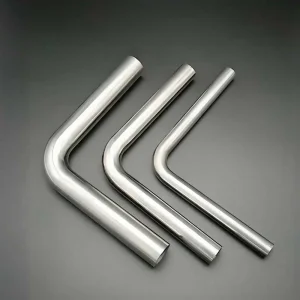
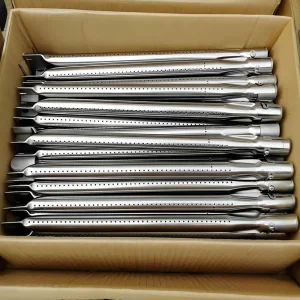
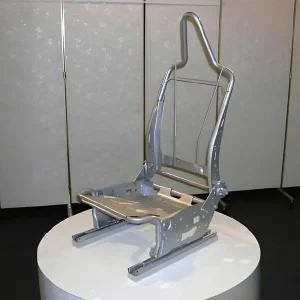
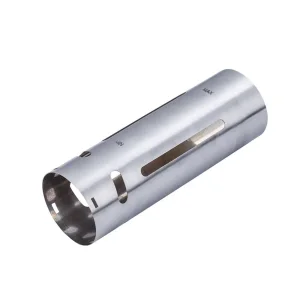
Instead of taking delivery of raw 6-meter mill lengths, global fabricators can order fully processed components ready for final assembly. Our CNC machinery handles complex downstream tube processing:
Real-world integration analysis across high-demand industrial sectors.
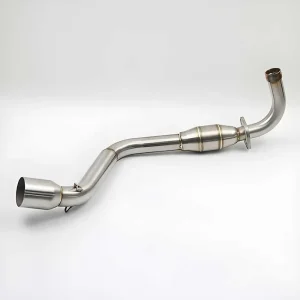
Application Challenge: Exhaust gas temperature spikes up to 650°C paired with road salt corrosion leads to premature rust and weld seam failure in conventional carbon steel or low-grade 201 tubes.
The Solution: Deploying plasma-welded AISI 304 tubes with internal nitrogen gas purging. The oxygen-free weld bore prevents thermal scaling and micro-cracking during deep CNC bending, extending OEM muffler service life to over 100,000 miles.
Application Challenge: Frequent chemical sterilization using chlorine-based solutions causes surface pitting, tea-staining, and loss of structural safety margins on medical grab bars.
The Solution: High-grade 304 sanitary tubes featuring 600# mirror polish paired with continuous passivation treatment. Eliminating surface micro-pores guarantees zero chemical entrapment and compliance with hospital hygiene regulations.
How cutting-edge smart mill technologies are defining the next generation of stainless steel pipe production.
Transitioning from traditional arc welding to ultra-precise laser-TIG hybrid systems reduces the Heat Affected Zone (HAZ) by 60%, drastically minimizing grain growth and enhancing weld seam ductility for extreme deformation tasks.
Inline neural-network camera arrays scan 100% of the pipe surface at mill speeds of 40m/min, identifying pinholes, scratches, and micro-dents down to 0.02 mm before final polishing.
Replacing natural gas bright annealing furnaces with 100% green hydrogen atmospheric furnaces, achieving absolute mirror surfaces without oxide scale while eliminating direct factory carbon emissions.
Direct answers from our metallurgical engineers and international export compliance specialists.
Complete your procurement evaluation with our specialized architectural, medical, hardware, and automotive pipe lines.