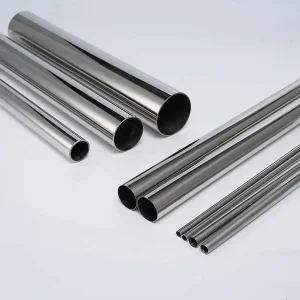
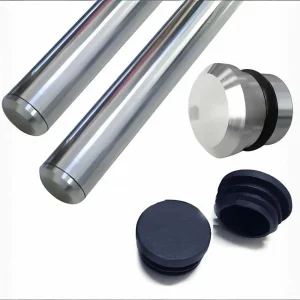
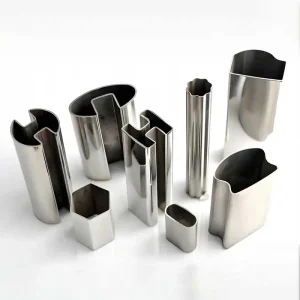
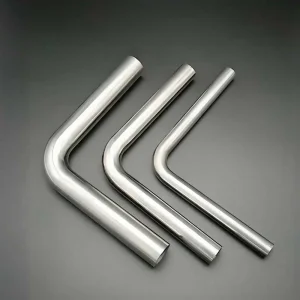
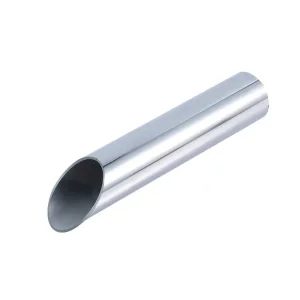
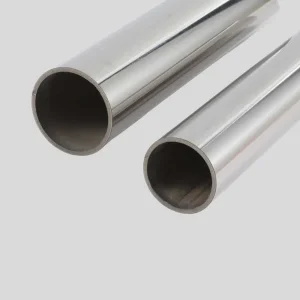
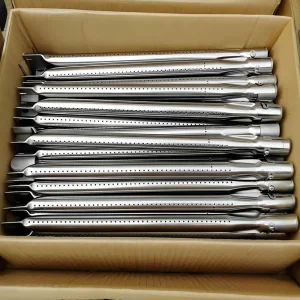
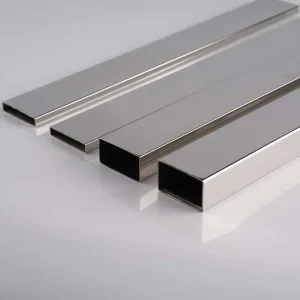
Explore our core selection of ASTM A554 welded stainless tubing, high-flexibility exhaust joints, and custom profile solutions manufactured at our Foshan facility.
The modern automotive exhaust system operates in one of the most demanding physical environments in consumer machinery. Situated directly downstream of the engine manifold and catalytic converter, the flexible pipe coupler (flex pipe) is subjected to thermal cycling reaching up to 900°C, engine dynamic torque roll, high-frequency kinetic vibrations, and aggressive atmospheric road salt corrosion. As global automotive OEMs transition toward stringent Euro 7 and EPA Tier 4 emission standards, the engineering tolerances and material expectations placed on a wholesale automotive flex pipe manufacturer have expanded exponentially.
In contemporary vehicle architectures, flex pipes perform three critical mechanical functions: isolation of engine motion from the rigid underbody exhaust piping, damping of Noise, Vibration, and Harshness (NVH) to improve cabin acoustic comfort, and thermal expansion absorption to prevent stress cracking in brittle turbocharger housings and ceramic catalytic converters. Failure at this junction results in direct toxic exhaust leaks, elevated engine noise, false O2 sensor readings, and catastrophic emission compliance failures.
Hybrid powertrains introduce rapid engine start-stop cycles, subjecting exhaust bellows to harsh thermal shock and rapid expansion/contraction stress, demanding superior anti-fatigue alloys like SS304 and Inconel 625.
Modern cabin sound suppression standards require multi-layer inner lock or inner braid liner configurations that suppress high-frequency exhaust gas resonance without restricting exhaust flow velocity.
Engineers utilize high-precision hydroforming technology to produce double-ply hydroformed bellows with reduced wall thickness, achieving enhanced axial flexibility while extending multi-axis fatigue life.
| Flex Pipe Construction Type | Internal Liner Architecture | Primary NVH Performance | Thermal / Pressure Resistance | Recommended Application |
|---|---|---|---|---|
| Inner Braid Flex Pipe | SS304 Woven Stainless Mesh | Moderate Damping | Up to 750°C / Standard Pressure | Standard Aftermarket & Light ICE Vehicles |
| Interlock Flex Pipe | Stainless Steel Interlocking Strip | High NVH Isolation & Turbulence Reduction | Up to 850°C / High Exhaust Flow | Heavy-Duty Trucks, Turbocharged Engine Downpipes |
| Inner Bellows Flex Pipe | Multi-Ply Hydroformed Bellows | Maximum Gas Tightness & Flexibility | Up to 950°C / Extreme Thermal shock | OEM Tier-1 Assemblies, Hybrid Powertrains |
| Extension Tube Bellows | Reinforced Outer Braid + Nipple Ends | Absorbs High Angular & Radial Displacement | Custom Calibrated | Commercial Fleets, Off-Highway Machinery |
When global Tier-1 automotive system integrators, commercial fleet manufacturers, and automotive aftermarket distributors evaluate a wholesale automotive flex pipe factory, technical compliance and metallurgical traceabilty supersede simple unit pricing. Purchasing directors require comprehensive verification across four key dimensions: raw material purity, geometric precision, dynamic fatigue durability, and leak integrity under working pressure.
High-grade outer braids and inner bellows utilize AISI 304 stainless steel containing 18% Chromium and 8% Nickel to prevent surface corrosion and intergranular cracking. For cost-sensitive, high-heat underslung exhaust sections, ferritic SS409L is selected for its superior thermal expansion coefficient matching cast iron exhaust manifolds.
Our automated hydroforming process generates consistent convolution pitch and depth, distributing stress evenly across the bellows profile. Outer braiding is tightly woven at optimized angles using 48-strand automated machinery to prevent ballooning under high turbocharger backpressure.
In modern OBD-II equipped vehicles, downstream oxygen sensors continuously monitor catalytic converter efficiency. Even a microscopic pinhole leak in an inferior flex pipe allows atmospheric oxygen to bleed into the exhaust stream via Venturi effect, throwing off engine fuel trim calibration and triggering Check Engine Light (CEL) codes (e.g., P0171 - System Too Lean). Our automated laser-welded bellows undergo 100% helium mass spectrometer leak testing, guaranteeing leak rates under 10⁻⁶ mbar·l/s.
The manufacturing landscape for automotive exhaust tubing and flex couplers has undergone a digital transformation. As a leading manufacturer operating out of Foshan, Guangdong—China's flagship stainless steel processing cluster—our factory integrates direct raw material slitting, automated tube welding, CNC hydroforming, and robotic TIG/laser welding under one unified quality management system.
By sourcing prime stainless steel coils directly from state mills (TISCO, POSCO, Baosteel) and executing in-house coil slitting, we eliminate intermediary markups while controlling wall tolerance down to ±0.03mm.
Multi-axis robotic welding stations execute clean, seam-matched circumferential welds between inner bellows, interlock liners, and outer cap nipples, eliminating manual seam variation and burn-through risk.
With over 500 active roll-forming and hydroforming dies in stock, custom OEM flex pipe prototypes are delivered within 7 business days, with full container production shipping in under 15 days.
Flex pipes are not universal; their operational requirements vary wildly across vehicle classes and industrial uses. As a specialized B2B manufacturer, we engineer custom flex joint configurations tailored to distinct operational profiles:
Focused on maximum cabin quietness and low weight. Utilizing double-ply hydroformed bellows with an internal mesh braid, these compact flex pipes isolate the vibration of transverse 3-cylinder and 4-cylinder engines before it reaches the floor pan mounting hangers.
Engineered for high diesel engine torque twist and long continuous operation. Featuring heavy-duty stainless steel interlock inner liners with thick-wall SS304 caps, these flex sections withstand intense thermal stress and exhaust gas velocity without collapsing or buzzing.
Exhaust systems in excavators, tractors, and mining haulers face massive multidirectional chassis twisting. Heavy-gauge braided flex pipes protect fragile Selective Catalytic Reduction (SCR) and Diesel Particulate Filter (DPF) housings from dynamic frame flexing.
Performance turbo downpipes generate excessive backpressure and heat. High-flow interlock flex couplings maintain smooth internal laminar flow, preventing internal braid unraveling even under aggressive pop-and-bang ECU tunes and track heat cycles.
A vehicle operating in the sub-zero road-salt conditions of North America demands vastly different material surface treatment than a commercial generator flex joint in coastal high-humidity environments. Our engineering team optimizes alloy specifications based on localized operating challenges:
For vehicles in Canada, Northern Europe, and the US Salt Belt, road de-icers (Calcium Chloride) accelerate exterior pinhole rust. We utilize 316L exterior braiding with passivation treatment passing 500+ hours of Neutral Salt Spray (NSS) testing.
High ambient moisture accelerates surface oxidation on mild steel collars. All wholesale flex pipes destined for Southeast Asia and South America feature 100% stainless steel collars (SS304/SS409) rather than cheap aluminized steel caps.
Desert climates present massive ambient temperature swings between day and night (-5°C to +45°C) combined with high exhaust heat. Hydroformed dual-ply bellows absorb severe thermal shock without micro-fracturing along the weld seam.
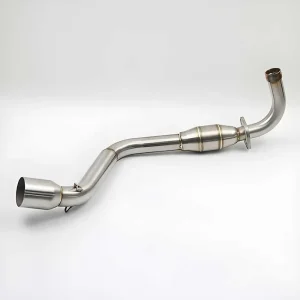
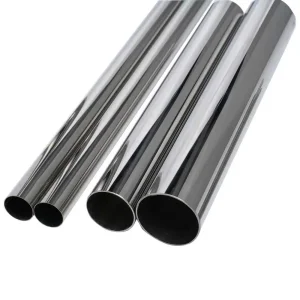
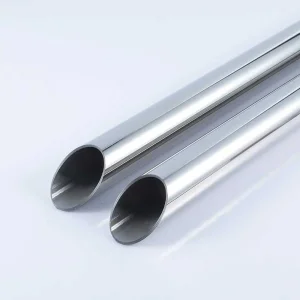
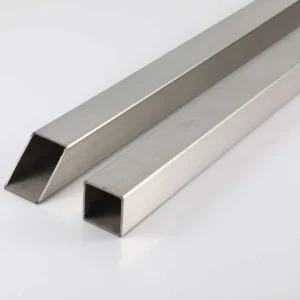
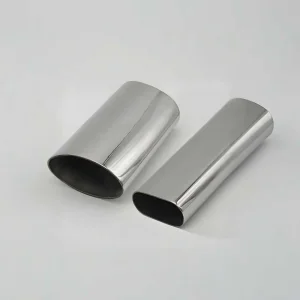
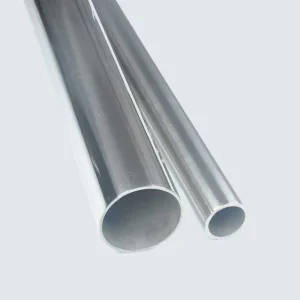
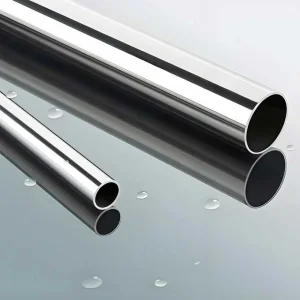
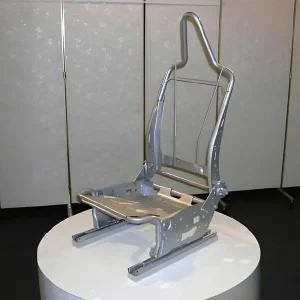
Browse our specialized automotive, medical, sanitary, and structural stainless steel tubing lines engineered for high-performance industrial applications.
Need custom bellows geometry, specialized flange integration, or CAD drawing validation? Our engineering team responds with technical feedback within 24 hours.
Request Technical Drawing Review & Quote