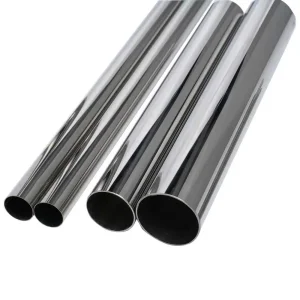
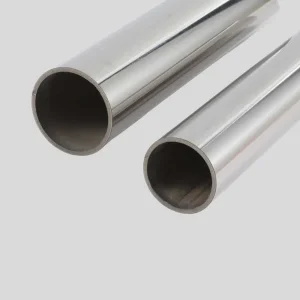
Direct factory supply of precision welded ASTM A554, ASTM A269, and sanitary grade stainless steel tubing manufactured under stringent ISO 9001 quality controls.
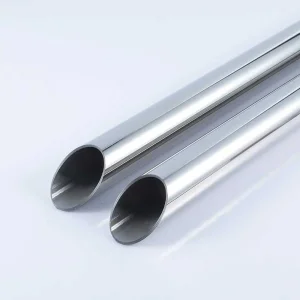
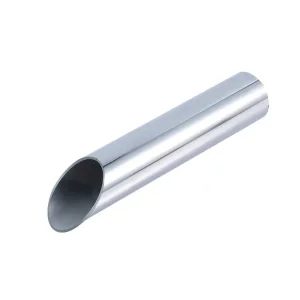
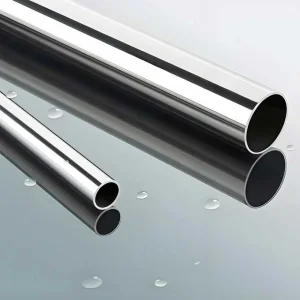
An engineering analysis of how 1/2-inch outer diameter (OD = 12.7mm) stainless steel tubing has become the foundational dimensional standard across fluid dynamics, structural architecture, and automated OEM manufacturing.
The half-inch (12.7mm) outer diameter represents a metallurgical sweet spot in tubular engineering. Balancing flexural strength with lightweight physical characteristics, it allows minimal flow friction loss while maintaining structural integrity under dynamic thermal expansion cycles.
North American and European industrial buyers specify 1/2 inch stainless tubing for automated hydraulic lines, instrument manifolds, and architectural handrails, while Asia-Pacific markets drive massive volume in luxury sanitaryware, home storage frameworks, and commercial EV bus seating components.
Procurement compliance hinges on precise dimensional adherence. Leading standards including ASTM A554 for ornamental and structural uses, ASTM A269 for general corrosion resistance, and ASTM A249 for heat exchangers dictate non-negotiable tolerances on concentricity and wall thickness.
Selecting the optimum stainless steel alloy for 1/2 inch tubing requires balancing corrosion vulnerability, tensile yield stress, formability, and total cost of acquisition.
| Alloy Grade | Nominal Chemical Composition | PREN Value | Yield Strength (MPa) | Primary Industrial Applications |
|---|---|---|---|---|
| AISI 201 (High Cu) | 16-18% Cr, 3.5-5.5% Ni, 5.5-7.5% Mn, Cu ≥ 1.0% | ~17.5 | ≥ 275 | Indoor furniture, home storage hardware, decorative dry-environment balustrades. |
| AISI 304 / 304L | 18-20% Cr, 8-10.5% Ni, C ≤ 0.03% (304L) | ~19.0 | ≥ 205 | Sanitary fittings, food processing, hospital furniture, automotive chassis, general engineering. |
| AISI 316 / 316L | 16-18% Cr, 10-14% Ni, 2-3% Mo, C ≤ 0.03% | ~23.5 - 25.0 | ≥ 220 | Marine hardware, outdoor coastal showers, chemical dosing lines, pharmaceutical cleanrooms. |
| AISI 409L / 439 | 10.5-11.7% Cr, Ti Stabilized, C ≤ 0.03% | ~11.0 | ≥ 205 | Automotive exhaust manifolds, heat shields, high-vibration muffler tailpipes. |
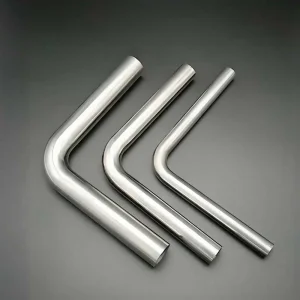
The face-centered cubic (FCC) crystal structure of austenitic alloys (304, 316) gives 1/2 inch tubing exceptional workability. It enables 90-degree tight-radius CNC mandrel bending without structural necking or micro-fissuring along the outer extrusion line.
The inclusion of 2-3% Molybdenum in 316L elevates its Pitting Resistance Equivalent Number (PREN = %Cr + 3.3x%Mo + 16x%N). This prevents localized breakdown of the chromium oxide passive layer when exposed to saline or chloride ions.
By increasing copper content (Cu ≥ 1.0%), modified 201 grade stainless steel reduces the work-hardening rate during cold drawing, allowing cost-sensitive furniture manufacturers to execute severe swaging and flaring operations without splitting.
How localized industrial synergy, continuous automated production lines, and advanced raw material slitting yield world-class pricing and lead-time advantages for global buyers.
Operating within Foshan, the epicenter of global stainless steel processing, mills source prime coil directly from Tier-1 steel producers (TISCO, POSCO, Baosteel). In-house high-precision slitting ensures zero edge-burr formation prior to high-frequency roll forming.
Modern Chinese tube mills run continuous plasma welding systems coupled with inner nitrogen purge shielding. This prevents internal oxidation (the dreaded "black line"), resulting in a clean inner bore suitable for fluid flow and sanitary passage.
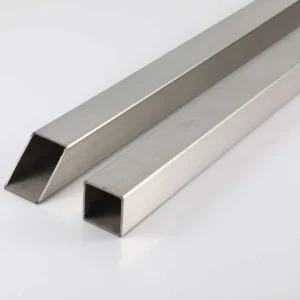
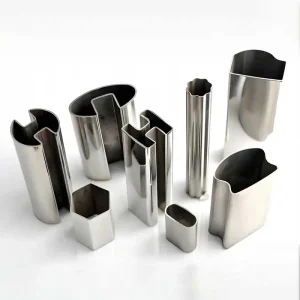
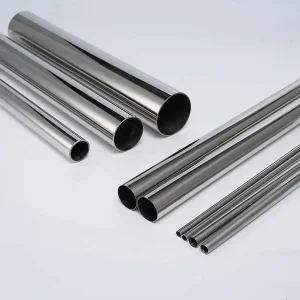
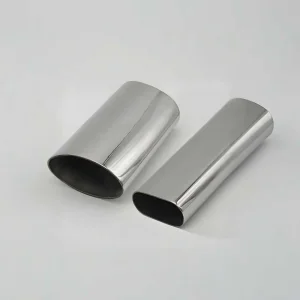
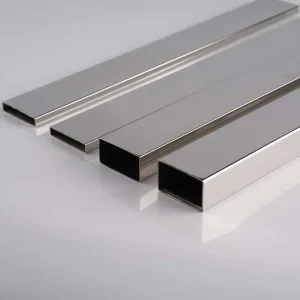
Because Foshan mills maintain massive tooling libraries for round, square, rectangular, oval, and slotted half-inch profiles, global buyers eliminate expensive custom mold amortization fees and achieve rapid 15-day sample-to-shipment turnaround.
From critical medical devices to high-end architectural metalwork, explore how specified wall thicknesses and surface finishes serve targeted engineering requirements.
Used as the primary substrate for shower arms, faucet spouts, and towel rails. Requires Ra ≤ 0.4 µm internal polish and smooth external seams to allow uniform electroplating of chrome, brushed nickel, or PVD gold.
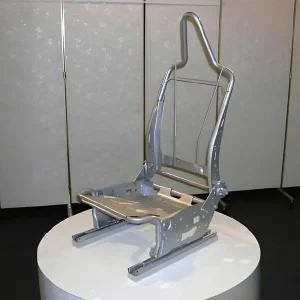
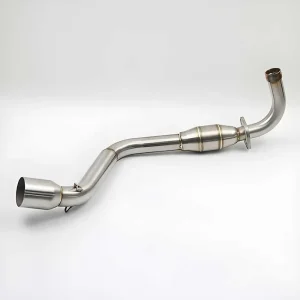
Precision 409L and 304 half-inch tubing is utilized in EGR cooler lines, fuel rail assemblies, and seat frame structural supports requiring resistance against severe vibration fatigue and engine heat cycles.
Constructed into hospital bed rails, grab bars, and IV pole stands. Demands hypoallergenic properties, easy chemical disinfestation, and stringent dimensional tolerance to integrate with molded plastic clips.
Engineered with Low Total Indicator Runout (TIR) and 1mm/m straightness for cleanroom assembly rollers, replacing traditional plastic-coated pipe that peels or harbors microbial growth.
When sourcing wholesale half-inch stainless steel tubing, international enterprise buyers must enforce structured Quality Assurance (QA) gates to eliminate risks of seam cracking, out-of-roundness, and surface pitting.
Always mandate Mill Test Certificates compliant with EN 10204 3.1 detailing exact heat-number traceability, spectral chemical analysis, tensile yield, percentage elongation, and hardness values (HRB/HV).
100% automated inline non-destructive testing (NDT) according to ASTM E426 ensures that pinholes, weld weld gaps, or micro-cracks are instantly flagged and cut out before the tube reaches the polishing or packing stage.
Batch samples undergo rigorous physical testing: flattening the tube until wall contact occurs without weld seam separation, and 60-degree expansion flaring to verify joint ductility for secondary CNC processing.
How smart automation, physical vapor deposition (PVD), and sustainable decarbonization are transforming the wholesale stainless steel tubing industry.
Replacing conventional liquid electroplating, physical vapor deposition (PVD) deposits a 0.3-0.5 µm titanium ceramic layer onto half-inch tubing. This creates scratch-resistant decorative finishes (Rose Gold, Gunmetal Black, Champagne) with zero toxic liquid waste.
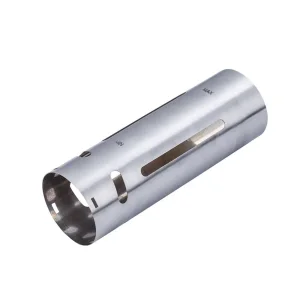
Global procurement is shifting from raw 6-meter mill length purchases to receiving fully fabricated components. Modern Chinese factories provide in-house laser slotting, precision end-swaging, multi-axis bending, and automated robotic welding under one roof.
Leading Chinese manufacturers are incorporating recycled scrap metal ratios up to 80% in electric arc furnaces (EAF) and utilizing solar power micro-grids, significantly lowering the embodied carbon footprint of exported stainless steel products.
Direct technical answers provided by senior metallurgical engineers regarding tolerances, alloy selection, surface finishes, and export shipping logistics.
Explore specialized application tubing including medical grade sections, oval decorative profiles, and structural architectural series available for worldwide export.