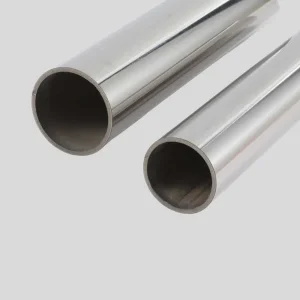
OEM Stainless Steel Tubing for Conveyor Rollers Manufacturers, Suppliers
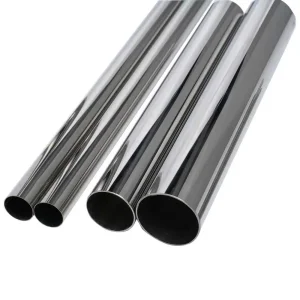
ODM Marine Grade 316L Stainless Steel Tubing Manufacturer, Suppliers
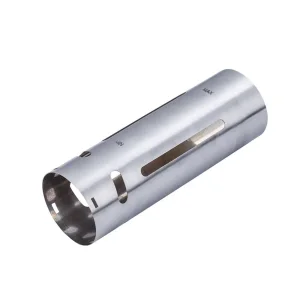
China OEM Stainless Steel Tube Fabrication & CNC Machining Manufacturers, Suppliers
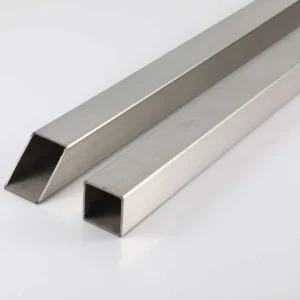
High-Quality Medical Grade Stainless Steel Tubing for Hospital Furniture Factories, Factory
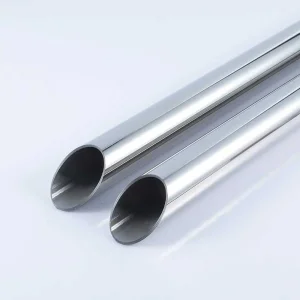
China Sanitary Grade Precision Stainless Steel Tubing Manufacturers, Manufacturer
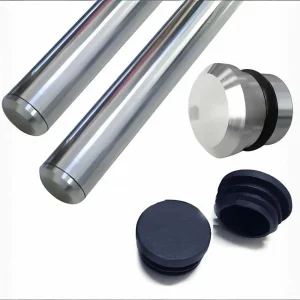
OEM Stainless Steel Tubing for Home Appliances & Electric Tools Factories, Factory
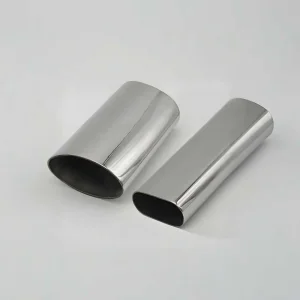
High-Quality Stainless Steel Tubing for Home Storage & Organization Manufacturers, Supplier
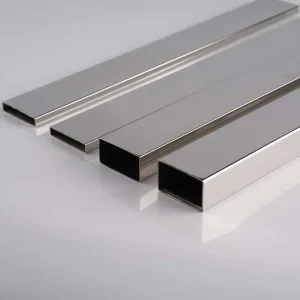
ODM ASTM A554 Stainless Steel Square & Rectangular Tubing Supplier, Factory
Modern industrial exhaust architecture demands materials capable of surviving rigorous operational constraints. From automotive manifold downpipes to massive industrial combined heat and power (CHP) exhaust stacks, selecting the correct high-temperature alloy determines system lifespan and structural compliance.
High-temperature exhaust tubing operates in atmospheres rich in oxygen, water vapor, and sulfur compounds. At temperatures exceeding 650°C to 1050°C, standard carbon steel undergoes severe scaling and catastrophic structural loss. Advanced ferritic alloys (such as 409L and 439) and austenitic grades (304, 316L, 321, 310S) form a protective passivating chromium-oxide (Cr₂O₃) surface layer that arrests subsurface degradation.
Exhaust tubing experiences continuous thermal cycling—rapid heating followed by ambient cooling. This generates tremendous cyclic expansion and compression stress. Creep strength—the material's resistance to slow, permanent deformation under sustained thermal stress—is optimized by precise additions of titanium, niobium, and molybdenum, suppressing grain growth and intergranular embrittlement over thousands of operational hours.
Engines and industrial turbines generate high-frequency mechanical vibration. Precision-welded tubing manufactured with strict concentricity and uniform wall thickness prevents resonance-induced fatigue cracking at flange joints and structural bends, ensuring physical stability under harmonic vibration loads.
| Steel Grade / Alloy | Structure Type | Max Continuous Temp | Corrosion Resistance | Primary Industrial Applications |
|---|---|---|---|---|
| AISI 409L / 1.4512 | Ferritic Stainless | 650°C (1202°F) | Moderate (Dry Exhaust) | Automotive catalytic converters, mufflers, commercial vehicle tailpipes. |
| AISI 439 / 1.4510 | Stabilized Ferritic | 750°C (1382°F) | Good (Condensate Resistant) | EGR cooler pipes, front manifold downpipes, residential heating exhausts. |
| AISI 304 / 304L | Austenitic Stainless | 870°C (1598°F) | High (Atmospheric & Organic) | Heavy-duty truck exhausts, industrial generator piping, flexible bellows. |
| AISI 316L / 1.4404 | Molybdenum Austenitic | 870°C (1598°F) | Superior (Acid/Salt Spray) | Marine engine exhausts, coastal power gensets, chemical process venting. |
| AISI 321 / 1.4541 | Ti-Stabilized Austenitic | 900°C (1652°F) | Exceptional (Anti-Intergranular) | Aircraft exhaust stacks, high-performance racing manifolds, turbo chargers. |
| AISI 310S / 1.4845 | High Cr-Ni Austenitic | 1050°C (1922°F) | Extreme Oxidation Resistance | Industrial kilns, heat treatment furnaces, gas turbine exhaust ducting. |
Our specialized manufacturing mills cater to diverse industrial sectors requiring customized dimensional tolerances, precise CNC mandrel bending, and specialized surface treatments.
Global emission standards require tight exhaust manifold and Selective Catalytic Reduction (SCR) integration. We produce hydroformable 409L and 439 ferritic tubing engineered for tight-radius mandrel bending without wall thinning or seam splitting. Our automated internal weld seam planishing ensures smooth interior gas flow, reducing backpressure and maximizing turbocharger efficiency.
Large diesel and gas generators operate continuous duty cycles under heavy load. We fabricate large-diameter ASTM A249/A269 304L and 316L welded and drawn tubing designed for expansion joints, flex bellows, and primary silencer interconnects. Tubing is 100% hydrostatically tested to guarantee zero leakage of lethal combustion gases.
Extreme weight-to-strength ratios and thermal shock resistance are mandatory in race craft and aviation exhausts. We supply thin-wall AISI 321 titanium-stabilized and Inconel 625 tubing with wall thickness down to 0.7mm (0.028 in), maintaining structural stiffness while withstanding direct flame impingement and continuous vibration.
Atmospheric marine environments attack warm exhaust lines both internally (acidic combustion condensate) and externally (salt-laden sea spray). Our 316L and Duplex 2205 exhaust tubing undergoes solution annealing and chemical passivation to pass 500+ hours of neutral salt spray testing without pitting or crevice corrosion.
As industrial engines evolve toward hydrogen combustion, synthetic fuels, and hybrid-electric turbos, exhaust temperatures are increasing. Our metallurgical research program focuses on advanced manufacturing technologies to meet tomorrow's thermal demands.
We are pioneering in-line pyrolytic application of micro-thin ceramic barrier coatings inside and outside the tube wall. This reduces radiant heat emission under the engine hood by up to 35%, protecting adjacent electronics without requiring bulky external heat shields.
Transitioning from traditional TIG/Plasma to high-speed fiber laser-hybrid welding reduces the heat-affected zone (HAZ) by 60%. This retains maximum grain structure refinement along the weld line, dramatically improving high-impact mechanical strength during hot-bending operations.
Modern engine bays feature non-circular spaces. Our internal high-pressure fluid hydroforming capability enables complex oval, D-shape, and asymmetrical tube shapes that maintain constant internal cross-sectional area, preventing gas turbulence while fitting complex geometric constraints.
Based in Foshan—China's industrial stainless steel hub—our 12,000 m² smart plant combines raw material slitting, continuous automated welding, bright annealing, and multi-axis polishing under one roof to maximize procurement speed and price competitiveness.
By sourcing direct mill coils from TISCO, POSCO, and Baosteel and executing in-house coil slitting, we remove third-party markup fees. Integrated production yields 15-20% cost efficiency compared to non-integrated re-processors.
Every millimeter of high-temperature tube undergoes inline infrared weld seam tracking, high-frequency eddy current flaw detection, and automatic ultrasonic wall thickness measurement. Defective sections are marked and cut instantly, guaranteeing zero defect dispatch.
With over 500 sets of existing roll-forming dies and stock master coils, standard and semi-custom exhaust tubing orders enter production within 24 hours of PO confirmation, delivering standard 15-day export dispatch schedules.
To integrate seamlessly into tier-1 automotive and industrial supply chains, our factory operates strictly in alignment with global technical standards and quality systems.
We manufacture directly to global exhaust and structural tubing standards including:
Every shipment includes a comprehensive quality documentation dossier designed for seamless customs clearance and internal QA acceptance:
Mitigate international shipping risks with flexible trade terms, robust export packaging, and dedicated regional support teams.
Whether you require FOB loading at Guangzhou/Shenzhen ports, CIF to your destination port, or complete DDP (Delivered Duty Paid) customs clearance directly to your factory door, our logistics desk handles all import documentation and duty tariffs.
Exhaust tubing surfaces are preserved using individual plastic protective sleeving, anti-corrosion VCI paper wrapping, outer corrugated plastic sheeting, and heavy-duty fumigated wooden crates or steel frames designed for forklift unloading.
For long-term contract OEM buyers, we offer Vendor-Managed Inventory (VMI) arrangements and scheduled blanket order dispatches, ensuring your production lines never experience material stockouts.
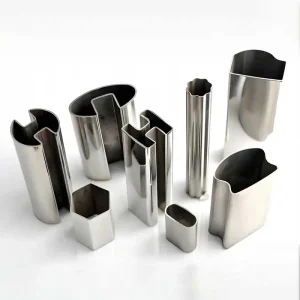
OEM ASTM A554 Stainless Steel Oval & Special Shaped Tubing Manufacturers, Supplier
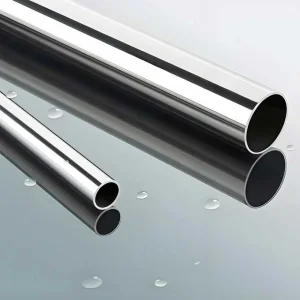
High-Quality Stainless Steel Tubing for Medical Safety Grab Bars Manufacturer, Supplier
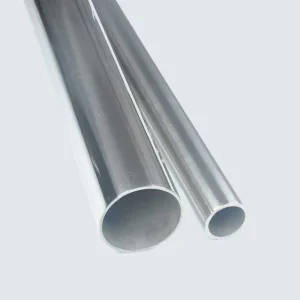
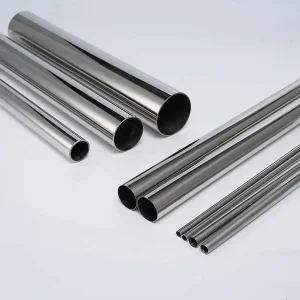
High-Quality Stainless Steel Handrail & Balustrade Tubing (ASTM A554) Manufacturers, Factory
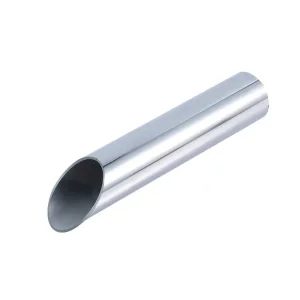
OEM Stainless Steel Tubing for Industrial Racks & Workstations Manufacturer, Factories
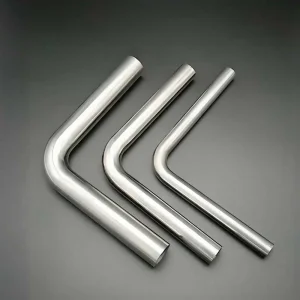
China Decorative Stainless Steel Tubing for Furniture (201 & 304) Manufacturer, Supplier
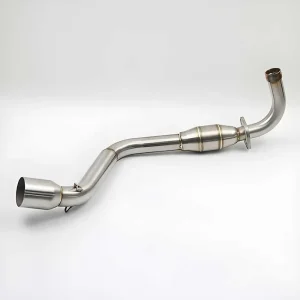
High-Quality Automotive Exhaust & Muffler Tubing (409L / 304) Suppliers, Factories
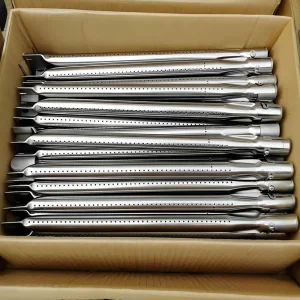
OEM Stainless Steel Gas Grill Burner Tubes (OEM & Aftermarket) Supplier, Factory
Engineering insights compiled by our metallurgical quality management team to resolve common OEM design and procurement queries.
While 304 stainless steel offers higher overall corrosion resistance, 409L ferritic stainless steel provides significant mechanical advantages for automotive exhaust lines operating up to 650°C. Ferritic stainless steels have a lower coefficient of thermal expansion than austenitic grades (like 304), which significantly reduces thermal stress and flaking during frequent heating and cooling cycles. Furthermore, 409L exhibits superior resistance to high-temperature thermal fatigue, is immune to chloride stress corrosion cracking, and costs substantially less due to zero nickel content.
Weld seam cracking during CNC rotary draw bending is caused by three primary factors: high residual stress in the heat-affected zone (HAZ), un-planished internal weld beads, or over-hardened raw strip steel. We eliminate bending failures by applying in-line bright annealing (softening the steel crystal lattice) and 100% internal weld seam planishing. Furthermore, when bending tight radii (1.0D to 1.5D), we orient the weld seam at the neutral axis (90° to the bending plane) to distribute stress evenly.
When standard 304 stainless steel is exposed to temperatures between 425°C and 850°C, chromium combines with carbon to form chromium carbides along the grain boundaries. This depletes chromium near the grain boundaries, causing a catastrophic phenomenon known as intergranular corrosion or weld decay. AISI 321 stainless steel contains titanium added at a ratio of at least 5x the carbon content. Titanium prefers to react with carbon over chromium, forming stable titanium carbides. This leaves the chromium fully intact across the metal matrix to maintain passive corrosion protection at extreme temperatures.
For standard ASTM A554 mechanical tubing, outer diameter (OD) tolerance is held within ±0.10 mm. On precision OEM applications—such as exhaust slip-joints, EGR cooler cores, or hydroforming blanks—we utilize cold-drawing and sizing passes to hold OD tolerances to ±0.05 mm. Wall thickness tolerance is maintained within ±8%, and straightness is controlled to 1.0 mm per meter.
Yes. We operate a full in-house secondary processing department equipped with 5-axis CNC laser cutting, multi-head mandrel tube benders, end flaring/necking machines, slotting presses, and robotic TIG welding stations. We supply fully processed, assembly-ready components directly to your production line, removing additional sub-contracting logistics and cost.
Marine exhausts face a destructive combination of hot combustion gases mixed with injected seawater (wet exhaust systems). Condensation forms acidic condensate containing sulfur compounds and chlorides. For these applications, we recommend 316L molybdenum-bearing austenitic tubing or Duplex 2205, combined with full post-weld solution annealing and pickling/passivation treatments to remove heat tint and restore the protective oxide film inside the tube bore.
Contact our engineering sales department today for technical drawing reviews, mill test certificates, sample dispatch, or instant factory-direct wholesale pricing.
Request an Engineering Consultation & Quote