
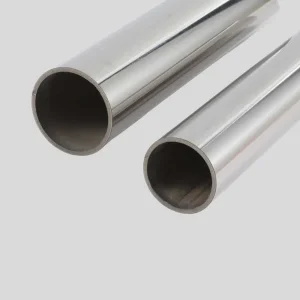
Comprehensive Technical Guide on Structural Metallurgy, Surface PVD Sputtering, Precision CNC Fabrication, and Macro OEM/ODM Supply Chains for Architectural Furniture Hardware.
Explore OEM/ODM stainless steel tubing series manufactured for high-load furniture frames, industrial fixtures, and architectural assemblies.
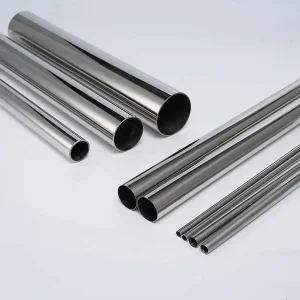
An in-depth structural, metallurgical, and economic analysis for global furniture OEMs, architectural specifiers, and procurement managers.
In contemporary high-end residential, commercial hospitality, and executive office furniture design, the coffee table has evolved from a functional centerpiece into an architectural statement. At the structural core of premium modern coffee tables are stainless steel table legs and base frames. To wholesale buyers and international furniture brands, choosing the right grade of stainless steel tube or solid profile is not merely a cosmetic decision—it dictates the product's ultimate load capacity, resistance to environmental stress corrosion cracking, weldability, and lifespan.
The primary stainless steel alloys utilized by world-class manufacturers fall into the austenitic 200, 304, and 316 series, alongside specialized ferritic grades like 409L for specific internal supports. Understanding their metallurgical behavior is essential for B2B sourcing decisions:
| Stainless Steel Grade | Chemical Composition (Nominal) | Yield Strength (MPa) | Corrosion Resistance | Recommended Primary Application |
|---|---|---|---|---|
| AISI 304 | 18% Cr, 8% Ni, Balance Fe | ≥ 205 | High (Interior/Standard Outdoor) | Luxury Indoor Coffee Tables, Hotel Lobbies |
| AISI 316L | 16.5% Cr, 10% Ni, 2.1% Mo | ≥ 220 | Extreme (Marine/Chloride Environments) | Coastal Resort Patios, Yacht Lounges, Spas |
| High-Copper 201 | 15% Cr, 1.5% Ni, 9.5% Mn, Cu | ≥ 275 | Moderate (Dry Interior Only) | Mass-Market Residential Furniture, Flat-Pack Legs |
| Ferritic 409L / 430 | 11% Cr, Ti Stabilized, 0% Ni | ≥ 205 | Basic (Requires Powder Coating) | Internal Sub-frames, Hidden Structural Racks |
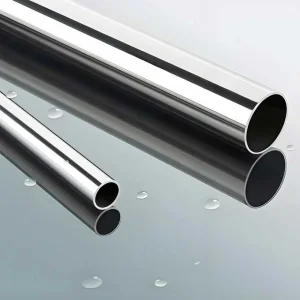
A major competitive factor in wholesale stainless steel coffee table manufacturing lies in surface finish quality and aesthetic versatility. Unlike mild steel legs that rely on thick liquid paints prone to chipping and flaking, stainless steel legs achieve luxury visual effects through precision mechanical polishing and atomic-level chemical coatings.
Leading manufacturers utilize multi-stage polishing lines to create substrates with micro-roughness levels down to Ra $\le$ 0.4 $\mu\text{m}$. The primary mechanical profiles include:
For colored stainless steel coffee table legs (such as Brushed Brass, Champagne Gold, Rose Gold, Matte Black, and Titanium Grey), advanced manufacturers employ Physical Vapor Deposition (PVD) Vacuum Sputtering Sputtering. During PVD, titanium or zirconium metals are vaporized into a plasma state in a high-vacuum chamber (under $10^{-3} \text{ Pa}$) and reacted with nitrogen or acetylene gases. This deposits a ultra-hard 0.3 to 0.5-micron ceramic nitride layer onto the stainless surface. PVD-coated legs boast three times the hardness of standard clear lacquer, superior UV stability without yellowing, and remarkable resistance to household cleaning agents.
How top-tier manufacturers navigate industrial trends, automated production lines, and structural load compliance for global furniture distributors.
Modern coffee table leg manufacturing relies heavily on automated 5-axis fiber laser cutting for tight-tolerance miter joints ($\pm 0.05\text{mm}$). Robotic TIG/Fiber welding yields seamless corner joints that require zero structural filler, enabling clean 90° frame assemblies and high static load resistance.
Architectural coffee table bases are engineered to meet ANSI/BIFMA X5.5 desk and table standards. Solid legs and heavy-walled welded profiles endure up to 1,500 N of static downward load and dynamic torsional impact without permanent deformation, ensuring complete user safety.
To reduce global sea freight charges by up to 60%, manufacturers have developed ultra-sturdy, concealed knock-down mounting plates. CNC-machined stainless steel flanges with internal blind threads allow flat-pack shipping while maintaining rock-solid anti-wobble assembly on arrival.
For international furniture buyers, sourcing wholesale stainless steel coffee table legs directly from specialized China manufacturing hubs like Foshan provides significant economies of scale. High-gain production models combine raw coil slitting, tube roll-forming, laser bending, welding, and vacuum PVD coating under a single quality control system.
By streamlining the end-to-end manufacturing process, OEM manufacturers eliminate multiple subcontractor markups, maintain strict metallurgical batch traceability (via 3.1 Mill Test Certificates per heat), and offer rapid prototyping cycles (custom sample turnaround within 7 to 10 days).
Exploring real-world architectural deployment scenarios and the future technical trajectory of stainless steel hardware fabrication.
High-footfall hotel reception lounges demand coffee table bases that resist aggressive cleaning chemicals, heavy luggage bumps, and spilled coffee. PVD-coated 304 hairline stainless steel legs provide a non-porous, smudge-resistant shield that maintains an opulent aesthetic under continuous public use.
For outdoor resort terraces exposed to salt mist and humidity, standard powder-coated steel legs corrode within months. Utilizing marine-grade 316L stainless steel coffee table frames with electropolished surfaces completely prevents salt tea-staining, guaranteeing decade-long outdoor durability.
In hospital lounge rooms and medical executive suites, hygienic surface standards are critical. Passivated 304 stainless steel coffee table bases do not host microbial growth, withstand daily isopropyl alcohol washdowns, and produce zero particulate shedding.
Looking ahead toward 2030 and beyond, the manufacturing landscape for stainless coffee table legs is being reshaped by three major technological paradigms:
Discover our extended OEM product lineup engineered for industrial workstations, home storage systems, automotive structures, and architectural hardware.
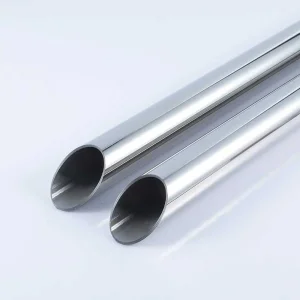
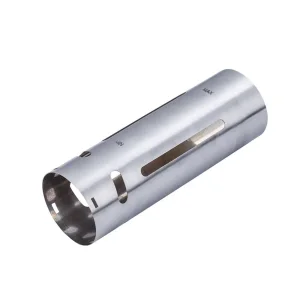
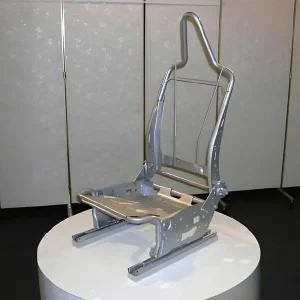
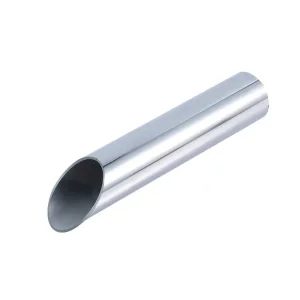
Clear, definitive answers compiled by our engineering team to help procurement officers and designers evaluate stainless steel coffee table hardware specifications.
Chrome-plated iron legs rely on a thin electroplated surface layer over rust-prone carbon steel. Once scratched by shoes or floor vacuum nozzles, moisture penetrates the plating, causing inner flaking and orange rust bleed. In contrast, 304 and 316L stainless steel are solid corrosion-resistant alloys throughout their entire mass. They possess a self-healing passive chromium-oxide layer that automatically repairs itself in oxygen, delivering a permanent rust-free lifecycle even in high-humidity environments.
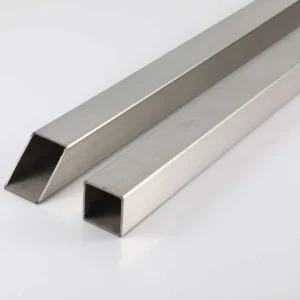
Load capacity depends on wall thickness, leg geometry, and top mounting plate thickness. Standard 304 welded square tube legs (e.g., 50x50mm with a 1.5mm wall thickness) comfortably support static downward loads exceeding 300 kg (660 lbs), making them fully suitable for heavy natural marble, thick sintered stone, or solid oak table tops. Custom heavy-duty base frames engineered with 2.0mm+ walls can support over 800 kg in accordance with ANSI/BIFMA X5.5 testing protocols.
Physical Vapor Deposition (PVD) is a high-vacuum thermal sputtering process that fuses titanium metal ions into the stainless steel surface at an atomic level. Unlike liquid paint or standard lacquer which can scratch off easily, a PVD titanium nitride coating creates a micro-hard ceramic film (0.3–0.5 µm thick) that increases surface hardness by up to three times. PVD is 100% eco-friendly (zero VOC emissions), resistant to UV color fading, and withstands harsh household chemicals without peeling.
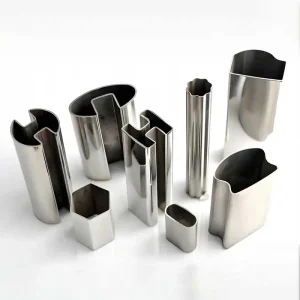
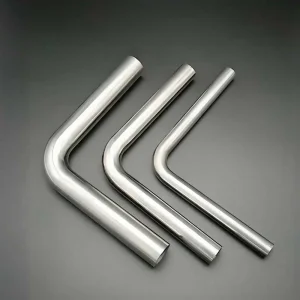
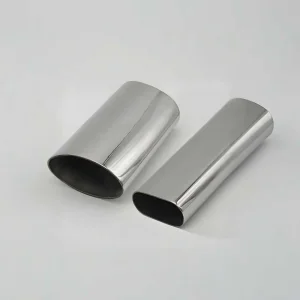
Yes. Full OEM and ODM customization services are available. Using 5-axis 3D laser cutters, CNC tube benders, and robotic TIG welding cells, manufacturers can execute complex angles, compound miter cuts, flat oval profiles, triangular legs, and custom laser-punched top plates directly from client STEP, DWG, or IGES CAD files with dimensional tolerances held within ±0.05mm.
To preserve mirror or PVD hairline finishes across long-distance transit, legs are first wrapped individually in thick PE anti-scratch protective film or non-woven fabric sleeves. They are then cushioned with custom EPE foam inserts inside heavy-duty 5-ply corrugated master cartons. For bulk wholesale shipments, cartons are stacked on fumigated ISPM-15 wooden pallets or steel frames and securely shrink-wrapped with corner protectors.
For standard catalog profiles in 304 or 201 grades, typical MOQs start at 100 to 300 sets per model. For bespoke custom extruded shapes or specialized PVD color treatments, MOQ is generally around 500 kg of stainless material. Standard factory production lead time is 15 to 20 business days following sample approval and deposit confirmation.