Explore engineered OEM/ODM stainless steel tubing products designed for automotive exhaust systems, industrial conveyor rollers, furniture frameworks, and sanitary applications.
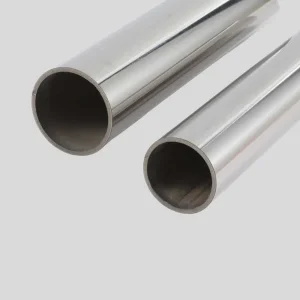
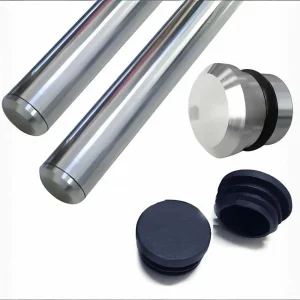
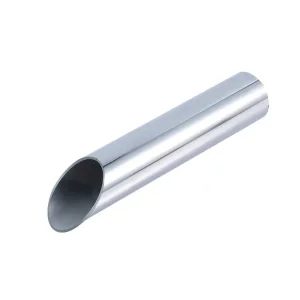
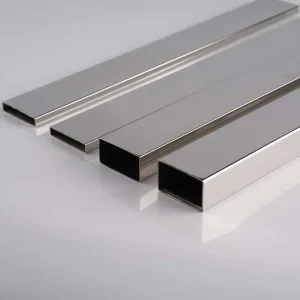
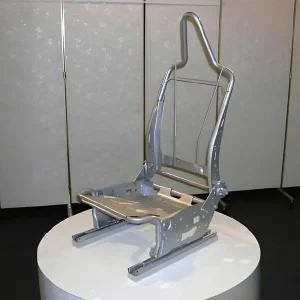
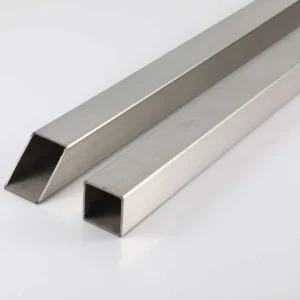
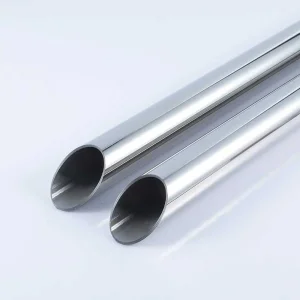
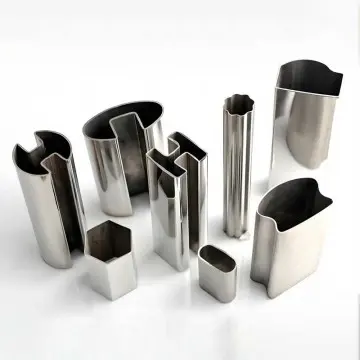
Analyzing key structural shifts in automotive, commercial vehicle, marine, and power generation exhaust system sourcing.
Driven by Euro 6d/Euro 7 and EPA Tier 4 emission mandates, global OEMs require high-frequency welded 409L and 439 ferritic tubing capable of enduring thermal shock up to 850°C while offering a 15-year corrosion life span against road salt deicers.
Heavy-duty diesel exhaust systems demand thick-wall (1.5mm–2.5mm) structural exhaust pipes with superior creep strength. Material selection balances thermal fatigue resistance in EGR (Exhaust Gas Recirculation) loops with total cost of ownership (TCO).
Exhaust systems operating in marine or coastal environments mandate marine-grade 316L stainless steel tubing. High molybdenum content (2–3%) prevents pitting corrosion caused by acidic wet-exhaust condensates and seawater spray.
When sourcing wholesale stainless steel exhaust pipes from Chinese factories, engineering buyers must evaluate not only nominal per-ton pricing, but also internal seam planishing quality, inline eddy-current defect logging, and batch-to-batch elongation repeatability. Low-grade raw strip slitting often causes heat-affected zone (HAZ) micro-cracking during 1D-radius CNC mandrel bending.
Comprehensive comparison of stainless steel alloys utilized in cold-end, warm-end, and hot-end exhaust manifold architectures.
| Alloy Grade | Structure Category | Max Temp (°C) | Corrosion Mechanism Resistance | Primary Exhaust Component Use | Compliance Standards |
|---|---|---|---|---|---|
| 409L (UNS S40900) | Ferritic Stainless | 650°C | Moderate atmospheric & condensate protection | Muffler shells, tailpipes, catalytic converter bodies | ASTM A554 / EN 10217-7 |
| 439 / 441 (UNS S43932) | Dual-Stabilized Ferritic | 850°C | High resistance to oxidation & exhaust condensate | Exhaust manifolds, flexible bellows, downpipes | ASTM A268 / JIS G3446 |
| 304 / 304L (UNS S30400) | Austenitic Stainless | 800°C | Superior salt spray & external cosmetic durability | Decorative dual tailpipes, performance mufflers | ASTM A554 / ASTM A269 |
| 316L (UNS S31603) | Moly-Austenitic | 870°C | Extreme acidic pitting & marine chloride protection | Marine wet exhaust risers, generator stacks | ASTM A249 / ASTM A269 |
| 201 (High-Cu Grade) | Austenitic Subbed | 400°C | Basic indoor / low-humidity environment | Cost-sensitive aftermarket decorative trims | ASTM A554 Standard |
Ferritic stainless steels contain 10.5%–18% Chromium with minimal Nickel content. Their primary engineering advantage lies in their low coefficient of thermal expansion (matching carbon steel), which minimizes thermal fatigue stresses on cylinder heads and manifold flanges. Titanium and Niobium stabilization prevents intergranular chromium carbide precipitation during plasma welding.
Austenitic grades provide exceptional cold-forming ductility and aesthetic polish retention (up to 600# Mirror finish). While prone to higher thermal expansion than ferritics, 304L and 316L remain indispensable for luxury automotive tailpipes, performance aftermarket exhaust headers, and aggressive marine wet-exhaust environments.
From raw strip slitting to automated 3D hydroforming and inline non-destructive testing (NDT).
Utilizing high-frequency induction (HFI) and automated TIG plasma seam welding with continuous internal nitrogen gas shielding. This eliminates internal bore oxidation (black line phenomenon) and guarantees 100% weld bead penetration.
The weld seam is rolled smooth inline via continuous hydraulic planishing dies to achieve seamless-equivalent wall uniformity. Online bright annealing at 1050°C restores crystalline ductility for severe post-processing bending.
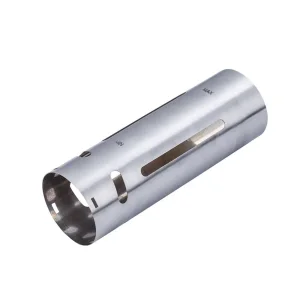
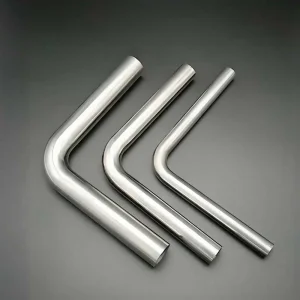
Automated 5-axis CNC mandrel bending ensures tight Centerline Radii (CLR = 1.0D to 1.5D) without ovality collapse or interior wrinkling. Secondary operations include end expansion, necking, slotting, and laser bead flanging.
Ensuring zero-defect production matching ISO/TS 16949 standards for global distribution.
Every meter of exhaust tubing undergoes 100% Inline Eddy Current Testing (ASTM E426) to detect pinholes, micro-fissures, and weld discontinuities. Hydrostatic pressure testing up to 50 Bar or pneumatic underwater leak tests are performed for pressurized cooling bypass manifolds.
Full traceability provided with EN 10204 3.1 Mill Test Certificates covering spectro-chemical composition, tensile yield, elongation, flattening, and flaring tests. Ocean shipping packs utilize custom wooden crates, VCI anti-rust film, and edge guard protection.
Addressing structural requirements for hybrid powertrains, hydrogen combustion, and lightweighting.
Plug-in Hybrid Electric Vehicles (PHEVs) experience frequent engine cycling, generating high volumes of acidic water condensate in cold mufflers. Advanced 441 ferritic and 304L thin-wall tubing prevents internal pitting caused by rapid thermal cycling.
Hydrogen internal combustion engines eliminate carbon emissions but emit pure water vapor exhaust. This requires ultra-passivated 304/316L stainless tubing with low surface roughness (Ra ≤ 0.4µm) to resist moisture-induced oxidation.
To accelerate catalytic converter warm-up and improve thermal management, dual-wall insulated exhaust piping featuring hydroformed inner tubes and 0.8mm outer shielding is rapidly becoming the industry standard.
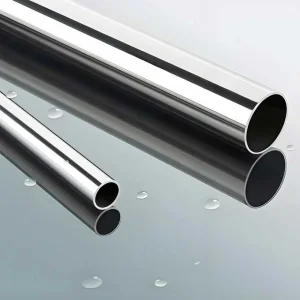
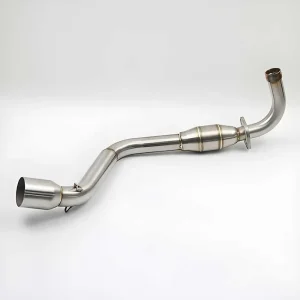
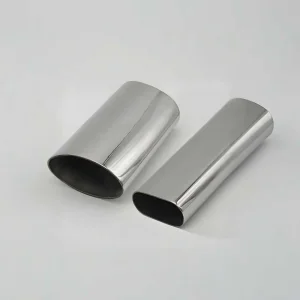
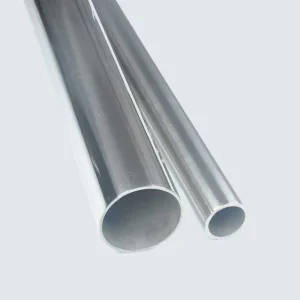
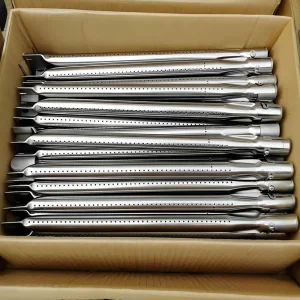
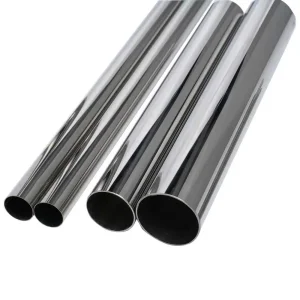
Exhaust & muffler tubing, custom CNC machined assemblies, decorative finishes, and marine grade materials.
Expert answers on stainless steel exhaust pipe engineering, metallurgical tolerances, and bulk ordering logistics.