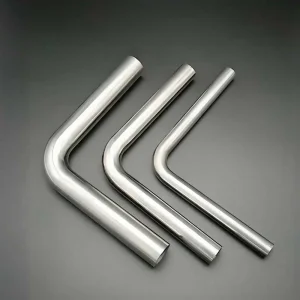
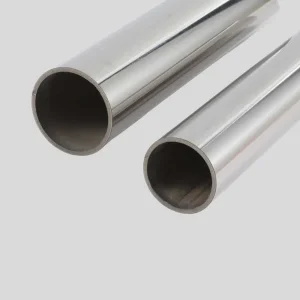
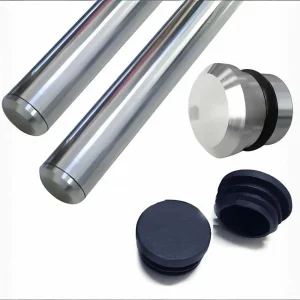
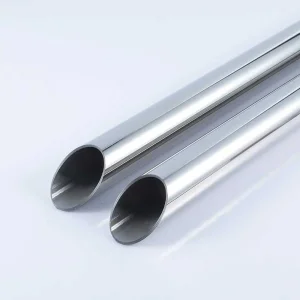
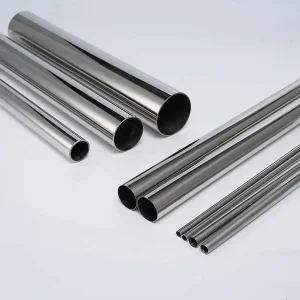
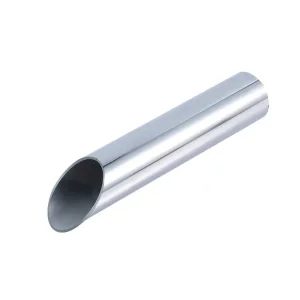
Direct mill supply featuring rigorous dimensional tolerances, customizable finishes, and ISO 9001 compliance.
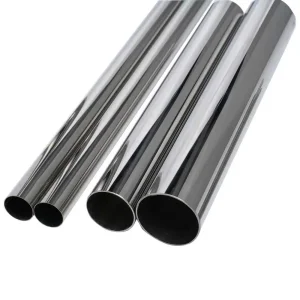
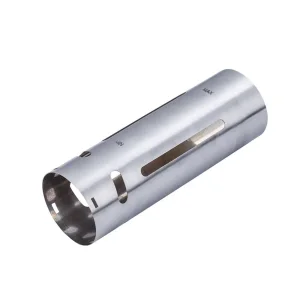
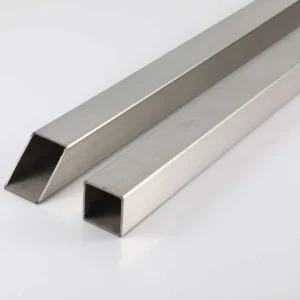
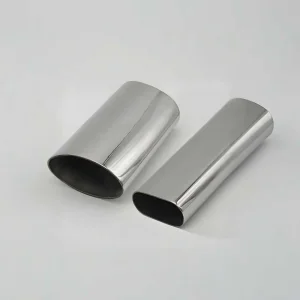
Understanding how raw material indices, alloying surcharges, precision tolerances, and regional factory dynamics shape the per-kilogram ("Ka Rate") pricing model for 304 stainless steel pipe worldwide.
In global B2B procurement—specifically within South Asian, Middle Eastern, and international steel trading hubs—the term "Ka Rate" refers directly to the spot or contractual market rate per kilogram (Kg) or per metric ton of raw finished pipe. Unlike retail per-piece pricing, the wholesale Ka Rate fluctuates according to the London Metal Exchange (LME) Nickel spot price, Chromium index surcharges, and production energy inputs.
Austenitic Grade 304 stainless steel requires a minimum chemical threshold of 18% Chromium and 8% Nickel (UNS S30400 / EN 1.4301). Variations in nickel content (e.g., 8.0% vs. 8.5%) create notable micro-deltas in the per-ton mill rate. Premium suppliers guarantee strict compliance with ASTM A554 chemistry to ensure corrosion resistance without overcharging for excess nickel.
The base coil rate is only part of the Ka Rate equation. Precision roll-forming, high-frequency plasma/TIG welding, argon gas inner shielding, cut-to-length accuracy (±0.05 mm), and multi-stage polishing (up to 600# Mirror or PVD color coating) represent value-added operational steps that determine the final landed factory invoice.
$$\text{Final Landed Ka Rate (per Kg)} = \left[ \frac{\text{Base Stainless Coil Price (TISCO/POSCO)} + \text{Alloying Surcharge (Ni/Cr)} + \text{Mill Fabrication Premium}}{\text{Theoretical vs. Actual Weight Factor (Tolerance Roll)}} \right] + \text{Surface Finishing} + \text{Export Freight}$$
*Note: Wall thickness variance directly impacts theoretical weight vs. actual scale weight. Buyers specifying standard ASTM A554 tolerances avoid overpaying on weight differentials.*
Strategic shifts in industrial manufacturing, structural engineering, and automotive supply chains are altering how global enterprises contract 304 stainless steel tubing suppliers.
Global original equipment manufacturers (OEMs) and structural fabricators are systematically eliminating middleman trading houses. By establishing direct contracts with high-capacity mills (such as Foshan-based manufacturing hubs running 40+ continuous lines), procurement teams lock in transparent Ka Rates, secure origin traceability, and reduce lead times to 15 days.
In humid storage environments, high-end retail display units, and medical facilities, traditional chrome-plated carbon steel tube degrades via micro-flaking and rust penetration. Buyers are pivoting to structural 304 welded tubes because the self-healing passive chromium-oxide surface eliminates product returns, yielding lower total life-cycle costs despite a higher initial per-kg material investment.
Carbon footprint transparency is now a mandatory vendor criteria for European and North American enterprises. Modern factory hubs utilize prime virgin cold-rolled strip sourced directly from TISCO, POSCO, and Baosteel. Each batch is paired with EN 10204 3.1 Mill Test Certificates (MTC) documenting exact heat numbers, chemical spectral analysis, and mechanical tensile/yield test results.
How specialized dimensional standards, wall tolerances, and surface finishing technologies resolve complex engineering challenges across diverse commercial sectors.
| Sector Application | Recommended Grade | Specification / Standard | Critical Tolerances & Finishes | Engineering Value Delivered |
|---|---|---|---|---|
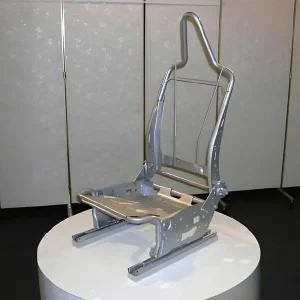
| Automotive Seats & Chassis | AISI 304 / 304L | ASTM A554 / DIN 2393 | OD ±0.10 mm, Wall ±8%, Bright Annealed | Prevents seam splitting during high-speed CNC mandrel bending; high tensile yield for crash safety. |
| Sanitary Hardware & Faucets | Grade 304 / 316L | ASTM A249 / Sanitary Spec | Ra ≤ 0.4 µm, Weld-Bead Flattened | Smooth inner/outer substrate for micro-thin electroplating, PVD coating, and mirror chrome adhesion. |
| Industrial Conveyor Rollers | Grade 304 Precision | ASTM A554 Mechanical | Low TIR (Total Indicator Runout), OD ±0.05 mm | Eliminates high-speed rotational vibration, extends bearing service life in wet food washdowns. |
| Hospital Furniture & Grab Bars | Medical 304 / 316L | ASTM A554 Decorative | 600# Mirror / 320# Satin, Anti-Microbial | Passes 500+ hours neutral salt spray testing; resists disinfectant chemical pitting and bacterial retention. |
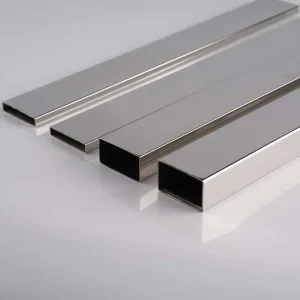
| Lean Racks & Workstations | 201 (High Cu) / 304 | ASTM A554 Structural | 28 mm OD Standard, Sharp-Corner Square | Outperforms plastic-coated pipe; eliminates micro-chipping, ESD hazards, and cleanroom particulate shedding. |
Standard frequency welding exposes hot steel to atmospheric oxygen, creating an oxidized black line along the internal weld seam. Premier factories utilize continuous plasma arc welding coupled with inner argon/nitrogen gas purging. This prevents internal seam oxidation, maintaining chemical integrity and preventing subterranean crevice corrosion.
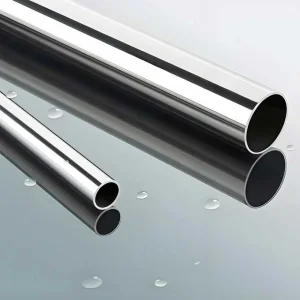
Surface roughness ($Ra$) directly correlates to corrosion initiation. Automated 4-stage polishing lines achieve 600# Mirror finish ($Ra \le 0.1\,\mu\text{m}$) or uniform 180#/240#/320# satin brushing. Furthermore, Physical Vapor Deposition (PVD) titanium coating technology allows factories to supply structural 304 pipes in Rose Gold, Black Titanium, and Champagne Brass without sacrificing metal recyclability.
Audited operational capability supporting high-volume global distribution networks.
Navigating global trade compliance, anti-dumping regulations, tariff classifications, and transit protection to ensure zero-friction delivery.
Every sea container dispatched is accompanied by official certification under EN 10204 3.1. This guarantees chemical heat analysis (C, Si, Mn, P, S, Ni, Cr), tensile strength ($R_m \ge 520\,\text{MPa}$), yield strength ($R_{p0.2} \ge 205\,\text{MPa}$), elongation ($\ge 40\%$), and flattening/flaring test compliance.
To prevent saltwater airborne contamination, scratching, or bundle warping during multi-week ocean transport, finished tubes receive individual plastic sleeving, woven gunny outer wrapping, and heavy-duty wooden box or steel frame packaging suitable for side-loader container discharge.
Navigating global customs requires correct product classification. Stainless welded ornamental/structural tubing falls under HS Code 7306.40.00. Direct factory export documentation ensures correct COO (Certificate of Origin) issuance (Form E, Form R, RCEP), minimizing import tariff liabilities for buyers.
How next-generation stainless tube manufacturing is integrating AI quality control, hydrogen annealing, and micro-alloy optimization.
Transitioning from manual post-production inspection to real-time 360-degree optical laser scanning on the mill. Automated machine-vision cameras detect micro-scratches, weld pinholes, or dimensional variations (within 0.02 mm) at production speeds of 60 meters per minute.
Replacing traditional electric/gas bright annealing furnaces with zero-emission hydrogen-atmosphere induction systems. This reduces carbon intensity per metric ton by up to 40% while delivering a perfectly scale-free, hyper-bright surface finish across high-grade 304 and 316L tubes.
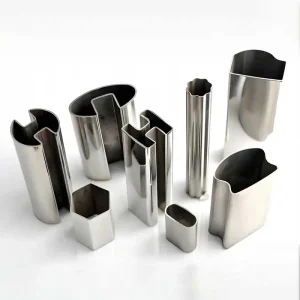
Expanding master roll-forming libraries beyond 500+ existing profiles to include rapid-prototyping modular dies. B2B buyers can obtain custom oval, D-shape, or multi-channel slotted structural profiles without incurring high die amortization charges.
Expert answers directly from our metallurgical quality assurance team regarding specifications, pricing algorithms, and manufacturing limits.
Explore our full line of ASTM A554 compliant stainless steel tubes, decorative profiles, and precision structural components.