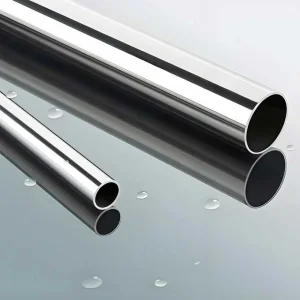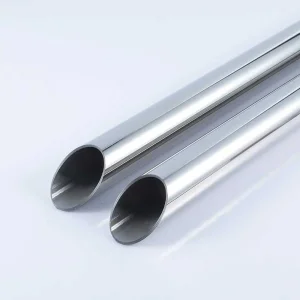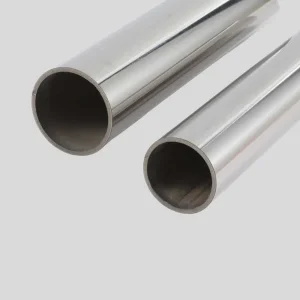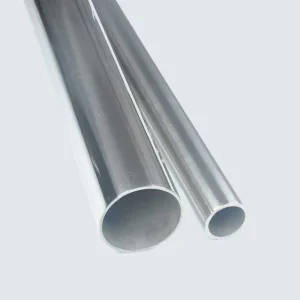
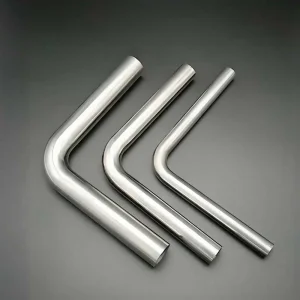
Explore our core wholesale selection of precision-welded 304 and 316L stainless steel tubing engineered for extreme structural yield, decorative brilliance, and environmental durability.
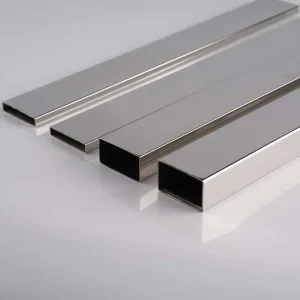
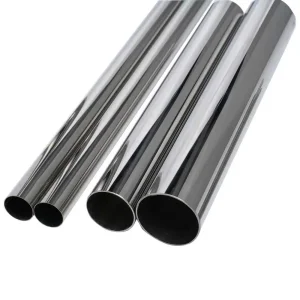
In modern structural and decorative engineering, welded 304 stainless steel tubing represents the gold standard for balancing tensile strength, ductility, and atmospheric corrosion resistance. Formulated within the austenitic steel family, Grade 304 (UNS S30400 / EN 1.4301) possesses a chemical composition of nominally 18% chromium and 8% nickel. This precise stoichiometry drives the instantaneous formation of a self-healing, microscopic chromium-oxide (Cr₂O₃) passive film that blocks oxygen penetration and prevents galvanic or oxidation-driven decay.
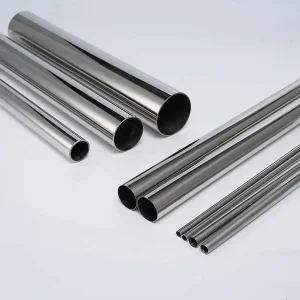
Unlike seamless tubing—which is hot-extruded for extreme pressure piping—welded tubing produced via cold roll-forming and continuous automatic arc welding (TIG, High-Frequency Induction, or Laser) delivers vastly superior dimensional uniformity. Outside diameter (OD) concentricity, wall thickness variance, and axial straightness are held to micron-level tolerances unattainable in hot-finished alternatives.
| Steel Grade Standard | Chromium (Cr) % | Nickel (Ni) % | Carbon (C) Max % | Yield Strength (Rp0.2 MPa) | Tensile Strength (Rm MPa) | Elongation (A5 %) |
|---|---|---|---|---|---|---|
| AISI 304 (UNS S30400) | 17.5 - 19.5 | 8.0 - 10.5 | 0.07 | ≥ 205 | ≥ 515 | ≥ 40 |
| AISI 304L (Low Carbon) | 17.5 - 19.5 | 8.0 - 12.0 | 0.03 | ≥ 175 | ≥ 485 | ≥ 40 |
| AISI 316L (Marine Grade) | 16.0 - 18.0 | 10.0 - 14.0 | 0.03 | ≥ 205 | ≥ 515 | ≥ 40 |
| AISI 201 (Decorative) | 16.0 - 18.0 | 3.5 - 5.5 | 0.15 | ≥ 275 | ≥ 520 | ≥ 35 |
Precision continuous roll-forming demands strict structural integrity at the weld seam. Utilizing Inner-Bore Nitrogen Shielding (99.999% purity) during high-speed plasma and laser welding processes, our Foshan facility eradicates internal oxidation ("black seam" defect). Subsequent inline weld seam bead reduction (planishing) and bright annealing ensure that the heat-affected zone (HAZ) retains ductility identical to the parent metal strip. This allows secondary operations such as 90° CNC mandrel bending, end flaring, and tube necking without cracking or structural failure.
Procuring wholesale welded 304 stainless steel tubing directly from Foshan, China offers global buyers unparalleled cost efficiency, production scalability, and technical dexterity. Foshan stands as the world's most concentrated hub for stainless steel processing, integrating raw material slitting mills, roll-forming machine design, automated polishing lines, and international logistics hubs within a 15-kilometer radius.
We source prime cold-rolled stainless coil directly from tier-one steel conglomerates including TISCO, POSCO, and Tsingshan. This ensures verified chemistry, uniform hardness (HV 150-180), and pristine initial surface condition.
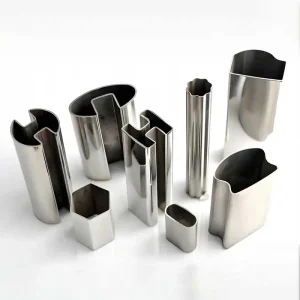
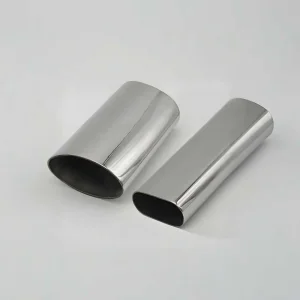
With over 500 sets of existing roll-forming dies, we eliminate expensive custom NRE tooling charges for non-standard oval, triangular, capsule, and D-shaped architectural profiles, shrinking sample turnaround to 72 hours.
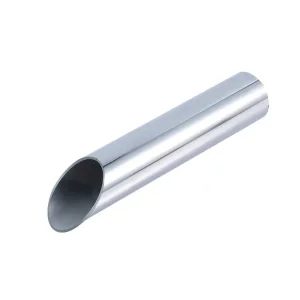
Beyond raw tube lengths, our facility houses multi-axis CNC laser cutting, automatic end-spinning, punching, chamfering, and precision bending machinery, shipping ready-to-assemble components straight to your production line.
The international market for welded stainless steel tubing is experiencing a rapid technological shift driven by environmental decarbonization, strict hygienic mandates, and modern architectural aesthetics. Key macroscopic trends transforming procurement strategies include:
Traditional electroplating is increasingly restricted due to environmental effluent regulations. Physical Vapor Deposition (PVD) applies 0.3-0.5 µm titanium-nitride ceramic layers, producing brilliant Gold, Rose Gold, Black Titanium, and Brass finishes with 5x higher scratch resistance and zero hazardous waste.
Smart factories are replacing manual calipers with inline laser micrometers and high-frequency Eddy Current flaw detectors (EN 10246-2 compliant). Every millimeter of weld seam is non-destructively evaluated at full production speed, automatically ejecting micro-pinhole flaws.
Biopharmaceutical and sanitary hardware sectors now demand mechanical polishing down to Ra ≤ 0.4 µm (16 micro-inch) followed by electropolishing. Smooth surface topography prevents bacterial biofilm adhesion and maximizes corrosion resistance in high-humidity cleanrooms.
Our wholesale welded 304 stainless steel tubing serves as a core structural element across a broad spectrum of global industries. Below is a breakdown of how specialized tubing specifications solve critical engineering challenges:
Requirement: ASTM A554 ASTM Standard round and square tubing with 600# Mirror or 320# Satin finishes.
Solution: Uniform wall thickness and strict straightness (1.0mm/m max) allow flawless glass-channel mounting, seamless field-welding, and zero surface degradation in high-traffic airports and shopping malls.
Requirement: High thermal endurance, vibration fatigue resistance, precise bendability.
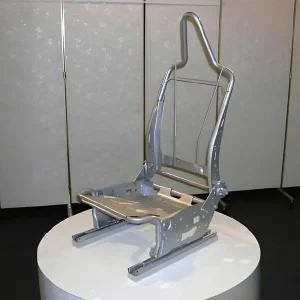
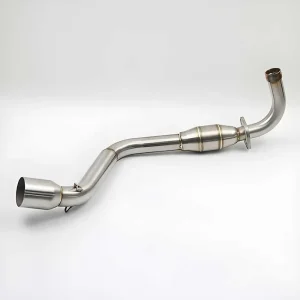
Solution: Formulated using 304 and 409L ferritic/austenitic alloys, providing superior oxidation resistance under 800°C exhaust gas conditions and crack-free CNC bending for exhaust headers and seat frames.
Requirement: High tensile payload capacity, hygienic non-porous surface, biocompatibility.
Solution: Precision-drawn 304 tubing subjected to 100% flare testing and chemical passivation baths, ensuring safety grab bars and hospital bed railings resist hospital-grade chemical disinfectants without pitting.
Requirement: Low Total Indicator Runout (TIR), precise inner diameter (ID) fit.
Solution: Specialized low-TIR tubing prevents rotational vibration at high drive speeds in food packaging and logistics distribution lines, drastically lengthening bearing operational lifespan.
Requirement: Sharp corner radii (1.0xT), seamless aesthetic joints, vibrant PVD colors.
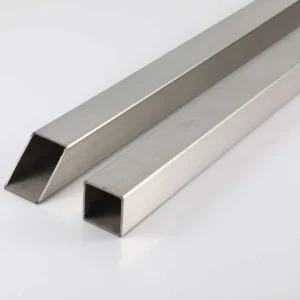
Solution: Custom square and rectangular hollow sections (10x10mm to 150x150mm) engineered with ultra-tight 90° corner squareness (±0.5°) for high-end luxury seating and table structures.
Requirement: Uniform gas orifice punching, corrosion resistance against outdoor weather.
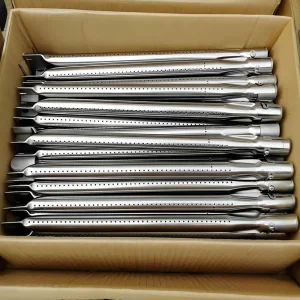
Solution: Thin-wall 304 welded tubing modified for gas burner arrays, offering clean laser-punched porting, high gas-flow efficiency, and zero rust formation under outdoor moisture environments.
To safeguard global enterprise procurement teams, every shipment of our wholesale welded 304 stainless steel tubing undergoes rigorous, multi-stage quality verification adhering to ISO 9001:2015 quality management systems.
Optical Emission Spectrometry (OES) chemical analysis confirms Chromium, Nickel, Molybdenum, and Carbon content per heat number before coil slitting begins.
Sample cuts undergo 90° flattening tests (weld at 3 and 9 o'clock), 60° cone flaring tests, and tensile elongation testing to verify zero weld seam splitting.
100% visual surface inspection for scratch-free gloss. Tubing is individually plastic sleeved, wrapped in heavy-duty woven polypropylene, and packed in reinforced wooden crates or steel frames for ocean freight protection.
All orders are delivered with standard Mill Test Certificates (MTC) compliant with EN 10204 3.1, ensuring complete metallurgical traceability from raw coil heat number to final installed component.
Direct technical answers curated by our senior metallurgical engineers to address common procurement and application challenges.
Browse our complete range of specialized industrial, medical grade, and architectural tubing engineered for exact international procurement specs.