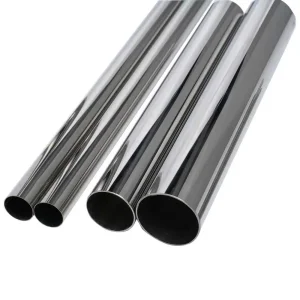
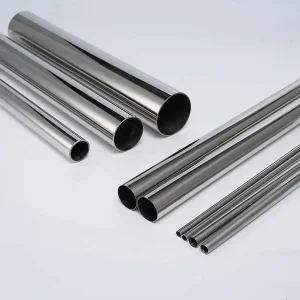
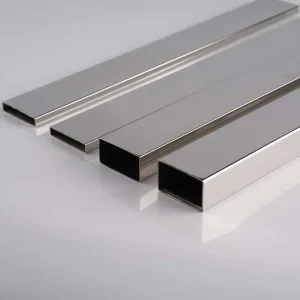
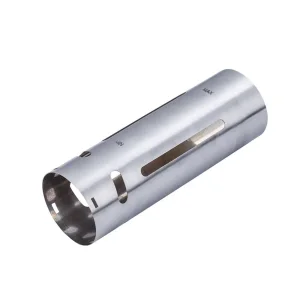
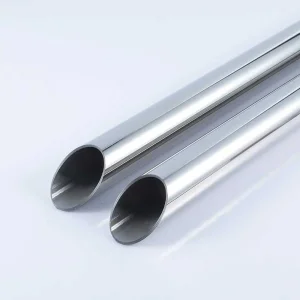
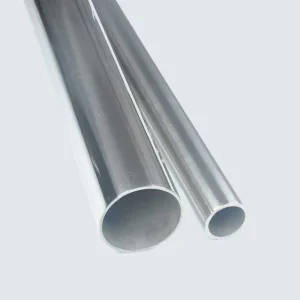
Direct mill-to-jobsite supply conforming rigorously to ASTM A554, ASTM A249, ASTM A269, and ASME specs with verified chemical composition and tight tolerance guarantees.
Passivated 316L tubing with 2-3% Molybdenum content. Engineered to withstand harsh coastal marine environment salt sprays in Florida, California, and Gulf Coast regions.
Architectural grade structural tubing with 180#-600# mirror polish options. Formulated for seamless integration into North American commercial building codes.
Precision square and rectangular hollow structural sections with tight corner radius control, ±0.5° squareness, designed for US modular frame fabricators.
Navigating the US Industrial Tubing Procurement Landscape
Strategic insights into standard compliance, supply chain mitigation, tariff optimization, and technical qualification for American steel buyers.
The demand for high-performance welded and seamless stainless steel tubing across the United States has undergone a structural transformation. American original equipment manufacturers (OEMs), commercial architecture fabricators, and automotive Tier-1 suppliers face an intricate dual challenge: maintaining strict compliance with North American standard specifications—primarily governed by ASTM International (American Society for Testing and Materials) and ASME (American Society of Mechanical Engineers)—while simultaneously insulating their operational supply chains from global price volatility and localized domestic stock shortages.
As a premier China By Standard Supplier & Factory serving the United States market, our manufacturing baseline directly solves this procurement dilemma. North American procurement teams cannot afford material variances; a failure in chemical composition (such as depleted Nickel or Chromium levels) or dimensional out-of-roundness disrupts automated robotic welding lines in Midwestern automotive plants or leads to catastrophic tea-staining corrosion on coastal balustrades in California and Florida.
Technical Insight for US Buyers: ASTM A554 governs mechanical and ornamental tubing where aesthetic finish, bendability, and dimensional precision are critical, whereas ASTM A249/A269 specifies pressure and hygienic applications requiring 100% non-destructive eddy current testing and solution annealing. Sourcing from a factory certified across both standard tracks ensures complete process traceability.
In the post-Section 301 tariff era, procurement strategy is no longer governed strictly by FOB unit costs. It is driven by Total Landed Cost Optimization (TLCO), zero-defect delivery guarantees, and compliance documentation. United States importers require mill partners who operate with absolute transparency regarding raw material provenance, furnace melt records, and physical test reports. By sourcing directly from our state-of-the-art Foshan manufacturing cluster—utilizing prime raw material coils from top-tier primary mills like TISCO, POSCO, and Baosteel—we deliver an uncompromised metallurgical standard that seamlessly passes third-party US port and jobsite audits.
Reverse bend testing, hydrostatic testing, strict grain boundary check.
Full solution treatment, yield strength logging, mechanical certification.
ASTM A312
Heavy industrial piping, water treatment, petrochemical transport.
Corrosion testing per ASTM A262 Practice E, pressure containment.
MTR compliance per EN 10204 3.1, PMI chemical validation per heat.
Data-Driven Reliability
Precision Engineering Standards by the Numbers
Continuous investment in automated plasma welding, inner nitrogen shielding, and inline laser gauging drives industry-leading accuracy across all export production runs.
43+
Automated High-Speed Tube Mills
±0.05mm
Precision OD / Wall Tolerance
500+ Hrs
Neutral Salt Spray (316L Passivated)
100%
Traceable Mill Test Reports (EN 10204 3.1)
Engineered Solutions
Localized Application Scenarios Across US Key Sectors
Formulated to meet the precise environmental, mechanical, and regulatory demands of American industries.
Architects and structural engineers in coastal urban hubs (Miami, San Diego, Houston, New York Harbor) demand structural tubing that withstands high humidity and chloride air exposure without surface pitting. Our ASTM A554 316L round and square tubing features internal bead flattening and passivated surfaces clearing 500-hour salt spray benchmarks, preventing unsightly tea-staining on high-end luxury high-rises and public infrastructure.
Automotive Exhaust, Chassis & Muffler Systems (Midwest Industrial Hub)
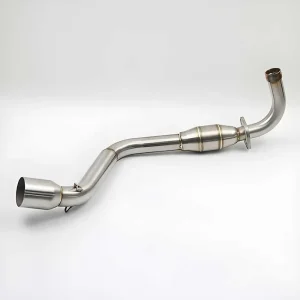
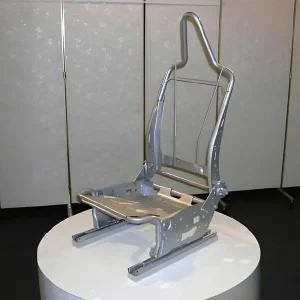
Serving automotive Tier suppliers in Michigan, Ohio, and Indiana, our 409L and 304 heat-resistant stainless tubing undergoes rigorous expansion, flaring, and 90° bend testing. Controlled yield strength prevents outer-radius micro-cracking during CNC mandrel bending, allowing smooth exhaust gas flow and structural resilience under continuous high-temperature thermal cycling.
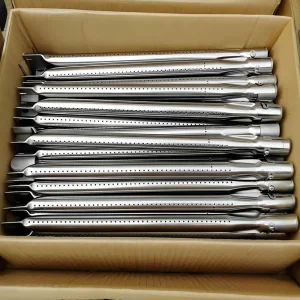
Commercial kitchen fabricators, gas grill OEMs, and HVAC equipment makers require tubing with Ra ≤ 0.4 µm interior surface smoothness to prevent bacterial harborages and ensure leak-free compression fitting connections. Our sanitary grade precision tubing features zero inner-bore oxidation thanks to continuous internal nitrogen purge during plasma seam welding.
Replacing traditional plastic-coated lean pipe in semiconductor, pharmaceutical, and electronic assembly plants, solid 304/316L stainless steel tubing from Vertex provides non-shedding, ESD-safe structural framing. Built to withstand daily chemical wash-downs in strict FDA-regulated environments without delamination.
Global Quality Governance
Localization Support & US Regulatory Compliance
Bridge the cross-border gap with rigorous quality documentation, customs clearance readiness, and direct engineering collaboration.
Full Chemical & Mechanical Traceability (EN 10204 3.1 MTRs)
Every shipment bound for US ports is accompanied by comprehensive Mill Test Reports (MTRs) traceable back to the raw material heat number. Material chemical compositions are verified using Optical Emission Spectroscopy (OES) and handheld XRF Positive Material Identification (PMI) units. Mechanical properties—including Tensile Strength (MPa), Yield Strength (MPa), Elongation (%), Hardness (HRB/HV), and Flattening/Flaring test compliance—are documented before container loading.
Dimensional Control & Laser Inspection Technology
Out-of-round tubing causes significant downtime on automated CNC benders and laser cutting machines. To protect our US buyers' operational efficiency, our 43 production lines feature real-time multi-axis laser measuring units. We monitor outside diameter (OD), wall thickness (WT), straightness (controlled to 1 mm/m), and squareness (controlled to ±0.5°) dynamically throughout the continuous roll-forming process.
Custom OEM/ODM Secondary Fabrication Services
To assist US customers in streamlining their local assembly pipelines, Vertex offers extensive in-house secondary processing. Rather than importing raw 6-meter mill lengths, buyers can receive ready-to-assemble components:
Precision CNC Cut-to-Length: Tight tolerance length cutting (±0.2 mm) with automated orbital deburring.
Laser Slotting & Hole Punching: Clean, burr-free cutouts for locking pins, glass clips, and fasteners.
As US manufacturing shifts toward decarbonization and higher automation, our factory roadmap is strategically aligned with these global industry benchmarks:
Eco-Friendly PVD Deposition
Replacing traditional liquid electroplating with zero-VOC Physical Vapor Deposition (PVD). Delivering ultra-durable Titanium Black, Rose Gold, Brass, and Champagne finishes with ceramic-like scratch resistance (0.3–0.5 µm thickness).
AI-Powered Vision Defect Detection
Deploying automated optical camera inspection (AOI) units at mill discharge ends. Continuously scanning 100% of outer tube surfaces for micro-scratches, seam pinholes, and gloss variance prior to sleeving.
Decarbonized Mill Operations
Integrating renewable solar power across our 12,000 m² Foshan plant footprint and sourcing scrap-recycled electric arc furnace (EAF) stainless coils to minimize Scope 3 carbon intensity for US ESG compliance.
Expert Knowledge Base
Frequently Asked Technical & Sourcing Questions
Direct answers from our metallurgical quality assurance team regarding standards, tariffs, logistics, and material performance.
How do you ensure your ASTM A554 tubing meets United States customs and engineering standards?
Every production batch undergoes strict quality control logging, including PMI chemical analysis (verifying Ni, Cr, Mo, C ratios), dimensional tolerance checks (OD, WT, straightness), and mechanical testing (yield, tensile, elongation). We provide complete EN 10204 3.1 Mill Test Reports (MTRs) with full heat number traceability for every shipping container.
What is the difference between 304 and 316L stainless steel tubing for US coastal installations?
Grade 304 contains 18% Chromium and 8% Nickel, offering excellent general corrosion resistance. However, airborne chlorides in coastal environments (such as Florida or California oceanfronts) can break down its passive oxide film, leading to "tea-staining." Grade 316L contains 2-3% Molybdenum, dramatically increasing resistance to pitting and crevice corrosion. We pickle and passivate weld seams on all 316L runs to ensure over 500 hours of neutral salt spray performance.
How do you manage lead times and logistics for US-bound ocean shipments?
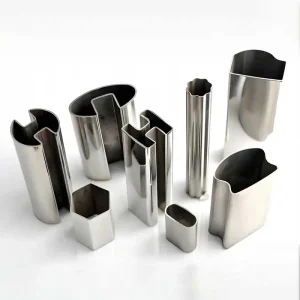
Standard production lead time is 15 business days following sample approval. Over 500 existing roll-forming tooling sets allow us to produce special oval, rectangular, and D-shape profiles without delay. Ocean shipping from Foshan/Shenzhen ports to US West Coast ports (Los Angeles/Long Beach) typically takes 14–18 days, while East Coast ports (Savannah/New York) require 28–32 days.
Can you supply ready-to-assemble fabricated components to bypass US processing costs?
Yes. Our in-house fabrication facility provides precision CNC cut-to-length (±0.2 mm), 3D laser slotting, rotary draw bending, end flaring, necking, deburring, and custom PVD color coating. Delivering pre-processed components saves US buyers significant labor and equipment capital expenditure.
What packaging methods do you use to prevent moisture and scratch damage during ocean transit?
Every individual tube is sleeved in protective PE film or woven plastic tubing to prevent surface abrasion. Bundles are wrapped in heavy-duty waterproof gunny bags or corrugated plastic sheets and loaded into fumigated solid wooden crates or reinforced iron frames. Desiccant packs are placed inside containers to eliminate condensation damage.
What are your Minimum Order Quantities (MOQ) for custom US OEM orders?
Our standard MOQ is 500 kg per size and finish for standard round, square, and rectangular profiles. For specialized PVD colors, custom dies, or complex CNC pre-fabricated items, the MOQ is 1,000 kg. Mixed-size container loading is fully supported for full-container-load (FCL) orders.
Full Manufacturing Portfolio
Complete Range of ASTM Standard Stainless Steel Tubing
Explore our extended series of specialized profiles, decorative finishes, and industry-specific stainless steel tubing solutions available for export to the US market.