Standard-compliant, laser-verified mechanical steel tubing designed for high-stress automation lines, cleanrooms, structural glazing, and biothermal processing units.
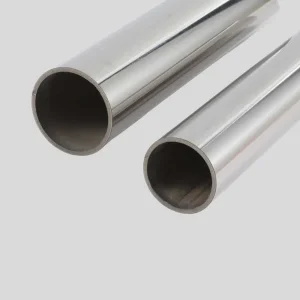
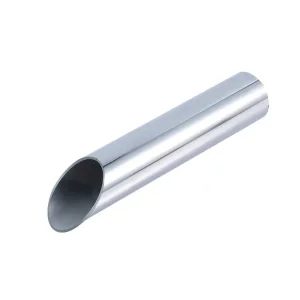
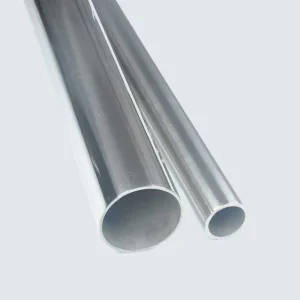
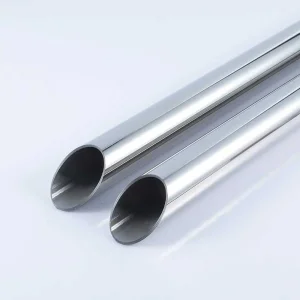
Greater Boston represents one of the world's highest-density convergence zones for biotech innovation, autonomous robotics, defense engineering, and maritime commercial trade. From the Route 128 Technology Corridor to the Kendall Square life science cluster and the Seaport District, mechanical structures demand ultra-precise metallurgical control and local structural code compliance.
High-density Automated Storage and Retrieval Systems (ASRS) and Autonomous Mobile Robots (AMR) deployed in Waltham, Natick, and Wilmington require structural tubing with zero torsional twist, tight wall tolerances (±0.05mm), and verified yield strengths exceeding 205 MPa.
Life science facilities in East Cambridge and Watertown operate under stringent ISO 14644 cleanroom standards. Our 304 and 316L stainless steel workstation frameworks replace traditional plastic-coated lean pipe, eliminating particle shedding, coating delamination, and microbial trapping.
Coastal commercial developments along South Boston Waterfront and Charlestown Navy Yard face severe marine chloride exposure. We engineer molybdenum-alloyed 316L tubing that passes 500+ hours of ASTM B117 neutral salt spray testing to prevent pitting and unsightly tea-staining.
Our state-of-the-art mill operating 43 automated plasma-welding lines guarantees metallurgical consistency for demanding OEM structural procurements.
To satisfy Boston’s rigorous engineering oversight, our mechanical structures strictly conform to international ASTM, EN, and JIS standards. Every mill heat is backed by complete EN 10204 3.1 Material Test Reports (MTR) detailing chemical analysis, tensile strength, yield points, and flattening tests.
| Steel Grade | Specification / Standard | Tensile / Yield Strength | Primary Industrial Applications in Boston | Corrosion Resistance Level |
|---|---|---|---|---|
| AISI 304 / 304L | ASTM A554 / EN 10217-7 | ≥ 515 MPa / ≥ 205 MPa | Automation frames, warehouse storage racks, indoor architectural railings, equipment housings. | High (Indoor / Moderate Ambient) |
| AISI 316 / 316L | ASTM A554 / ASTM A269 | ≥ 485 MPa / ≥ 177 MPa | BioPharma cleanrooms, maritime hardware along Boston Harbor, chemical processing, spa frames. | Ultra-High (Chloride / Marine Grade) |
| AISI 409L | ASTM A554 / SAE J403 | ≥ 380 MPa / ≥ 175 MPa | Automotive thermal mufflers, structural exhaust manifolds, heavy-duty industrial machinery. | Moderate Heat & Oxidation Resistant |
| AISI 201 (High Cu) | ASTM A554 Commercial | ≥ 520 MPa / ≥ 240 MPa | Cost-effective interior furniture, display fixtures, non-corrosive structural elements. | Standard Interior Commercial |
During high-frequency plasma arc welding, pure nitrogen gas is purged inside the tube bore. This eliminates oxidation, preventing the brittle black weld seam line common in lower-grade welded tubes. This process is essential for structural tubes undergoing secondary CNC mandrel bending up to 90° without cracking.
Every production run across our 43 mills utilizes real-time laser odometers and infrared seam scanners. We continuously log outside diameter, wall thickness, diagonal squareness (±0.5°), and straightness (1mm/m), automatically rejecting off-spec tubing before coil cutting.
Our engineering team provides technical drawings review, mould matching against 500+ existing dies, material grade selection, and fast JIT shipping to New England region.
Send Inquiry Now (Direct Engineer Response)Procurement managers and structural fabricators in Greater Boston face dual challenges: controlling material acquisition costs while guaranteeing strict adherence to Massachusetts building codes and American society standards. As a direct manufacturer operating 12,000 m² of plant floor, we bridge the gap between overseas manufacturing economies and local project timelines.
By eliminating middleman trading desks, Boston procurement teams reduce landed material cost by 18%–30%. Standard production lead time is locked at 15 days, with direct sea-freight booking to the Port of Boston (Conley Terminal).
Why process mill lengths in-house? We supply assembly-ready components featuring precision CNC cut-to-length, laser slotting, mandrel bending, end necking, flow-drilling, and deburring tailored to your exact CAD blueprints.
Every tube bundle is individually polyethylene-sleeved to eliminate surface scratching, wrapped in woven moisture-proof plastic sheeting, and reinforced with heavy-duty steel channel end-frames for damage-free ocean container transport.
Select from our standard structural geometries, high-durability decorative finishes, automotive heat-resistant grades, and custom-machined profile components.
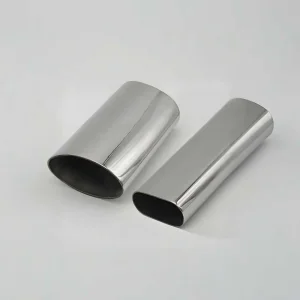
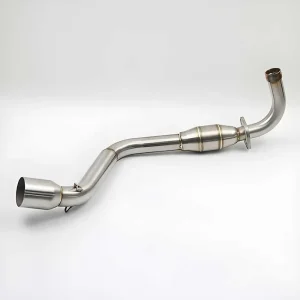
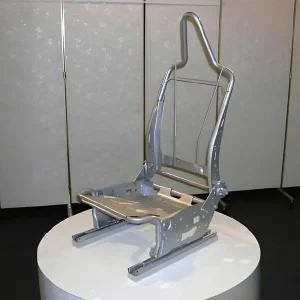
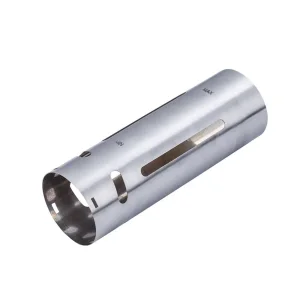
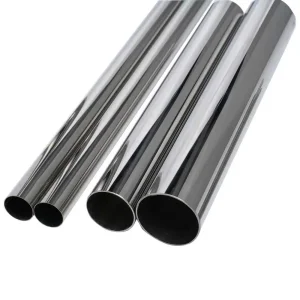
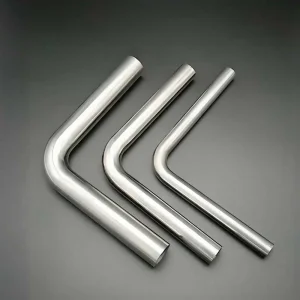
Architectural projects and industrial engineering tenders in Massachusetts must comply with strict state building codes (780 CMR), International Building Code (IBC 2021) guidelines, and corporate ESG mandate frameworks.
Our structural hollow sections undergo rigorous transverse yield and elongation testing to ensure load-bearing compliance for commercial balustrades, glass facade supports, and overhead cleanroom equipment grids specified by Boston structural engineers.
Manufactured utilizing up to 85% recycled stainless steel scrap from tier-1 steel mills (TISCO / POSCO). Our production footprint leverages closed-loop water recirculation and zero-VOC Physical Vapor Deposition (PVD) coating lines, aligning with Boston's Greenovate initiatives.
As advanced manufacturing and AI-driven automation evolve across New England, mechanical tubing must adapt to higher speed, lighter weight, and smart monitoring requirements. Here is how our R&D center is pioneering future structural innovations:
Integration of titanium nitride (TiN) ceramic PVD layers (0.3–0.5 µm) directly onto structural guidance channels to reduce coefficient of friction in automated material sorters.
Development of nitrogen-strengthened austenitic grades yielding 35% weight reduction while maintaining equal torsional stiffness for high-acceleration AMR chassis.
Co-extruded internal conduit channels designed for fiber-optic strain gauge placement, enabling real-time structural health monitoring in heavy industrial facilities.
Answers prepared by our Senior Metallurgical Quality Control Engineers based on real Boston OEM buyer procurement specs.
Send your technical drawings, sizing requirements, or grade specifications to our engineering team. We deliver rapid quotation and structural feasibility reports within 24 hours.