Engineered to satisfy stringent international ISO 13485 and Argentine ANMAT regulatory directives for healthcare furniture, mobility aids, and clinical infrastructure.
Argentina possesses one of Latin America’s most developed healthcare ecosystems, structured around a tripartite dynamic: the public sector, the mandatory trade union framework (Obras Sociales), and a robust private healthcare network (such as OSDE, Swiss Medical, and Galeno). With total healthcare expenditure representing roughly 9.5% to 10.5% of national GDP, demand for advanced biomedical hardware, intensive care unit (ICU) beds, diagnostic apparatus, patient transport carts, and surgical room infrastructure has grown exponentially over the past decade.
Historically reliant on finished European and North American imports, domestic medical equipment manufacturers in key industrial nodes—most notably across Greater Buenos Aires (GBA), Córdoba’s biomedical tech hub, and the industrial corridor of Rosario (Santa Fe)—have increasingly shifted toward localized assembly and structural engineering. This import-substitution dynamic is propelled by national economic directives aimed at building sovereign industrial capacity, managing foreign exchange constraints, and fulfilling the stringent quality mandates set by ANMAT (Administración Nacional de Medicamentos, Alimentos y Tecnología Médica).
Adherence to ANMAT Regulation 3266/2013 and ISO 13485. Component raw materials must provide documented traceability, chemical purity, and surface passivity to avoid bio-contamination.
Strategic sourcing of raw stainless steel tubing under MERCOSUR Harmonized System (HS) Code 7306.40 allows optimized import duty management across South American supply chains.
Concentrated original equipment manufacturers (OEMs) in Córdoba and Santa Fe require rapid lead times, custom profile bending yields, and zero defect rates for hospital bed frames.
In medical-grade tubular procurement, failure rarely stems from gross mechanical breakdown; it stems from micro-fissures along weld seams where pathogenic bacteria (e.g., Staphylococcus aureus, Pseudomonas aeruginosa) harbor despite harsh hospital disinfection cycles. VertexFlow’s inner nitrogen-shielded plasma welding eliminates interior seam oxidation, guaranteeing a microscopic roughness average of Ra ≤ 0.4 µm prior to electropolishing.
Selecting the optimal stainless steel alloy for medical equipment fabrication requires a comprehensive evaluation of tensile yield, corrosion kinetics, surface energy, and sterilization compatibility. Hospitals routinely utilize aggressive chemical agents—including peracetic acid, quaternary ammonium compounds, sodium hypochlorite (bleach), and vaporized hydrogen peroxide (VHP)—as well as high-temperature autoclave cycles (134°C at 2.1 bar). Substandard steel profiles rapidly exhibit micro-pitting, stress corrosion cracking (SCC), and discoloration.
| Stainless Steel Grade | Chemical Composition Highlights | Tensile Strength (MPa) | Pitting Resistance (PREN) | Primary Clinical Applications in Argentina |
|---|---|---|---|---|
| AISI 304 / EN 1.4301 | 18% Cr, 8% Ni, C ≤ 0.07% | ≥ 515 | 18.0 - 20.0 | Hospital bed frames, overbed tables, diagnostic cart chassis, IV pole stands. |
| AISI 316L / EN 1.4404 | 16.5% Cr, 10% Ni, 2.1% Mo, C ≤ 0.03% | ≥ 485 | 23.0 - 25.0 | Surgical grab bars, cleanroom trolley frames, sterilization tray racks, splash zone items. |
| AISI 316LVM / ISO 5832-1 | Vacuum Arc Remelted (VAR), High Ni/Mo | ≥ 860 (Cold Worked) | ≥ 26.0 | Internal structural components, cannula tubing, high-precision surgical instruments. |
| ASTM A554 (Structural) | Austenitic 201/304 Tailored Strip | ≥ 450 | Variable | Non-critical hospital furniture, waiting area handrails, aesthetic outer framework. |
For medical equipment factories operating in Buenos Aires and Rosario, balancing component cost against performance is paramount. While seamless tubing is traditionally specified for ultra-high-pressure hydraulic systems, high-precision plasma welded tubing conforming to ASTM A554 / A269 dimensional practices provides superior wall thickness uniformity (±0.05 mm) at a significantly lower cost point.
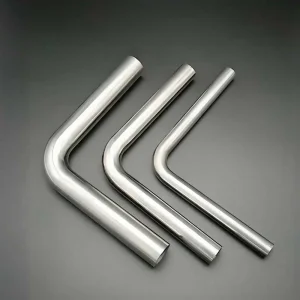
VertexFlow utilizes 43 automated mill lines incorporating in-line infrared seam scanning, dimensional laser gauging, and post-weld brightness annealing. This ensures that when local fabricators execute tight-radius CNC mandrel bending (e.g., 90° bends on 25.4 mm OD grab bars), the weld seam retains 100% mechanical integrity without splitting or necking.
Surface roughness is the single most critical variable dictating bacterial adhesion. Mechanical polishing alone leaves micro-grooves (groove width < 1 µm) that protect microbes from disinfectant wipe-downs.
Direct from our 12,000 m² centralized production complex in Foshan, China to the port hubs of Buenos Aires and Zárate.
Custom-engineered stainless steel tube configurations tailored to the exact operational stresses of modern clinical environments.
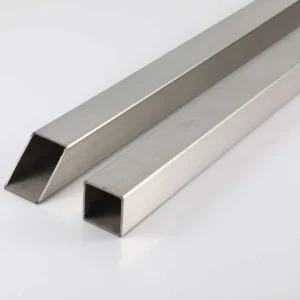
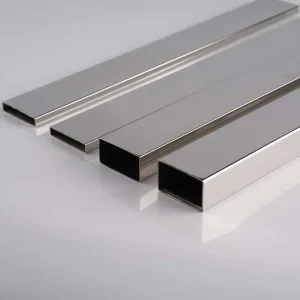
Biomedical manufacturers in Córdoba require high yield-strength 304 square tubing (30x30 mm, 40x40 mm with 1.5 mm to 2.0 mm wall thickness) to support heavy motorized multi-positiion ICU beds (load rating ≥ 250 kg). Precise squareness (±0.5°) and sharp corner radii allow seamless integration with linear actuators and zero binding during height adjustments.
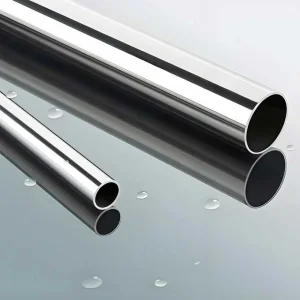
Emergency medical carts demand lightweight, ultra-rigid round tubing (22 mm and 25.4 mm OD) with 240# satin finish. The tubing must withstand daily impacts against doorframes, frequent washdowns with quaternary ammonium, and support heavy defibrillators without flexing.
Contractors constructing private hospitals for the OSDE network in Rosario install heavy-duty 316L safety grab bars. Utilizing 31.8 mm OD x 1.5 mm wall tubing with anti-slip knurled or satin finishes, these assemblies resist high humidity in hydrotherapy suites while complying with accessibility codes.
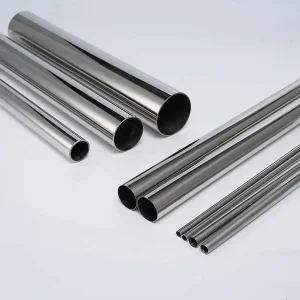
Sterilization processing departments require small-diameter solid 316L round tubes and perforated hollow profiles. Chemical resistance to acidic descaling agents prevents tea-staining, preserving sterility assurance levels (SAL 10⁻⁶).
As medical device manufacturing undergoes rapid digitization and sustainability transformation, VertexFlow is pioneering next-generation stainless steel tubing solutions tailored for smart hospital environments.
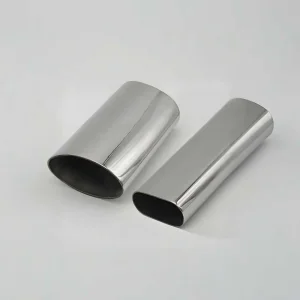
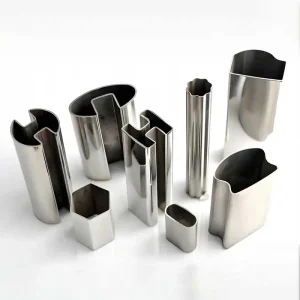
Future ICU furniture will feature embedded structural wiring channels. We are developing internal-bore deburred, smooth-passivated special profile tubes (D-shape and oval) that allow strain gauges and load-cell wiring to route internally without insulation chafe.
Physical Vapor Deposition (PVD) technology applying Titanium Nitride (TiN) and Copper-doped ceramic thin films directly over 304/316L surfaces. This provides active 99.9% contact-kill performance against drug-resistant hospital superbugs (MRSA).
Partnering with Tier-1 mills (TISCO, Baosteel) utilizing Electric Arc Furnaces (EAF) powered by green energy. Our target by 2028 is to offer 100% recyclable, low-embodied-carbon tubing with documented Environmental Product Declarations (EPD).
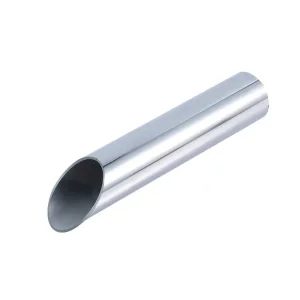
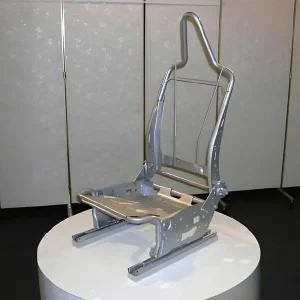
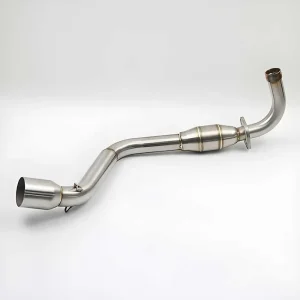
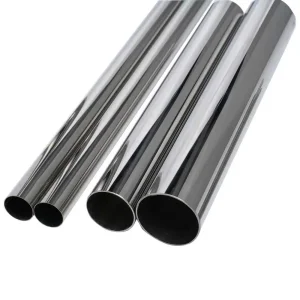
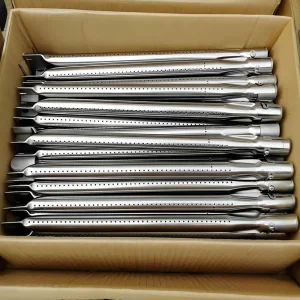
Explore our extended series of specialized round, square, rectangular, oval, and structural steel tubing designed for high-stress commercial, automotive, and hardware applications.
Direct responses formulated by our metallurgical engineering and export logistics team for Argentine medical device manufacturers and importers.
From custom metallurgical advice and ANMAT audit support to rapid container shipping, our senior engineering team is ready to review your CAD drawings and bill of materials within 24 hours.