Specialized Stainless Steel Tubing & Structural Systems Engineered for Kuala Lumpur Hospitals & Manufacturers
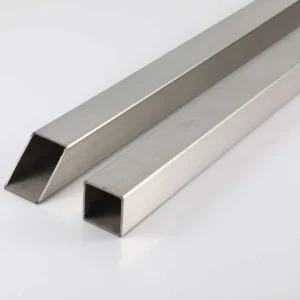
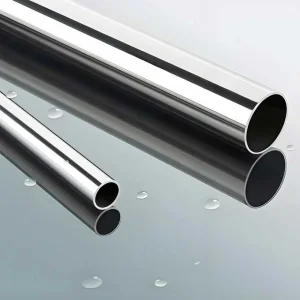
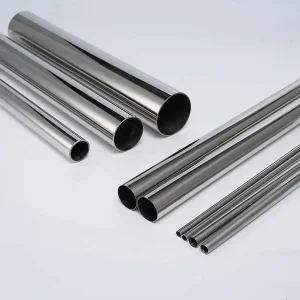
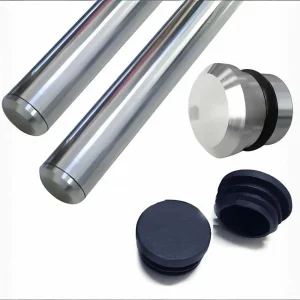
The Greater Kuala Lumpur area and the surrounding Klang Valley industrial corridor (spanning Shah Alam, Subang Jaya, Cyberjaya, and Port Klang) represent one of the fastest-growing medical device manufacturing and procurement centers in the Asia-Pacific region. Driven by Malaysia’s national healthcare strategy, the expansion of medical tourism overseen by the Malaysia Healthcare Travel Council (MHTC), and public-private hospital developments, local original equipment manufacturers (OEMs) and contract assemblers face an unprecedented surge in demand for medical-grade raw components.
As healthcare infrastructure advances, the technical requirements for surgical furniture, rehabilitation aids, diagnostic carts, and sterile handling systems have evolved dramatically. Modern healthcare facilities in Kuala Lumpur—such as Kuala Lumpur Hospital (HKL), University of Malaya Medical Centre (UMMC), and tier-1 private hospital networks—enforce stringent bio-burden, corrosion resistance, and operational ergonomics standards. To satisfy these institutional requirements, regional OEMs must partner with certified primary tubing mills and precision fabrication factories capable of delivering metallurgical integrity, sub-millimeter dimensional tolerances, and complete traceability.
Full material certification and heat number traceability supporting registration requirements set by Malaysia’s Medical Device Authority (MDA).
Streamlined sea freight packaging and container consolidation routed directly to Port Klang for seamless JIT assembly line integration.
High-molybdenum 316L and ultra-clean 304 grades designed specifically to withstand harsh hospital disinfectants and autoclave sterilization.
Rigorous Quality Assurance Frameworks for Precision Medical Tubing and Structural Fabrication
Global medical equipment brands establishing OEM assembly lines in Malaysia demand strict compliance with international metallurgical and manufacturing specifications. When supplying tubular components for electric ICU beds, hydraulic surgical tables, drip stands, or patient transfer trolleys, variations in wall thickness or surface microscopic imperfections can compromise structural integrity or harbor microbial pathogens.
Our mill utilizes high-frequency plasma welding under inner nitrogen gas shielding alongside continuous inline laser gauge inspection. This guarantees an outside diameter (OD) tolerance down to ±0.05 mm for precision applications and uniform weld planishing that eliminates internal bead oxidation—a critical factor for fluid handling and hygienic structure.
| Technical Parameter | Standard Specification | Medical OEM Grade Capabilities | Application Focus (Kuala Lumpur) |
|---|---|---|---|
| Material Alloys | AISI 201, 304, 304L, 316, 316L | High-Copper 201, Ultra-Low Carbon 304/316L | ICU Beds, Grab Bars, Cleanroom Racks |
| Dimensional Standard | ASTM A554, ASTM A269, EN 10217-7 | Tightened Precision Tolerance (±0.05 mm OD) | Conveyor Rollers, Telescopic Stand Poles |
| Surface Roughness (Ra) | Standard Satin (Ra ~ 0.8 µm) | Electro-polished / Mirror 600# (Ra ≤ 0.2–0.4 µm) | Surgical Furniture, Sterilizer Racks |
| Corrosion Resistance | 168h Neutral Salt Spray | 500h+ Neutral Salt Spray (316L Passivated) | Coastal Hospitals, Hydrotherapy Facilities |
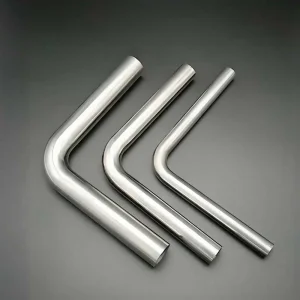
| Secondary Fabrication | Mill Length Cut (6 meter) | CNC Mandrel Bending, Laser Slotting, Swagging | Assembly-Ready Frame Components |
Medical equipment operating within sterile environments requires surfaces free of organic contaminants and free iron deposits. During the tube forming and polishing stages, microscopic metallic particles can become embedded in the surface layer. If unaddressed, these particles lead to premature surface pitting—commonly referred to as "tea-staining"—when exposed to aggressive medical-grade chlorine or quaternary ammonium disinfectants.
To eliminate this vulnerability, our secondary processing includes multi-stage ultrasonic degreasing followed by citric or nitric acid chemical passivation. This process dissolves tramp iron particles and reinforces the passive chromium-oxide layer (Cr₂O₃), maximizing long-term corrosion performance in warm, humid tropical environments like Kuala Lumpur.
Quantifiable Engineering Metrics Behind Our Direct Factory Supply Chain
Pioneering Smart Healthcare Hardware & Advanced Surface Engineering for Next-Generation Medical Facilities
The evolution of modern medical hardware extends far beyond structural strength. Over the next decade, medical equipment manufacturers servicing the ASEAN market are transitioning toward intelligent, lightweight, and antimicrobial structural systems. Our R&D division works directly with regional procurement teams to implement advanced technical roadmaps across three primary vectors:
Traditional liquid paints and low-grade chrome platings are prone to chipping under high-impact hospital hospital cart collisions. Scratched surfaces create microscopic micro-fissures where bacteria such as Methicillin-resistant Staphylococcus aureus (MRSA) can proliferate. By deploying Physical Vapor Deposition (PVD) titanium ceramic coatings and integrating anti-bacterial silver-ion nano-layers, our structural tubing exhibits extreme surface hardness (HV > 2200) while actively suppressing microbial cell division on bedrails and push handles.
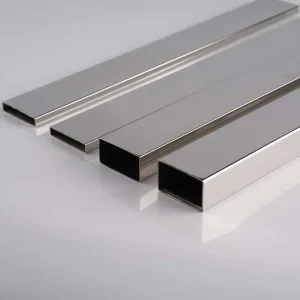
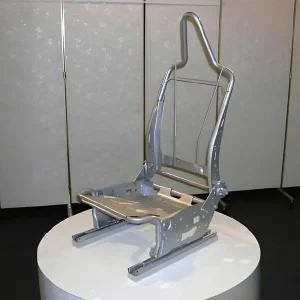
As smart hospitals adopt IoT-enabled patient monitoring systems, ICU bed frames must route power conduits, load-cell wiring, and hydraulic lines cleanly through internal tubular frames. We engineer specialized elliptical, D-profile, and dual-chamber hollow sections with internal laser-cut grommets and wireways. This prevents cable fatigue and simplifies wipe-down sanitation protocols for healthcare workers in busy surgical wards.
Mobile healthcare teams in Malaysia require lightweight diagnostic units for field deployments and inter-hospital transfers. By utilizing cold-worked, thin-wall 316L stainless steel with engineered ribbing, we achieve structural rigidity comparable to standard heavy-gauge carbon steel while reducing frame weight by up to 35%. This reduction translates into easier maneuverability and lower shipping costs across international supply networks.
Streamlined Logistics, OEM Custom Tooling, and Halal-Compliant Manufacturing Protocols
Supply chain reliability is paramount for contract manufacturers in Selangor and Kuala Lumpur operating under rigid production schedules. Delayed component deliveries lead to idle assembly lines and costly penalties from healthcare buyers. Our direct factory export service addresses local procurement challenges through structured operational mechanisms:
Answers to Critical Procurement & Metallurgy Questions from Medical Equipment Engineers
Explore Structural, Decorative, Marine, and Specialized Profiles Engineered to Global Standards
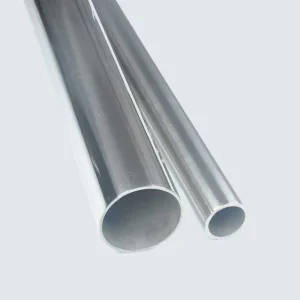
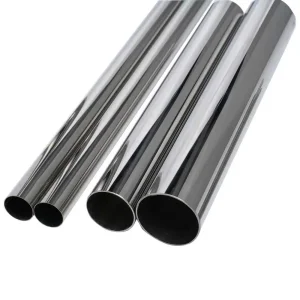
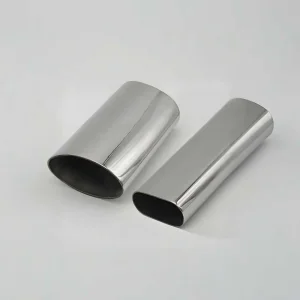
Send us your technical drawings, material specifications, or volume requirements. Our export engineering team will review your specifications and provide a competitive quote within 24 hours.
Send Inquiry Now