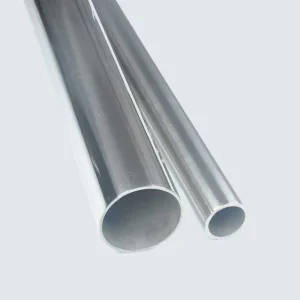
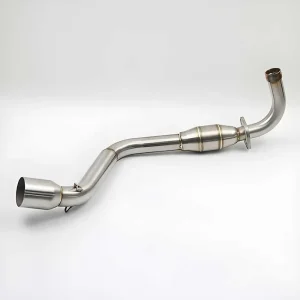
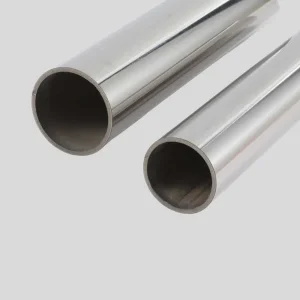
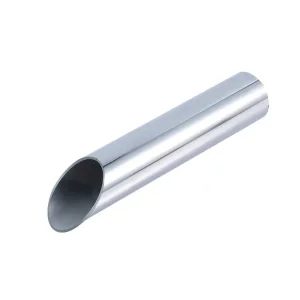
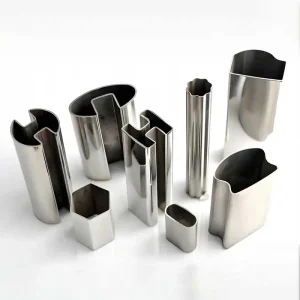
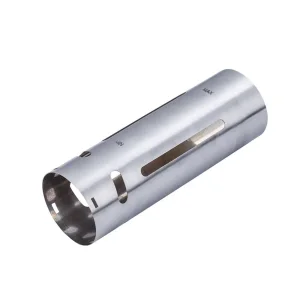
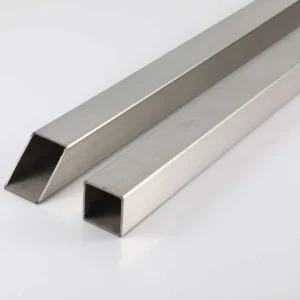
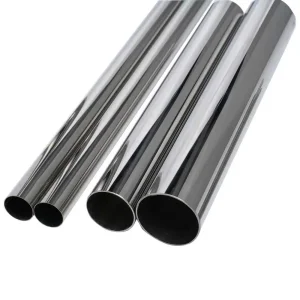
High-precision stainless steel tubing engineered to withstand Kazakhstan's harsh climatic swings, hard mineralized water supply, and heavy commercial wear.
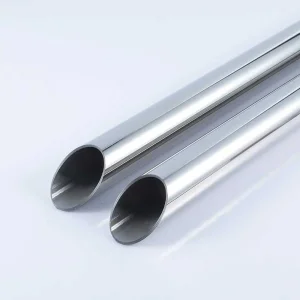
Kazakhstan's rapid urban modernization—spearheaded by major commercial developments in Astana, Almaty, and Shymkent—has triggered an unprecedented surge in demand for high-performance architectural metalwork, sanitary fixtures, and commercial bathroom plumbing systems. As Central Asia's primary economic engine, Kazakhstan presents a unique operational landscape characterized by severe climate variations (ranging from -40°C in northern winters to +40°C in southern summers), highly mineralized municipal water supplies in specific regions, and expanding residential and industrial building codes under EAC (Eurasian Conformity) and GOST standards.
To meet these stringent criteria, international procurement agencies, MEP (Mechanical, Electrical, Plumbing) contractors, and domestic Kazakh hardware manufacturers are increasingly shifting away from traditional brass alloys and low-grade carbon steel in favor of advanced welded precision stainless steel tubing (AISI 304, 304L, 316, and 316L). This report outlines the technical paradigms, metallurgical specifications, and macroeconomic supply chain dynamics that define successful sanitary hardware sourcing for the Kazakh market.
The total cost of ownership (TCO) of sanitary installations in Kazakhstan is heavily impacted by resistance to localized pitting, galvanic corrosion, and freeze-thaw stress cycles. Precision-engineered AISI 316L tubing with inner-bore bead planishing and passive chromium-oxide surface layers delivers a service life exceeding 25 years without structural degradation, significantly outperforming conventional electroplated brass fittings.
The Kazakh construction sector has experienced structural growth driven by state-led initiatives such as the "Nurly Zher" housing program and substantial foreign direct investment (FDI) into commercial real estate, logistics hubs, and luxury hospitality projects. This economic momentum creates distinct localized requirements across key metropolitan hubs:
Extreme winter temperatures require high ductility structural tubing for pre-fabricated bathroom pods, heated towel rails, and thermal-break shower enclosures capable of handling internal heating differentials.
High-density hotel construction and luxury residential towers require premium surface finishes (600# Mirror Polish, Satin 320#, and PVD Titanium coatings) that maintain aesthetic integrity despite heavy foot traffic and aggressive cleaning agents.
Industrial washrooms in Atyrau and Aktau (Caspian coastline) demand AISI 316L tubing enriched with Molybdenum (2.0–3.0%) to prevent chloride-induced pitting corrosion in saline water environments.
Selecting the appropriate stainless steel grade is paramount to avoiding catastrophic field failures, such as stress corrosion cracking (SCC) or intergranular corrosion near weld seams. The table below outlines the material chemistry and mechanical performance matrices for sanitary tubing deployed in Kazakhstan:
| Standard Grade | UNS / EN Spec | Cr (%) | Ni (%) | Mo (%) | Surface Finish ($R_a$) | Primary Application in Kazakhstan |
|---|---|---|---|---|---|---|
| AISI 201 (High Cu) | S20100 / 1.4372 | 13.5–15.0 | 1.0–1.5 | - | ≤ 0.4 µm | Budget indoor furniture, dry retail bathroom fixtures, temporary modular frames. |
| AISI 304 | S30400 / 1.4301 | 17.5–19.5 | 8.0–10.5 | - | ≤ 0.2 µm | Standard municipal sanitaryware, shower columns, faucet substrate, towel warmer frames. |
| AISI 304L | S30403 / 1.4306 | 18.0–20.0 | 8.0–12.0 | - | ≤ 0.2 µm | Precision welded sanitary manifolds requiring post-weld ductility without carbide precipitation. |
| AISI 316L | S31603 / 1.4404 | 16.5–18.5 | 10.0–13.0 | 2.0–2.5 | ≤ 0.15 µm | Hospital hygiene stations, hydrotherapy equipment, spa facilities, Caspian marine projects. |
At VertexFlow Tubes, manufacturing sanitary-grade stainless steel tubing requires a tight sequence of cold-roll forming, TIG/Plasma argon-shielded welding, online infrared seam tracking, bright annealing, and multi-pass mechanical polishing. The structural integrity of each tube is dictated by three technical parameters:
Unrefined weld beads inside a pipe create stagnant micro-environments where bacteria and mineral scale aggregate. By utilizing internal nitrogen purge gas during welding combined with inline mechanical bead planishing (rolling), the internal weld line is rendered virtually flush with the parent metal. This process eliminates internal oxidation ("black seam") and guarantees smooth fluid dynamics inside faucet channels and shower manifolds.
Sanitary fitting factories in Almaty requiring decorative finish coats (Chrome, PVD Brass, Brushed Nickel) depend heavily on substrate smoothness. Minor microscopic pinholes or roll lines cause surface blistering after electroplating. Our multi-head automated polishing lines utilize 180#, 240#, 320#, 400#, and 600# mirror abrasives, delivering an ultra-smooth profile verified by optical profilometers.
Sanitary components such as U-shaped towel warmers, S-bend trap pipes, and curved shower arms undergo severe cold deformation. We strictly monitor tensile strength (≥ 520 MPa) and elongation rates (≥ 40%) via continuous mill eddy-current and mechanical flattening tests. This ensures our tubes bend 90° to 180° on tight centerline radii (CLR) without wall thinning, ovality distortion, or exterior micro-cracking.
The global sanitary and bathroom hardware industry is undergoing rapid technological convergence, driven by sustainability targets, automated manufacturing, and smart home integration. Supply partners serving Kazakhstan must align with these strategic developments:
Physical Vapor Deposition (PVD) is rapidly superseding traditional electroplating. PVD vacuum deposition applies micro-thin ceramic layers (TiN, ZrN) directly onto 304 stainless steel tubing, creating scratch-resistant surfaces in Gunmetal, Rose Gold, and Matte Black with zero toxic chemical runoff.
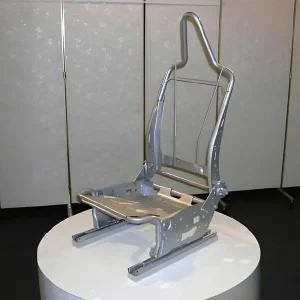
To reduce construction timelines in freezing Kazakh winter months, tier-1 builders are adopting off-site prefabricated bathroom pods. Lightweight, high-tensile stainless steel square and rectangular hollow sections provide the structural skeleton for these rapidly transportable modules.
Sourcing directly from Foshan—China's leading stainless steel manufacturing cluster—gives Kazakh buyers significant cost efficiency and product variation. However, landlocked cross-border transit presents logistical complexities that require optimized supply chain management:
Detailed technical answers to common queries regarding stainless steel sanitary tubing specs, winter durability, and logistics.
Explore our complete lineup of structural, ornamental, and industrial sanitary tubing options tailored for Kazakh manufacturing and construction partners.